Center for Molecular and Translational Human Infectious Diseases Research, Department of Pathology and Genomic Medicine, Houston Methodist Research Institute and Houston Methodist Hospital, Houston, Texas; Departments of Pathology and Laboratory Medicine, and Microbiology and Immunology, Weill Cornell Medical College, New York, New York.
Center for Molecular and Translational Human Infectious Diseases Research, Department of Pathology and Genomic Medicine, Houston Methodist Research Institute and Houston Methodist Hospital, Houston, Texas.
Am J Pathol. 2021 Oct;191(10):1754-1773. doi: 10.1016/j.ajpath.2021.07.002. Epub 2021 Jul 23.
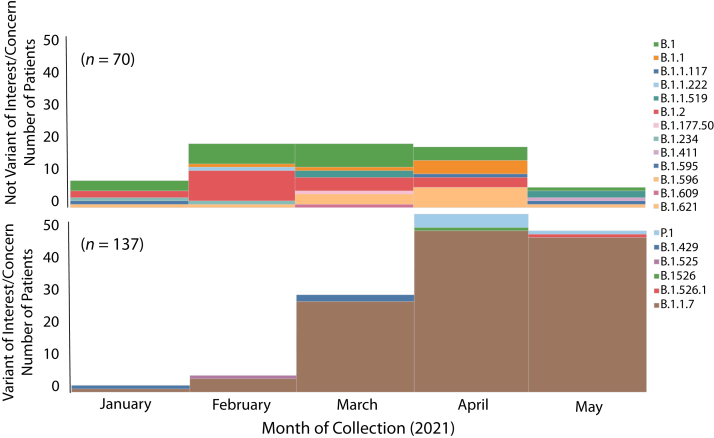
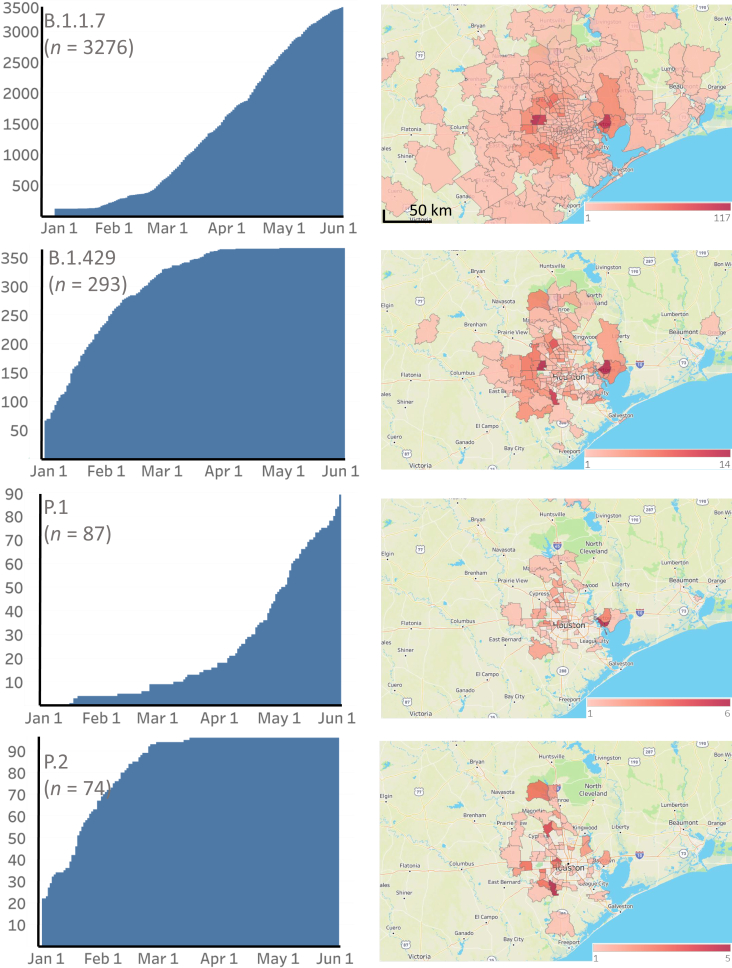
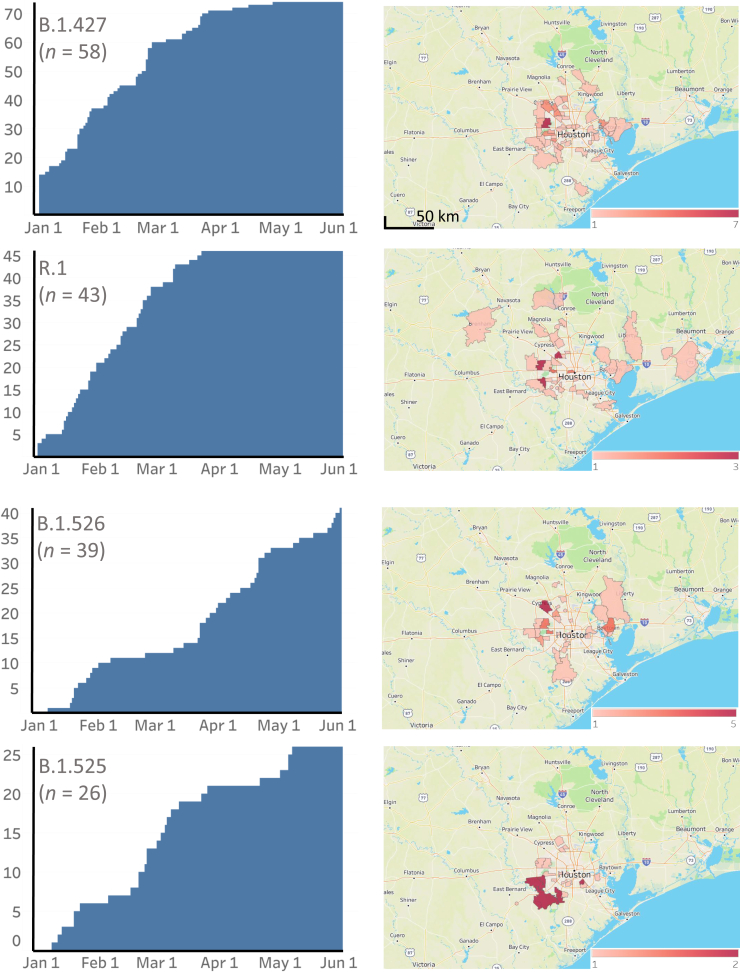
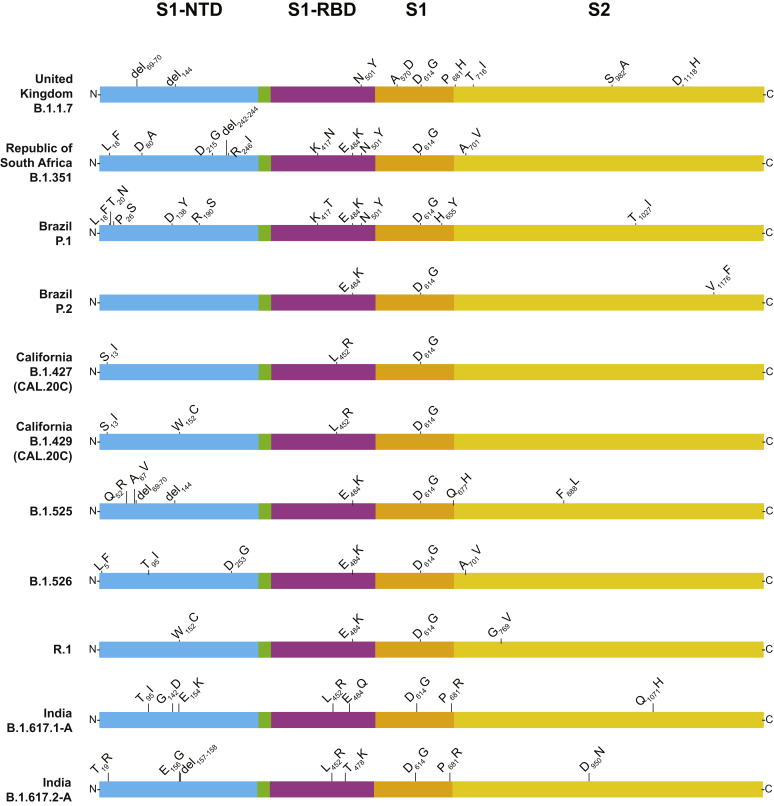
Certain genetic variants of severe acute respiratory syndrome coronavirus 2 (SARS-CoV-2) are of substantial concern because they may be more transmissible or detrimentally alter the pandemic course and disease features in individual patients. SARS-CoV-2 genome sequences from 12,476 patients in the Houston Methodist health care system diagnosed from January 1 through May 31, 2021 are reported here. Prevalence of the B.1.1.7 (Alpha) variant increased rapidly and caused 63% to 90% of new cases in the latter half of May. Eleven B.1.1.7 genomes had an E484K replacement in spike protein, a change also identified in other SARS-CoV-2 lineages. Compared with non-B.1.1.7-infected patients, individuals with B.1.1.7 had a significantly lower cycle threshold (a proxy for higher virus load) and significantly higher hospitalization rate. Other variants [eg, B.1.429 and B.1.427 (Epsilon), P.1 (Gamma), P.2 (Zeta), and R.1] also increased rapidly, although the magnitude was less than that in B.1.1.7. Twenty-two patients infected with B.1.617.1 (Kappa) or B.1.617.2 (Delta) variants had a high rate of hospitalization. Breakthrough cases (n = 207) in fully vaccinated patients were caused by a heterogeneous array of virus genotypes, including many not currently designated variants of interest or concern. In the aggregate, this study delineates the trajectory of SARS-CoV-2 variants circulating in a major metropolitan area, documents B.1.1.7 as the major cause of new cases in Houston, TX, and heralds the arrival of B.1.617 variants in the metroplex.
这里报告了 2021 年 1 月 1 日至 5 月 31 日期间,休斯顿卫理公会医疗保健系统从 12476 名患者中提取的严重急性呼吸综合征冠状病毒 2(SARS-CoV-2)的基因变体。报道称,该变体的 B.1.1.7(阿尔法)变体迅速增加,并导致 5 月后半段新增病例的 63%至 90%。11 个 B.1.1.7 基因组在刺突蛋白中具有 E484K 取代,这一变化也在其他 SARS-CoV-2 谱系中被发现。与非 B.1.1.7 感染者相比,B.1.1.7 感染者的循环阈值(病毒载量的替代指标)明显较低,住院率明显较高。其他变体[例如 B.1.429 和 B.1.427(Epsilon)、P.1(Gamma)、P.2(Zeta)和 R.1]也迅速增加,尽管幅度小于 B.1.1.7。22 名感染 B.1.617.1(Kappa)或 B.1.617.2(Delta)变体的患者住院率很高。207 例完全接种疫苗的突破性病例是由多种病毒基因型引起的,包括许多目前尚未被指定为关注或关切的变异株。总的来说,本研究描绘了在一个主要大都市区传播的 SARS-CoV-2 变体的轨迹,记录了 B.1.1.7 是休斯顿德克萨斯州新病例的主要原因,并预示着 B.1.617 变体的到来。