• 文献检索
  • 文档翻译
  • 深度研究
  • 学术资讯
  • Suppr Zotero 插件Zotero 插件
  • 邀请有礼
  • 套餐&价格
  • 历史记录
应用&插件
Suppr Zotero 插件Zotero 插件浏览器插件Mac 客户端Windows 客户端微信小程序
定价
高级版会员购买积分包购买API积分包
服务
文献检索文档翻译深度研究API 文档MCP 服务
关于我们
关于 Suppr公司介绍联系我们用户协议隐私条款
关注我们

Suppr 超能文献

核心技术专利:CN118964589B侵权必究
粤ICP备2023148730 号-1Suppr @ 2026

文献检索

告别复杂PubMed语法,用中文像聊天一样搜索,搜遍4000万医学文献。AI智能推荐,让科研检索更轻松。

立即免费搜索

文件翻译

保留排版,准确专业,支持PDF/Word/PPT等文件格式,支持 12+语言互译。

免费翻译文档

深度研究

AI帮你快速写综述,25分钟生成高质量综述,智能提取关键信息,辅助科研写作。

立即免费体验

沙特阿拉伯的机器人药房实施情况与成果:一项为期21个月的可用性研究。

Robotic Pharmacy Implementation and Outcomes in Saudi Arabia: A 21-Month Usability Study.

作者信息

Momattin Hisham, Arafa Shokry, Momattin Shahad, Rahal Rayan, Waterson James

机构信息

Mouwasat Medical Services, Dammam, Saudi Arabia.

King Faisal University, Al Hassa, Dammam, Saudi Arabia.

出版信息

JMIR Hum Factors. 2021 Sep 1;8(3):e28381. doi: 10.2196/28381.

DOI:10.2196/28381
PMID:34304149
原文链接:https://pmc.ncbi.nlm.nih.gov/articles/PMC8444036/
Abstract

BACKGROUND

We describe the introduction, use, and evaluation of an automation and integration pharmacy development program in a private facility in Saudi Arabia. The project was specifically undertaken to increase throughput, reduce medication dispensing error rates, improve patient satisfaction, and free up pharmacists' time to allow for increased face-to-face consultations with patients.

OBJECTIVE

We forecasted growth of our outpatient service at 25% per annum over 5- and 10-year horizons and set out to prepare our outpatient pharmacy service to meet this demand. Initial project goals were set as a 50% reduction in the average patient wait time, a 15% increase in patient satisfaction regarding pharmacy wait time and pharmacy services, a 25% increase in pharmacist productivity, and zero dispensing errors. This was expected to be achieved within 10 months of go-live. Realignment of pharmacist activity toward counseling and medication review with patients was a secondary goal, along with the rapid development of a reputation in the served community for patient-centered care.

METHODS

Preimplementation data for patient wait time for dispensing of prescribed medications as a specific measure of patient satisfaction was gathered as part of wider ongoing data collection in this field. Pharmacist activity and productivity in terms of patient interaction time were gathered. Reported and discovered dispensing errors per 1000 prescriptions were also aggregated. All preimplementation data was gathered over an 11-month period.

RESULTS

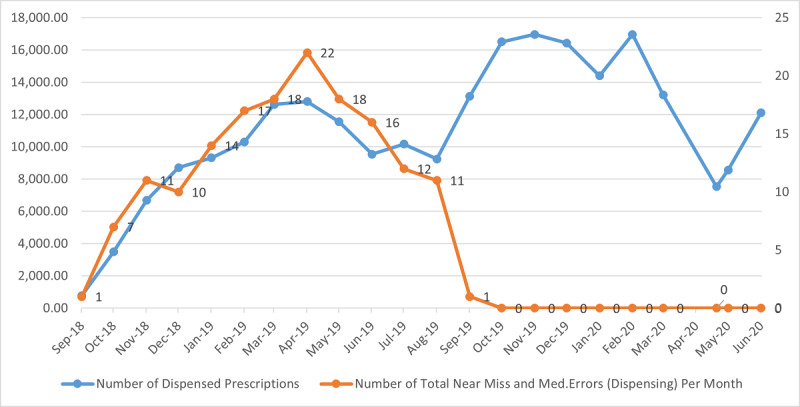
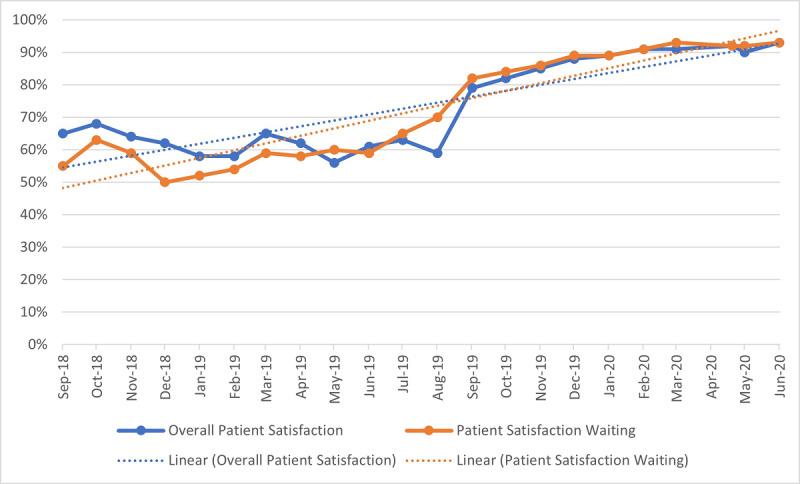
From go-live, data were gathered on the above metrics in 1-month increments. At the 10-month point, there had been a 53% reduction in the average wait time, a 20% increase in patient satisfaction regarding pharmacy wait time, with a 22% increase in overall patient satisfaction regarding pharmacy services, and a 33% increase in pharmacist productivity. A zero dispensing error rate was reported.

CONCLUSIONS

The robotic pharmacy solution studied was highly effective, but a robust upstream supply chain is vital to ensure stock levels, particularly when automated filling is planned. The automation solution must also be seamlessly and completely integrated into the facility's software systems for appointments, medication records, and prescription generation in order to garner its full benefits. Overall patient satisfaction with pharmacy services is strongly influenced by wait time and follow-up studies are required to identify how to use this positive effect and make optimal use of freed-up pharmacist time. The extra time spent by pharmacists with patients and the opportunity for complete overview of the patient's medication history, which full integration provides, may allow us to address challenging issues such as medication nonadherence. Reduced wait times may also allow for smaller prescription fill volumes, and more frequent outpatient department visits, allowing patients to have increased contact time with pharmacists.
https://cdn.ncbi.nlm.nih.gov/pmc/blobs/5c34/8444036/9a85f39995b9/humanfactors_v8i3e28381_fig4.jpg
https://cdn.ncbi.nlm.nih.gov/pmc/blobs/5c34/8444036/90dd7db93217/humanfactors_v8i3e28381_fig1.jpg
https://cdn.ncbi.nlm.nih.gov/pmc/blobs/5c34/8444036/e46b311f3199/humanfactors_v8i3e28381_fig2.jpg
https://cdn.ncbi.nlm.nih.gov/pmc/blobs/5c34/8444036/de4c5b66a750/humanfactors_v8i3e28381_fig3.jpg
https://cdn.ncbi.nlm.nih.gov/pmc/blobs/5c34/8444036/9a85f39995b9/humanfactors_v8i3e28381_fig4.jpg
https://cdn.ncbi.nlm.nih.gov/pmc/blobs/5c34/8444036/90dd7db93217/humanfactors_v8i3e28381_fig1.jpg
https://cdn.ncbi.nlm.nih.gov/pmc/blobs/5c34/8444036/e46b311f3199/humanfactors_v8i3e28381_fig2.jpg
https://cdn.ncbi.nlm.nih.gov/pmc/blobs/5c34/8444036/de4c5b66a750/humanfactors_v8i3e28381_fig3.jpg
https://cdn.ncbi.nlm.nih.gov/pmc/blobs/5c34/8444036/9a85f39995b9/humanfactors_v8i3e28381_fig4.jpg
摘要

背景

我们描述了沙特阿拉伯一家私立机构中自动化与集成药房发展项目的引入、使用及评估情况。该项目旨在提高吞吐量、降低药品调配错误率、提升患者满意度,并腾出药剂师的时间,以便增加与患者面对面咨询的机会。

目的

我们预测了未来5年和10年门诊服务每年25%的增长率,并着手准备门诊药房服务以满足这一需求。最初的项目目标设定为将患者平均等待时间减少50%,患者对药房等待时间和药房服务的满意度提高15%,药剂师工作效率提高25%,且调配错误率为零。预计在上线后的10个月内实现这些目标。将药剂师的工作重心调整为与患者进行咨询和药物审查是次要目标,同时要在服务社区中迅速树立以患者为中心的护理声誉。

方法

作为该领域正在进行的更广泛数据收集的一部分,收集了患者等待处方调配时间的实施前数据,以此作为患者满意度的一项具体衡量指标。收集了药剂师在患者互动时间方面的活动和工作效率数据。还汇总了每1000张处方上报和发现的调配错误情况。所有实施前数据均在11个月的时间内收集。

结果

自上线起,每月收集上述指标的数据。在第10个月时,平均等待时间减少了53%,患者对药房等待时间的满意度提高了20%,患者对药房服务的总体满意度提高了22%,药剂师工作效率提高了33%。报告的调配错误率为零。

结论

所研究的自动化药房解决方案非常有效,但强大的上游供应链对于确保库存水平至关重要,特别是在计划进行自动配药时。自动化解决方案还必须无缝且完全集成到机构的预约、用药记录和处方生成软件系统中,以便充分发挥其优势。患者对药房服务的总体满意度受等待时间的影响很大,需要进行后续研究以确定如何利用这一积极影响,并充分利用腾出的药剂师时间。药剂师与患者相处的额外时间以及完全集成所提供的全面了解患者用药史的机会,可能使我们能够解决诸如用药依从性等具有挑战性的问题。等待时间的减少也可能允许较小的处方配药量以及更频繁的门诊就诊,从而使患者有更多时间与药剂师接触。

相似文献

1
Robotic Pharmacy Implementation and Outcomes in Saudi Arabia: A 21-Month Usability Study.沙特阿拉伯的机器人药房实施情况与成果:一项为期21个月的可用性研究。
JMIR Hum Factors. 2021 Sep 1;8(3):e28381. doi: 10.2196/28381.
2
The Introduction of Robotics to an Outpatient Dispensing and Medication Management Process in Saudi Arabia: Retrospective Review of a Pharmacy-led Multidisciplinary Six Sigma Performance Improvement Project.沙特阿拉伯门诊配药与药物管理流程中引入机器人技术:一项由药房主导的多学科六西格玛绩效改进项目的回顾性研究
JMIR Hum Factors. 2022 Oct 11;9(4):e37905. doi: 10.2196/37905.
3
Detecting Potential Medication Selection Errors During Outpatient Pharmacy Processing of Electronic Prescriptions With the RxNorm Application Programming Interface: Retrospective Observational Cohort Study.使用RxNorm应用程序编程接口在电子处方门诊药房处理过程中检测潜在的用药选择错误:回顾性观察队列研究
JMIR Med Inform. 2020 Mar 11;8(3):e16073. doi: 10.2196/16073.
4
Robotic dispensing improves patient safety, inventory management, and staff satisfaction in an outpatient hospital pharmacy.机器人配药提高了门诊医院药房的患者安全性、库存管理和员工满意度。
J Eval Clin Pract. 2019 Feb;25(1):28-35. doi: 10.1111/jep.13014. Epub 2018 Aug 22.
5
Impact of an automated dispensing system in outpatient pharmacies.自动发药系统在门诊药房的影响。
J Am Pharm Assoc (2003). 2008 Nov-Dec;48(6):774-9. doi: 10.1331/JAPhA.2008.07114.
6
Design of the POINT study: Pharmacotherapy Optimisation through Integration of a Non-dispensing pharmacist in a primary care Team (POINT).POINT研究的设计:通过在基层医疗团队中纳入非配药药剂师实现药物治疗优化(POINT)。
BMC Fam Pract. 2015 Jul 2;16:76. doi: 10.1186/s12875-015-0296-8.
7
Evaluating An Automated Compounding Workflow Software for Safety and Efficiency: Implementation Study.评估用于安全性和效率的自动配药工作流程软件:实施研究。
JMIR Hum Factors. 2021 Nov 2;8(4):e29180. doi: 10.2196/29180.
8
Evaluation of community pharmacy tech-check-tech as a strategy for practice advancement.评估社区药房技术人员相互检查作为实践推进策略的效果。
J Am Pharm Assoc (2003). 2018 Nov-Dec;58(6):652-658. doi: 10.1016/j.japh.2018.06.018. Epub 2018 Aug 29.
9
The degree of integration of non-dispensing pharmacists in primary care practice and the impact on health outcomes: A systematic review.非发药药师在初级保健实践中的整合程度及其对健康结果的影响:系统评价。
Res Social Adm Pharm. 2018 Mar;14(3):228-240. doi: 10.1016/j.sapharm.2017.04.014. Epub 2017 Apr 22.
10
Impact of Adherence Education and Monitoring on Community Pharmacy Performance Scores and Patient Satisfaction.依从性教育与监测对社区药房绩效评分及患者满意度的影响。
Innov Pharm. 2020 Jul 31;11(3). doi: 10.24926/iip.v11i3.3369. eCollection 2020.

引用本文的文献

1
Healthcare staff acceptance and satisfaction with automated medication dispensing cabinets: a neural network-based analysis.医护人员对自动药品调配柜的接受度和满意度:基于神经网络的分析
BMC Health Serv Res. 2025 Aug 13;25(1):1070. doi: 10.1186/s12913-025-13266-8.
2
Utilization, perceived benefits and concerns regarding robotic technologies among community pharmacists.社区药剂师对机器人技术的使用、感知到的益处及担忧
Future Sci OA. 2025 Dec;11(1):2514932. doi: 10.1080/20565623.2025.2514932. Epub 2025 Jun 9.
3
Unveiling the complementariness of robotic tablet dispensing machines for elderly care: A bibliometric data analysis.

本文引用的文献

1
Safety, time and cost evaluation of automated and semi-automated drug distribution systems in hospitals: a systematic review.医院自动化和半自动化药品分发系统的安全性、时间和成本评估:系统评价。
Eur J Hosp Pharm. 2020 Sep;27(5):253-262. doi: 10.1136/ejhpharm-2018-001791. Epub 2019 Mar 19.
2
Return on investment: a practical calculation tool to convince your institution.投资回报率:一个实用的计算工具,可说服您的机构。
Eur J Hosp Pharm. 2020 Mar;27(2):111-113. doi: 10.1136/ejhpharm-2018-001733. Epub 2018 Nov 12.
3
Approaches to outpatient pharmacy automation: a systematic review.
揭示用于老年护理的机器人片剂分发机的互补性:文献计量数据分析
Explor Res Clin Soc Pharm. 2024 Nov 26;17:100545. doi: 10.1016/j.rcsop.2024.100545. eCollection 2025 Mar.
4
Advancements in ambulatory care pharmacy practice in Saudi Arabia: A comprehensive review of innovations and best practices at Johns Hopkins Aramco Healthcare.沙特阿拉伯门诊护理药学实践的进展:对约翰霍普金斯阿美医疗保健公司创新与最佳实践的全面回顾。
Saudi Pharm J. 2024 Oct;32(10):102170. doi: 10.1016/j.jsps.2024.102170. Epub 2024 Sep 6.
5
Evaluation of the automated dispensing cabinets users' level of satisfaction and the influencing factors in Al-Ahsa hospitals.艾哈萨医院自动配药柜用户满意度水平及其影响因素评估
Digit Health. 2024 Aug 25;10:20552076241264641. doi: 10.1177/20552076241264641. eCollection 2024 Jan-Dec.
6
Assessment of satisfaction of attendees of healthcare centers in Jordan with community pharmacy services of pharmacies they usually use.评估约旦医疗机构参会者对其常去药店的社区药房服务的满意度。
PLoS One. 2024 Jul 22;19(7):e0305991. doi: 10.1371/journal.pone.0305991. eCollection 2024.
7
Improving Inpatient Medication Dispensing with an Automated System.使用自动化系统改善住院患者用药调配
Glob J Qual Saf Healthc. 2023 Nov 24;6(4):117-125. doi: 10.36401/JQSH-23-15. eCollection 2023 Nov.
8
Assessment of Awareness, Perceptions, and Opinions towards Artificial Intelligence among Healthcare Students in Riyadh, Saudi Arabia.沙特阿拉伯利雅得的医疗保健专业学生对人工智能的认知、看法和意见评估。
Medicina (Kaunas). 2023 Apr 24;59(5):828. doi: 10.3390/medicina59050828.
9
Transforming Primary Care: Developing Health Precincts as Models for Sustainable Integrated Community-Based Healthcare.转变初级医疗保健:发展健康园区作为可持续的社区综合医疗保健模式。
Healthcare (Basel). 2023 Feb 24;11(5):673. doi: 10.3390/healthcare11050673.
10
Impact of automated drug dispensing system on patient safety.自动药品调配系统对患者安全的影响。
Pharm Pract (Granada). 2022 Oct-Dec;20(4):2744. doi: 10.18549/PharmPract.2022.4.2744. Epub 2022 Nov 11.
门诊药房自动化方法:一项系统评价。
Eur J Hosp Pharm. 2019 May;26(3):157-162. doi: 10.1136/ejhpharm-2017-001424. Epub 2018 Mar 29.
4
Factors associated with patient satisfaction in an outpatient hospital pharmacy.门诊医院药房中与患者满意度相关的因素。
Eur J Hosp Pharm. 2018 Jul;25(4):183-188. doi: 10.1136/ejhpharm-2016-001192. Epub 2017 Mar 16.
5
Tailored interventions by community pharmacists and general practitioners improve adherence to statins in a Spanish randomized controlled trial.社区药剂师和全科医生的针对性干预措施改善了西班牙一项随机对照试验中患者对他汀类药物的依从性。
Health Serv Res. 2019 Jun;54(3):658-668. doi: 10.1111/1475-6773.13152. Epub 2019 Apr 7.
6
A centralized automated-dispensing system in a French teaching hospital: return on investment and quality improvement.法国一家教学医院的集中式自动配药系统:投资回报率与质量提升
Int J Qual Health Care. 2019 Apr 1;31(3):219-224. doi: 10.1093/intqhc/mzy152.
7
Psychometric properties of the Press Ganey® Outpatient Medical Practice Survey.Press Ganey®门诊医疗实践调查的心理测量学特性。
Health Qual Life Outcomes. 2017 Feb 10;15(1):32. doi: 10.1186/s12955-017-0610-3.
8
Interventions to improve adherence to lipid-lowering medication.提高降脂药物依从性的干预措施。
Cochrane Database Syst Rev. 2016 Dec 21;12(12):CD004371. doi: 10.1002/14651858.CD004371.pub4.
9
A comparison of patients' and pharmacists' satisfaction with medication counseling provided by community pharmacies: a cross-sectional survey.社区药房提供的用药咨询服务中患者与药剂师满意度的比较:一项横断面调查。
BMC Health Serv Res. 2016 Apr 14;16:131. doi: 10.1186/s12913-016-1374-x.
10
Impact of community pharmacist intervention discussing patients' beliefs to improve medication adherence.社区药剂师通过讨论患者信念来干预以提高用药依从性的影响。
Int J Clin Pharm. 2014 Oct;36(5):1048-58. doi: 10.1007/s11096-014-9993-y. Epub 2014 Aug 19.