King Ryan J, Qiu Fang, Yu Fang, Singh Pankaj K
The Eppley Institute for Research in Cancer and Allied Diseases, University of Nebraska Medical Center, Omaha, NE, United States.
Department of Biostatistics, University of Nebraska Medical Center, Omaha, NE, United States.
Front Cell Dev Biol. 2021 Jul 8;9:667852. doi: 10.3389/fcell.2021.667852. eCollection 2021.
Esophageal cancer has the sixth highest rate of cancer-associated deaths worldwide, with many patients displaying metastases and chemotherapy resistance. We sought to find subtypes to see if precision medicine could play a role in finding new potential targets and predicting responses to therapy. Since metabolism not only drives cancers but also serves as a readout, metabolism was examined as a key reporter for differences.
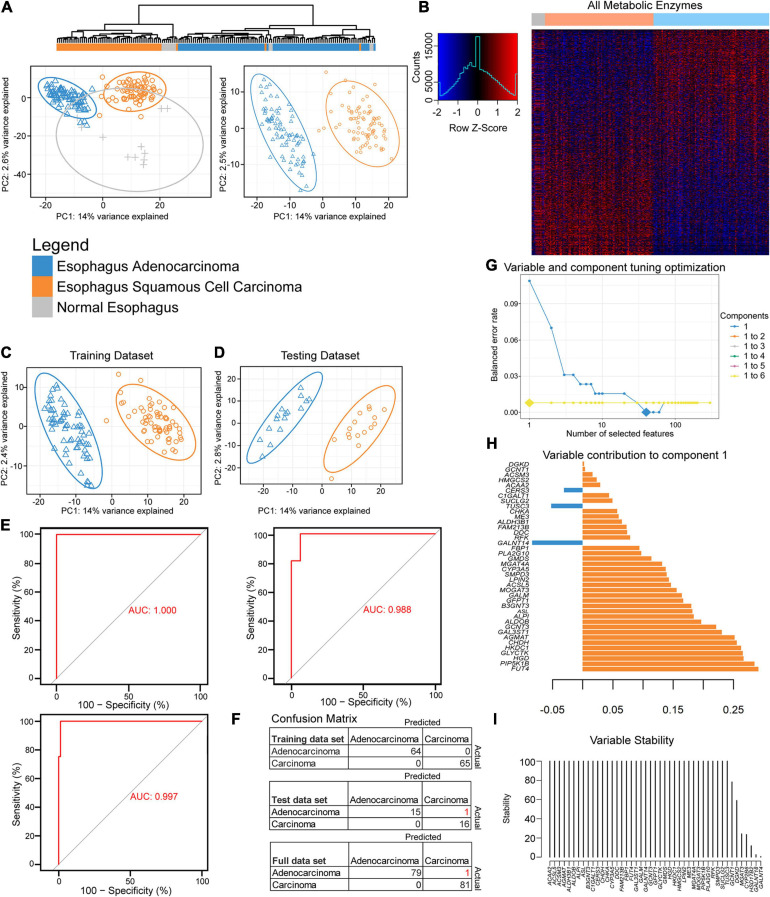
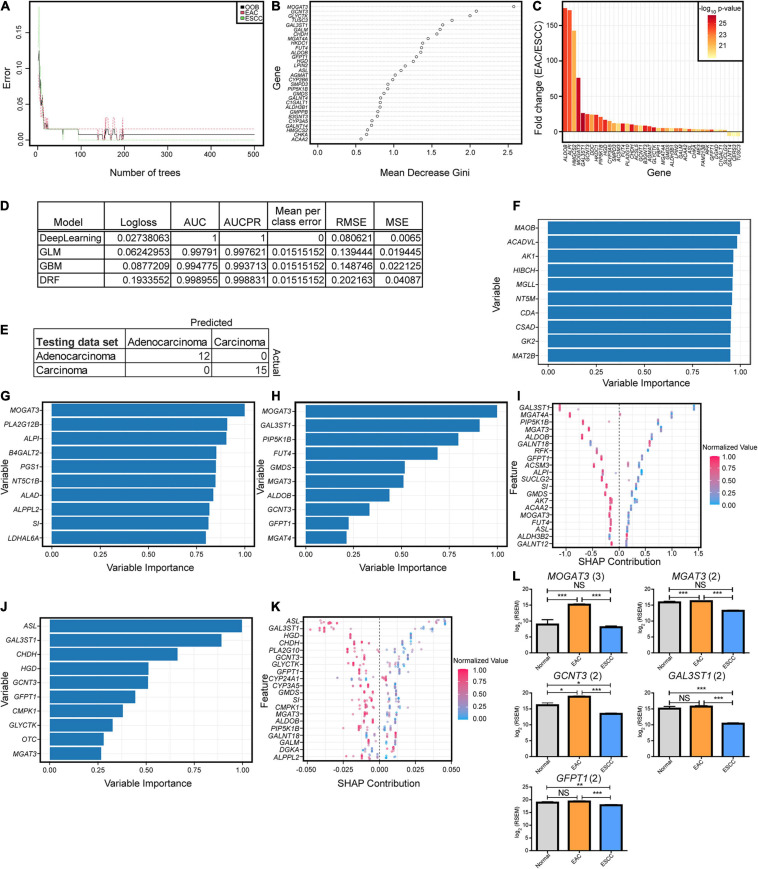
Unsupervised and supervised classification methods, including hierarchical clustering, partial least squares discriminant analysis, k-nearest neighbors, and machine learning techniques, were used to discover and display two major subgroups. Genes, pathways, gene ontologies, survival, and immune differences between the groups were further examined, along with biomarkers between the groups and against normal tissue.
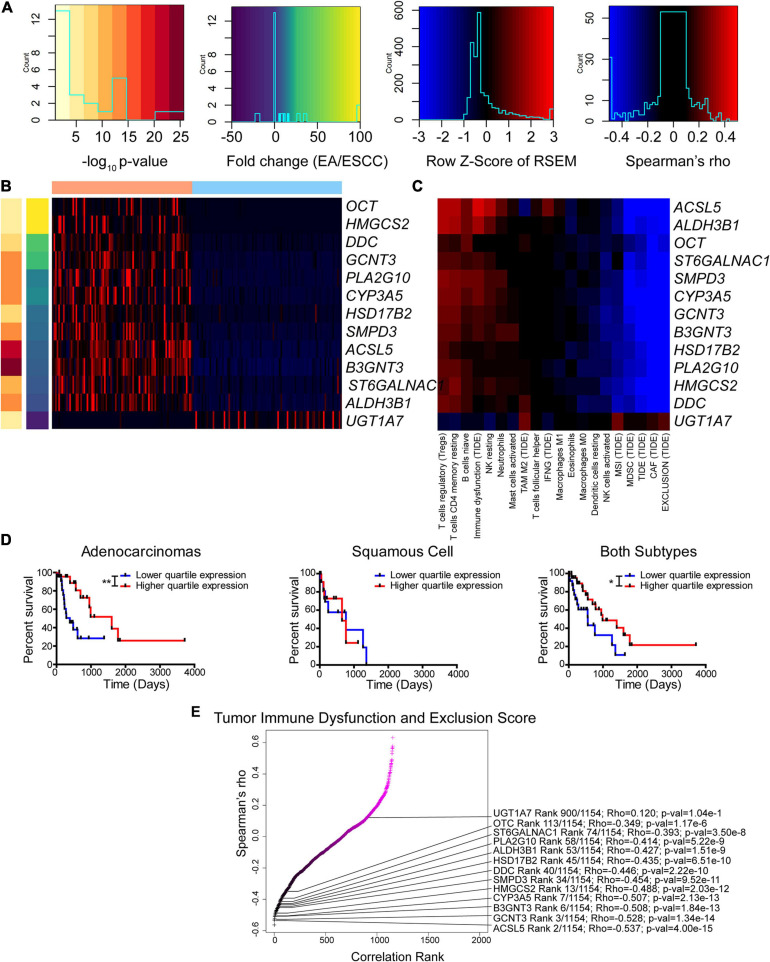
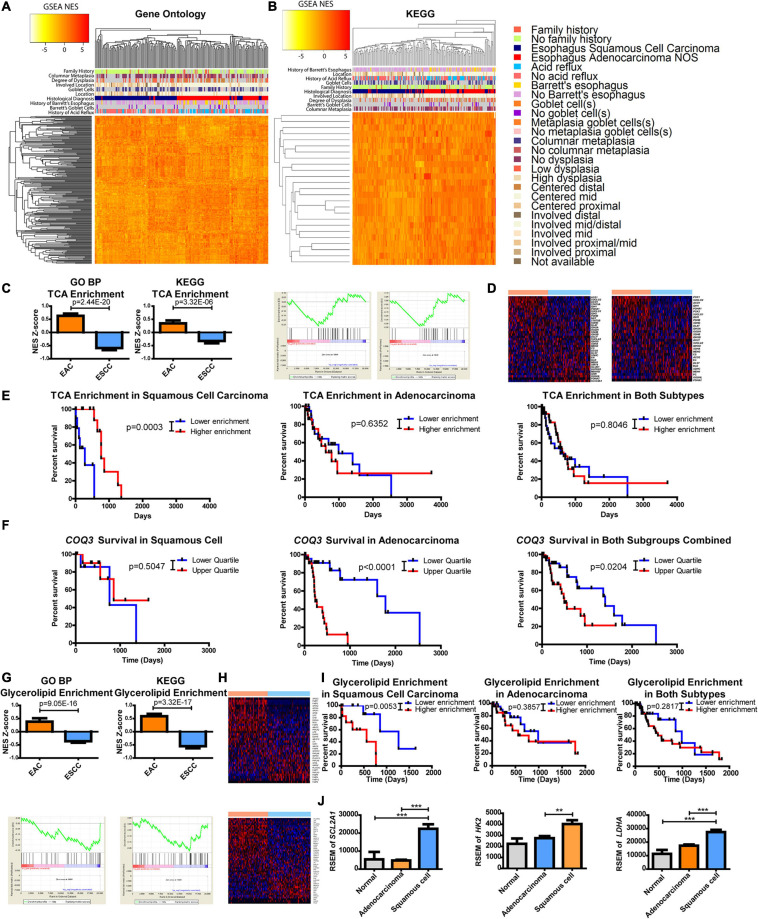
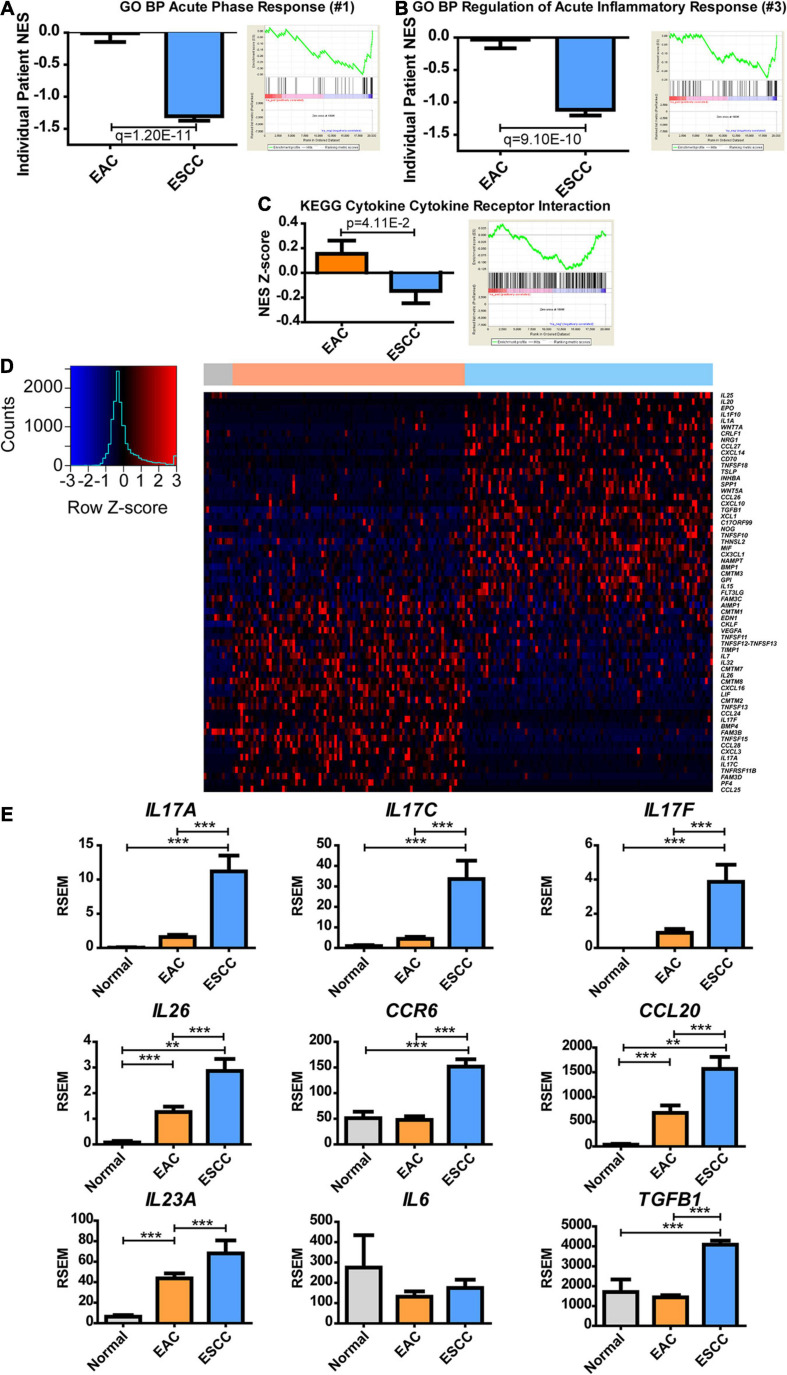
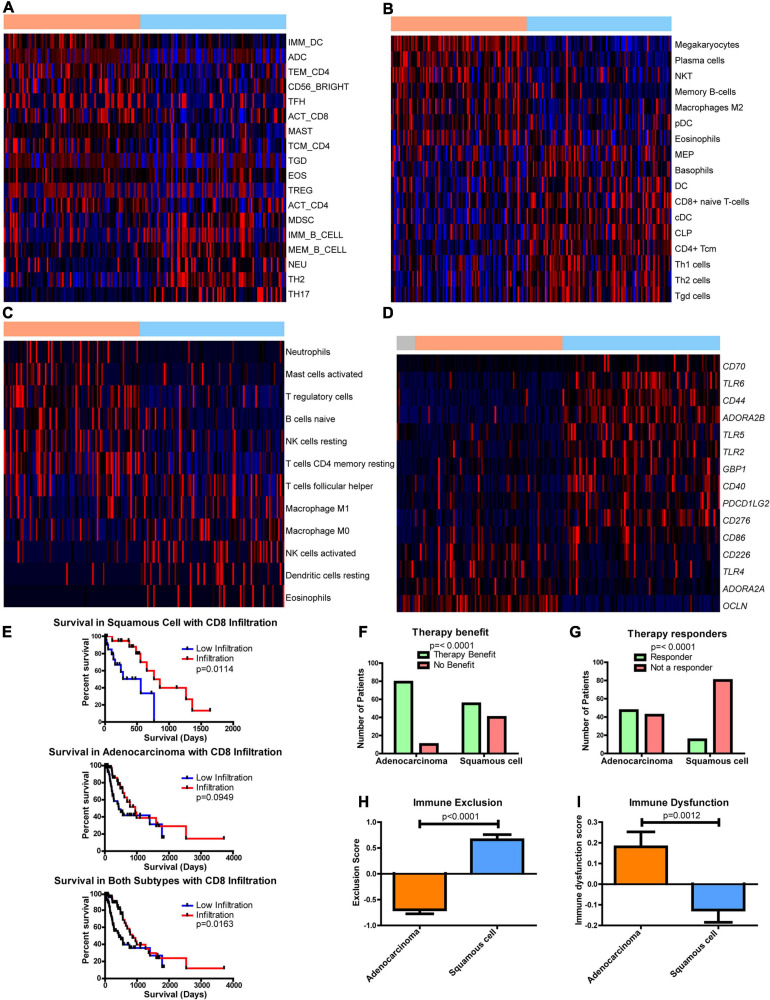
Esophageal cancer had two major unique metabolic profiles observed between the histological subtypes esophageal squamous cell carcinoma (ESCC) and esophageal adenocarcinoma (EAC). The metabolic differences suggest that ESCC depends on glycolysis, whereas EAC relies more on oxidative metabolism, catabolism of glycolipids, the tricarboxylic acid (TCA) cycle, and the electron transport chain. We also noted a robust prognostic risk associated with expression. In addition to the metabolic alterations, we noted significant alterations in key pathways regulating immunity, including alterations in cytokines and predicted immune infiltration. ESCC appears to have increased signature associated with dendritic cells, Th17, and CD8 T cells, the latter of which correlate with survival in ESCC. We bioinformatically observed that ESCC may be more responsive to checkpoint inhibitor therapy than EAC and postulate targets to enhance therapy further. Lastly, we highlight correlations between differentially expressed enzymes and the potential immune status.
Overall, these results highlight the extreme differences observed between the histological subtypes and may lead to novel biomarkers, therapeutic strategies, and differences in therapeutic response for targeting each esophageal cancer subtype.
食管癌是全球癌症相关死亡发生率第六高的癌症,许多患者会出现转移和化疗耐药。我们试图寻找亚型,以确定精准医学是否能在发现新的潜在靶点和预测治疗反应方面发挥作用。由于代谢不仅驱动癌症发展,还可作为一种指标,因此将代谢作为差异的关键报告指标进行研究。
采用无监督和有监督分类方法,包括层次聚类、偏最小二乘判别分析、k近邻算法和机器学习技术,来发现并展示两个主要亚组。进一步研究两组之间的基因、信号通路、基因本体、生存率和免疫差异,以及两组之间和与正常组织相比的生物标志物。
在组织学亚型食管鳞状细胞癌(ESCC)和食管腺癌(EAC)之间观察到食管癌有两种主要的独特代谢特征。代谢差异表明,ESCC依赖糖酵解,而EAC更多地依赖氧化代谢、糖脂分解代谢、三羧酸(TCA)循环和电子传递链。我们还注意到与[此处原文可能缺失具体基因或蛋白名称]表达相关的强大预后风险。除代谢改变外,我们还注意到调节免疫的关键信号通路有显著改变,包括细胞因子改变和预测的免疫浸润。ESCC似乎与树突状细胞、Th17和CD8 T细胞相关的特征增加,其中后者与ESCC的生存率相关。我们通过生物信息学观察到,ESCC可能比EAC对检查点抑制剂治疗更敏感,并推测了可进一步增强治疗效果的靶点。最后,我们强调了差异表达酶与潜在免疫状态之间的相关性。
总体而言,这些结果突出了组织学亚型之间观察到的极端差异,可能会带来新的生物标志物、治疗策略,以及针对每种食管癌亚型的治疗反应差异。