Rehab Neural Engineering Labs, University of Pittsburgh, Pittsburgh, United States.
Department of Bioengineering, University of Pittsburgh, Pittsburgh, United States.
Elife. 2021 Jul 27;10:e65128. doi: 10.7554/eLife.65128.
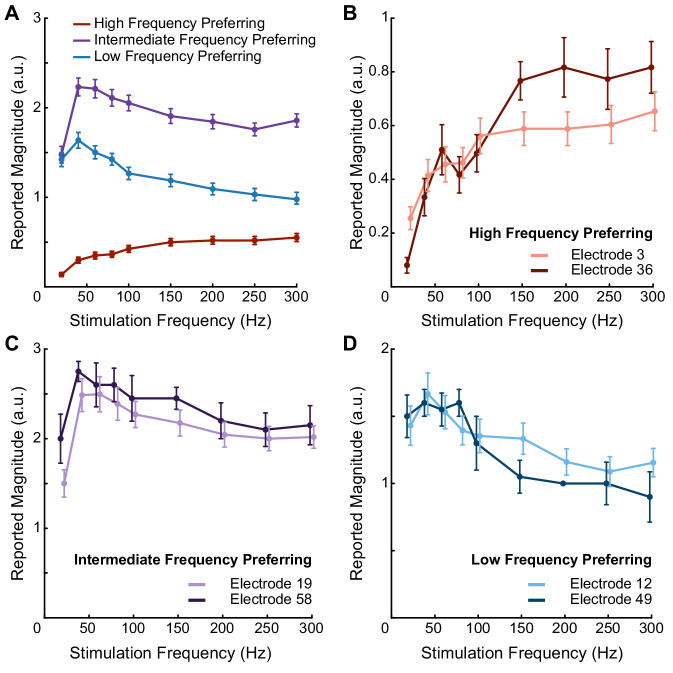
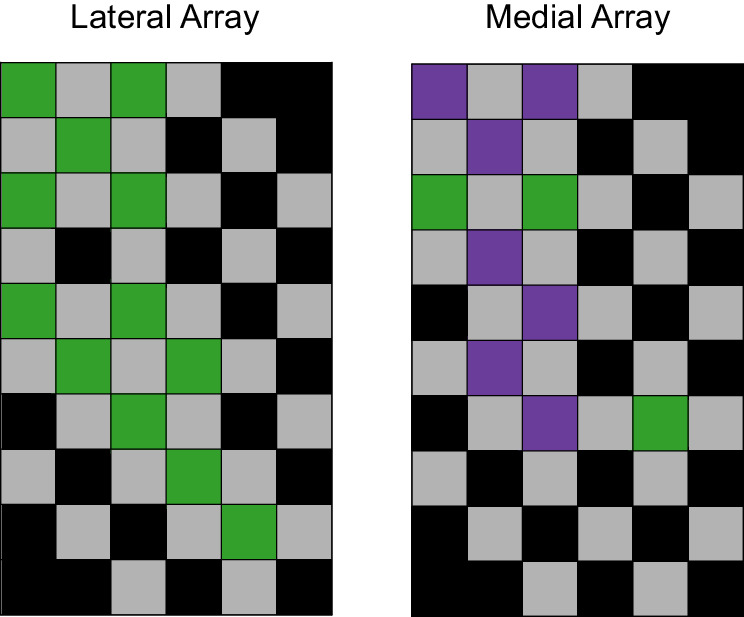
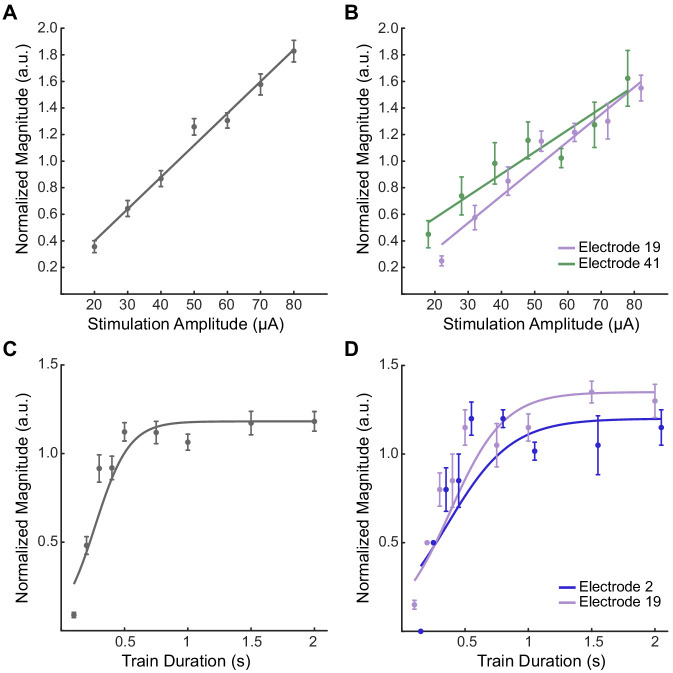
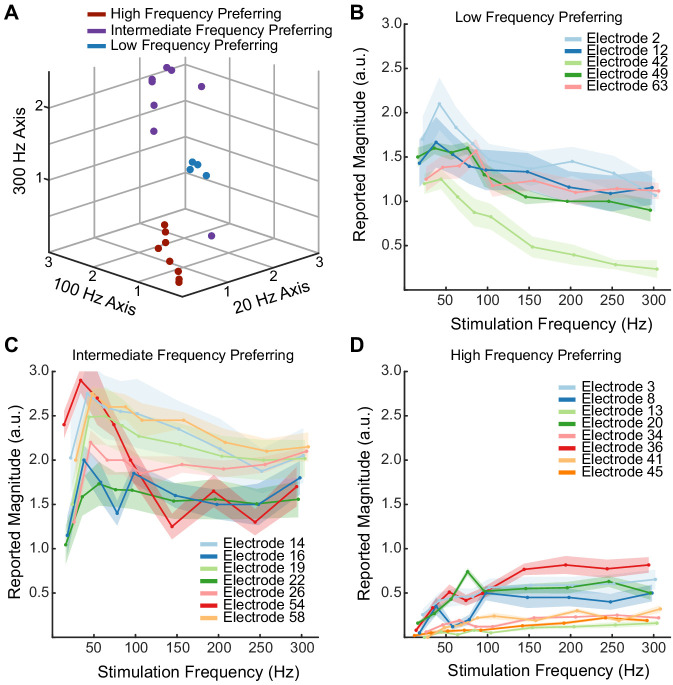
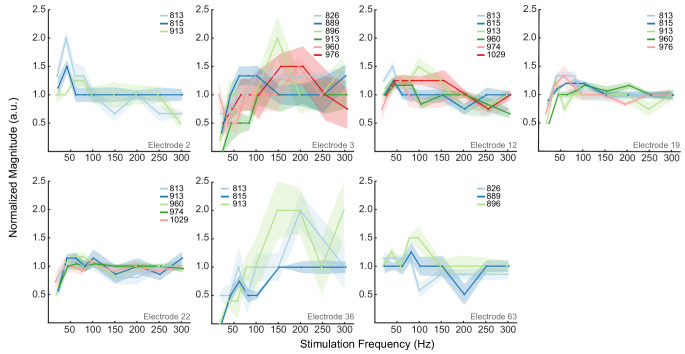
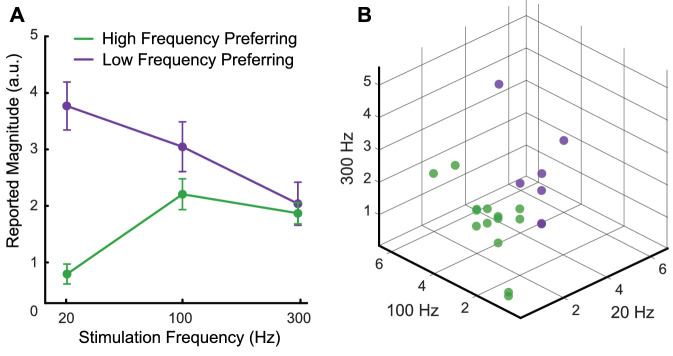
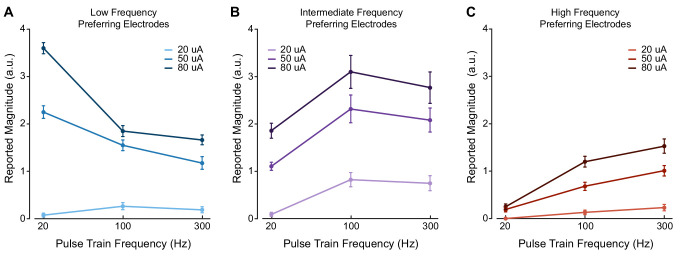
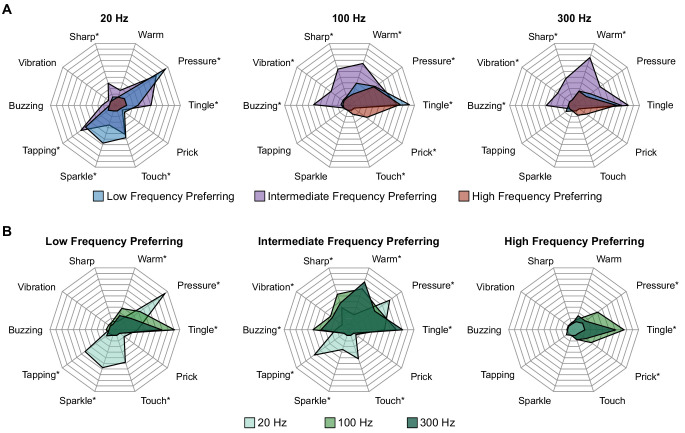
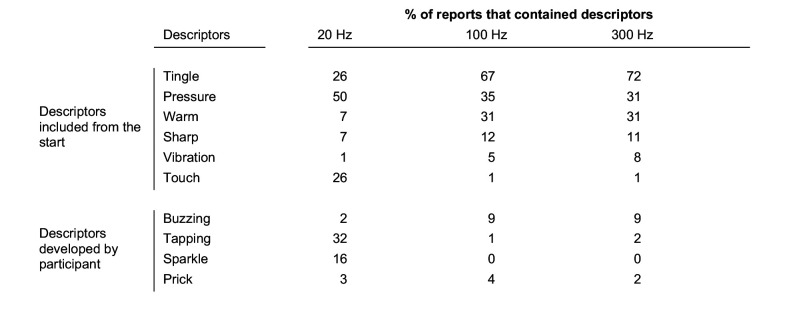
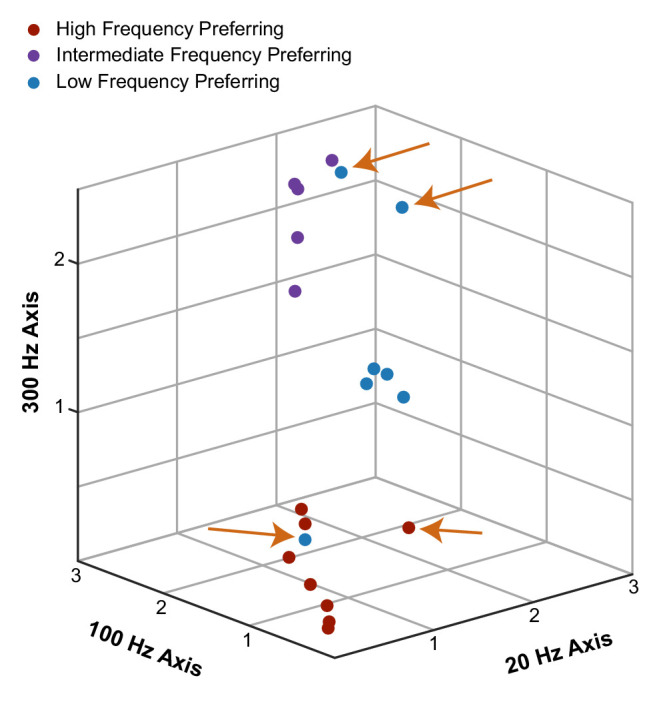
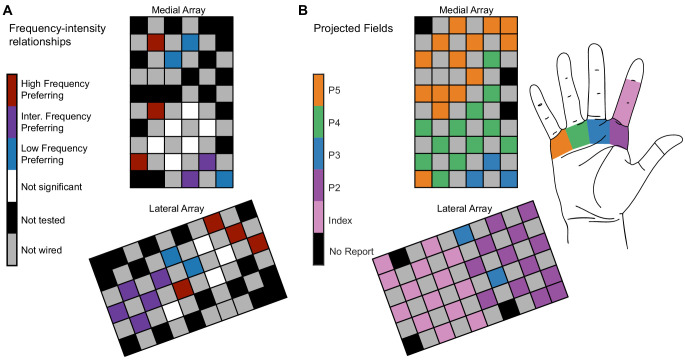
Microstimulation in the somatosensory cortex can evoke artificial tactile percepts and can be incorporated into bidirectional brain-computer interfaces (BCIs) to restore function after injury or disease. However, little is known about how stimulation parameters themselves affect perception. Here, we stimulated through microelectrode arrays implanted in the somatosensory cortex of two human participants with cervical spinal cord injury and varied the stimulus amplitude, frequency, and train duration. Increasing the amplitude and train duration increased the perceived intensity on all tested electrodes. Surprisingly, we found that increasing the frequency evoked more intense percepts on some electrodes but evoked less-intense percepts on other electrodes. These different frequency-intensity relationships were divided into three groups, which also evoked distinct percept qualities at different stimulus frequencies. Neighboring electrode sites were more likely to belong to the same group. These results support the idea that stimulation frequency directly controls tactile perception and that these different percepts may be related to the organization of somatosensory cortex, which will facilitate principled development of stimulation strategies for bidirectional BCIs.
在躯体感觉皮层进行微刺激可以诱发人为的触觉感知,并且可以整合到双向脑机接口 (BCI) 中,以在损伤或疾病后恢复功能。然而,对于刺激参数本身如何影响感知知之甚少。在这里,我们通过植入两名颈脊髓损伤患者躯体感觉皮层的微电极阵列进行刺激,并改变刺激幅度、频率和刺激串时长。增加刺激幅度和刺激串时长会增加所有测试电极的感知强度。令人惊讶的是,我们发现增加频率会在一些电极上引起更强烈的感知,但在其他电极上引起较弱的感知。这些不同的频率-强度关系分为三组,在不同的刺激频率下也会引起不同的感知质量。相邻的电极位点更有可能属于同一组。这些结果支持刺激频率直接控制触觉感知的观点,并且这些不同的感知可能与躯体感觉皮层的组织有关,这将有助于双向 BCI 刺激策略的原则性发展。