Estonian Young Academy of Sciences, Kohtu 6, 10130, Tallinn, Estonia.
Mycology and Microbiology Center, University of Tartu, Ravila 14a, 50411, Tartu, Estonia.
Sci Data. 2021 Jul 27;8(1):192. doi: 10.1038/s41597-021-00981-0.
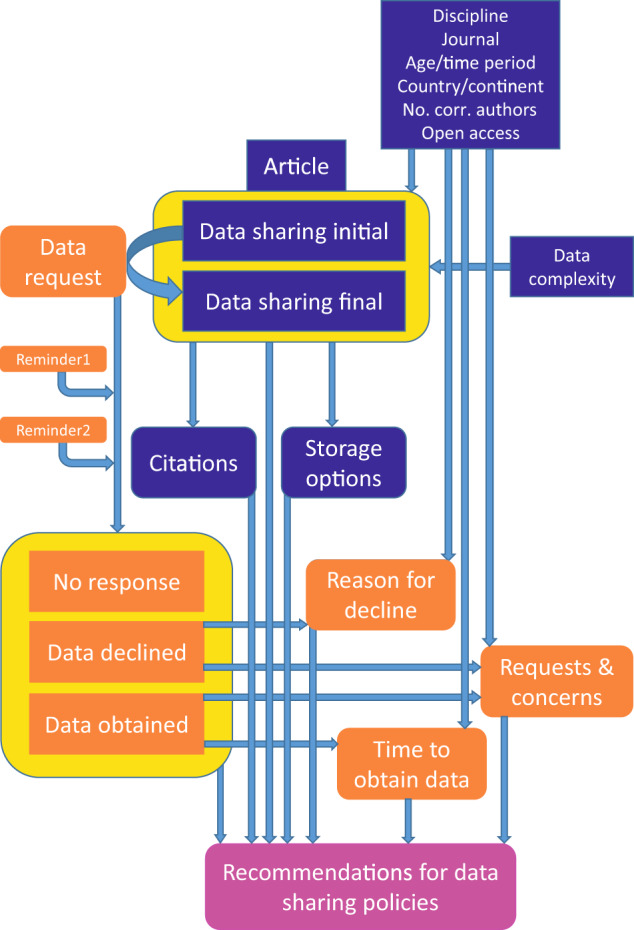
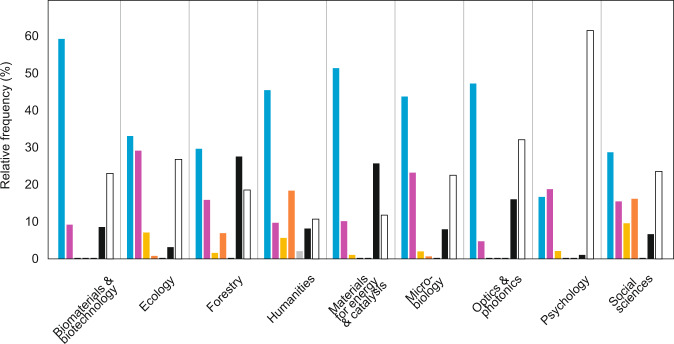
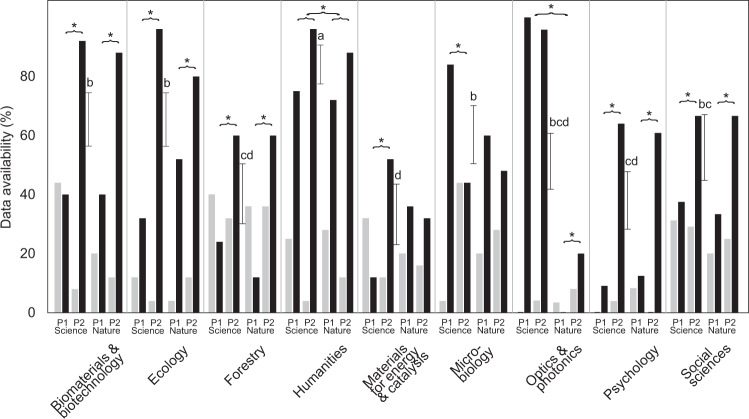
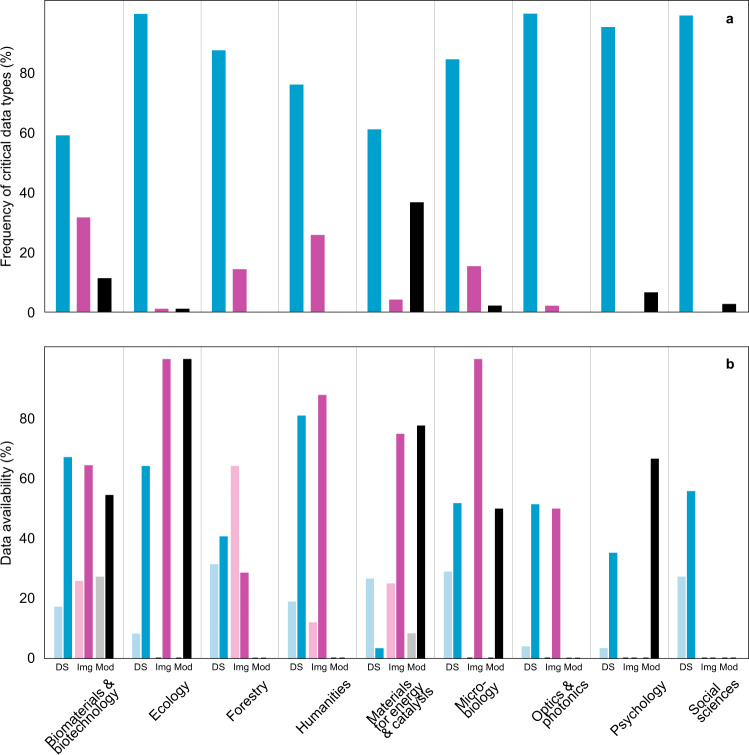
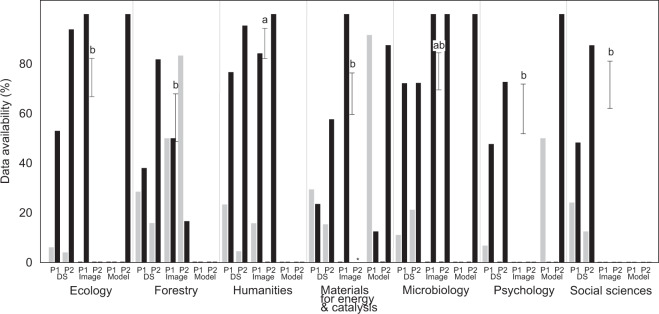
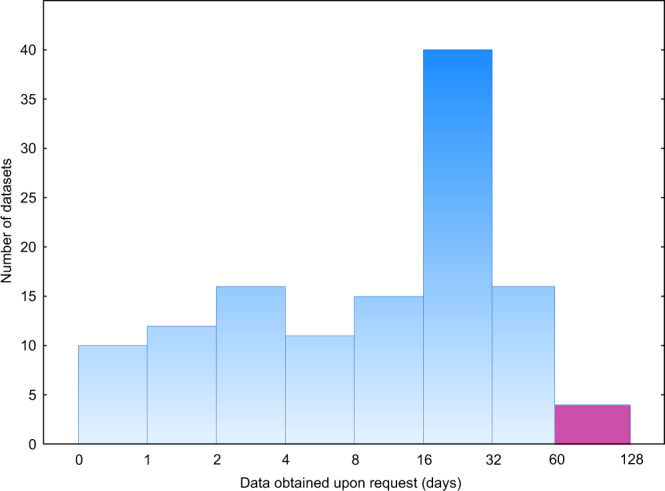
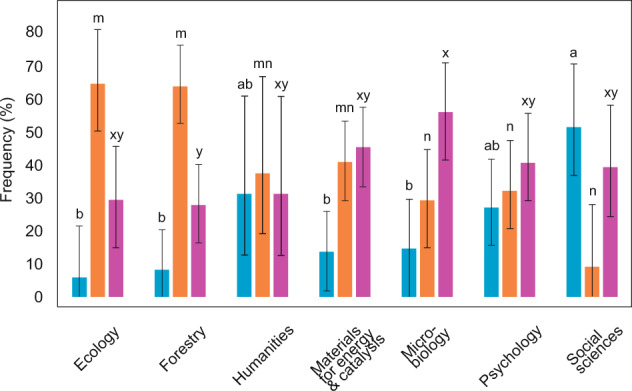
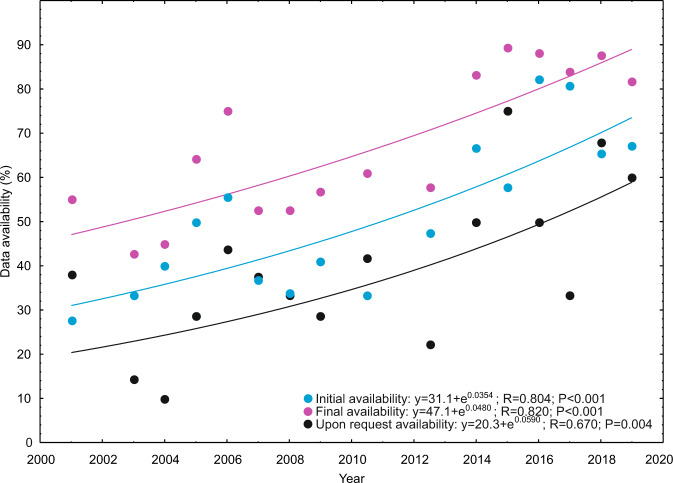
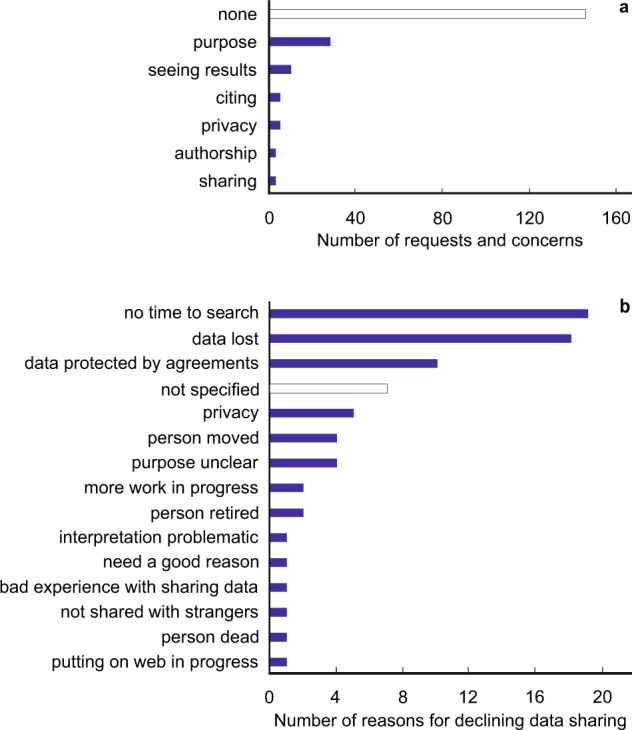
Data sharing is one of the cornerstones of modern science that enables large-scale analyses and reproducibility. We evaluated data availability in research articles across nine disciplines in Nature and Science magazines and recorded corresponding authors' concerns, requests and reasons for declining data sharing. Although data sharing has improved in the last decade and particularly in recent years, data availability and willingness to share data still differ greatly among disciplines. We observed that statements of data availability upon (reasonable) request are inefficient and should not be allowed by journals. To improve data sharing at the time of manuscript acceptance, researchers should be better motivated to release their data with real benefits such as recognition, or bonus points in grant and job applications. We recommend that data management costs should be covered by funding agencies; publicly available research data ought to be included in the evaluation of applications; and surveillance of data sharing should be enforced by both academic publishers and funders. These cross-discipline survey data are available from the plutoF repository.
数据共享是现代科学的基石之一,它使大规模分析和可重复性成为可能。我们评估了《自然》和《科学》杂志中九个学科的研究文章中的数据可用性,并记录了相应作者对数据共享的关注、请求和拒绝理由。尽管在过去十年中,数据共享有所改善,特别是近年来,但数据可用性和愿意共享数据的意愿在不同学科之间仍然存在很大差异。我们观察到,在(合理)请求时声明数据可用性的做法效率低下,不应被期刊允许。为了在 manuscript acceptance 时提高数据共享,应该更好地激励研究人员发布数据,给予他们实际的好处,如认可或在 grant 和工作申请中获得加分。我们建议由资助机构承担数据管理成本;应将公开可用的研究数据纳入申请评估;学术出版商和资助者都应加强对数据共享的监督。这些跨学科调查数据可从 plutoF 存储库中获得。