Department of Microbiology, Immunology and Molecular Genetics, University of Texas Health Science Center at San Antonio, San Antonio, TX, United States.
Department of Gastroenterology, Second Xiangya Hospital of Central South University, Changsha, China.
Front Immunol. 2021 Jul 15;12:712632. doi: 10.3389/fimmu.2021.712632. eCollection 2021.
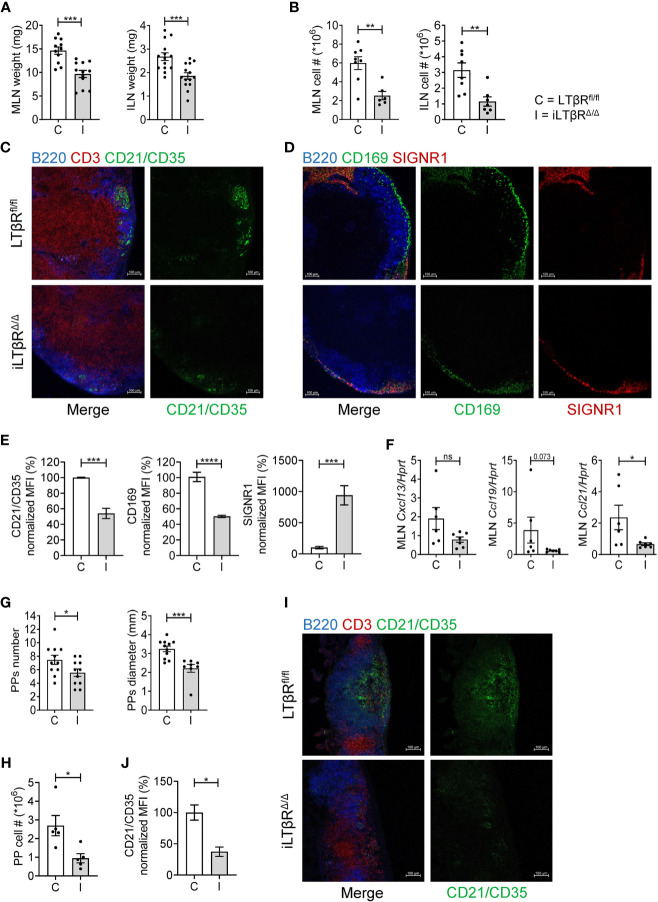
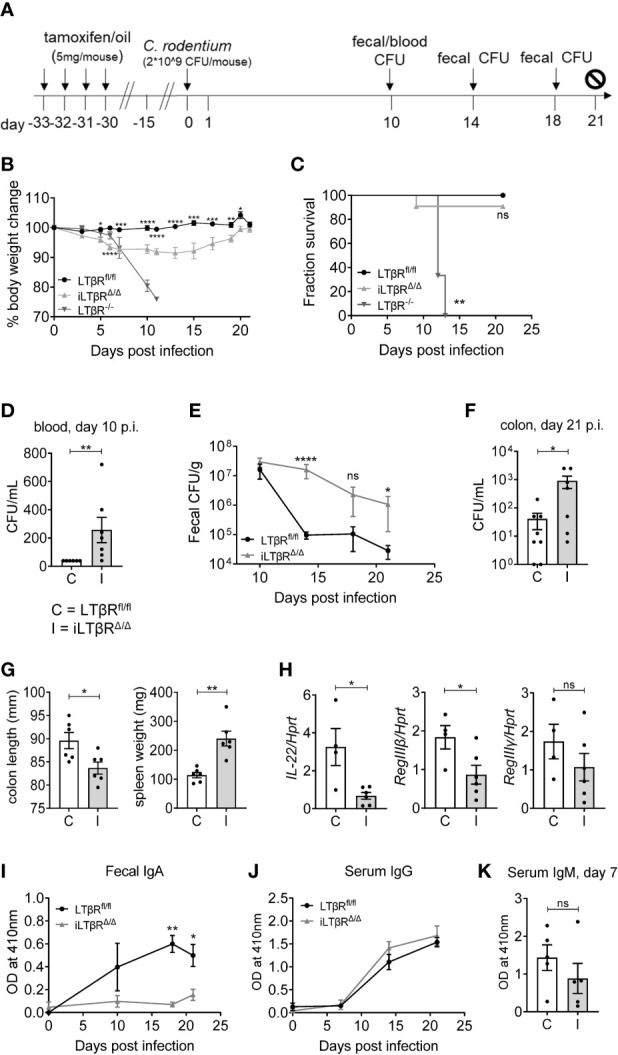
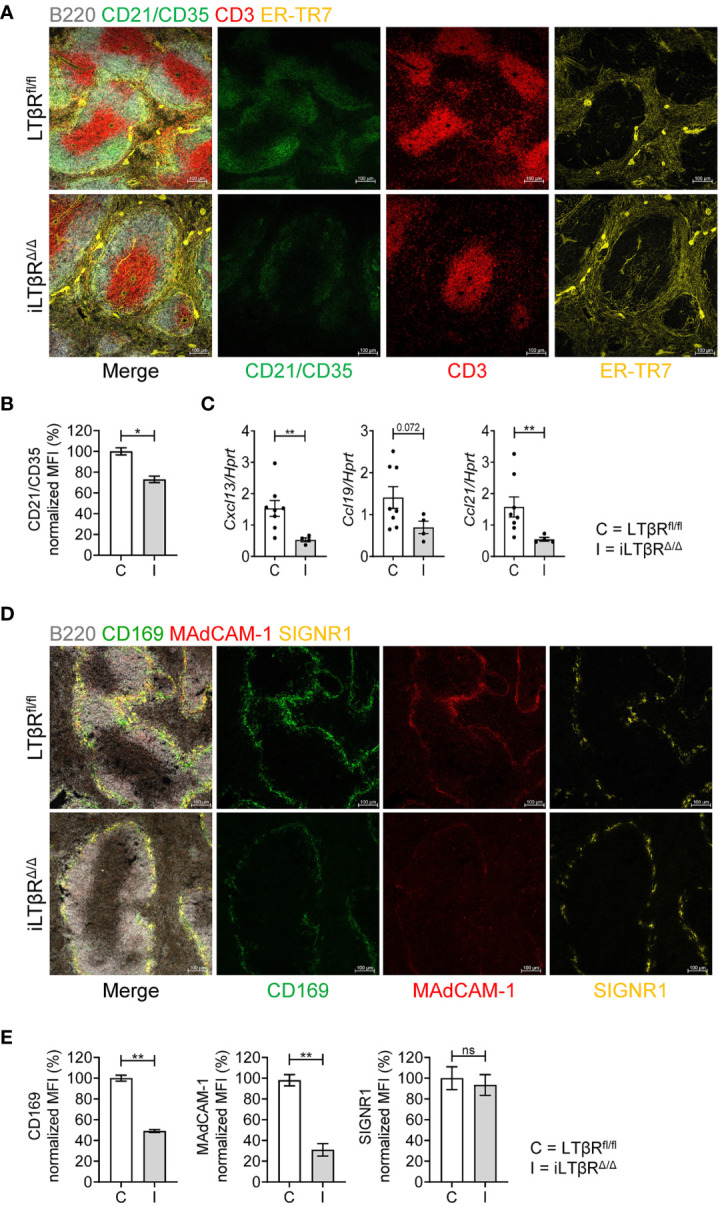
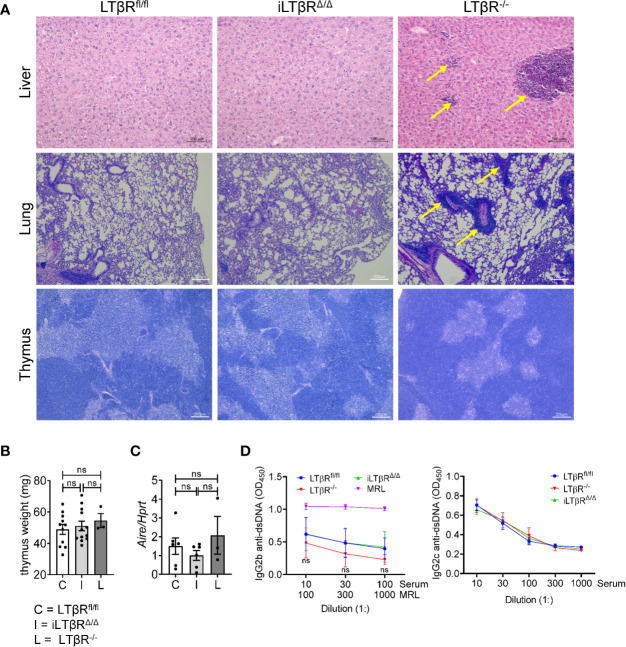
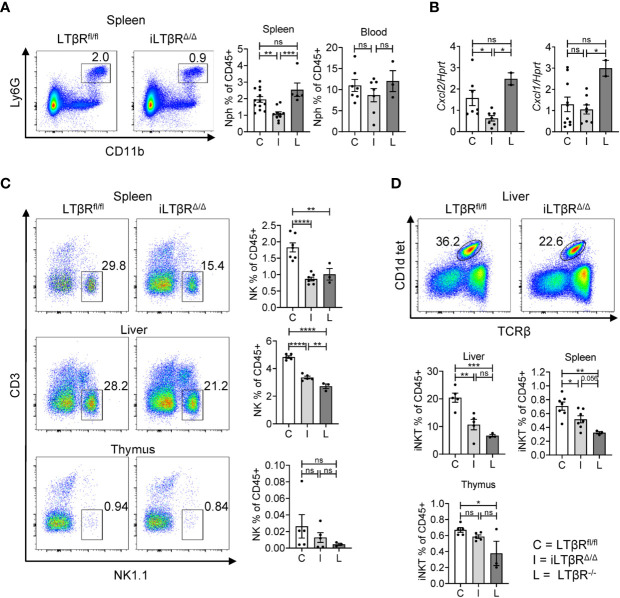
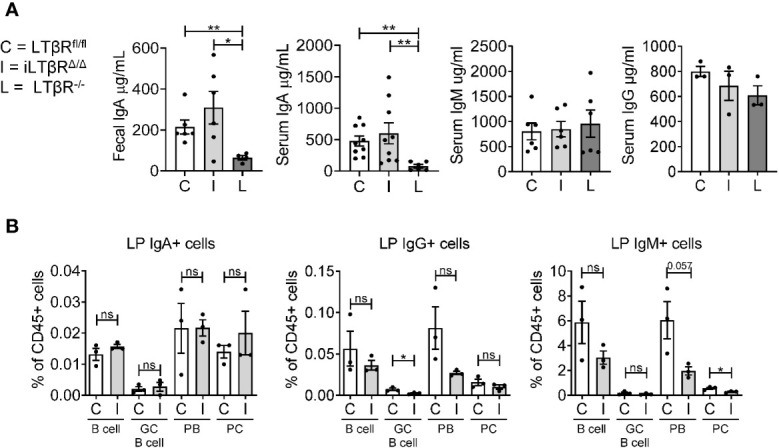
Lymphotoxin beta receptor (LTβR) is a promising therapeutic target in autoimmune and infectious diseases as well as cancer. Mice with genetic inactivation of LTβR display multiple defects in development and organization of lymphoid organs, mucosal immune responses, IgA production and an autoimmune phenotype. As these defects are imprinted in embryogenesis and neonate stages, the impact of LTβR signaling in adulthood remains unclear. Here, to overcome developmental defects, we generated mice with inducible ubiquitous genetic inactivation of LTβR in adult mice (iLTβR mice) and redefined the role of LTβR signaling in organization of lymphoid organs, immune response to mucosal bacterial pathogen, IgA production and autoimmunity. In spleen, postnatal LTβR signaling is required for development of B cell follicles, follicular dendritic cells (FDCs), recruitment of neutrophils and maintenance of the marginal zone. Lymph nodes of iLTβR mice were reduced in size, lacked FDCs, and had disorganized subcapsular sinus macrophages. Peyer`s patches were smaller in size and numbers, and displayed reduced FDCs. The number of isolated lymphoid follicles in small intestine and colon were also reduced. In contrast to LTβR mice, iLTβR mice displayed normal thymus structure and did not develop signs of systemic inflammation and autoimmunity. Further, our results suggest that LTβR signaling in adulthood is required for homeostasis of neutrophils, NK, and iNKT cells, but is dispensable for the maintenance of polyclonal IgA production. However, iLTβR mice exhibited an increased sensitivity to infection and failed to develop pathogen-specific IgA responses. Collectively, our study uncovers new insights of LTβR signaling in adulthood for the maintenance of lymphoid organs, neutrophils, NK and iNKT cells, and IgA production in response to mucosal bacterial pathogen.
淋巴毒素β受体(LTβR)是治疗自身免疫和传染病以及癌症的有前途的治疗靶点。LTβR 基因敲除的小鼠在淋巴器官的发育和组织、黏膜免疫反应、IgA 产生和自身免疫表型方面存在多种缺陷。由于这些缺陷在胚胎发生和新生儿阶段被印记,LTβR 信号在成年期的影响尚不清楚。在这里,为了克服发育缺陷,我们在成年小鼠中生成了可诱导的普遍遗传敲除 LTβR 的小鼠(iLTβR 小鼠),并重新定义了 LTβR 信号在淋巴器官组织、对黏膜细菌病原体的免疫反应、IgA 产生和自身免疫中的作用。在脾脏中,LTβR 信号在出生后对于 B 细胞滤泡、滤泡树突状细胞(FDC)、中性粒细胞的募集和边缘区的维持是必需的。iLTβR 小鼠的淋巴结体积减小,缺乏 FDC,并且副皮质窦巨噬细胞排列紊乱。派伊尔氏斑体积较小,数量减少,并且 FDC 减少。小肠和结肠中分离的淋巴滤泡数量也减少。与 LTβR 小鼠不同,iLTβR 小鼠的胸腺结构正常,没有出现全身炎症和自身免疫的迹象。此外,我们的结果表明,成年期的 LTβR 信号对于中性粒细胞、NK 和 iNKT 细胞的稳态是必需的,但对于多克隆 IgA 产生的维持是可有可无的。然而,iLTβR 小鼠对 感染的敏感性增加,并且未能产生针对病原体的特异性 IgA 反应。总之,我们的研究揭示了成年期 LTβR 信号在维持淋巴器官、中性粒细胞、NK 和 iNKT 细胞以及对黏膜细菌病原体的 IgA 产生中的新作用。