ISGlobal, Hospital Clínic-Universitat de Barcelona, Barcelona, Catalonia, Spain.
INSERM U1016, Centre National de la Recherche Scientifique (CNRS) Unité Mixte de Recherche (UMR) 8104, Université de Paris, Institut Cochingrid.462098.1, Paris, France.
mBio. 2021 Aug 31;12(4):e0163621. doi: 10.1128/mBio.01636-21. Epub 2021 Aug 3.
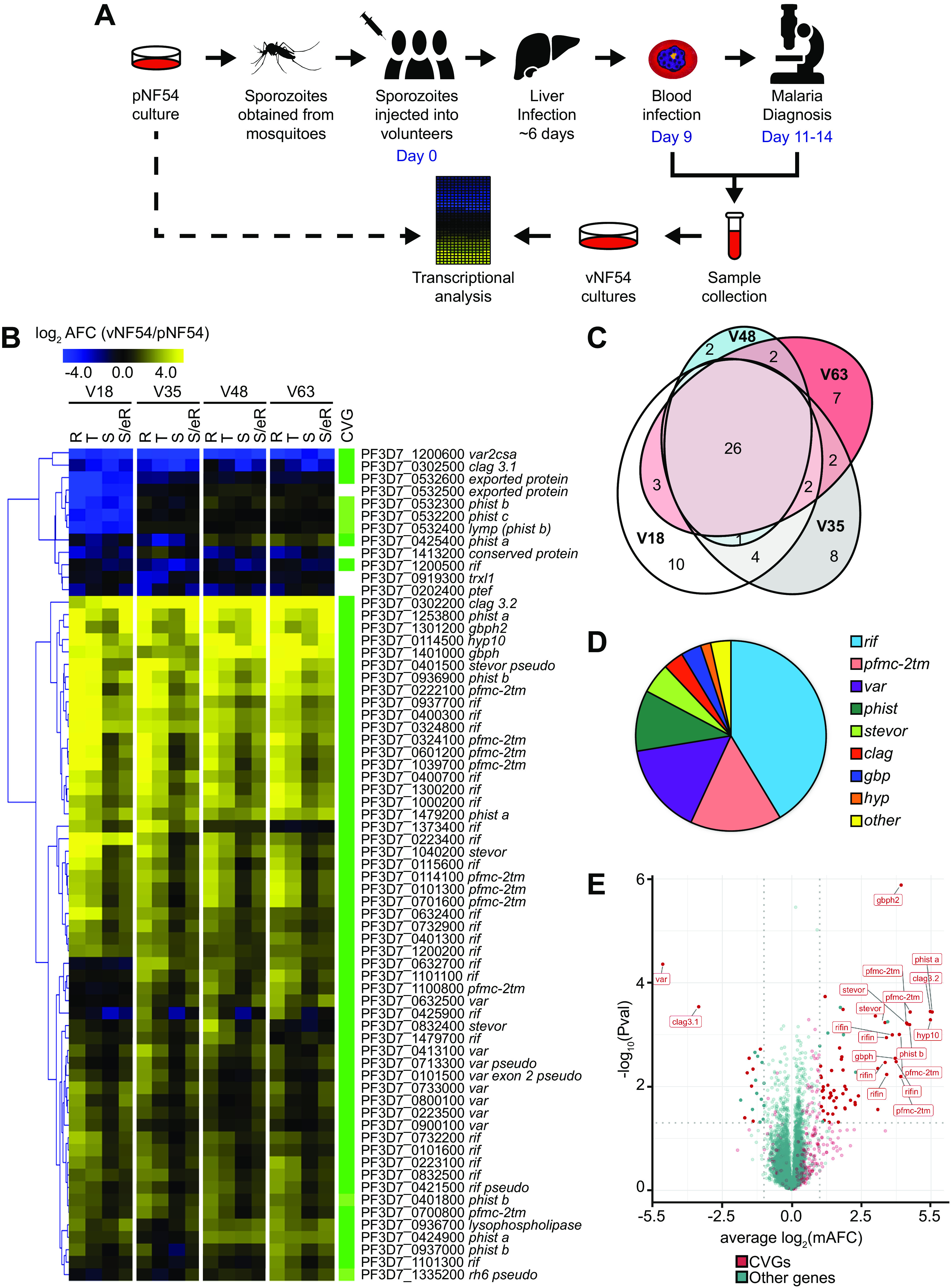
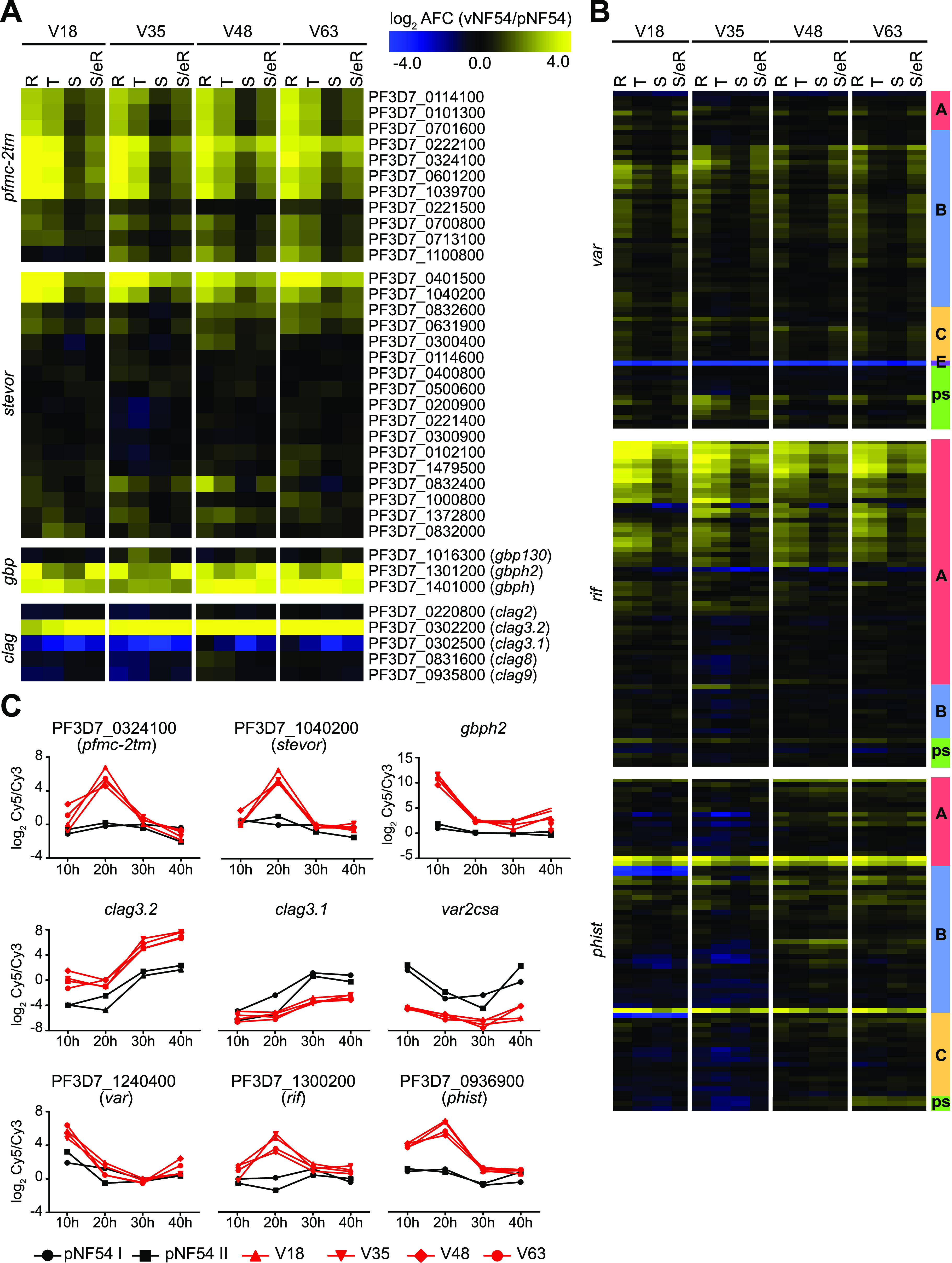
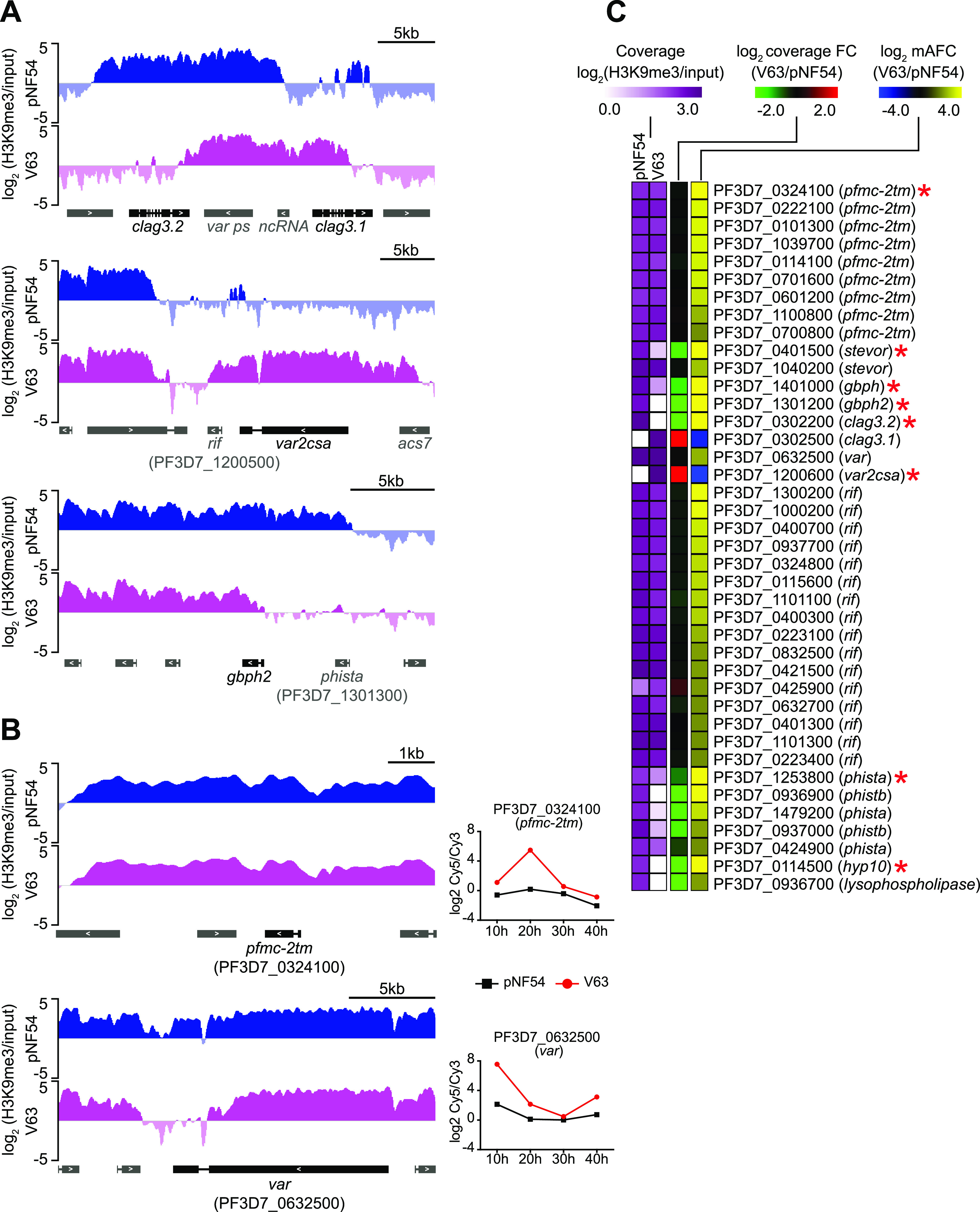
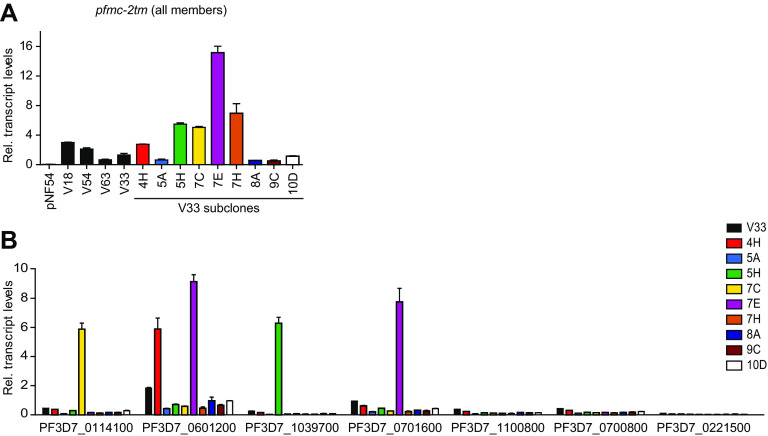
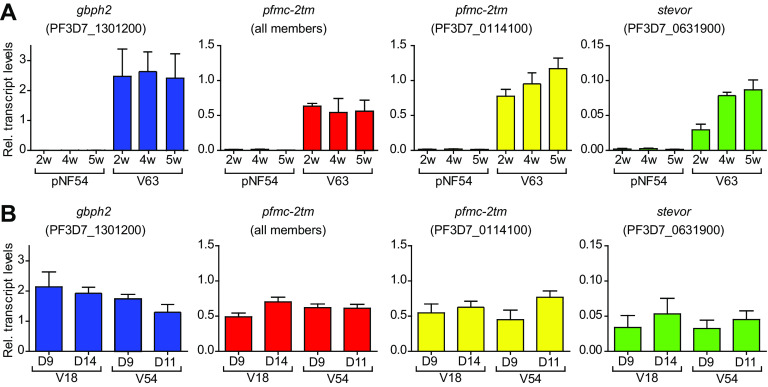
Clonally variant genes (CVGs) play fundamental roles in the adaptation of Plasmodium falciparum to fluctuating conditions of the human host. However, their expression patterns under the natural conditions of the blood circulation have been characterized in detail for only a few specific gene families. Here, we provide a detailed characterization of the complete P. falciparum transcriptome across the full intraerythrocytic development cycle (IDC) at the onset of a blood infection in malaria-naive human volunteers. We found that the vast majority of transcriptional differences between parasites obtained from the volunteers and the parental parasite line maintained in culture occurred in CVGs. In particular, we observed a major increase in the transcript levels of most genes of the and families and of specific genes of other families, such as , , , or , in addition to previously reported changes in and gene expression. Increased transcript levels of individual , , and genes involved activation in small subsets of parasites. Large transcriptional differences correlated with changes in the distribution of heterochromatin, confirming their epigenetic nature. Furthermore, the similar expression of several CVGs between parasites collected at different time points along the blood infection suggests that the epigenetic memory for multiple CVG families is lost during transmission stages, resulting in a reset of their transcriptional state. Finally, the CVG expression patterns observed in a volunteer likely infected by a single sporozoite suggest that new epigenetic patterns are established during liver stages. The ability of malaria parasites to adapt to changes in the human blood environment, where they produce long-term infection associated with clinical symptoms, is fundamental for their survival. CVGs, regulated at the epigenetic level, play a major role in this adaptive process, as changes in the expression of these genes result in alterations in the antigenic and functional properties of the parasites. However, how these genes are expressed under the natural conditions of the human circulation and how their expression is affected by passage through transmission stages are not well understood. Here, we provide a comprehensive characterization of the expression patterns of these genes at the onset of human blood infections, which reveals major differences with -cultured parasites. We also show that, during transmission stages, the previous expression patterns for many CVG families are lost, and new patterns are established.
克隆变异基因 (CVG) 在疟原虫适应人类宿主不断变化的环境中发挥着重要作用。然而,只有少数特定基因家族的 CVG 在血液循环的自然条件下的表达模式得到了详细描述。在这里,我们在疟疾初发志愿者的血液感染开始时,全面描述了整个疟原虫完整的红细胞内发育周期 (IDC) 转录组。我们发现,志愿者来源的寄生虫与在培养中维持的亲本寄生虫株之间的绝大多数转录差异都发生在 CVG 中。特别是,我们观察到大多数 和 家族的基因以及其他家族的特定基因(如 、 、 或 )的转录水平显著增加,除了先前报道的 和 基因表达变化外。参与小部分寄生虫激活的个别 、 和 基因的转录水平升高。大的转录差异与异染色质分布的变化相关,证实了它们的表观遗传性质。此外,在沿血液感染的不同时间点收集的寄生虫中,多个 CVG 的相似表达表明,在传播阶段,多个 CVG 家族的表观遗传记忆丢失,导致其转录状态重置。最后,志愿者中观察到的 CVG 表达模式可能是由单个子孢子感染引起的,这表明在肝脏阶段建立了新的表观遗传模式。疟原虫适应人类血液环境的能力,在这种环境中它们产生与临床症状相关的长期感染,是它们生存的基础。受表观遗传调控的 CVG 在这个适应过程中发挥着重要作用,因为这些基因表达的变化导致寄生虫抗原性和功能特性的改变。然而,这些基因在人类循环的自然条件下是如何表达的,以及它们的表达如何受到通过传播阶段的影响,目前还不是很清楚。在这里,我们在人类血液感染开始时全面描述了这些基因的表达模式,这揭示了与培养寄生虫的主要差异。我们还表明,在传播阶段,许多 CVG 家族的先前表达模式丢失,并且建立了新的模式。