Department of Genetic Medicine and Development, iGE3 and Centre Facultaire du Diabète, Faculty of Medicine, University of Geneva, Geneva, Switzerland.
Present address: Department of Cell Biology, Duke University Medical Center, Durham, NC, USA.
BMC Genomics. 2021 Aug 2;22(1):585. doi: 10.1186/s12864-021-07812-x.
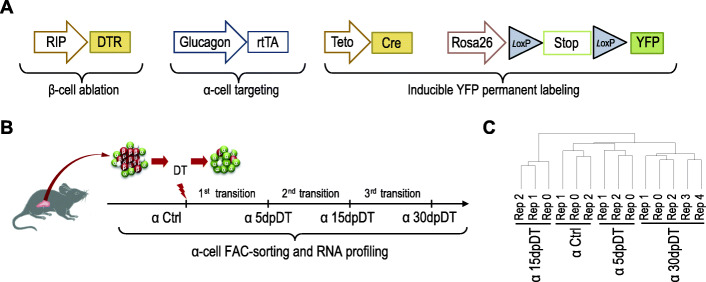
Loss of pancreatic insulin-secreting β-cells due to metabolic or autoimmune damage leads to the development of diabetes. The discovery that α-cells can be efficiently reprogrammed into insulin-secreting cells in mice and humans has opened promising avenues for innovative diabetes therapies. β-cell loss triggers spontaneous reprogramming of only 1-2% of α-cells, limiting the extent of regeneration. Most α-cells are refractory to conversion and their global transcriptomic response to severe β-cell loss as well as the mechanisms opposing their reprogramming into insulin producers are largely unknown. Here, we performed RNA-seq on FAC-sorted α-cells to characterize their global transcriptional responses at different time points after massive β-cell ablation.
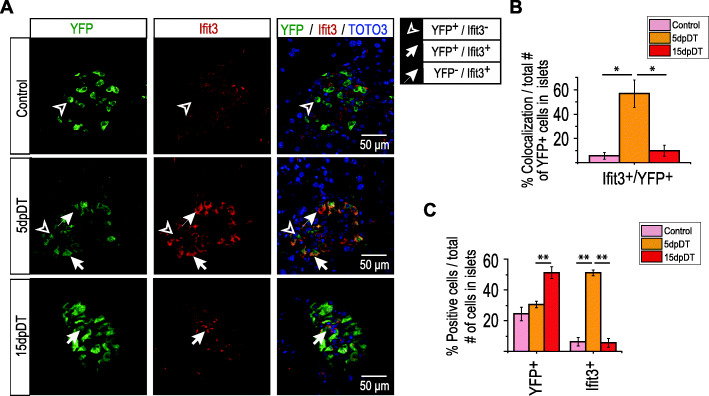
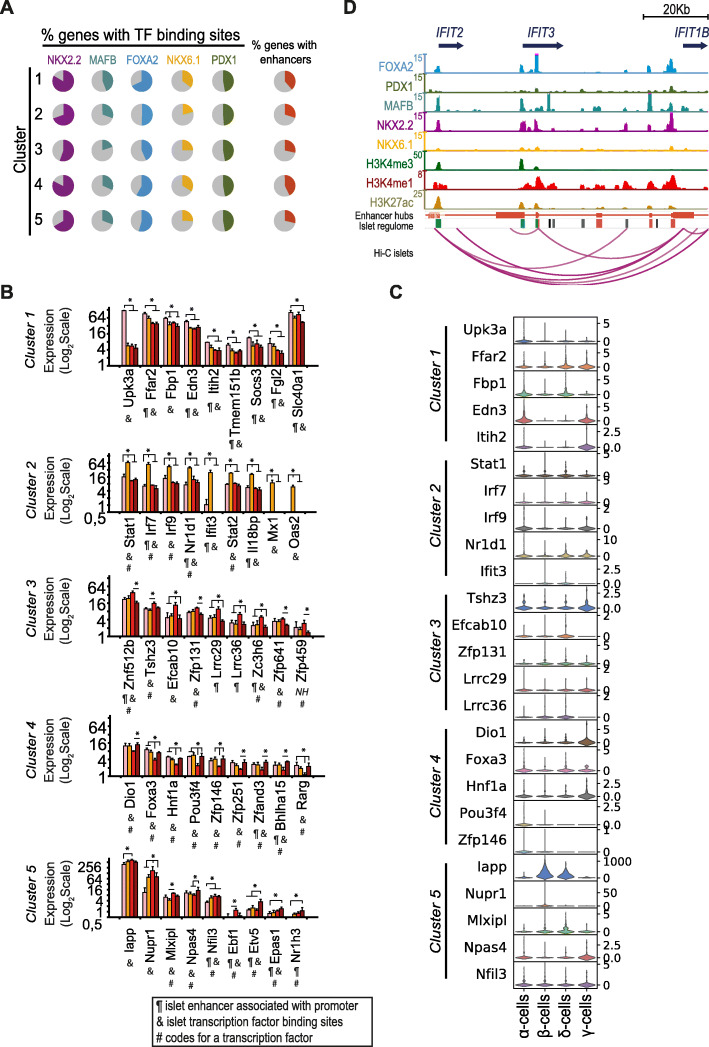
Our results show that α-cells undergo stage-specific transcriptional changes 5- and 15-days post-diphtheria toxin (DT)-mediated β-cell ablation. At 5 days, α-cells transiently upregulate various genes associated with interferon signaling and proliferation, including Interferon Induced Protein with Tetratricopeptide Repeats 3 (Ifit3). Subsequently, at 15 days post β-cell ablation, α-cells undergo a transient downregulation of genes from several pathways including Insulin receptor, mTOR and MET signaling.
The results presented here pinpoint novel markers discriminating α-cells at different stages after acute β-cell loss, and highlight additional signaling pathways that are modulated in α-cells in this context.
代谢或自身免疫损伤导致的胰岛β细胞丧失会引发糖尿病。在小鼠和人类中发现α细胞可以被有效地重编程为胰岛素分泌细胞,这为创新的糖尿病治疗方法开辟了有希望的途径。β细胞的丧失仅触发 1-2%的α细胞自发重编程,限制了再生的程度。大多数α细胞对转化具有抗性,其对严重β细胞丧失的整体转录组反应以及阻止其重编程为胰岛素产生细胞的机制在很大程度上尚不清楚。在这里,我们对 FAC 分选的α细胞进行了 RNA-seq 分析,以在β细胞大量消融后不同时间点表征其整体转录反应。
我们的结果表明,α细胞在白喉毒素(DT)介导的β细胞消融后 5 和 15 天经历特定于阶段的转录变化。在 5 天,α细胞短暂地上调与干扰素信号和增殖相关的各种基因,包括干扰素诱导的四肽重复蛋白 3(Ifit3)。随后,在β细胞消融后 15 天,α细胞经历了几个途径的基因短暂下调,包括胰岛素受体、mTOR 和 MET 信号通路。
这里呈现的结果指出了急性β细胞丧失后不同阶段区分α细胞的新标记,并强调了在这种情况下α细胞中调节的其他信号通路。