Research Institute of Internal Medicine, Oslo University Hospital, Rikshospitalet and University of Oslo, Oslo, Norway.
Institute for Surgical Research, Oslo University Hospital and University of Oslo, Oslo, Norway.
Elife. 2021 Aug 3;10:e59828. doi: 10.7554/eLife.59828.
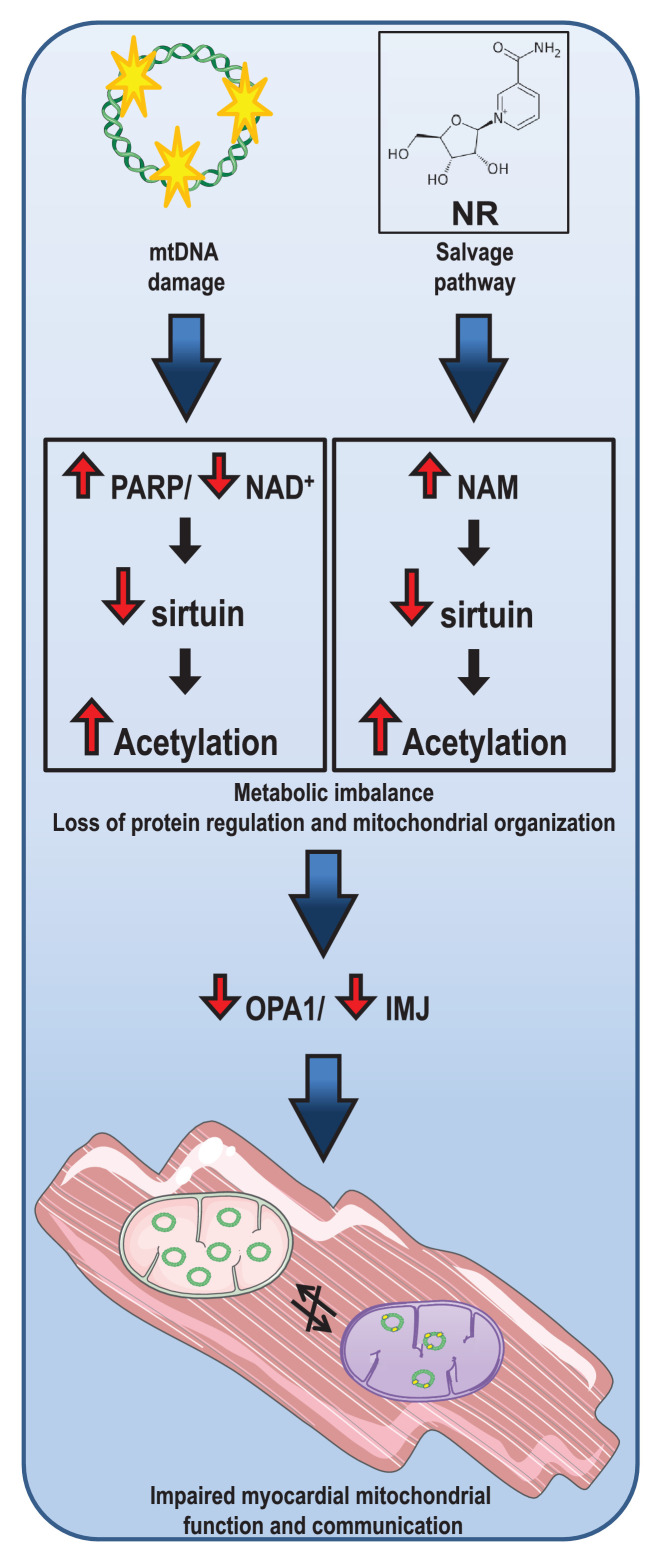
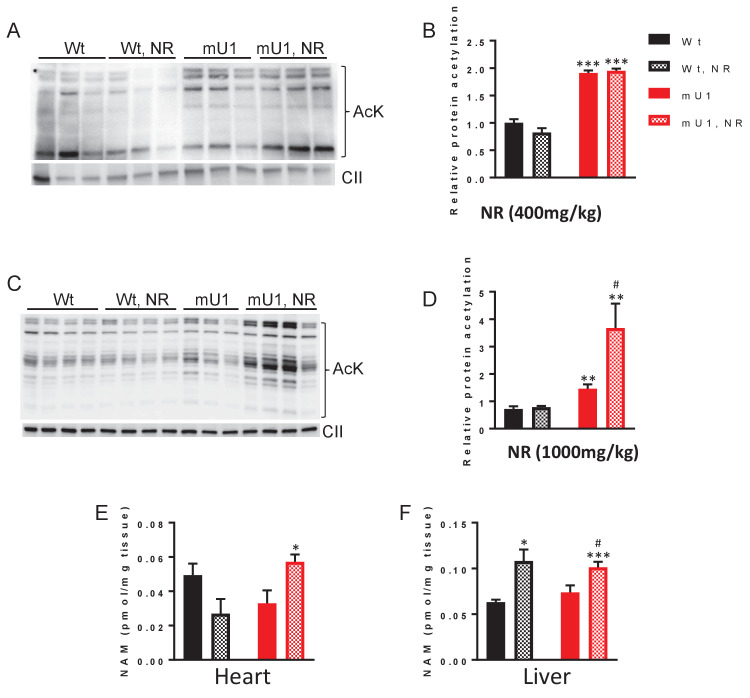
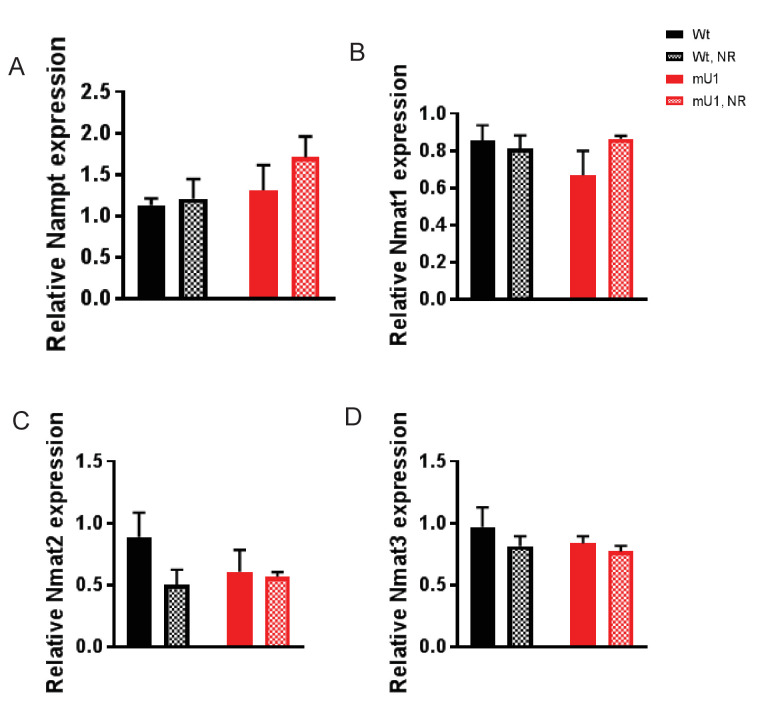
Poly(ADP-ribose) polymerase (PARP) enzymes initiate (mt)DNA repair mechanisms and use nicotinamide adenine dinucleotide (NAD) as energy source. Prolonged PARP activity can drain cellular NAD reserves, leading to de-regulation of important molecular processes. Here, we provide evidence of a pathophysiological mechanism that connects mtDNA damage to cardiac dysfunction via reduced NAD levels and loss of mitochondrial function and communication. Using a transgenic model, we demonstrate that high levels of mice cardiomyocyte mtDNA damage cause a reduction in NAD levels due to extreme DNA repair activity, causing impaired activation of NAD-dependent SIRT3. In addition, we show that myocardial mtDNA damage in combination with high dosages of nicotinamideriboside (NR) causes an inhibition of sirtuin activity due to accumulation of nicotinamide (NAM), in addition to irregular cardiac mitochondrial morphology. Consequently, high doses of NR should be used with caution, especially when cardiomyopathic symptoms are caused by mitochondrial dysfunction and instability of mtDNA.
聚(ADP-核糖)聚合酶(PARP)酶启动(mt)DNA 修复机制,并将烟酰胺腺嘌呤二核苷酸(NAD)用作能量来源。PARP 活性的持续延长会耗尽细胞内 NAD 储备,导致重要分子过程失调。在这里,我们提供了一种病理生理机制的证据,该机制通过降低 NAD 水平以及线粒体功能和通讯的丧失,将 mtDNA 损伤与心脏功能障碍联系起来。使用转基因模型,我们证明了高水平的小鼠心肌细胞 mtDNA 损伤由于极端的 DNA 修复活性导致 NAD 水平降低,从而导致 NAD 依赖性 SIRT3 的激活受损。此外,我们还表明,心肌 mtDNA 损伤与高剂量烟酰胺核糖(NR)结合会导致烟酰胺(NAM)的积累,从而抑制 Sirtuin 活性,此外还有不规则的心脏线粒体形态。因此,应谨慎使用高剂量的 NR,尤其是当心肌病症状是由线粒体功能障碍和 mtDNA 不稳定性引起时。