College of Optometry, University of Houston, 4901 Calhoun Road, Houston, TX, 77204-2020, USA.
Department of Bioengineering, Rice University, Houston, TX, 77030, USA.
BMC Immunol. 2021 Aug 4;22(1):52. doi: 10.1186/s12865-021-00443-7.
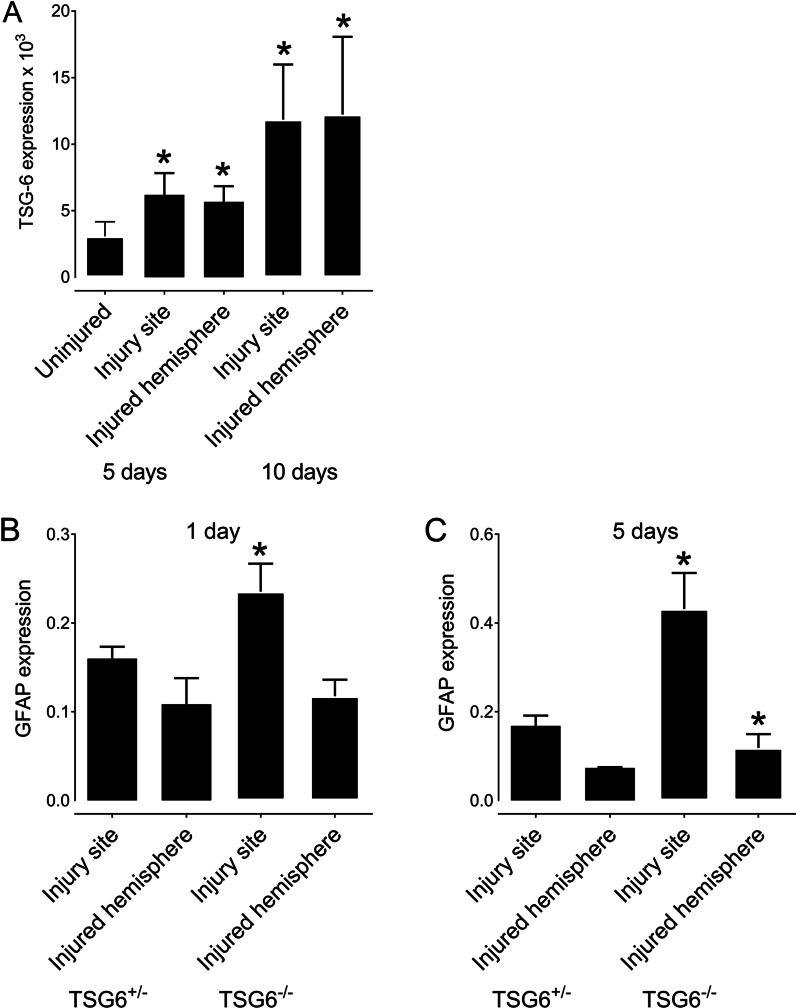
Current research suggests that the glial scar surrounding penetrating brain injuries is instrumental in preserving the surrounding uninjured tissue by limiting the inflammatory response to the injury site. We recently showed that tumor necrosis factor (TNF)-stimulated gene-6 (TSG-6), a well-established anti-inflammatory molecule, is present within the glial scar. In the present study we investigated the role of TSG-6 within the glial scar using TSG-6 null and littermate control mice subjected to penetrating brain injuries.
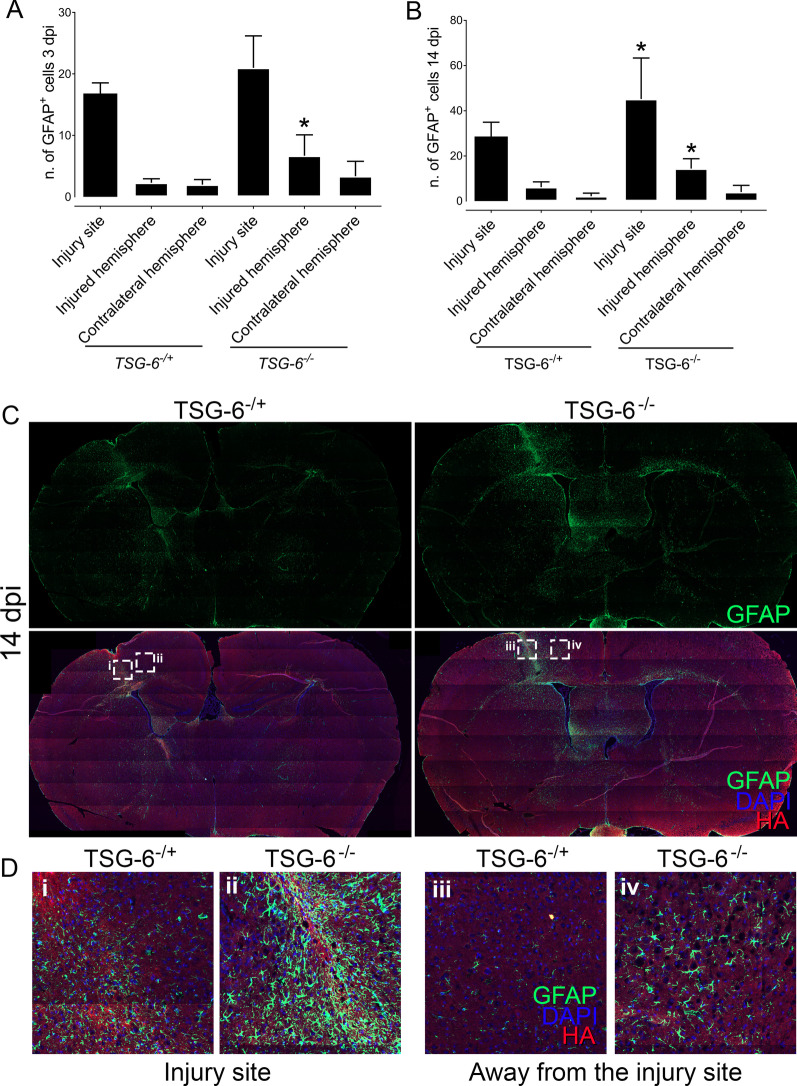
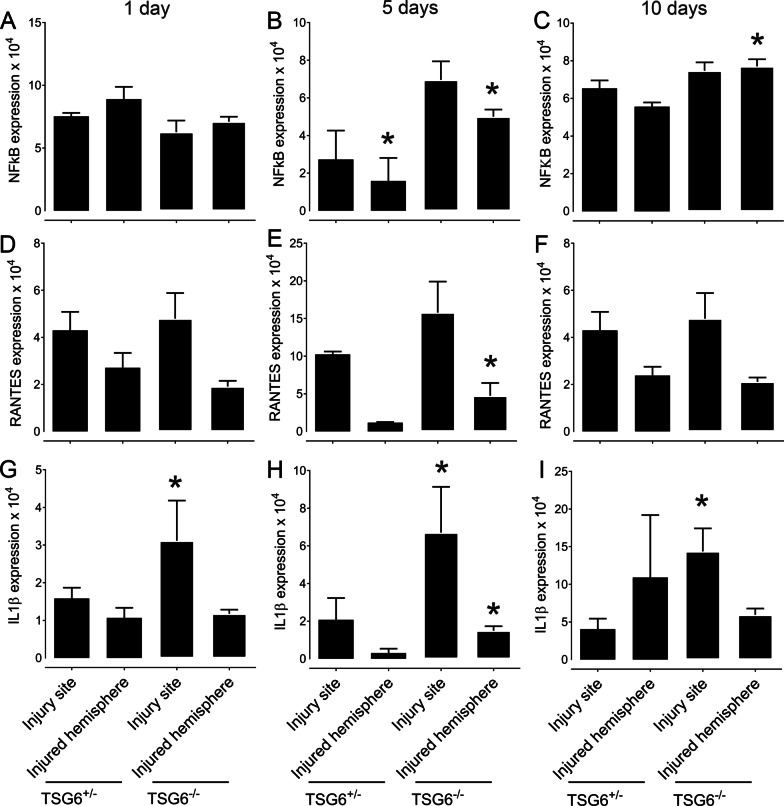
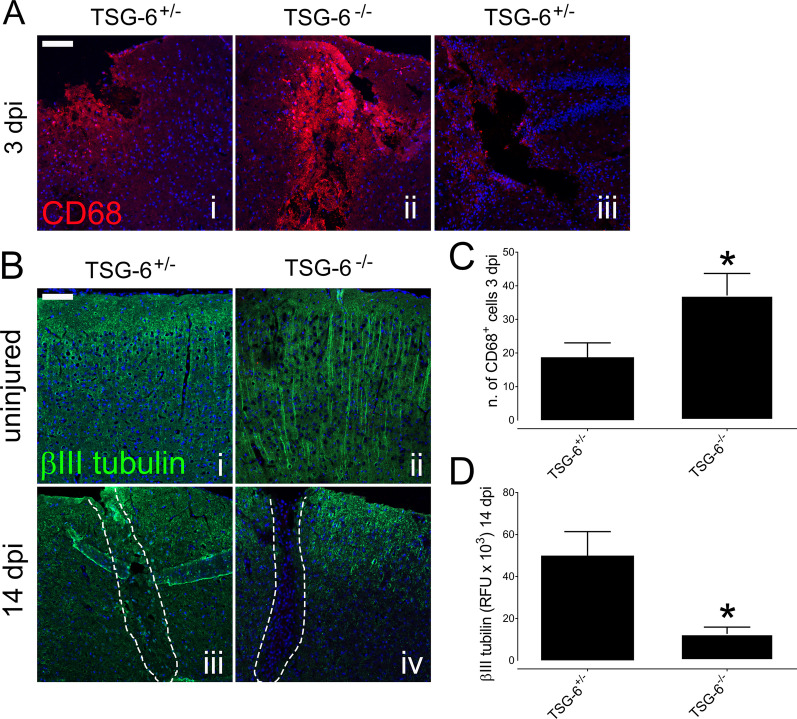
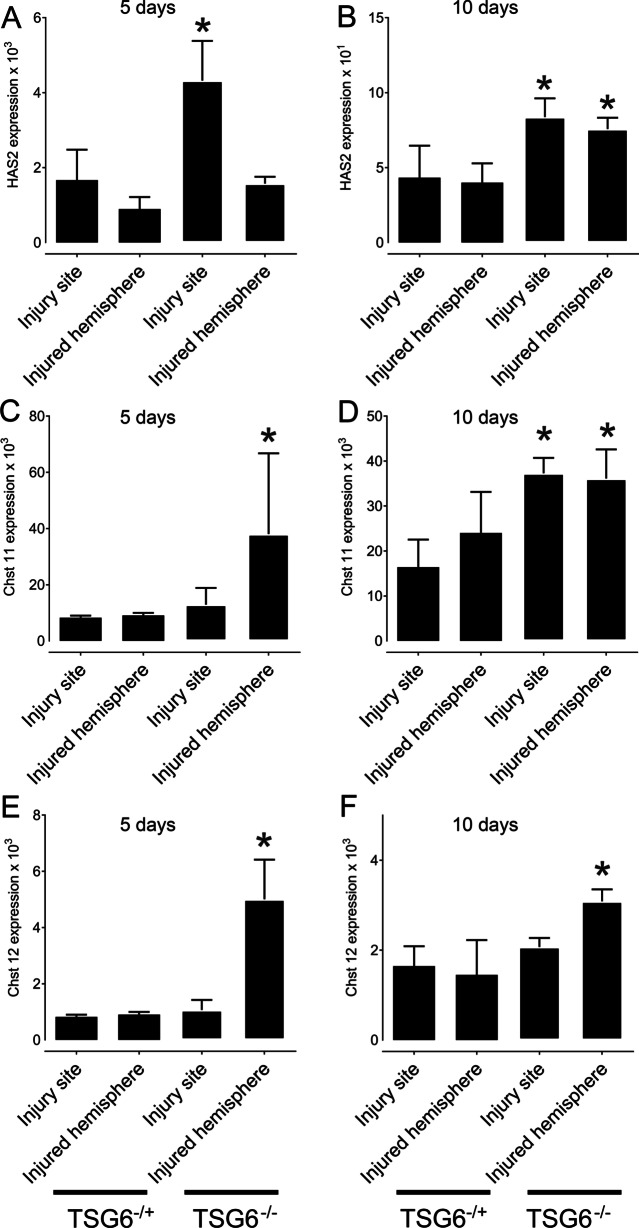
Our findings show that mice lacking TSG-6 present a more severe inflammatory response after injury, which was correlated with an enlarged area of astrogliosis beyond the injury site.
Our data provides evidence that TSG-6 has an anti-inflammatory role within the glial scar.
目前的研究表明,穿透性脑损伤周围的神经胶质瘢痕通过限制损伤部位的炎症反应,对周围未受伤的组织起到保护作用。我们最近发现,肿瘤坏死因子(TNF)刺激基因-6(TSG-6)是一种成熟的抗炎分子,存在于神经胶质瘢痕中。在本研究中,我们使用 TSG-6 缺失和同窝对照小鼠进行穿透性脑损伤,研究了 TSG-6 在神经胶质瘢痕中的作用。
我们的研究结果表明,缺乏 TSG-6 的小鼠在损伤后表现出更严重的炎症反应,这与损伤部位以外的星形胶质细胞增生面积增大有关。
我们的数据提供了证据,表明 TSG-6 在神经胶质瘢痕中具有抗炎作用。