IEEE/ACM Trans Comput Biol Bioinform. 2022 Sep-Oct;19(5):2723-2736. doi: 10.1109/TCBB.2021.3102584. Epub 2022 Oct 10.
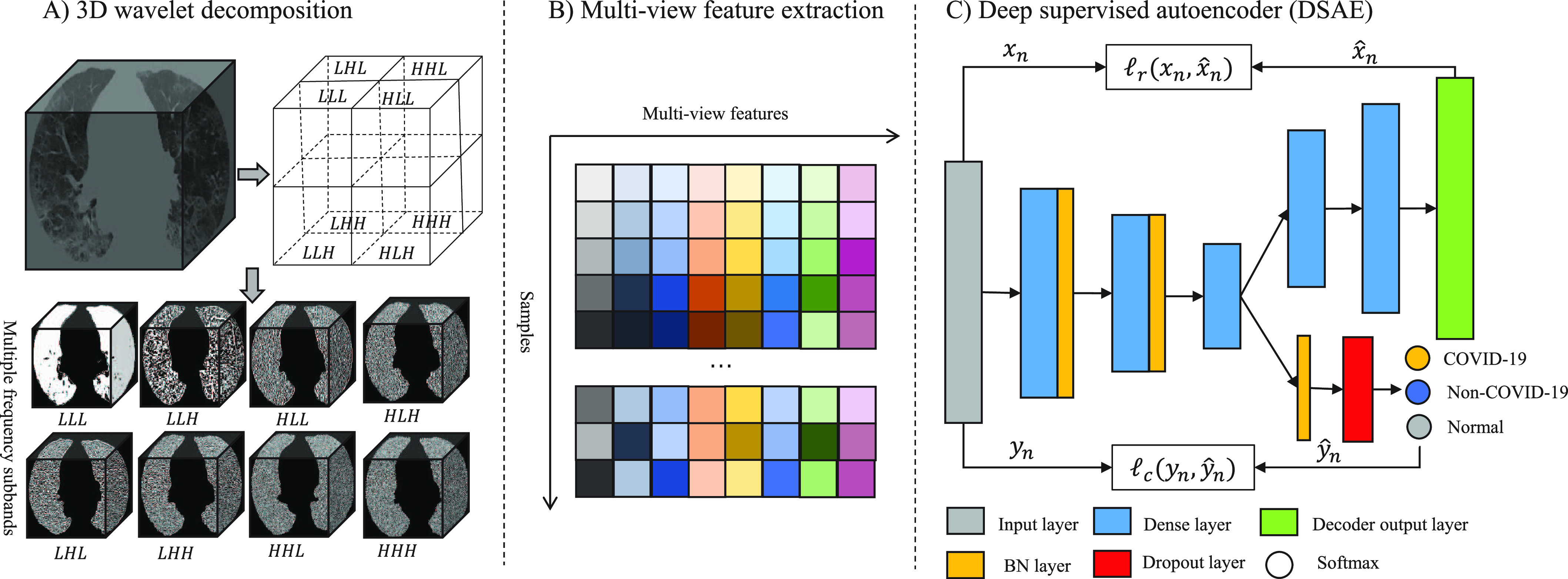
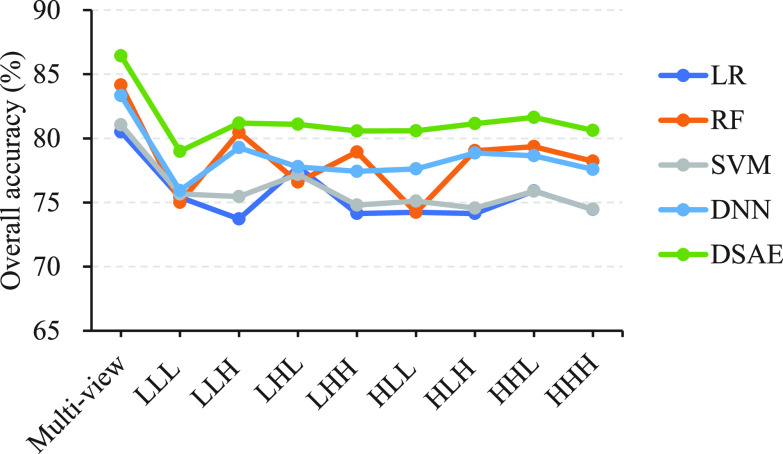
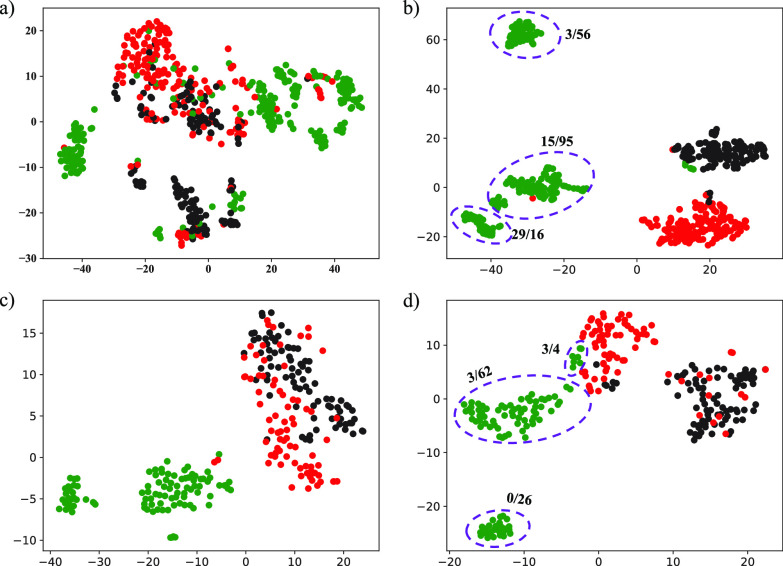
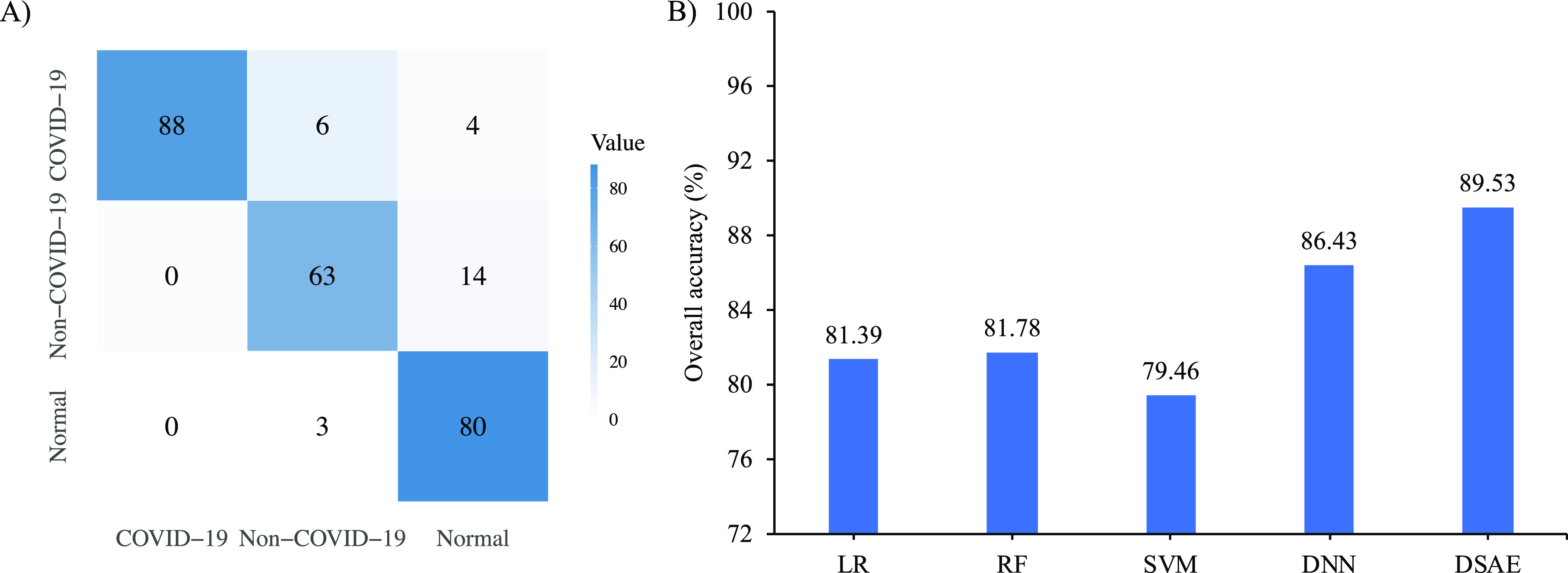
Accurate and rapid diagnosis of coronavirus disease 2019 (COVID-19) from chest CT scans is of great importance and urgency during the worldwide outbreak. However, radiologists have to distinguish COVID-19 pneumonia from other pneumonia in a large number of CT scans, which is tedious and inefficient. Thus, it is urgently and clinically needed to develop an efficient and accurate diagnostic tool to help radiologists to fulfill the difficult task. In this study, we proposed a deep supervised autoencoder (DSAE) framework to automatically identify COVID-19 using multi-view features extracted from CT images. To fully explore features characterizing CT images from different frequency domains, DSAE was proposed to learn the latent representation by multi-task learning. The proposal was designed to both encode valuable information from different frequency features and construct a compact class structure for separability. To achieve this, we designed a multi-task loss function, which consists of a supervised loss and a reconstruction loss. Our proposed method was evaluated on a newly collected dataset of 787 subjects including COVID-19 pneumonia patients, other pneumonia patients, and normal subjects without abnormal CT findings. Extensive experimental results demonstrated that our proposed method achieved encouraging diagnostic performance and may have potential clinical application for the diagnosis of COVID-19.
在全球疫情爆发期间,准确、快速地从胸部 CT 扫描中诊断 2019 年冠状病毒病(COVID-19)非常重要和紧迫。然而,放射科医生必须在大量 CT 扫描中区分 COVID-19 肺炎和其他肺炎,这既繁琐又低效。因此,迫切需要开发一种高效、准确的诊断工具,帮助放射科医生完成这一艰巨任务。在这项研究中,我们提出了一个深度监督自编码器(DSAE)框架,使用从 CT 图像中提取的多视图特征自动识别 COVID-19。为了充分挖掘来自不同频率域的 CT 图像的特征,DSAE 通过多任务学习来学习潜在表示。该提案旨在从不同频率特征中编码有价值的信息,并构建一个紧凑的类别结构以实现可分离性。为了实现这一点,我们设计了一个多任务损失函数,它由监督损失和重建损失组成。我们的方法在一个新收集的包括 COVID-19 肺炎患者、其他肺炎患者和无异常 CT 发现的正常受试者的 787 例受试者的数据集上进行了评估。广泛的实验结果表明,我们提出的方法取得了令人鼓舞的诊断性能,可能具有 COVID-19 诊断的潜在临床应用价值。