• 文献检索
  • 文档翻译
  • 深度研究
  • 学术资讯
  • Suppr Zotero 插件Zotero 插件
  • 邀请有礼
  • 套餐&价格
  • 历史记录
应用&插件
Suppr Zotero 插件Zotero 插件浏览器插件Mac 客户端Windows 客户端微信小程序
定价
高级版会员购买积分包购买API积分包
服务
文献检索文档翻译深度研究API 文档MCP 服务
关于我们
关于 Suppr公司介绍联系我们用户协议隐私条款
关注我们

Suppr 超能文献

核心技术专利:CN118964589B侵权必究
粤ICP备2023148730 号-1Suppr @ 2026

文献检索

告别复杂PubMed语法,用中文像聊天一样搜索,搜遍4000万医学文献。AI智能推荐,让科研检索更轻松。

立即免费搜索

文件翻译

保留排版,准确专业,支持PDF/Word/PPT等文件格式,支持 12+语言互译。

免费翻译文档

深度研究

AI帮你快速写综述,25分钟生成高质量综述,智能提取关键信息,辅助科研写作。

立即免费体验

基于自适应U-Net的肺部分割与基于卷积神经网络深度特征的集成学习用于新冠肺炎自动诊断

Adaptive UNet-based Lung Segmentation and Ensemble Learning with CNN-based Deep Features for Automated COVID-19 Diagnosis.

作者信息

Das Anupam

机构信息

Royal Global University, Guwahati, Assam 781033 India.

出版信息

Multimed Tools Appl. 2022;81(4):5407-5441. doi: 10.1007/s11042-021-11787-y. Epub 2021 Dec 22.

DOI:10.1007/s11042-021-11787-y
PMID:34955679
原文链接:https://pmc.ncbi.nlm.nih.gov/articles/PMC8693146/
Abstract

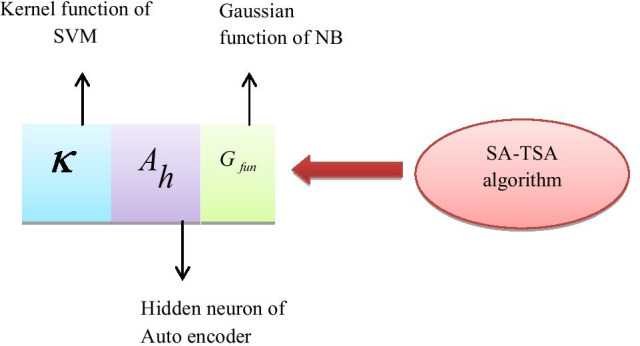
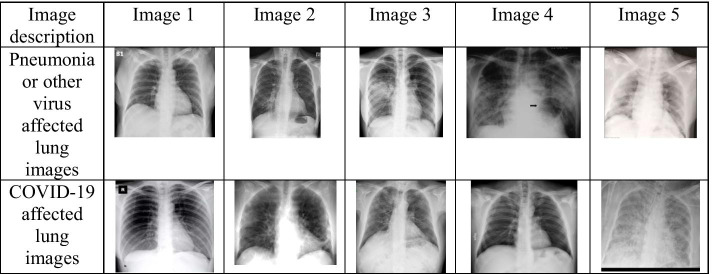
COVID-19 disease is a major health calamity in twentieth century, in which the infection is spreading at the global level. Developing countries like Bangladesh, India, and others are still facing a delay in recognizing COVID-19 cases. Hence, there is a need for immediate recognition with perfect identification of infection. This clear visualization helps to save the life of suspected COVID-19 patients. With the help of traditional RT-PCR testing, the combination of medical images and deep learning classifiers delivers more hopeful results with high accuracy in the prediction and recognition of COVID-19 cases. COVID-19 disease is recently researched through sample chest X-ray images, which have already proven its efficiency in lung diseases. To emphasize corona virus testing methods and to control the community spreading, the automatic detection process of COVID-19 is processed through the detailed medication reports from medical images. Although there are numerous challenges in the manual understanding of traces in COVID-19 infection from X-ray, the subtle differences among normal and infected X-rays can be traced by the data patterns of Convolutional Neural Network (CNN). To improve the detection performance of CNN, this paper plans to develop an Ensemble Learning with CNN-based Deep Features (EL-CNN-DF). In the initial phase, image scaling and median filtering perform the pre-processing of the chest X-ray images gathered from the benchmark source. The second phase is lung segmentation, which is the significant step for COVID detection. It is accomplished by the Adaptive Activation Function-based U-Net (AAF-U-Net). Once the lungs are segmented, it is subjected to novel EL-CNN-DF, in which the deep features are extracted from the pooling layer of CNN, and the fully connected layer of CNN are replaced with the three classifiers termed "Support Vector Machine (SVM), Autoencoder, Naive Bayes (NB)". The final detection of COVID-19 is done by these classifiers, in which high ranking strategy is utilized. As a modification, a Self Adaptive-Tunicate Swarm Algorithm (SA-TSA) is adopted as a boosting algorithm to enhance the performance of segmentation and detection. The overall analysis has shown that the precision of the enhanced CNN by using SA-TSA was 1.02%, 4.63%, 3.38%, 1.62%, 1.51% and 1.04% better than SVM, autoencoder, NB, Ensemble, RNN and LSTM respectively. The comparative performance analysis on existing model proves that the proposed algorithm is better than other algorithms in terms of segmentation and classification of COVID-19 detection.

摘要

新冠病毒病是20世纪的一场重大健康灾难,其感染正在全球范围内蔓延。像孟加拉国、印度等发展中国家仍在新冠病毒病病例的识别上存在延迟。因此,需要立即进行识别并准确鉴定感染情况。这种清晰的可视化有助于挽救疑似新冠病毒病患者的生命。借助传统的逆转录聚合酶链反应(RT-PCR)检测,医学图像与深度学习分类器相结合,在新冠病毒病病例的预测和识别方面能以高精度给出更有希望的结果。近期通过胸部X光样本图像对新冠病毒病进行了研究,胸部X光样本图像在肺部疾病方面已证明了其有效性。为了强调冠状病毒检测方法并控制社区传播,新冠病毒病的自动检测过程通过医学图像的详细用药报告来进行。尽管从X光手动理解新冠病毒感染痕迹存在诸多挑战,但卷积神经网络(CNN)的数据模式可以追踪正常X光和感染X光之间的细微差异。为了提高CNN的检测性能,本文计划开发一种基于CNN深度特征的集成学习(EL-CNN-DF)。在初始阶段,图像缩放和中值滤波对从基准源收集的胸部X光图像进行预处理。第二阶段是肺部分割,这是新冠病毒检测的重要步骤。它由基于自适应激活函数的U型网络(AAF-U-Net)完成。一旦肺部被分割,就对其应用新颖的EL-CNN-DF,其中深度特征从CNN的池化层提取,并且CNN的全连接层被替换为三个分类器,即“支持向量机(SVM)、自动编码器、朴素贝叶斯(NB)”。新冠病毒病的最终检测由这些分类器完成,其中采用了高排名策略。作为一种改进,采用自适应-樽海鞘群算法(SA-TSA)作为增强算法来提高分割和检测性能。总体分析表明,使用SA-TSA增强后的CNN在精度上分别比SVM、自动编码器、NB、集成、循环神经网络(RNN)和长短期记忆网络(LSTM)高1.02%、4.63%、3.38%、1.62%、1.51%和1.04%。对现有模型的比较性能分析证明,所提出的算法在新冠病毒病检测的分割和分类方面优于其他算法。
https://cdn.ncbi.nlm.nih.gov/pmc/blobs/7cfa/8693146/88f5e162ee7c/11042_2021_11787_Fig8_HTML.jpg
https://cdn.ncbi.nlm.nih.gov/pmc/blobs/7cfa/8693146/3e7480dae24e/11042_2021_11787_Fig2_HTML.jpg
https://cdn.ncbi.nlm.nih.gov/pmc/blobs/7cfa/8693146/a2881998d4e3/11042_2021_11787_Fig3_HTML.jpg
https://cdn.ncbi.nlm.nih.gov/pmc/blobs/7cfa/8693146/27619e8b610d/11042_2021_11787_Fig4_HTML.jpg
https://cdn.ncbi.nlm.nih.gov/pmc/blobs/7cfa/8693146/c61cc560cde3/11042_2021_11787_Fig5_HTML.jpg
https://cdn.ncbi.nlm.nih.gov/pmc/blobs/7cfa/8693146/21a6fb8dc1f2/11042_2021_11787_Fig6_HTML.jpg
https://cdn.ncbi.nlm.nih.gov/pmc/blobs/7cfa/8693146/88f5e162ee7c/11042_2021_11787_Fig8_HTML.jpg
https://cdn.ncbi.nlm.nih.gov/pmc/blobs/7cfa/8693146/3e7480dae24e/11042_2021_11787_Fig2_HTML.jpg
https://cdn.ncbi.nlm.nih.gov/pmc/blobs/7cfa/8693146/a2881998d4e3/11042_2021_11787_Fig3_HTML.jpg
https://cdn.ncbi.nlm.nih.gov/pmc/blobs/7cfa/8693146/27619e8b610d/11042_2021_11787_Fig4_HTML.jpg
https://cdn.ncbi.nlm.nih.gov/pmc/blobs/7cfa/8693146/c61cc560cde3/11042_2021_11787_Fig5_HTML.jpg
https://cdn.ncbi.nlm.nih.gov/pmc/blobs/7cfa/8693146/21a6fb8dc1f2/11042_2021_11787_Fig6_HTML.jpg
https://cdn.ncbi.nlm.nih.gov/pmc/blobs/7cfa/8693146/88f5e162ee7c/11042_2021_11787_Fig8_HTML.jpg

相似文献

1
Adaptive UNet-based Lung Segmentation and Ensemble Learning with CNN-based Deep Features for Automated COVID-19 Diagnosis.基于自适应U-Net的肺部分割与基于卷积神经网络深度特征的集成学习用于新冠肺炎自动诊断
Multimed Tools Appl. 2022;81(4):5407-5441. doi: 10.1007/s11042-021-11787-y. Epub 2021 Dec 22.
2
Adaptive fuzzy deformable fusion and optimized CNN with ensemble classification for automated brain tumor diagnosis.用于自动脑肿瘤诊断的自适应模糊可变形融合与优化的集成分类卷积神经网络
Biomed Eng Lett. 2021 Nov 7;12(1):37-58. doi: 10.1007/s13534-021-00209-5. eCollection 2022 Feb.
3
Automatic lung disease classification from the chest X-ray images using hybrid deep learning algorithm.使用混合深度学习算法从胸部X光图像中进行肺部疾病自动分类。
Multimed Tools Appl. 2023 Mar 22:1-27. doi: 10.1007/s11042-023-15047-z.
4
Deep Learning Based Skin Lesion Segmentation and Classification of Melanoma Using Support Vector Machine (SVM).基于深度学习的皮肤病变分割以及使用支持向量机(SVM)对黑色素瘤进行分类
Asian Pac J Cancer Prev. 2019 May 25;20(5):1555-1561. doi: 10.31557/APJCP.2019.20.5.1555.
5
CNN-RNN Network Integration for the Diagnosis of COVID-19 Using Chest X-ray and CT Images.基于胸部 X 射线和 CT 图像的 COVID-19 诊断的 CNN-RNN 网络集成。
Sensors (Basel). 2023 Jan 25;23(3):1356. doi: 10.3390/s23031356.
6
Applying dual models on optimized LSTM with U-net segmentation for breast cancer diagnosis using mammogram images.应用双模型于优化的 LSTM 与 U-net 分割,以利用乳腺 X 光图像进行乳腺癌诊断。
Artif Intell Med. 2023 Sep;143:102626. doi: 10.1016/j.artmed.2023.102626. Epub 2023 Jul 11.
7
Exploring the effect of image enhancement techniques on COVID-19 detection using chest X-ray images.探讨使用胸部 X 光图像的图像增强技术对 COVID-19 检测的影响。
Comput Biol Med. 2021 May;132:104319. doi: 10.1016/j.compbiomed.2021.104319. Epub 2021 Mar 11.
8
COVID-19 Detection from Chest X-ray Images Using Feature Fusion and Deep Learning.基于特征融合和深度学习的胸部 X 射线图像 COVID-19 检测。
Sensors (Basel). 2021 Feb 20;21(4):1480. doi: 10.3390/s21041480.
9
Deep learning approaches for COVID-19 detection based on chest X-ray images.基于胸部X光图像的新冠肺炎检测深度学习方法
Expert Syst Appl. 2021 Feb;164:114054. doi: 10.1016/j.eswa.2020.114054. Epub 2020 Sep 28.
10
EMCNet: Automated COVID-19 diagnosis from X-ray images using convolutional neural network and ensemble of machine learning classifiers.EMCNet:使用卷积神经网络和机器学习分类器集成从X射线图像自动诊断新冠肺炎
Inform Med Unlocked. 2021;22:100505. doi: 10.1016/j.imu.2020.100505. Epub 2020 Dec 22.

引用本文的文献

1
EF-net: Accurate edge segmentation for segmenting COVID-19 lung infections from CT images.EF-net:用于从CT图像中分割新冠肺炎肺部感染的精确边缘分割方法。
Heliyon. 2024 Nov 20;10(23):e40580. doi: 10.1016/j.heliyon.2024.e40580. eCollection 2024 Dec 15.
2
A full-scale lung image segmentation algorithm based on hybrid skip connection and attention mechanism.一种基于混合跳跃连接和注意力机制的全尺寸肺部图像分割算法。
Sci Rep. 2024 Oct 5;14(1):23233. doi: 10.1038/s41598-024-74365-w.
3
Study on lung CT image segmentation algorithm based on threshold-gradient combination and improved convex hull method.

本文引用的文献

1
COVID-19 Detection Through Transfer Learning Using Multimodal Imaging Data.利用多模态成像数据通过迁移学习进行新冠病毒疾病检测
IEEE Access. 2020 Aug 14;8:149808-149824. doi: 10.1109/ACCESS.2020.3016780. eCollection 2020.
2
Artificial Intelligence Applied to Chest X-Ray Images for the Automatic Detection of COVID-19. A Thoughtful Evaluation Approach.应用于胸部X光图像以自动检测新冠病毒的人工智能。一种深思熟虑的评估方法。
IEEE Access. 2020 Dec 14;8:226811-226827. doi: 10.1109/ACCESS.2020.3044858. eCollection 2020.
3
Deep Convolutional Approaches for the Analysis of COVID-19 Using Chest X-Ray Images From Portable Devices.
基于阈值-梯度组合和改进凸壳方法的肺 CT 图像分割算法研究。
Sci Rep. 2024 Jul 31;14(1):17731. doi: 10.1038/s41598-024-68409-4.
4
A brief review and scientometric analysis on ensemble learning methods for handling COVID-19.关于处理新冠肺炎的集成学习方法的简要综述与科学计量分析
Heliyon. 2024 Feb 20;10(4):e26694. doi: 10.1016/j.heliyon.2024.e26694. eCollection 2024 Feb 29.
5
Optimized DEC: An effective cough detection framework using optimal weighted Features-aided deep Ensemble classifier for COVID-19.优化的DEC:一种使用最优加权特征辅助深度集成分类器检测COVID-19咳嗽的有效框架。
Biomed Signal Process Control. 2023 May 15:105026. doi: 10.1016/j.bspc.2023.105026.
6
A fuzzy fine-tuned model for COVID-19 diagnosis.用于 COVID-19 诊断的模糊微调模型。
Comput Biol Med. 2023 Feb;153:106483. doi: 10.1016/j.compbiomed.2022.106483. Epub 2023 Jan 4.
7
RADIC:A tool for diagnosing COVID-19 from chest CT and X-ray scans using deep learning and quad-radiomics.RADIC:一种利用深度学习和四元放射组学从胸部CT和X光扫描诊断新冠肺炎的工具。
Chemometr Intell Lab Syst. 2023 Feb 15;233:104750. doi: 10.1016/j.chemolab.2022.104750. Epub 2023 Jan 2.
8
COVIDX-LwNet: A Lightweight Network Ensemble Model for the Detection of COVID-19 Based on Chest X-ray Images.COVIDX-LwNet:一种基于胸部 X 光图像的 COVID-19 检测轻量化网络集成模型。
Sensors (Basel). 2022 Nov 7;22(21):8578. doi: 10.3390/s22218578.
9
Comparison of Convolutional Neural Networks and Transformers for the Classification of Images of COVID-19, Pneumonia and Healthy Individuals as Observed with Computed Tomography.卷积神经网络与Transformer在基于计算机断层扫描观察的COVID-19、肺炎及健康个体图像分类中的比较
J Imaging. 2022 Sep 1;8(9):237. doi: 10.3390/jimaging8090237.
使用便携式设备获取的胸部X光图像分析新冠肺炎的深度卷积方法
IEEE Access. 2020 Oct 26;8:195594-195607. doi: 10.1109/ACCESS.2020.3033762. eCollection 2020.
4
Automated Diagnosis of COVID-19 Using Deep Supervised Autoencoder With Multi-View Features From CT Images.利用 CT 图像多视图特征的深度监督自动编码器进行 COVID-19 自动诊断。
IEEE/ACM Trans Comput Biol Bioinform. 2022 Sep-Oct;19(5):2723-2736. doi: 10.1109/TCBB.2021.3102584. Epub 2022 Oct 10.
5
Automated Diagnosis of COVID-19 Using Deep Features and Parameter Free BAT Optimization.基于深度特征和无参数蝙蝠算法优化的 COVID-19 自动化诊断
IEEE J Transl Eng Health Med. 2021 May 3;9:1800209. doi: 10.1109/JTEHM.2021.3077142. eCollection 2021.
6
CoroDet: A deep learning based classification for COVID-19 detection using chest X-ray images.CoroDet:一种基于深度学习的、利用胸部X光图像进行新冠肺炎检测的分类方法。
Chaos Solitons Fractals. 2021 Jan;142:110495. doi: 10.1016/j.chaos.2020.110495. Epub 2020 Nov 23.
7
COVID-Net: a tailored deep convolutional neural network design for detection of COVID-19 cases from chest X-ray images.COVID-Net:一种针对胸部 X 光图像中 COVID-19 病例检测的定制化深度卷积神经网络设计。
Sci Rep. 2020 Nov 11;10(1):19549. doi: 10.1038/s41598-020-76550-z.
8
Deep learning approaches for COVID-19 detection based on chest X-ray images.基于胸部X光图像的新冠肺炎检测深度学习方法
Expert Syst Appl. 2021 Feb;164:114054. doi: 10.1016/j.eswa.2020.114054. Epub 2020 Sep 28.
9
Learning distinctive filters for COVID-19 detection from chest X-ray using shuffled residual CNN.使用随机残差卷积神经网络从胸部X光片中学习用于新冠病毒检测的独特滤波器。
Appl Soft Comput. 2021 Feb;99:106744. doi: 10.1016/j.asoc.2020.106744. Epub 2020 Sep 23.
10
A Novel Medical Diagnosis model for COVID-19 infection detection based on Deep Features and Bayesian Optimization.一种基于深度特征和贝叶斯优化的新型新冠病毒感染检测医学诊断模型。
Appl Soft Comput. 2020 Dec;97:106580. doi: 10.1016/j.asoc.2020.106580. Epub 2020 Jul 28.