Meng Feng-Zhen, Liu Jin-Biao, Wang Xu, Wang Peng, Hu Wen-Hui, Hou Wei, Ho Wen-Zhe
School of Basic Medical Sciences, Wuhan University, Wuhan 430000, China.
Department of Pathology and Laboratory Medicine, Temple University School of Medicine, Philadelphia, PA 19140, USA.
Biology (Basel). 2021 Jul 13;10(7):661. doi: 10.3390/biology10070661.
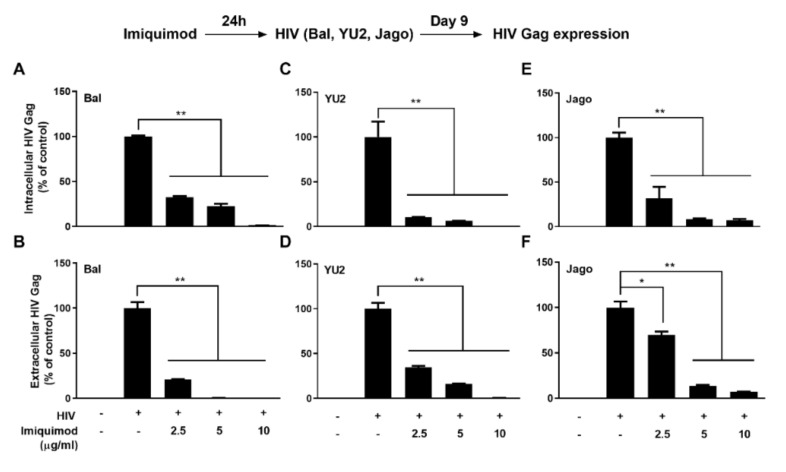
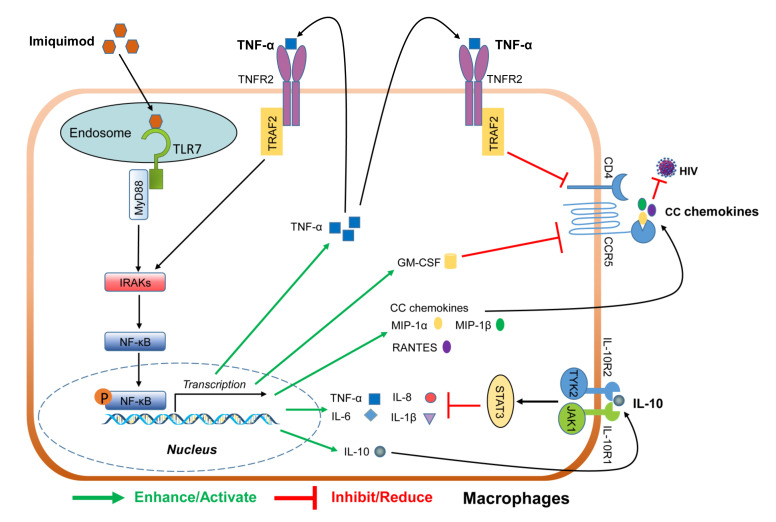
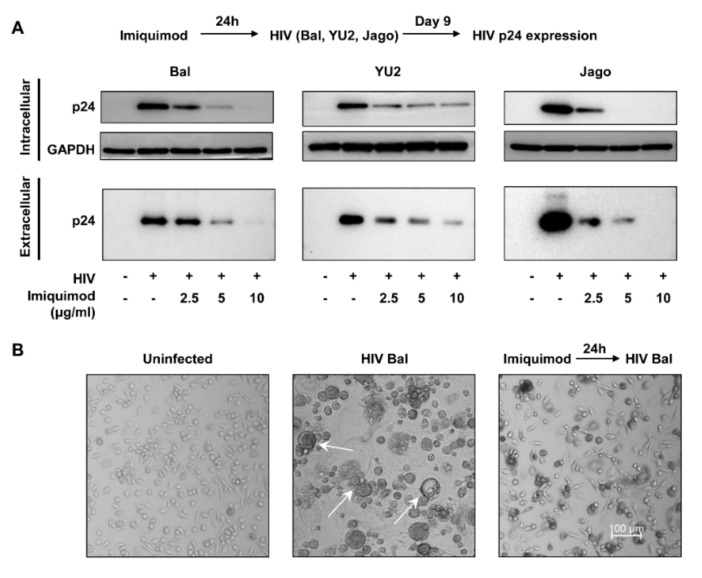
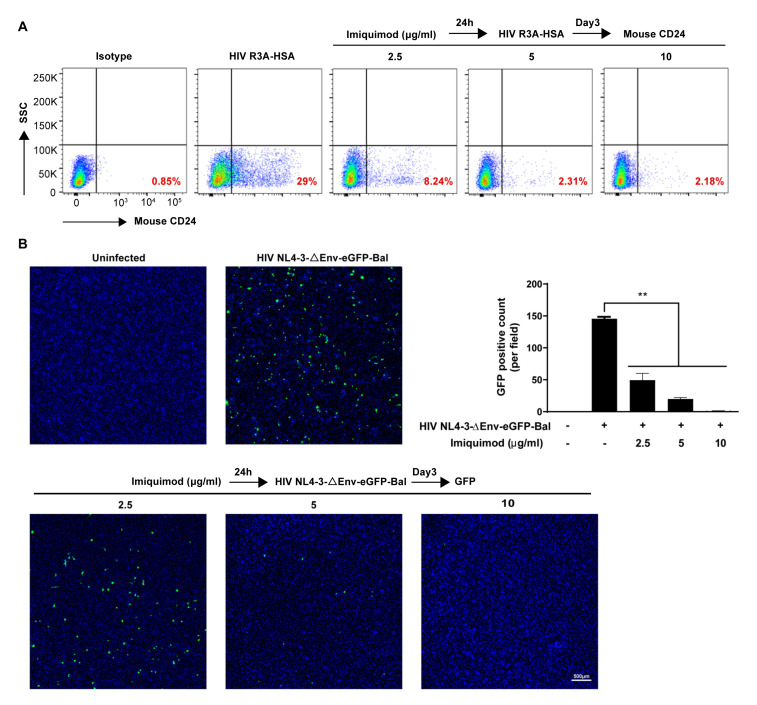
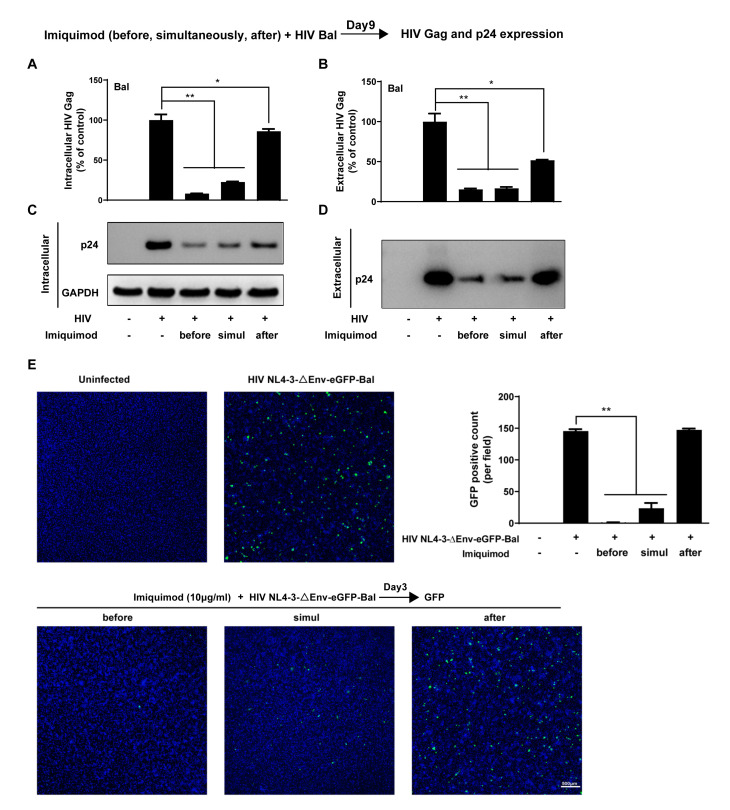
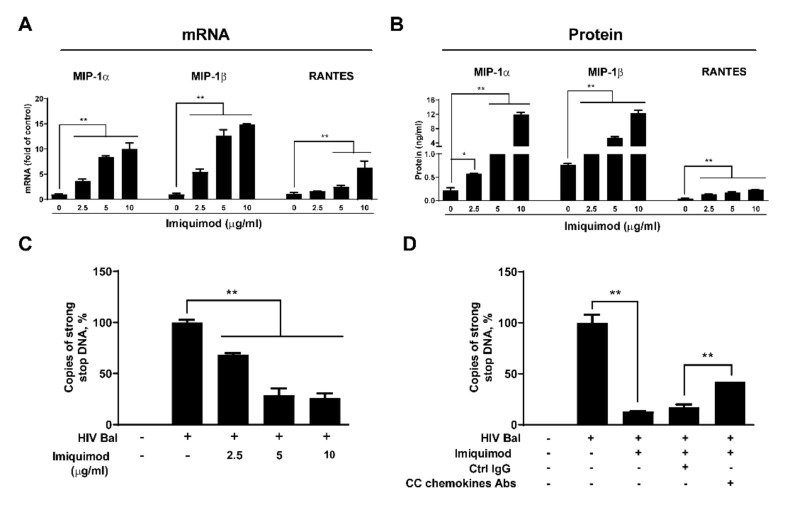
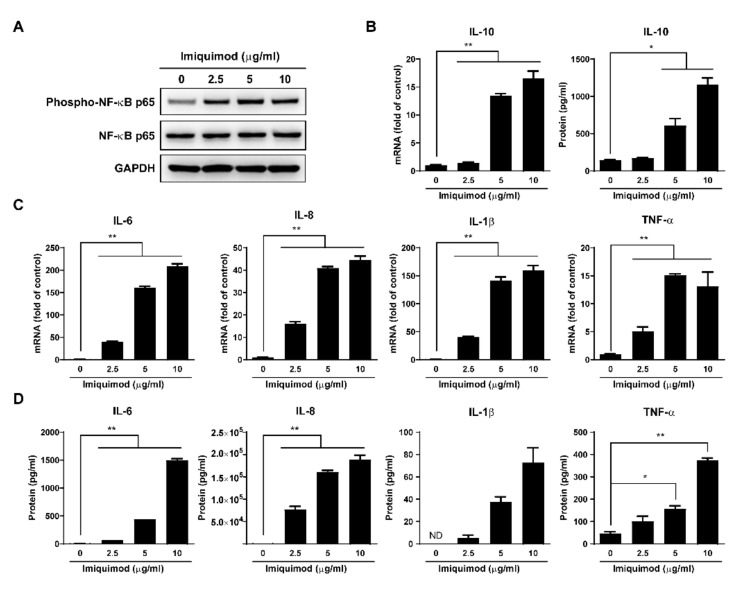
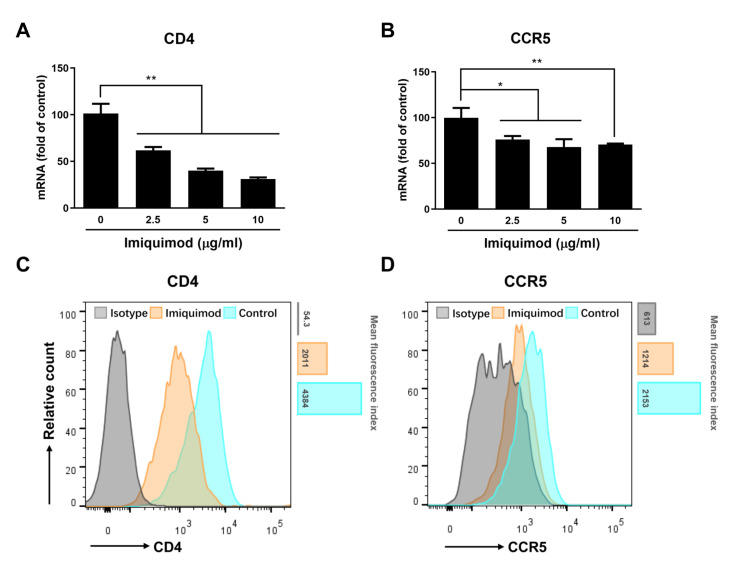
The Toll-like receptor (TLR) 7 is a viral sensor for detecting single-stranded ribonucleic acid (ssRNA), the activation of which can induce intracellular innate immunity against viral infections. Imiquimod, a synthetic ligand for TLR7, has been successfully used for the topical treatment of genital/perianal warts in immunocompetent individuals. We studied the effect of imiquimod on the human immunodeficiency virus (HIV) infection of primary human macrophages and demonstrated that the treatment of cells with imiquimod effectively inhibited infection with multiple strains (Bal, YU2, and Jago) of HIV. This anti-HIV activity of imiquimod was the most potent when macrophages were treated prior to infection. Infection of macrophages with pseudotyped HIV NL4-3-ΔEnv-eGFP-Bal showed that imiquimod could block the viral entry. Further mechanistic studies revealed that while imiquimod had little effect on the interferons (IFNs) expression, its treatment of macrophages resulted in the increased production of the CC chemokines (human macrophage inflammatory protein-1 alpha (MIP-1α), MIP-1β, and upon activation regulated normal T cells expressed and secreted (RANTES)), the natural ligands of HIV entry co-receptor CCR5, and decreased the expression of CD4 and CCR5. The addition of the antibodies against the CC chemokines to macrophage cultures could block imiquimod-mediated HIV inhibition. These findings provide experimental evidence to support the notion that TLR7 participates in the intracellular immunity against HIV in macrophages, suggesting the further clinical evaluation of imiquimod for its additional benefit of treating genital/perianal warts in people infected with HIV.
Toll样受体7(TLR7)是一种用于检测单链核糖核酸(ssRNA)的病毒传感器,其激活可诱导针对病毒感染的细胞内固有免疫。咪喹莫特是一种TLR7的合成配体,已成功用于免疫功能正常个体的生殖器/肛周疣的局部治疗。我们研究了咪喹莫特对原代人巨噬细胞感染人免疫缺陷病毒(HIV)的影响,并证明用咪喹莫特处理细胞可有效抑制多种HIV毒株(Bal、YU2和Jago)的感染。当巨噬细胞在感染前接受处理时,咪喹莫特的这种抗HIV活性最为显著。用假型HIV NL4-3-ΔEnv-eGFP-Bal感染巨噬细胞表明,咪喹莫特可阻断病毒进入。进一步的机制研究表明,虽然咪喹莫特对干扰素(IFN)表达影响不大,但其对巨噬细胞的处理导致CC趋化因子(人巨噬细胞炎性蛋白-1α(MIP-1α)、MIP-1β以及活化后调节正常T细胞表达和分泌的趋化因子(RANTES))的产生增加,这些是HIV进入共受体CCR5的天然配体,并降低了CD4和CCR5的表达。向巨噬细胞培养物中添加抗CC趋化因子抗体可阻断咪喹莫特介导的HIV抑制作用。这些发现提供了实验证据,支持TLR7参与巨噬细胞对HIV的细胞内免疫这一观点,提示对咪喹莫特进行进一步临床评估,以探讨其在治疗HIV感染人群的生殖器/肛周疣方面的额外益处。