Castelli Germano, Bruno Federica, Reale Stefano, Catanzaro Simone, Valenza Viviana, Vitale Fabrizio
Centro di Referenza Nazionale per le Leishmaniosi (C.Re.Na.L.), OIE Leishmania Reference Laboratory, Istituto Zooprofilattico Sperimentale della Sicilia, Via Gino Marinuzzi 3, 90129 Palermo, Italy.
Laboratorio di Tecnologie Diagnostiche Innovative (TDI), Istituto Zooprofilattico Sperimentale della Sicilia, Via Gino Marinuzzi 3, 90129 Palermo, Italy.
Pathogens. 2021 Jul 9;10(7):865. doi: 10.3390/pathogens10070865.
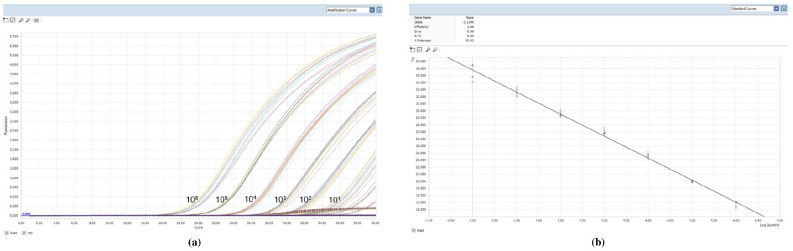
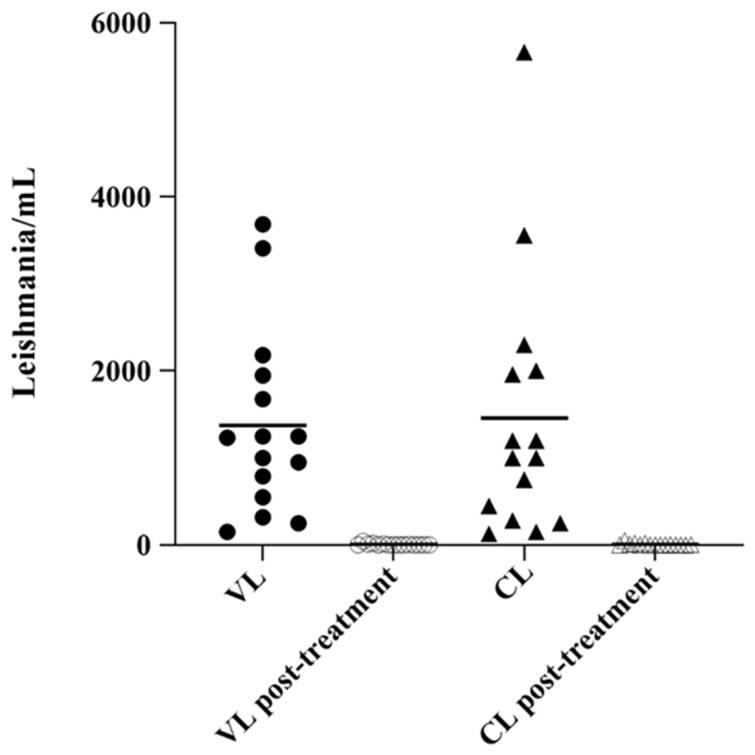
Real-time PCR was developed to quantify kinetoplast DNA and optimized to achieve a sensitivity of 1 parasite/mL. For this purpose, we cloned the conserved kDNA fragment of 120 bp into competent cells and correlated them with serial dilutions of DNA extracted from reference parasite cultures calculating that a parasite cell contains approximately 36 molecules of kDNA. This assay was applied to estimate parasite load in clinical samples from visceral, cutaneous leishmaniasis patients and infected dogs and cats comparing with conventional diagnosis. The study aimed to propose a real-time PCR for the detection of DNA from clinical samples trying to solve the diagnostic problems due to the low sensitivity of microscopic examination or the low predictive values of serology and resolve problems related to in vitro culture. The quantitative PCR assay in this study allowed detection of DNA and quantification of considerably low parasite loads in samples that had been diagnosed negative by conventional techniques. In conclusion, this quantitative PCR can be used for the diagnosis of both human, canine and feline Leishmaniasis with high sensitivity and specificity, but also for evaluating treatment and the endpoint determination of leishmaniasis.
实时荧光定量聚合酶链反应(Real-time PCR)技术用于定量检测动基体DNA,并进行了优化,以达到每毫升1个寄生虫的灵敏度。为此,我们将120bp的保守动基体DNA片段克隆到感受态细胞中,并将其与从参考寄生虫培养物中提取的DNA系列稀释液进行关联,计算得出一个寄生虫细胞大约含有36个动基体DNA分子。该检测方法应用于估计内脏利什曼病、皮肤利什曼病患者以及感染的犬猫临床样本中的寄生虫载量,并与传统诊断方法进行比较。本研究旨在提出一种用于检测临床样本中DNA的实时荧光定量聚合酶链反应方法,试图解决因显微镜检查灵敏度低或血清学预测价值低而导致的诊断问题,并解决与体外培养相关的问题。本研究中的定量聚合酶链反应检测方法能够检测DNA,并对传统技术诊断为阴性的样本中极低的寄生虫载量进行定量。总之,这种定量聚合酶链反应可用于诊断人类、犬类和猫类利什曼病,具有高灵敏度和特异性,还可用于评估治疗效果和确定利什曼病的终点。