Mammi Ludovica M E, Guadagnini Marcello, Mechor Gerald, Cainzos Juan M, Fusaro Isa, Palmonari Alberto, Formigoni Andrea
Department of Veterinary Medical Sciences, University of Bologna, Via Tolara di Sopra 50, 40064 Ozzano Emilia, Italy.
Elanco Italia Spa, Via dei Colatori 12, 50019 Sesto Fiorentino, Italy.
Animals (Basel). 2021 Jul 2;11(7):1988. doi: 10.3390/ani11071988.
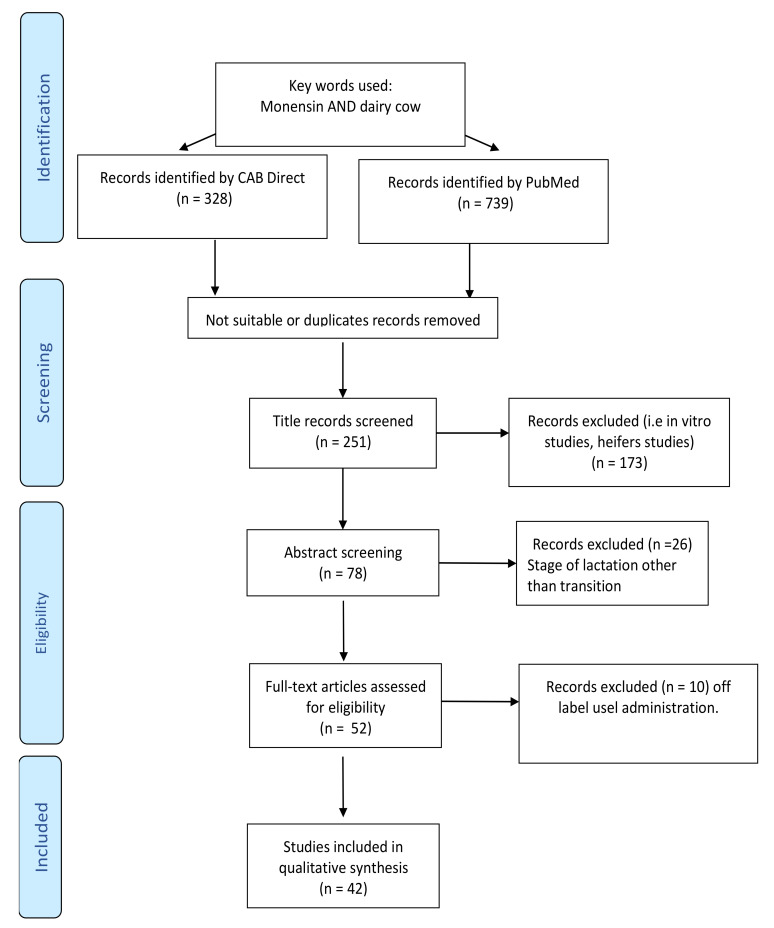
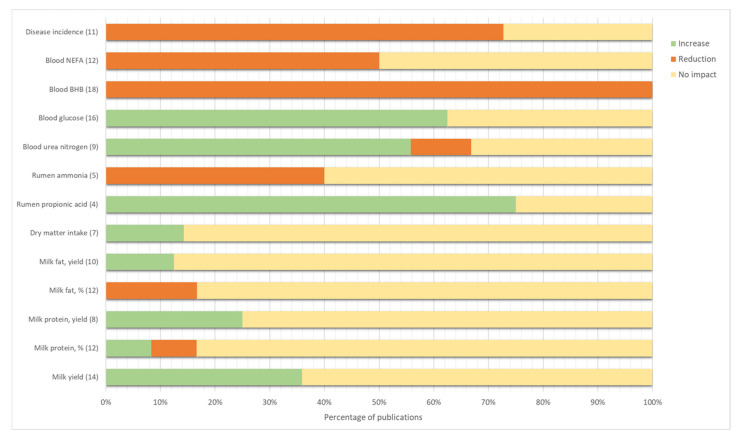
Since the approval by the European Medicines Agency in 2013 of a monensin controlled-release capsule (CRC) for the prevention of ketosis in dairy cows, there has been widespread use across Europe. In recent decades, several papers have investigated the effects of monensin used as a CRC or as a feed additive to improve cattle energy metabolism and improve feed efficiency. Since the CRC is the only form of monensin permitted in Europe in dairy cows, the objective of this review was to report and summarize observations from the literature on the effects of this treatment in transition cows. The peer-reviewed literature published from 1997 was scanned, and papers written in English were evaluated for eligibility. Only papers evaluating the use of monensin in dairy cows for the prevention of ketosis during the transition period were reviewed. In total, 42 papers met the required criteria and were included in this review. The major findings focused on cow metabolism and health, rumen fermentation and milk production and quality. Overall, the review of the existing literature confirmed that monensin delivered as a CRC during the transition period has effects of different magnitude compared to other forms, doses or durations of administration. Studies agree on the antiketotic effects of this treatment, showing evidence of an increased propionate production in the rumen, reduced blood β-hydroxybutyrate, and improved liver function in treated cows, mainly resulting in reduced incidence of peripartum disease. On the contrary, the effects of CRC on ammonia production and rumen microflora are less robust than those reported for other forms. Of importance for the European market is the well-documented absence of any negative impact on milk and cheese production and composition using the CRC treatment.
自2013年欧洲药品管理局批准莫能菌素控释胶囊(CRC)用于预防奶牛酮病以来,该产品已在欧洲广泛使用。近几十年来,多篇论文研究了莫能菌素作为控释胶囊或饲料添加剂对改善牛能量代谢和提高饲料效率的影响。由于CRC是欧洲唯一允许用于奶牛的莫能菌素剂型,本综述的目的是报告和总结文献中关于这种处理对围产期奶牛影响的观察结果。检索了1997年以来发表的经过同行评审的文献,并对英文撰写的论文进行了资格评估。仅对评估莫能菌素在围产期奶牛中预防酮病的论文进行了综述。共有42篇论文符合要求标准并纳入本综述。主要研究结果集中在奶牛的代谢与健康、瘤胃发酵以及产奶量和奶品质方面。总体而言,对现有文献的综述证实,围产期以控释胶囊形式给药的莫能菌素与其他形式、剂量或给药持续时间相比,具有不同程度的效果。研究一致认为这种处理具有抗酮病作用,并表明瘤胃中丙酸产量增加、血液中β-羟基丁酸减少以及治疗奶牛肝功能改善,主要导致围产期疾病发病率降低。相反,控释胶囊对氨生成和瘤胃微生物区系的影响不如其他形式报道的那么显著。对于欧洲市场而言,有充分文献记载使用控释胶囊处理对牛奶和奶酪产量及成分没有任何负面影响,这一点很重要。