Wu Qitong, Siddharth Sumit, Sharma Dipali
Department of Oncology, Johns Hopkins University School of Medicine and the Sidney Kimmel Comprehensive Cancer Center at Johns Hopkins, Baltimore, MD 21231, USA.
Cancers (Basel). 2021 Jul 23;13(15):3697. doi: 10.3390/cancers13153697.
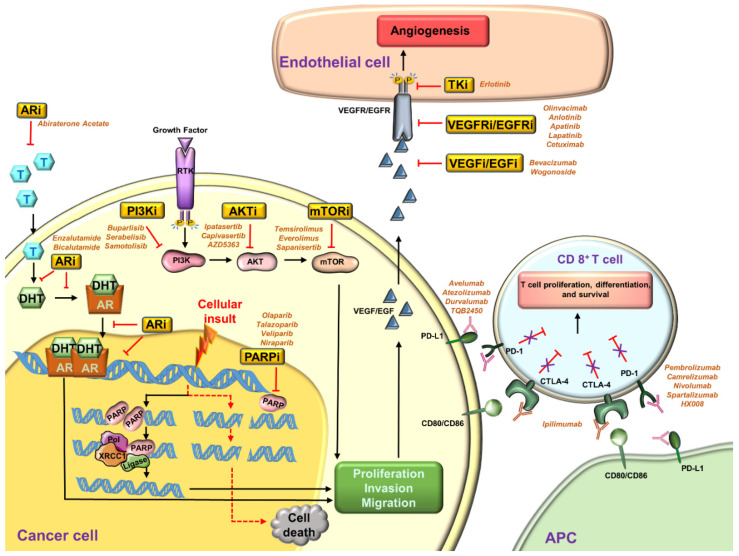
Metastatic progression and tumor recurrence pertaining to TNBC are certainly the leading cause of breast cancer-related mortality; however, the mechanisms underlying TNBC chemoresistance, metastasis, and tumor relapse remain somewhat ambiguous. TNBCs show 77% of the overall 4-year survival rate compared to other breast cancer subtypes (82.7 to 92.5%). TNBC is the most aggressive subtype of breast cancer, with chemotherapy being the major approved treatment strategy. Activation of ABC transporters and DNA damage response genes alongside an enrichment of cancer stem cells and metabolic reprogramming upon chemotherapy contribute to the selection of chemoresistant cells, majorly responsible for the failure of anti-chemotherapeutic regime. These selected chemoresistant cells further lead to distant metastasis and tumor relapse. The present review discusses the approved standard of care and targetable molecular mechanisms in chemoresistance and provides a comprehensive update regarding the recent advances in TNBC management.
三阴性乳腺癌(TNBC)的转移进展和肿瘤复发无疑是乳腺癌相关死亡的主要原因;然而,TNBC化疗耐药、转移和肿瘤复发的潜在机制仍有些模糊不清。与其他乳腺癌亚型(82.7%至92.5%)相比,TNBC的4年总生存率为77%。TNBC是最具侵袭性的乳腺癌亚型,化疗是主要的获批治疗策略。ABC转运蛋白和DNA损伤反应基因的激活,以及化疗后癌症干细胞的富集和代谢重编程,促成了化疗耐药细胞的选择,这主要是抗化疗方案失败的原因。这些选择出的化疗耐药细胞进一步导致远处转移和肿瘤复发。本综述讨论了化疗耐药方面获批的标准治疗和可靶向的分子机制,并全面更新了TNBC治疗的最新进展。