Department of Community Medicine and School of Public Health, Postgraduate Institute of Medical Education and Research (PGIMER), Chandigarh, India.
Department of Obstetrics & Gynecology, Postgraduate Institute of Medical Education and Research (PGIMER), Chandigarh, India.
PLoS One. 2021 Aug 9;16(8):e0255830. doi: 10.1371/journal.pone.0255830. eCollection 2021.
This study was undertaken to explore the treatment-seeking pathways traversed by women with PCOS and elicit their behavior, experiences and perspectives regarding it.
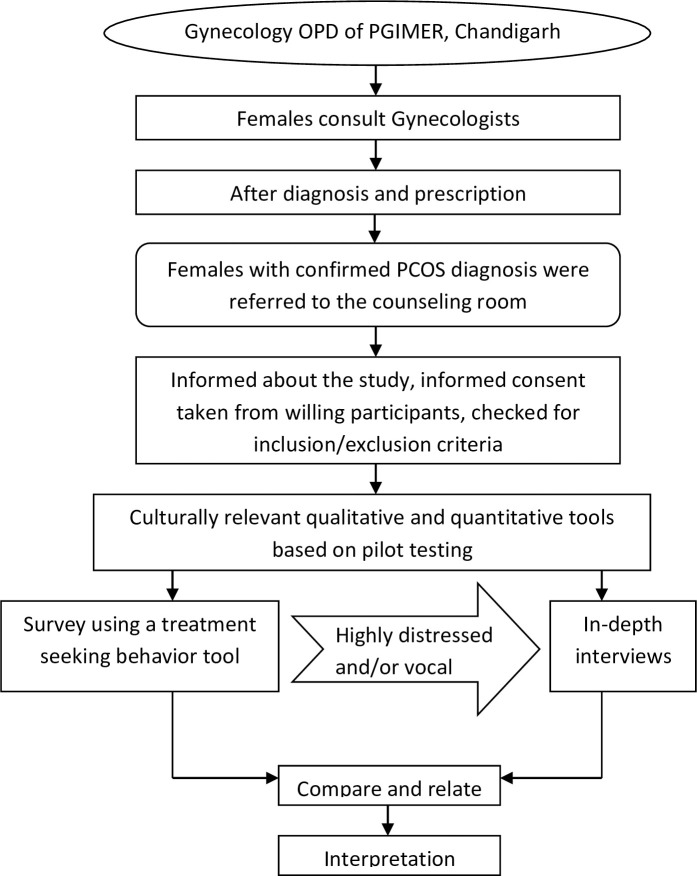
This concurrent mixed-method study was conducted on 18-40 years old women diagnosed with PCOS at the Gynecology outpatient department, PGIMER, Chandigarh, India. Of the 275 women, who were administered a questionnaire to elicit their treatment-seeking behavior, 62 willing participants were subjected to in-depth interviews. Quantitative responses were descriptively analyzed and presented as count, proportion, mean or median. Framework analysis was performed for the qualitative data. The findings of both types of data were triangulated to construct the pathways to treatment traversed by PCOS patients.
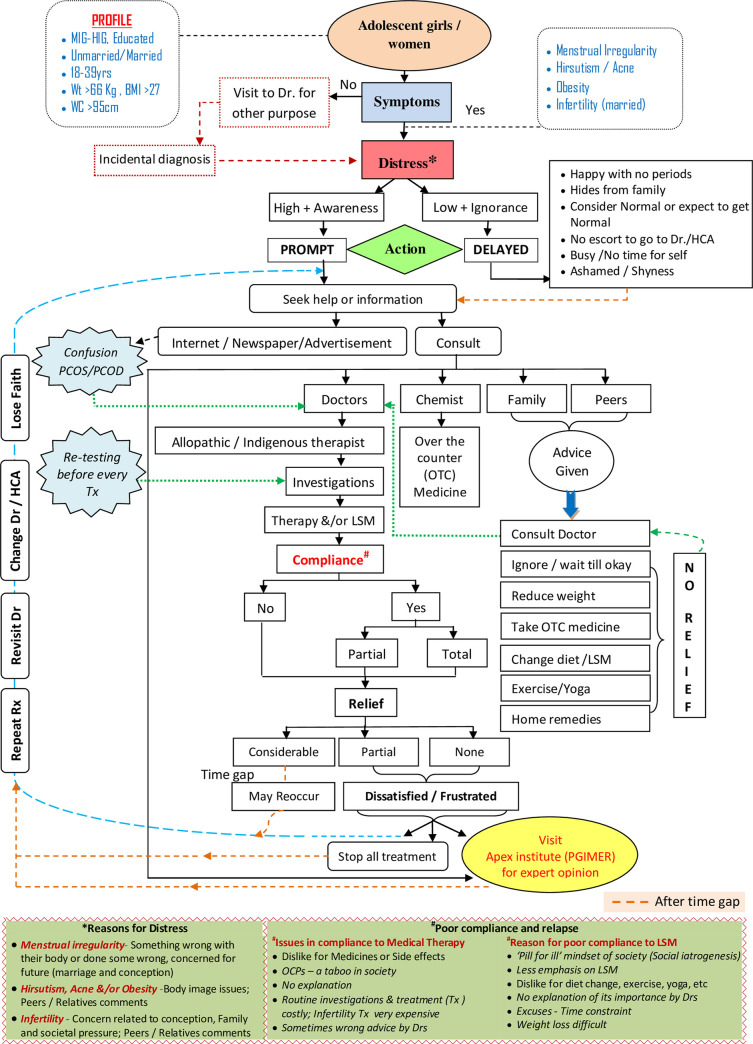
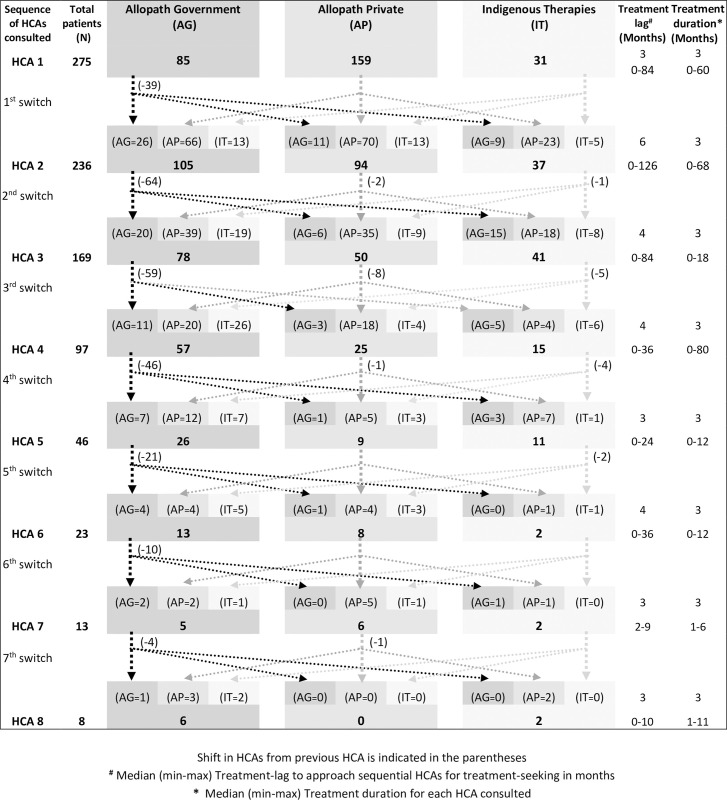
Many (~45%) respondents had no information regarding PCOS. Only 9.1% received some information from their doctors. Though the internet was the primary source of information for 37.5% of respondents, they expressed dissatisfaction with the quality of information. Multiple health care agencies were consulted by most (85.8%) of the respondents. Allopathy was the preferred choice of treatment. The average delay in initiating the treatment was 3 months. The major reasons for this were ignorance, the concept of 'normality' and 'endurance'. Deviations from the normal self (like irregular-menstruation, obesity, hirsutism, infertility) were the concern that led them to consult a doctor. They were also dissatisfied with the treatment due to a late diagnosis, lack of relief, taboo, side-effects, expenses involved and the need for repeated laboratory tests. Participants' course of treatment was influenced by the interplay of individual, distress, health-system, and social-economic factors.
Women with PCOS were dissatisfied with the quality of the information and treatment received. There were treatment delays. The patients consulted multiple health agencies, including indigenous therapies, in the hope of relief. The findings provide an empirical basis on points to focus on for building better coping strategies for managing the condition.
本研究旨在探索多囊卵巢综合征(PCOS)患者的治疗途径,并了解她们的行为、经历和看法。
这是一项在印度昌迪加尔 PGIMER 妇科门诊进行的同时性混合方法研究,纳入了 275 名被诊断为 PCOS 的 18-40 岁女性。对其中 275 名女性进行问卷调查,以了解她们的治疗寻求行为,对 62 名愿意接受深入访谈的参与者进行了访谈。对定量数据进行描述性分析,以计数、比例、均值或中位数的形式呈现。对定性数据进行框架分析。将两种类型的数据的结果进行三角剖分,以构建 PCOS 患者的治疗途径。
许多(约 45%)受访者对 PCOS 没有任何信息。只有 9.1%的人从医生那里获得了一些信息。虽然互联网是 37.5%受访者的主要信息来源,但她们对信息质量表示不满。大多数(85.8%)受访者咨询了多个医疗保健机构。大多数人选择了对抗疗法。平均延迟 3 个月开始治疗。主要原因是无知、“正常”概念和“忍耐”。不规则月经、肥胖、多毛、不孕等偏离正常自我的情况引起了她们的关注,促使她们去看医生。她们还对治疗不满意,因为诊断晚、缓解效果不佳、禁忌、副作用、费用和需要反复进行实验室检查。患者的治疗过程受到个人、痛苦、卫生系统和社会经济因素的相互作用的影响。
PCOS 患者对获得的信息和治疗质量不满意。存在治疗延迟。患者咨询了多个卫生机构,包括传统疗法,以寻求缓解。研究结果为建立更好的应对策略提供了实证依据,以管理这种疾病。