Peter Medawar Building for Pathogen Research, Nuffield Department of Medicine, University of Oxford, Oxford, UK.
Nuffield Department of Clinial Neurosciences, University of Oxford, Oxford, UK.
Nat Commun. 2021 Aug 17;12(1):5061. doi: 10.1038/s41467-021-25167-5.
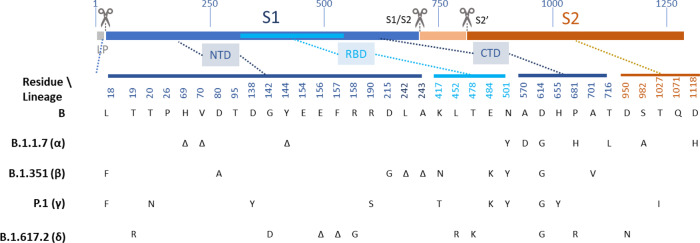
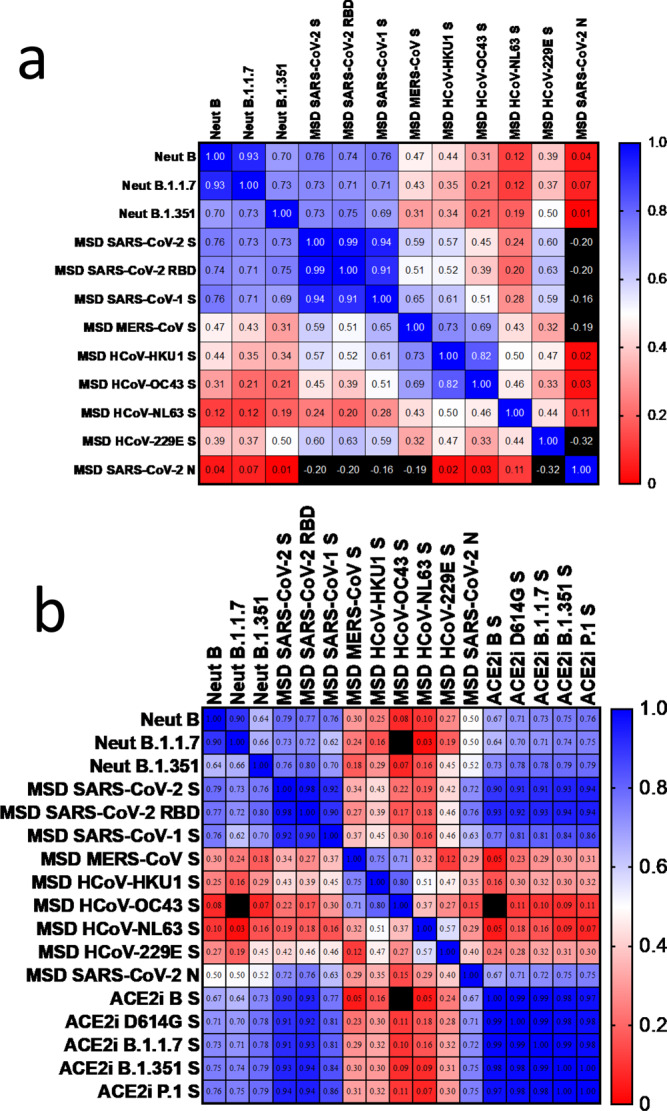
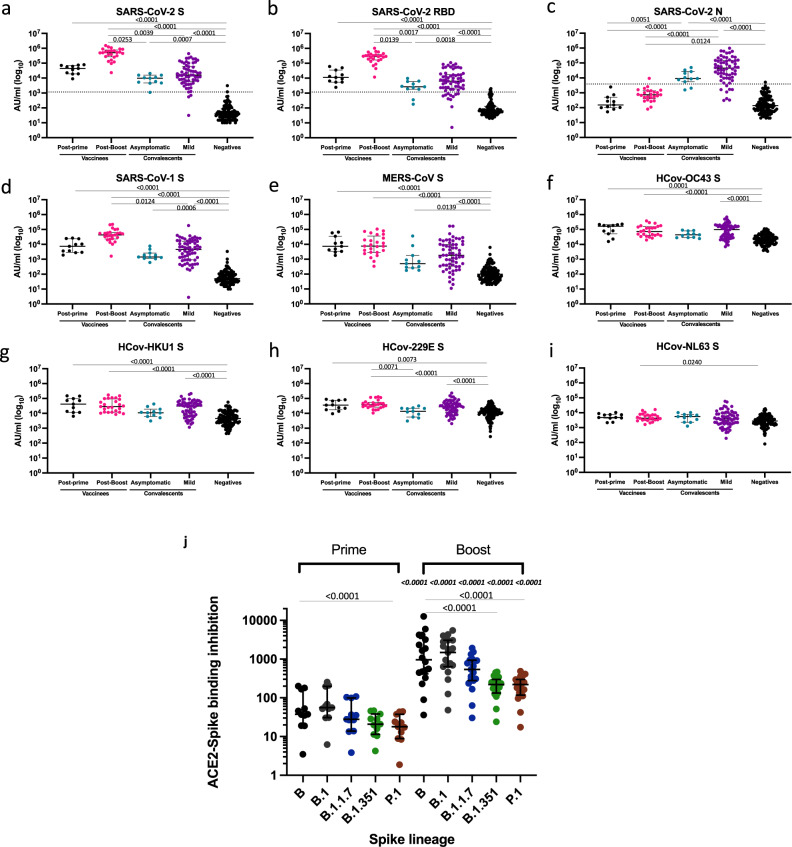
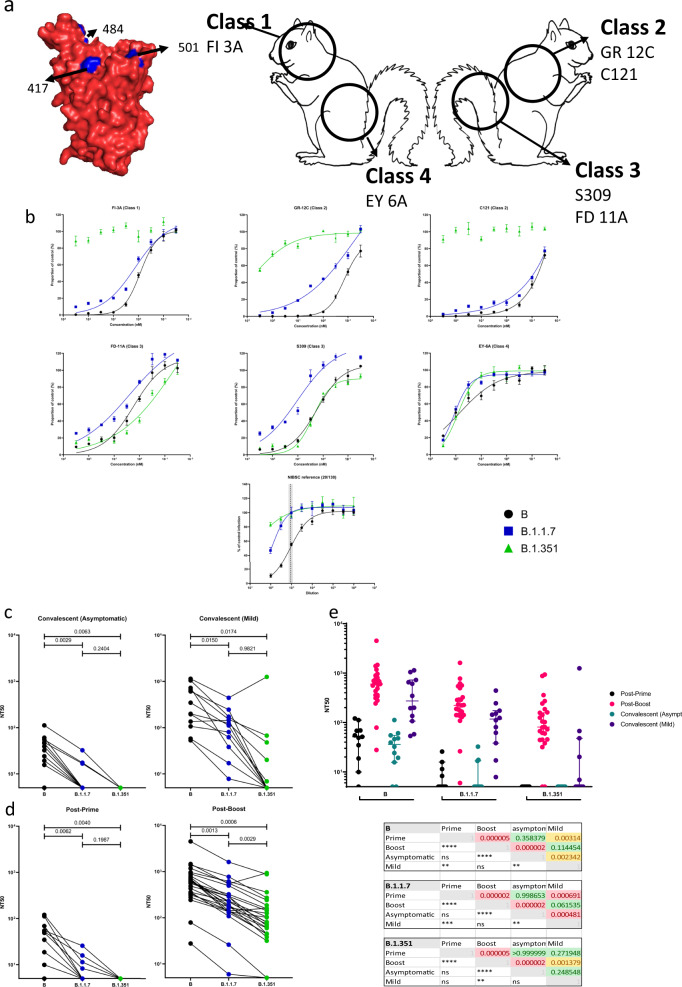
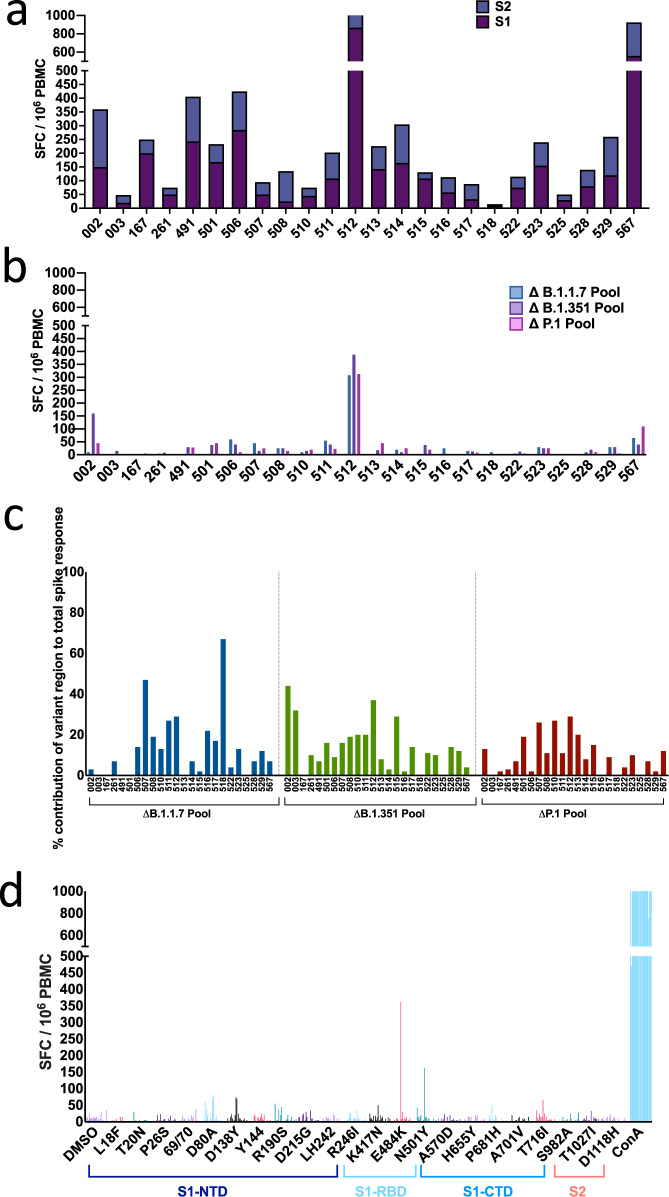
The extent to which immune responses to natural infection with severe acute respiratory syndrome coronavirus 2 (SARS-CoV-2) and immunization with vaccines protect against variants of concern (VOC) is of increasing importance. Accordingly, here we analyse antibodies and T cells of a recently vaccinated, UK cohort, alongside those recovering from natural infection in early 2020. We show that neutralization of the VOC compared to a reference isolate of the original circulating lineage, B, is reduced: more profoundly against B.1.351 than for B.1.1.7, and in responses to infection or a single dose of vaccine than to a second dose of vaccine. Importantly, high magnitude T cell responses are generated after two vaccine doses, with the majority of the T cell response directed against epitopes that are conserved between the prototype isolate B and the VOC. Vaccination is required to generate high potency immune responses to protect against these and other emergent variants.
针对严重急性呼吸综合征冠状病毒 2(SARS-CoV-2)自然感染和疫苗接种引起的免疫反应对关注变种(VOC)的保护程度变得越来越重要。因此,在这里,我们分析了最近接种疫苗的英国队列的抗体和 T 细胞,以及 2020 年初从自然感染中恢复的抗体和 T 细胞。我们发现,与原始循环谱系 B 的参考分离株相比,对 VOC 的中和作用降低:对 B.1.351 的降低程度比 B.1.1.7 更为明显,并且在感染或接种一剂疫苗后的反应比接种两剂疫苗后的反应更为明显。重要的是,两剂疫苗接种后会产生高浓度的 T 细胞反应,其中大多数 T 细胞反应针对的是原型分离株 B 和 VOC 之间保守的表位。需要接种疫苗以产生高效的免疫反应来预防这些和其他新兴变种。