Sathiyamoorthi Ezhaveni, Faleye Olajide Sunday, Lee Jin-Hyung, Raj Vinit, Lee Jintae
School of Chemical Engineering, Yeungnam University, Gyeongsan, South Korea.
Front Microbiol. 2021 Aug 2;12:714371. doi: 10.3389/fmicb.2021.714371. eCollection 2021.
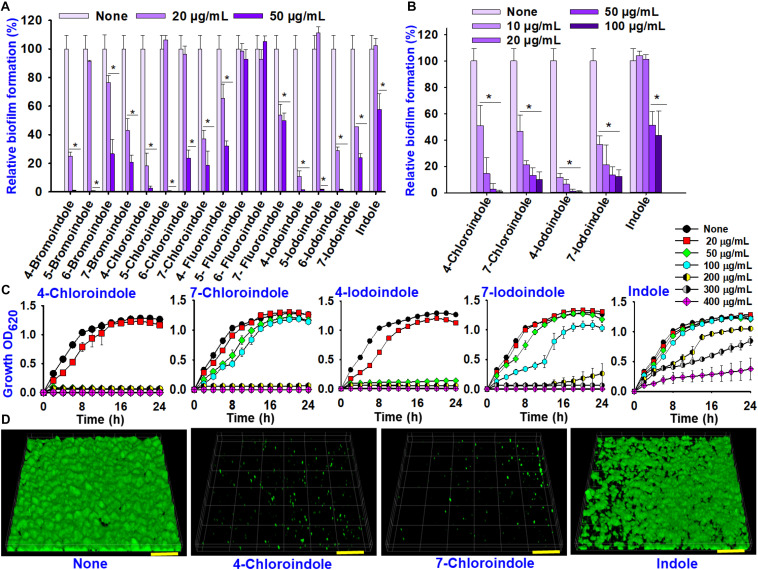
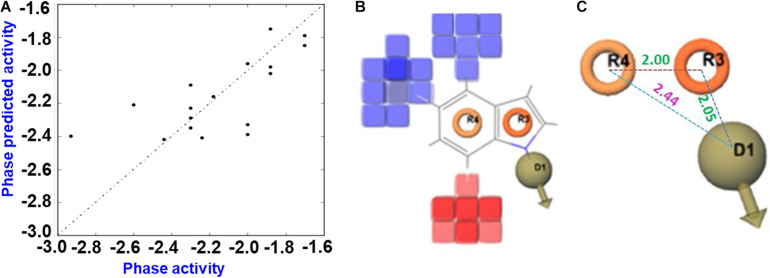
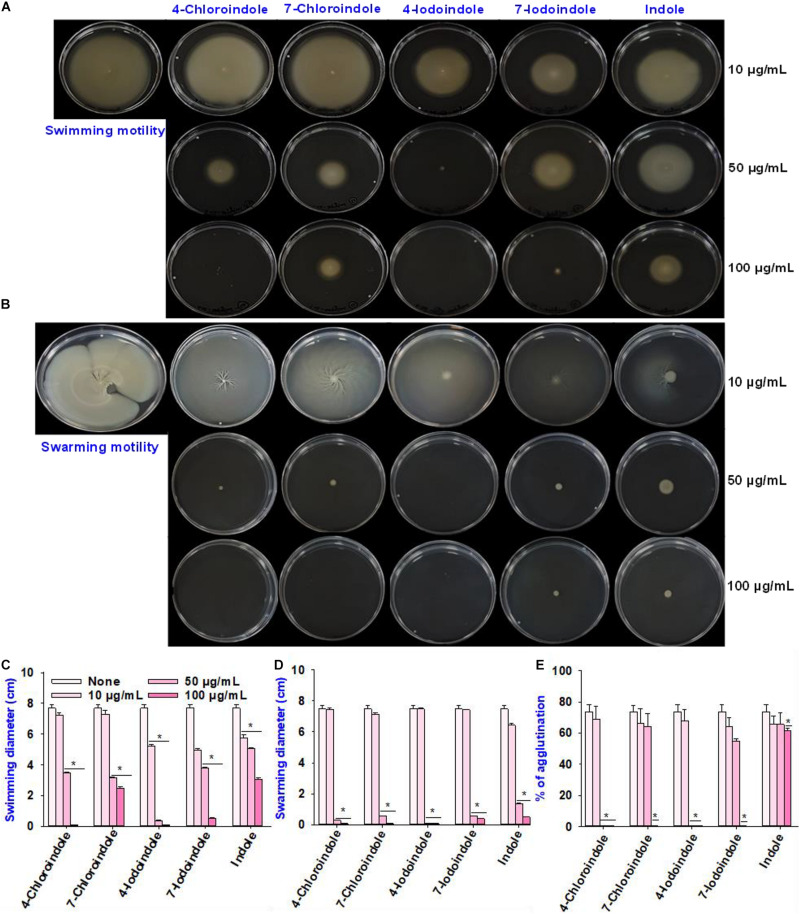
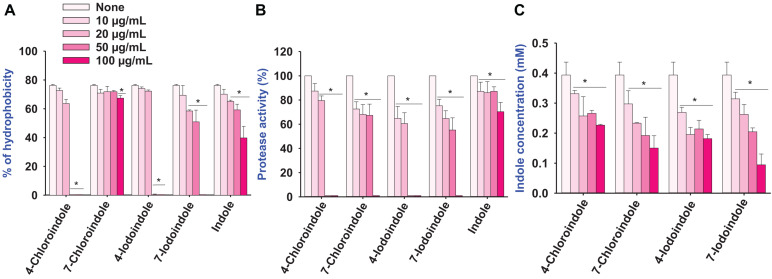
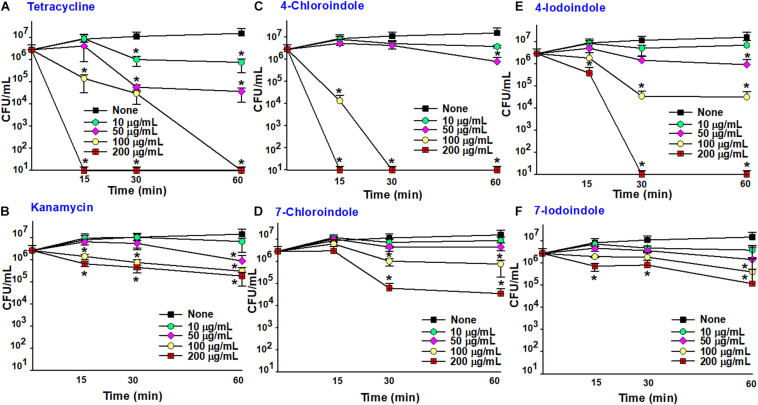
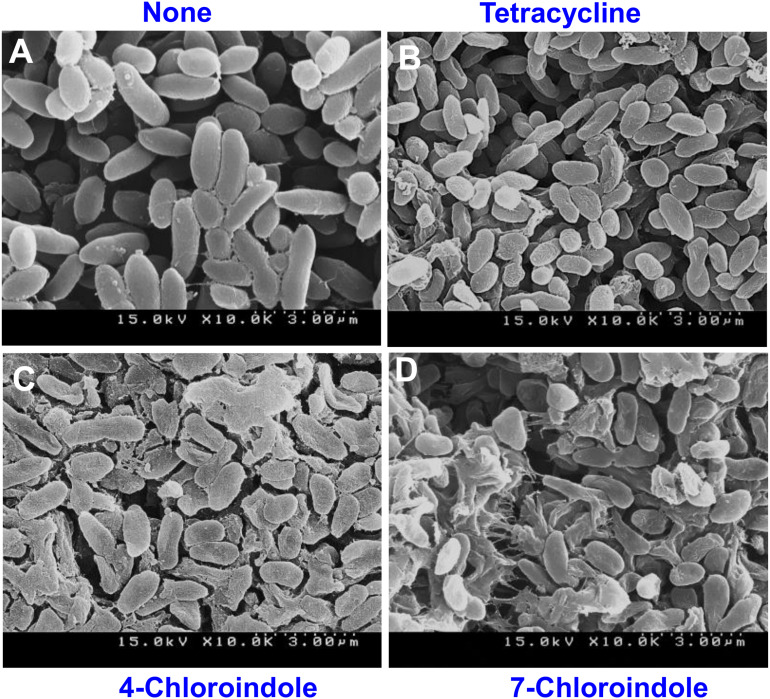
is a food-borne pathogen recognized as the prominent cause of seafood-borne gastroenteritis globally, necessitating novel therapeutic strategies. This study examined the antimicrobial and antivirulence properties of indole and 16 halogenated indoles on . Among them, 4-chloroindole, 7-chloroindole, 4-iodoindole, and 7-iodoindole effectively inhibited planktonic cell growth, biofilm formation, bacterial motility, fimbrial activity, hydrophobicity, protease activity, and indole production. Specifically, 4-chloroindole at 20 μg/mL inhibited more than 80% of biofilm formation with a minimum inhibitory concentration (MIC) of 50 μg/mL against and . In contrast, 7-chloroindole inhibited biofilm formation without affecting planktonic cell growth with a MIC of 200 μg/mL. Both chlorinated indoles caused visible damage to the cell membrane, and 4-chloroindole at 100 μg/mL had a bactericidal effect on within 30 min treatment, which is superior to the effect of tetracycline at the same dose. The quantitative structure-activity relationship (QSAR) analyses revealed that chloro and bromo at positions 4 or 5 of the indole are essential for eradicating the growth of . These results suggest that halogenated indoles have potential use in antimicrobial and antivirulence strategies against species.
是一种食源性病原体,被认为是全球海鲜源性肠胃炎的主要病因,因此需要新的治疗策略。本研究检测了吲哚和16种卤代吲哚对……的抗菌和抗毒力特性。其中,4-氯吲哚、7-氯吲哚、4-碘吲哚和7-碘吲哚有效抑制浮游细胞生长、生物膜形成、细菌运动性、菌毛活性、疏水性、蛋白酶活性和吲哚产生。具体而言,20μg/mL的4-氯吲哚抑制超过80%的生物膜形成,对……的最小抑菌浓度(MIC)为50μg/mL。相比之下,7-氯吲哚抑制生物膜形成但不影响浮游细胞生长,MIC为200μg/mL。两种氯化吲哚均对细胞膜造成明显损伤,100μg/mL的4-氯吲哚在处理30分钟内对……具有杀菌作用,优于相同剂量的四环素。定量构效关系(QSAR)分析表明,吲哚4位或5位的氯和溴对于消除……的生长至关重要。这些结果表明,卤代吲哚在针对……物种的抗菌和抗毒力策略中具有潜在用途。