Lu Haiping, Zhang Yi, Xiong Shan, Zhou Yinghong, Xiao Lan, Ma Yaping, Xiao Yin, Wang Xin
Department of Orthopaedic Surgery, Affiliated Hospital of Zunyi Medical University, Zunyi, China.
Department of Hygiene Toxicology, School of Public Health, Zunyi Medical University, Zunyi, China.
Front Chem. 2021 Aug 2;9:699802. doi: 10.3389/fchem.2021.699802. eCollection 2021.
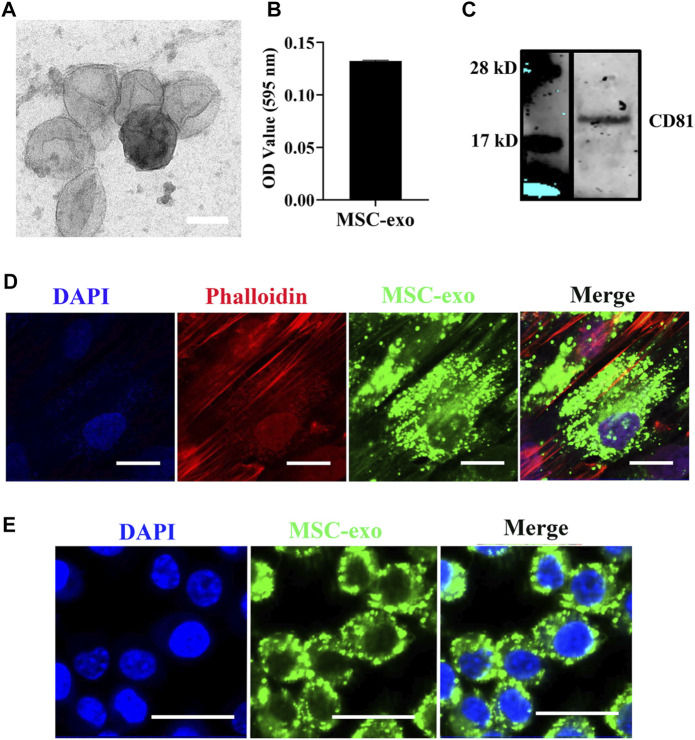
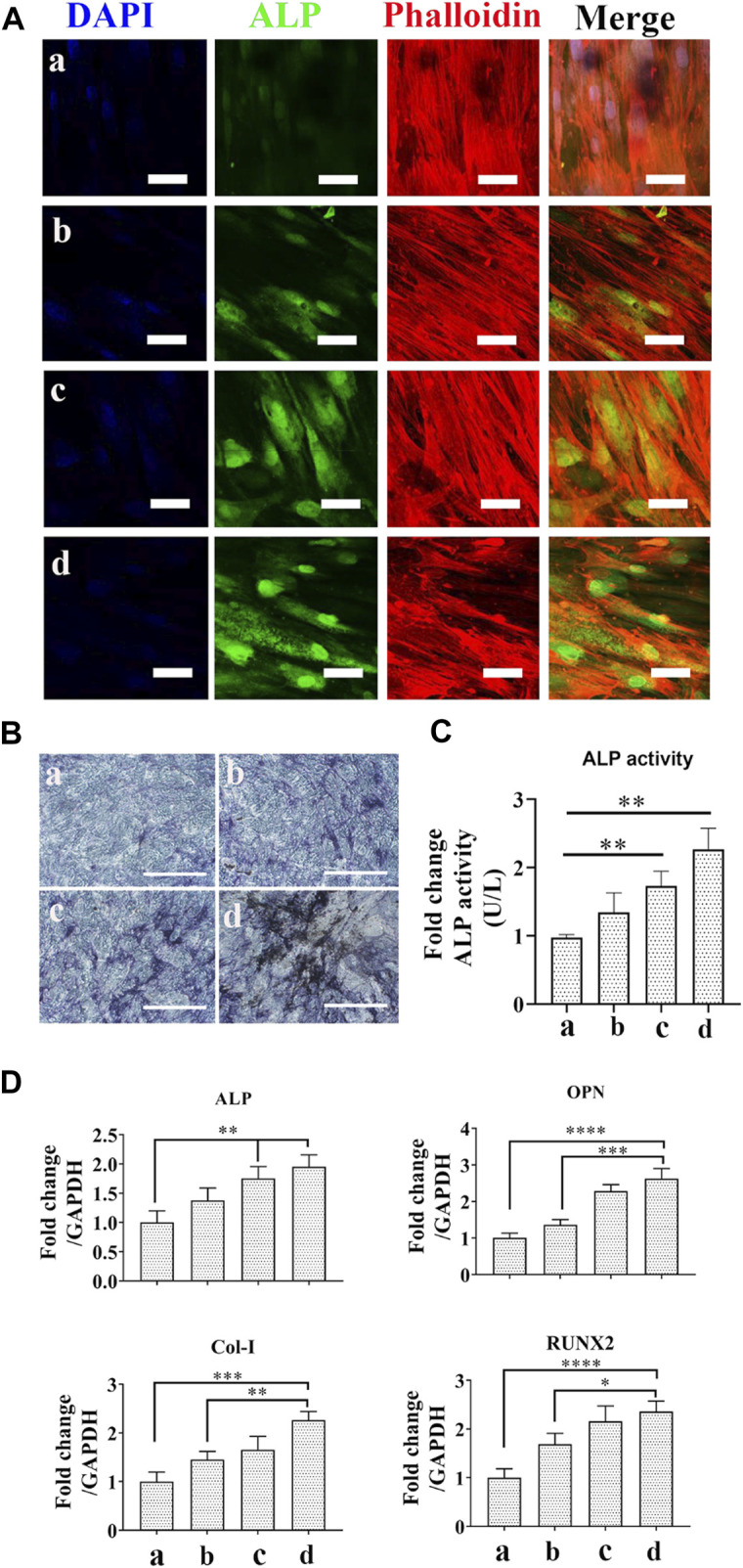
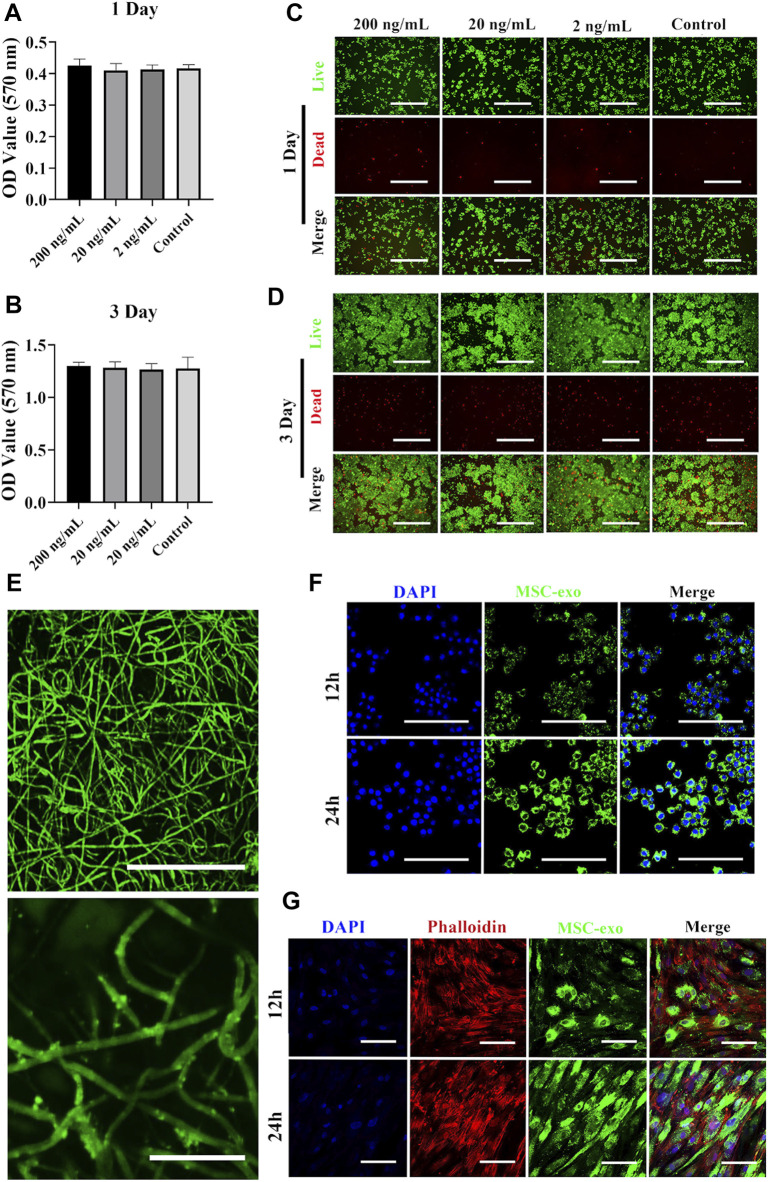
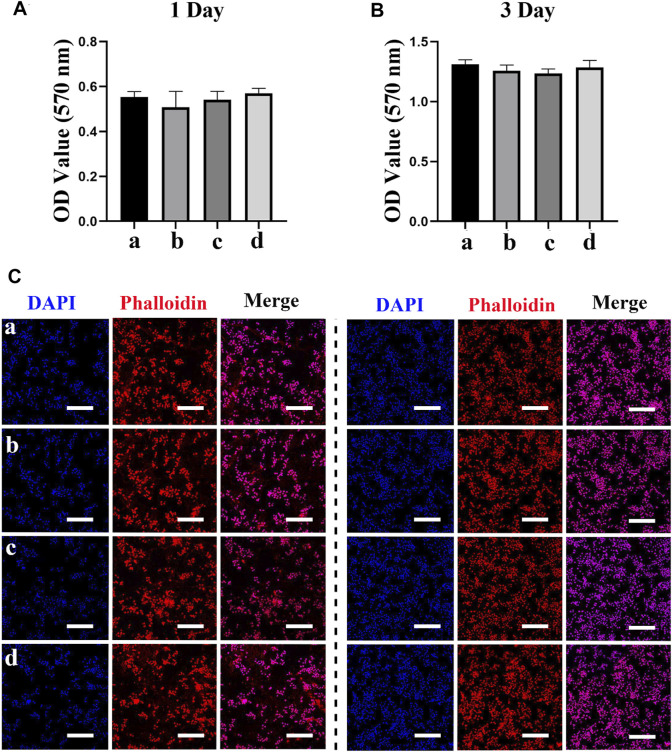
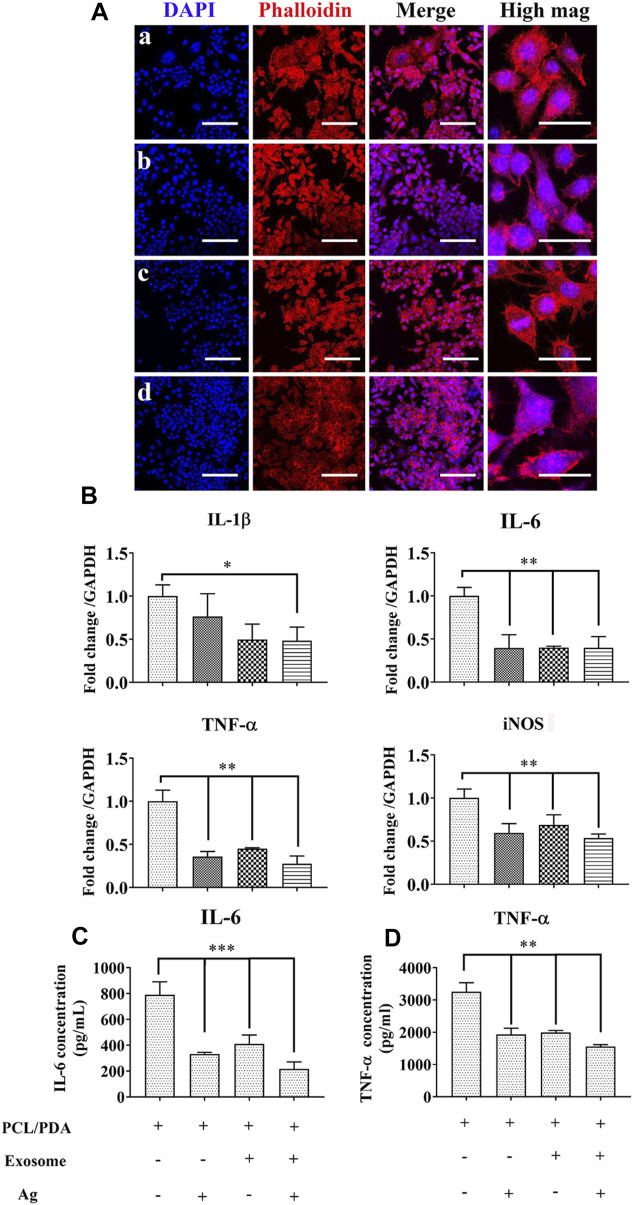
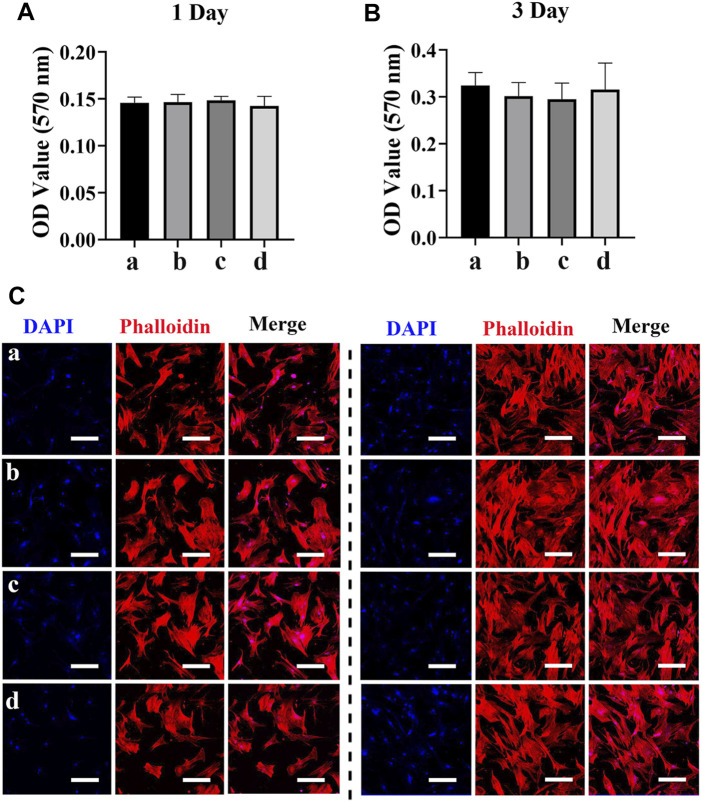
As a wound dressing and barrier membrane, surface modification of polycaprolactone (PCL) is needed in order to achieve better biological activities. Exosomes derived from mesenchymal stem cells (MSCs) hold significant tissue regeneration promise. Silver nanoparticles (Ag) have been suggested as the surface modification technique for various medical devices. Ag and human bone marrow MSC (hBMSC)-derived exosomes (MSCs-exo) were used to modify the PCL scaffold. The impact of different scaffolds on immune cells and MSC proliferation and differentiation was further evaluated. MSCs-exo exhibited cup-shaped morphology with a diameter around 100 nm. MSCs-exo were enriched with exosome marker CD81 and showed good internalization into recipient cells. 200 ng/ml Ag nanoparticles and MSCs-exo were further used to modify the PCL scaffold. The internalization study further indicated a similar releasing pattern of exosomes from Ag/MSCs-exo hybrid scaffolds into RAW264.7 and hBMSCs at 12 and 24 h, respectively. Macrophages play an important role during different stages of bone regeneration. The MTT and confocal microscopy study demonstrated no significant toxicity of exosome and/or Ag hybrid scaffolds for macrophages and MSCs. Inflammatory macrophages were further used to mimic the inflammatory environment. A mixed population of elongated and round morphology was noted in the exosome and Ag hybrid group, in which the proinflammatory genes and secretion of IL-6 and TNF-α were significantly reduced. In addition, the exosome and Ag hybrid scaffolds could significantly boost the osteogenic differentiation of hBMSCs. This study highlights the possibility of using Ag nanoparticles and MSCs-exo to modify the PCL scaffold, thus providing new insight into the development of the novel immunomodulatory biomembrane.
作为一种伤口敷料和屏障膜,聚己内酯(PCL)需要进行表面改性以获得更好的生物活性。间充质干细胞(MSC)来源的外泌体具有显著的组织再生潜力。银纳米颗粒(Ag)已被建议作为各种医疗器械的表面改性技术。采用Ag和人骨髓间充质干细胞(hBMSC)来源的外泌体(MSCs-exo)对PCL支架进行改性。进一步评估了不同支架对免疫细胞以及MSC增殖和分化的影响。MSCs-exo呈现杯状形态,直径约为100 nm。MSCs-exo富含外泌体标志物CD81,并显示出良好的被受体细胞内化的能力。200 ng/ml的Ag纳米颗粒和MSCs-exo进一步用于改性PCL支架。内化研究进一步表明,在12小时和24小时时,Ag/MSCs-exo混合支架中的外泌体分别以相似的释放模式进入RAW264.7细胞和hBMSCs。巨噬细胞在骨再生的不同阶段发挥着重要作用。MTT和共聚焦显微镜研究表明,外泌体和/或Ag混合支架对巨噬细胞和MSCs无明显毒性。进一步使用炎性巨噬细胞模拟炎性环境。在外泌体和Ag混合组中观察到了细长和圆形形态的混合群体,其中促炎基因以及IL-6和TNF-α的分泌显著减少。此外,外泌体和Ag混合支架可显著促进hBMSCs的成骨分化。本研究突出了使用Ag纳米颗粒和MSCs-exo改性PCL支架的可能性,从而为新型免疫调节生物膜的开发提供了新的见解。