Urban Katelyn, Chu Sherman, Scheufele Christian, Giesey Rachel L, Mehrmal Sino, Uppal Prabhdeep, Delost Gregory R
Lake Erie College of Osteopathic Medicine, Greensburg, Pennsylvania.
Western University of Health Sciences, College of Osteopathic Medicine of the Pacific-Northwest, Lebanon, Oregon.
JAAD Int. 2020 Nov 30;2:22-27. doi: 10.1016/j.jdin.2020.10.003. eCollection 2021 Mar.
Fungal skin diseases are highly prevalent worldwide, but few existing studies focus on the burden of dermatomycoses.
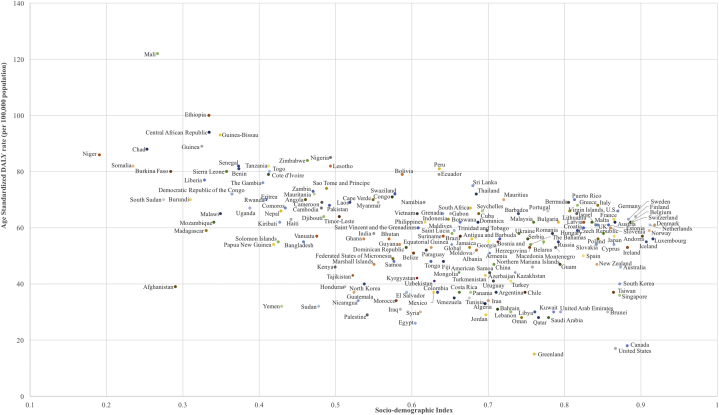
An analysis of fungal skin disease trends in 2017 in 195 countries worldwide was conducted using the Global Burden of Disease Study database, including prevalence rates, age and sex patterns, and fungal burden, using disability-adjusted life years (DALYs). Age-standardized DALYs were also compared to the sociodemographic index values of all the countries in 2017.
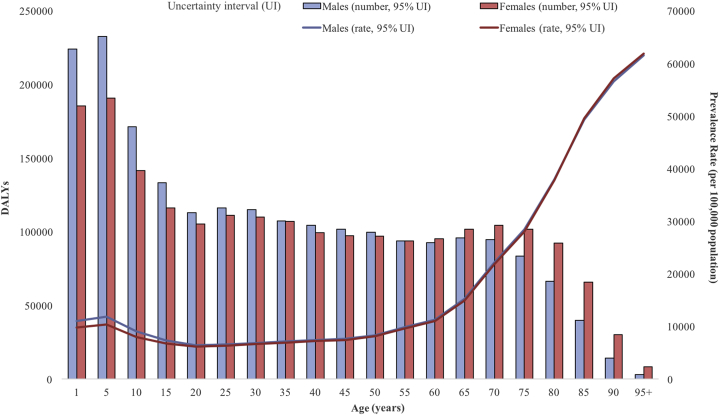
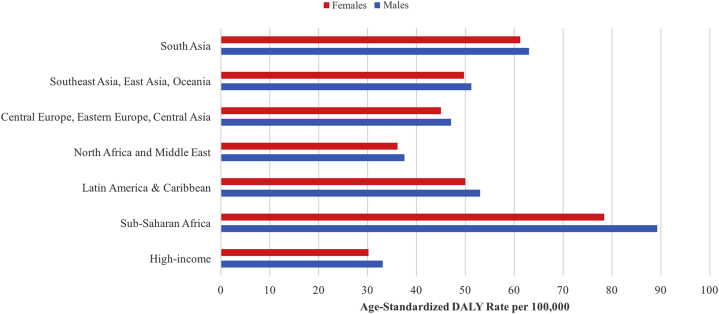
The age-specific fungal skin disease DALYs in 2017 showed a right-skewed distribution, with a peak between 1 and 5 years of age. The world region with the greatest burden of fungal skin disease was sub-Saharan Africa (DALY rate 89.3 per 100,000 males, 78.42 for females), and the individual country with the greatest DALY rate was Mali (122). The Global Burden of Disease super region with the lowest fungal skin disease burden had high incomes (DALY rate 33.12 per 100,000 males, 30.16 for females), which includes southern Latin America, western Europe, high-income North America, Australasia, and high-income southern Pacific.
Skin mycoses place a substantial burden on patients worldwide. This burden is the greatest in resource-poor countries, tropical regions, and children between 1 and 5 years of age. DALYs can potentially serve as a purposeful measure for directing health policy resources to improve the global impact of fungal skin disease.
真菌性皮肤病在全球范围内高度流行,但现有研究很少关注皮肤癣菌病的负担。
利用全球疾病负担研究数据库对2017年全球195个国家的真菌性皮肤病趋势进行分析,包括患病率、年龄和性别模式以及真菌负担,采用伤残调整生命年(DALYs)。还将年龄标准化的DALYs与2017年所有国家的社会人口指数值进行了比较。
2017年特定年龄的真菌性皮肤病DALYs呈右偏态分布,在1至5岁之间达到峰值。真菌性皮肤病负担最重的世界区域是撒哈拉以南非洲(男性DALY率为每10万人89.3,女性为78.42),DALY率最高的国家是马里(122)。真菌性皮肤病负担最低的全球疾病负担超级区域是高收入地区(男性DALY率为每10万人33.12,女性为30.16),包括拉丁美洲南部、西欧、高收入北美、澳大拉西亚和高收入南太平洋地区。
皮肤癣菌病给全球患者带来了沉重负担。这种负担在资源匮乏国家、热带地区以及1至5岁的儿童中最为严重。DALYs有可能作为一种有针对性的衡量标准,用于指导卫生政策资源,以改善真菌性皮肤病对全球的影响。