Department of Pharmacy, University of Zambia, Lusaka, Zambia.
School of Public Health, University of Zambia, Lusaka, Zambia.
Pan Afr Med J. 2021 May 25;39:69. doi: 10.11604/pamj.2021.39.69.27138. eCollection 2021.
globally, almost half of all deaths in children under five years of age occur among neonates. We investigated the predictors of mortality within 28 days among preterm infants at a tertiary hospital in Lusaka, Zambia.
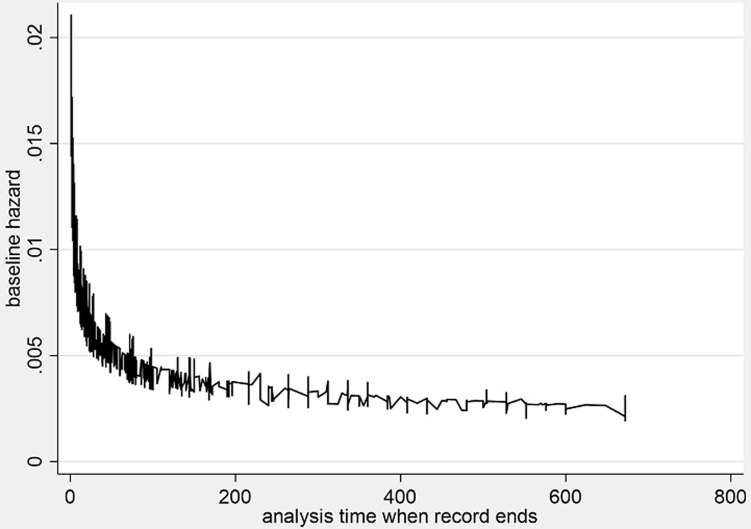
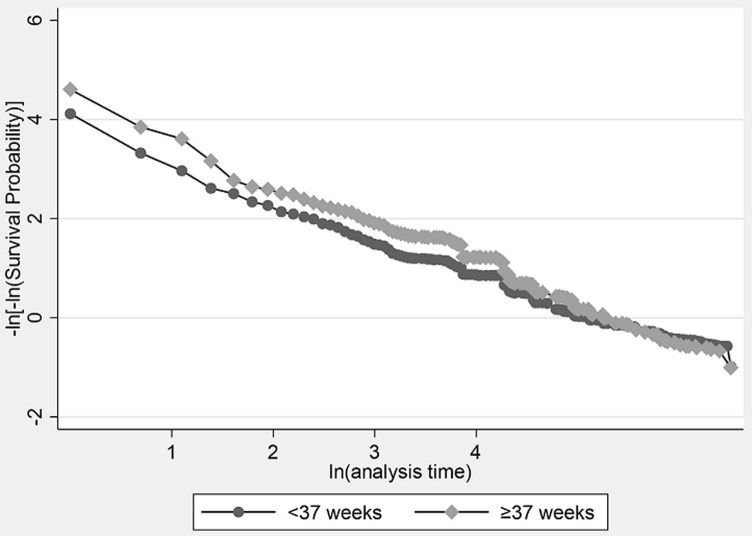
we reviewed admission records linked to birth, mortality, and hospital discharge from 1 January 2018 to 30 September 2019. Information was retrieved with a follow-up period of 28 days post-delivery to discharge/mortality. We used the Weibull hazards regression to establish the best predictor model for mortality among the neonates.
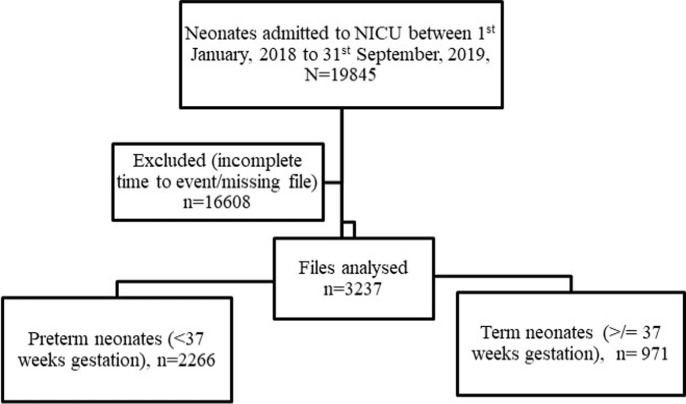
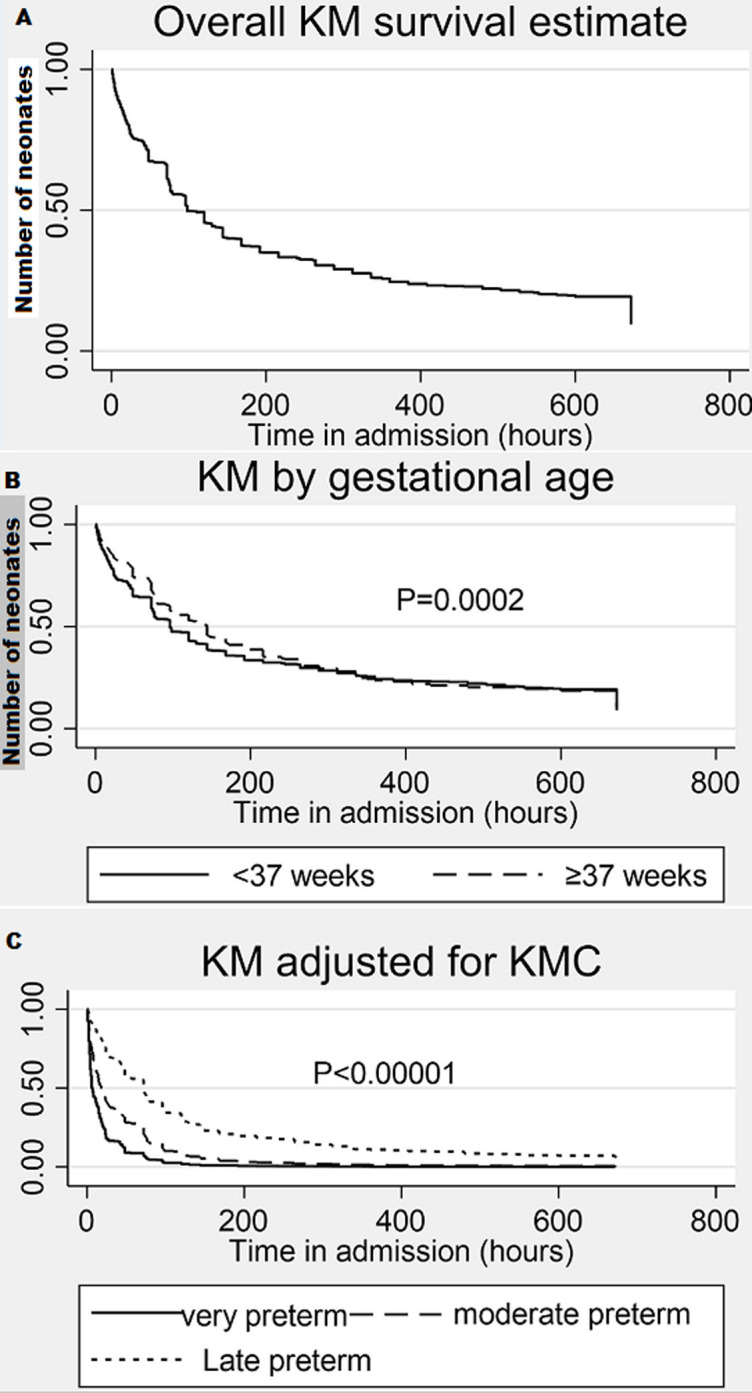
a total of 3237 case records of women with a median age of 27 years (IQR, 22-33) were included in the study, of which 971 (30%) delivered term infants and 2267 (70%) preterm infants. The overall median survival time of the infants was 98 hours (IQR, 34-360). Preterm birth was not associated with increased hazards of mortality compared to term birth (p=0.078). Being in the Kangaroo Mother Care compared to Neonatal Intensive Care Unit (NICU), and a unit increase in birth weight were independently associated with reduced hazards of mortality. On the other hand, having hypoxic-ischemic encephalopathy, experiencing difficulty in feeding and vaginal delivery compared to caesarean section independently increased the hazards of mortality.
having hypoxic-ischemic encephalopathy, vaginal delivery, and experiencing difficulty in feeding increases the risk of mortality among neonates. Interventions to reduce neonatal mortality should be directed on these factors in this setting.
在全球范围内,五岁以下儿童死亡人数中几乎有一半发生在新生儿期。我们研究了赞比亚卢萨卡一家三级医院早产儿 28 天内的死亡预测因素。
我们回顾了 2018 年 1 月 1 日至 2019 年 9 月 30 日期间与分娩、死亡和出院相关的入院记录。信息是在分娩后 28 天的随访期间检索到的。我们使用威布尔风险回归来建立新生儿死亡率的最佳预测模型。
共有 3237 名妇女的病例记录被纳入研究,中位数年龄为 27 岁(IQR,22-33),其中 971 名(30%)分娩足月婴儿,2267 名(70%)早产儿。婴儿的总体中位数生存时间为 98 小时(IQR,34-360)。与足月出生相比,早产与死亡率增加无关(p=0.078)。与新生儿重症监护病房(NICU)相比,在袋鼠式护理中,以及出生体重每增加一个单位,与死亡率降低相关。另一方面,患有缺氧缺血性脑病、与剖腹产相比存在喂养困难和阴道分娩,独立增加了死亡风险。
患有缺氧缺血性脑病、阴道分娩和喂养困难会增加新生儿的死亡风险。在这种情况下,应针对这些因素采取干预措施来降低新生儿死亡率。