Paciello Fabiola, Pisani Anna, Rolesi Rolando, Escarrat Vincent, Galli Jacopo, Paludetti Gaetano, Grassi Claudio, Troiani Diana, Fetoni Anna Rita
Fondazione Policlinico Universitario A. Gemelli IRCCS, 00168 Roma, Italy.
Department of Neuroscience, Università Cattolica del Sacro Cuore, 00168 Roma, Italy.
Antioxidants (Basel). 2021 Jul 26;10(8):1188. doi: 10.3390/antiox10081188.
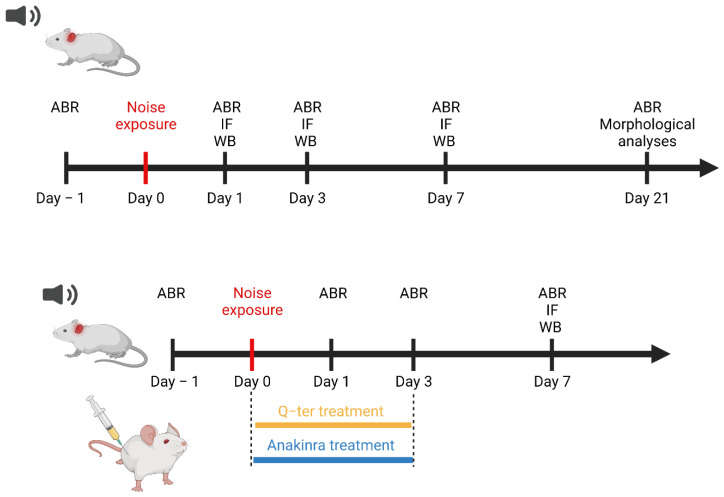
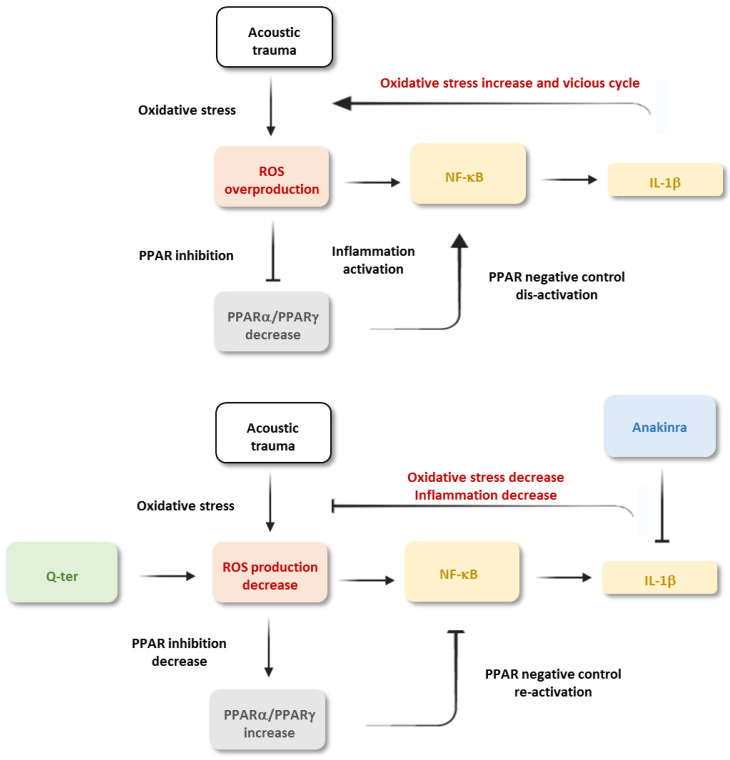
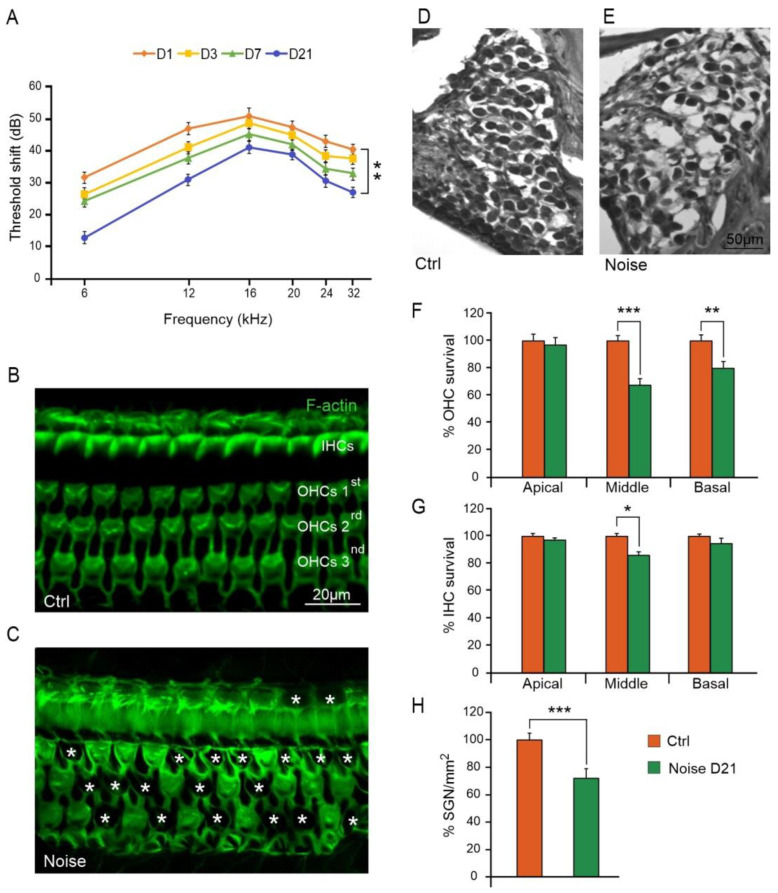
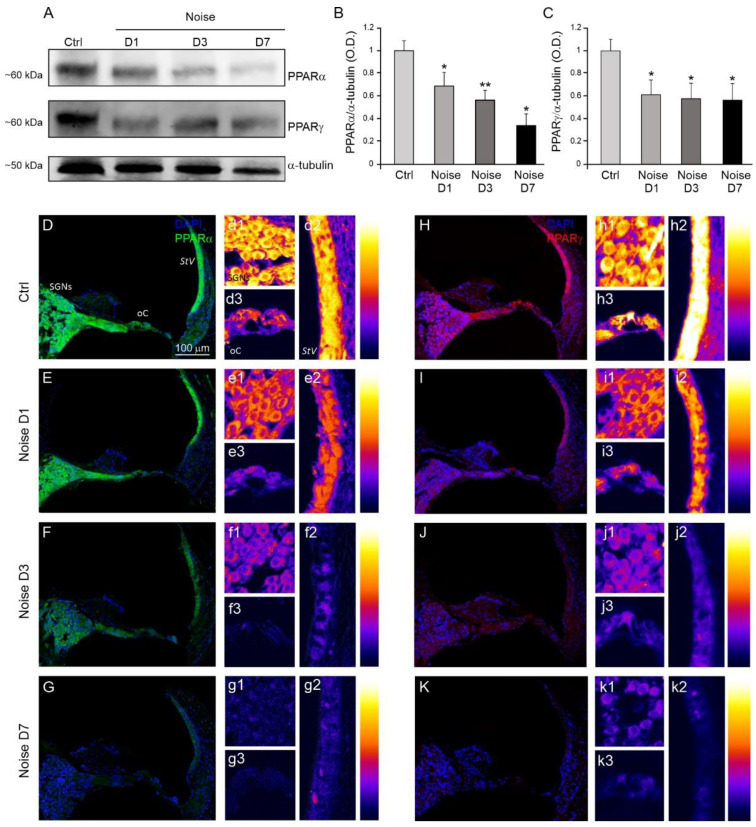
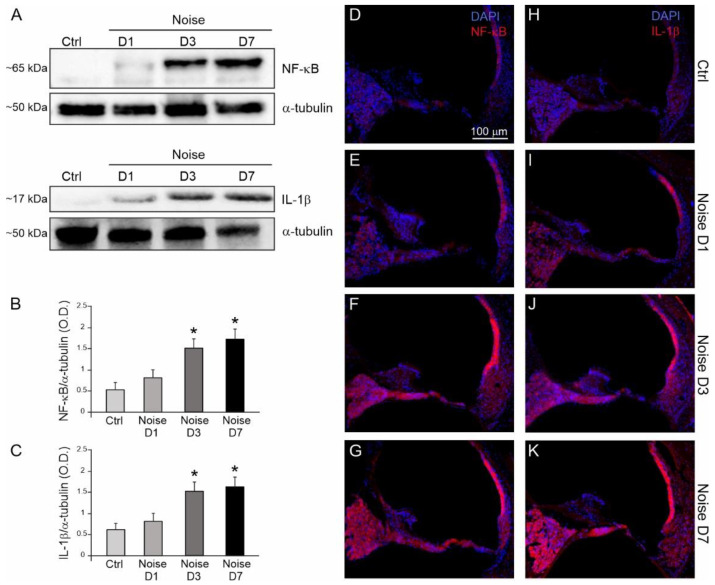
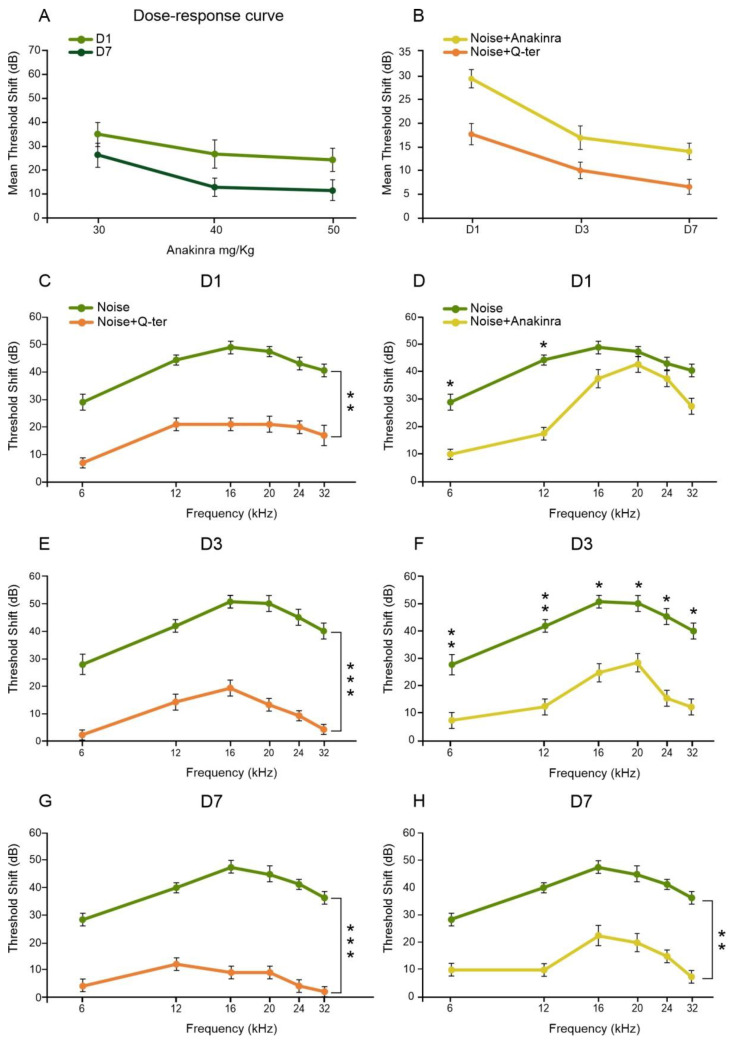
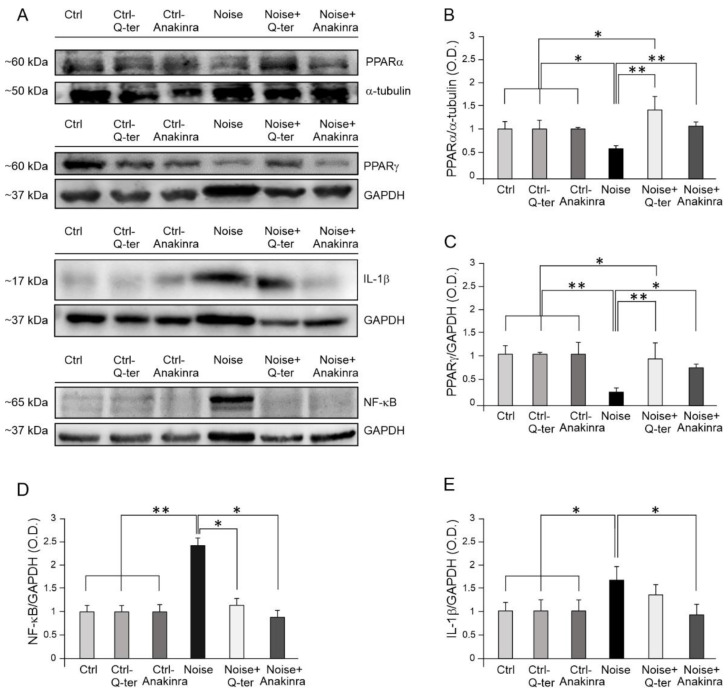
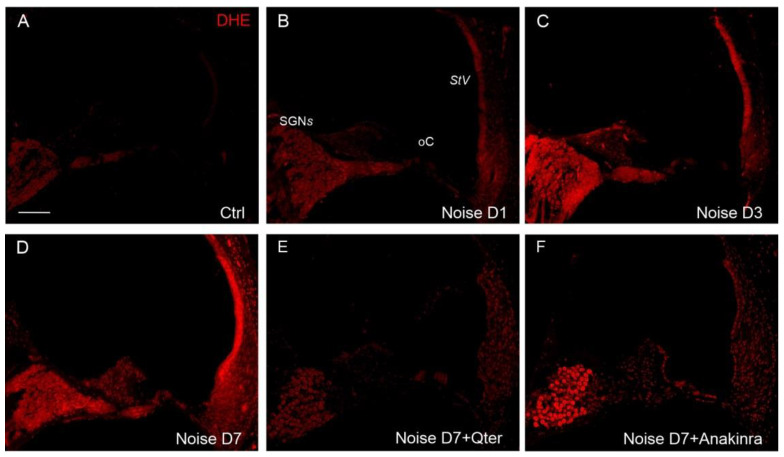
The cross-talk between oxidative stress and inflammation seems to play a key role in noise-induced hearing loss. Several studies have addressed the role of PPAR receptors in mediating antioxidant and anti-inflammatory effects and, although its protective activity has been demonstrated in several tissues, less is known about how PPARs could be involved in cochlear dysfunction induced by noise exposure. In this study, we used an in vivo model of noise-induced hearing loss to investigate how oxidative stress and inflammation participate in cochlear dysfunction through PPAR signaling pathways. Specifically, we found a progressive decrease in PPAR expression in the cochlea after acoustic trauma, paralleled by an increase in oxidative stress and inflammation. By comparing an antioxidant (Q-ter) and an anti-inflammatory (Anakinra) treatment, we demonstrated that oxidative stress is the primary element of damage in noise-induced cochlear injury and that increased inflammation can be considered a consequence of PPAR down-regulation induced by ROS production. Indeed, by decreasing oxidative stress, PPARs returned to control values, reactivating the negative control on inflammation in a feedback loop.
氧化应激与炎症之间的相互作用似乎在噪声性听力损失中起关键作用。多项研究探讨了PPAR受体在介导抗氧化和抗炎作用中的作用,尽管其保护活性已在多个组织中得到证实,但关于PPAR如何参与噪声暴露引起的耳蜗功能障碍却知之甚少。在本研究中,我们使用噪声性听力损失的体内模型来研究氧化应激和炎症如何通过PPAR信号通路参与耳蜗功能障碍。具体而言,我们发现声学创伤后耳蜗中PPAR表达逐渐降低,同时氧化应激和炎症增加。通过比较抗氧化剂(Q-ter)和抗炎药(阿那白滞素)治疗,我们证明氧化应激是噪声性耳蜗损伤的主要损伤因素,并且炎症增加可被认为是由ROS产生引起的PPAR下调的结果。事实上,通过降低氧化应激,PPAR恢复到对照值,在反馈回路中重新激活对炎症的负调控。