Fan Rui, Hao Yuntao, Liu Xinran, Kang Jiawei, Hu Jiani, Mao Ruixue, Liu Rui, Zhu Na, Xu Meihong, Li Yong
Department of Nutrition and Food Hygiene, School of Public Health, Peking University, Beijing 100191, China.
Molecules. 2021 Aug 15;26(16):4942. doi: 10.3390/molecules26164942.
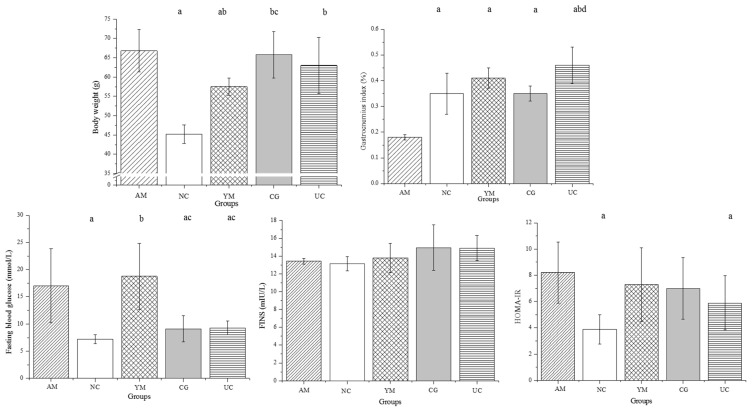
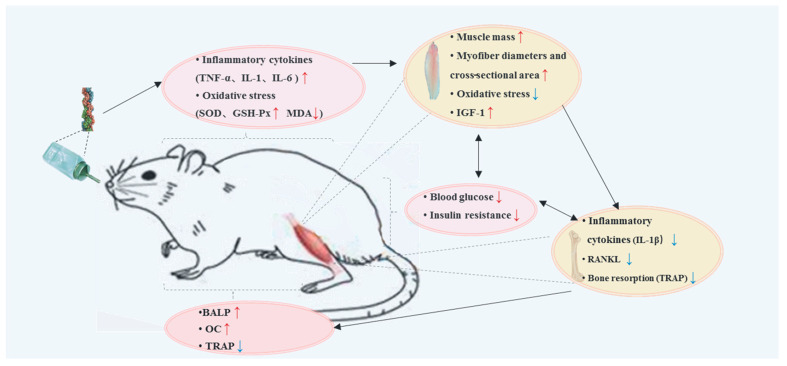
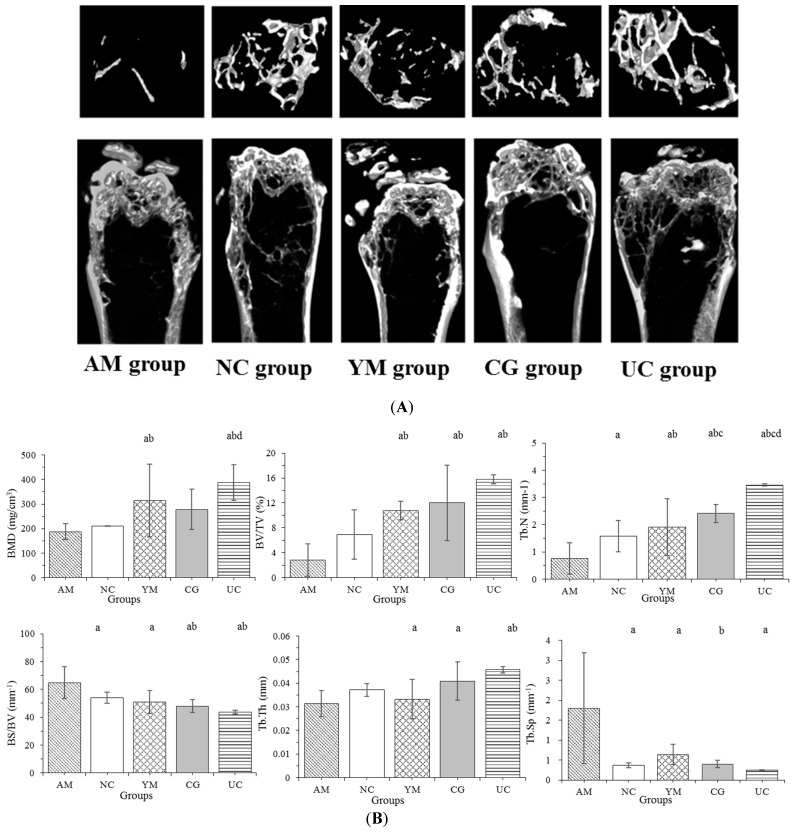
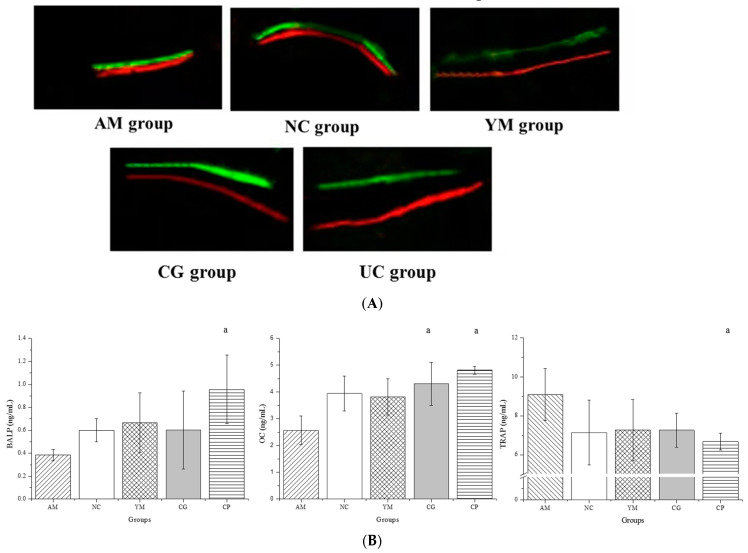
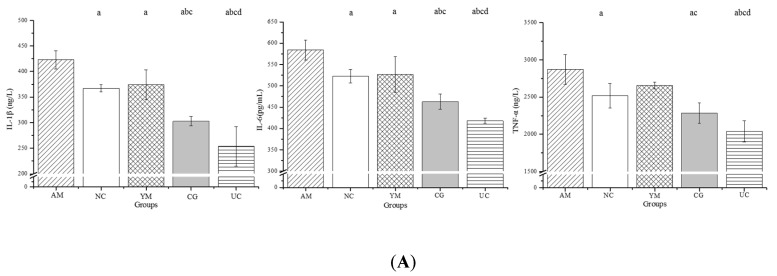
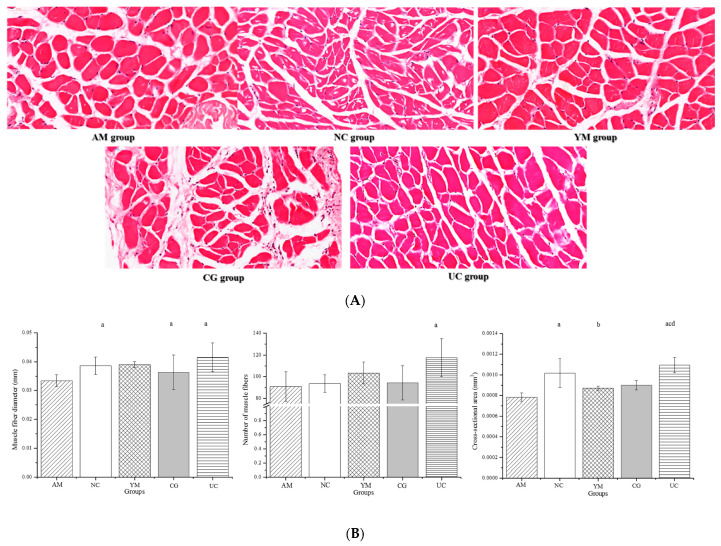
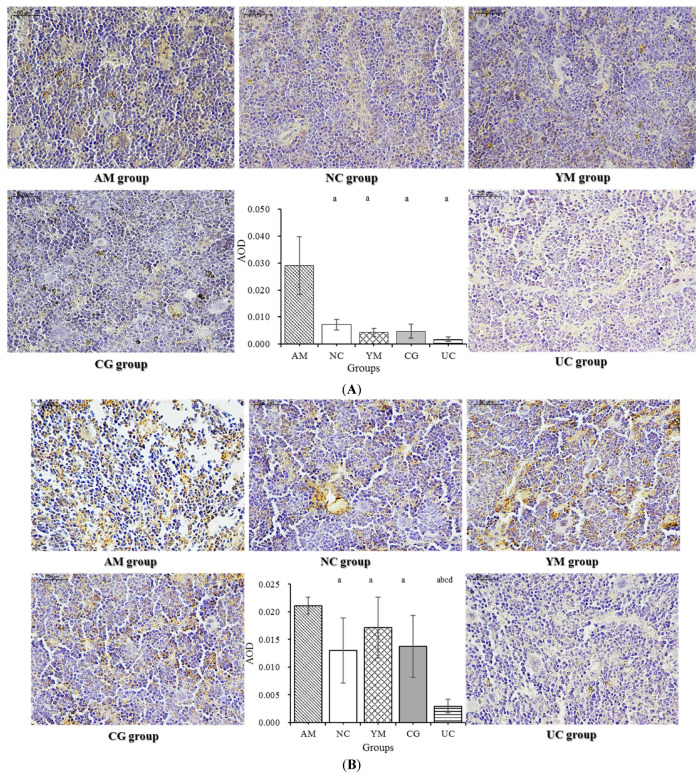
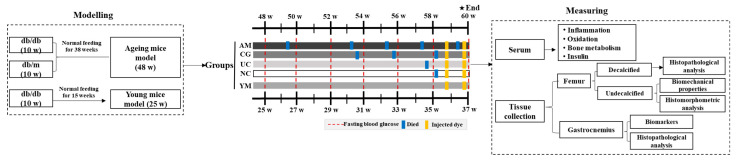
Ageing-related bone impairment due to exposure to hyperglycemic environment is scarcely researched. The aim was to confirm the improvement effects of undenatured type II collagen (UC II) on bone impairment in ageing db/db mice, and the ageing model was established by normal feeding for 48-week-old. Then, the ageing db/db mice were randomly assigned to UC II intervention, the ageing model, and the chondroitin sulfate + glucosamine hydrochloride control groups. After 12 weeks of treatment, femoral microarchitecture and biomechanical parameters were observed, biomarkers including bone metabolism, inflammatory cytokines, and oxidative stress were measured, and the gastrocnemius function and expressions of interleukin (IL) 1β, receptor activator of nuclear factor (NF)-κB ligand (RANKL), and tartrate-resistant acid phosphatase (TRAP) were analyzed. The results showed that the mice in the UC II intervention group showed significantly superior bone and gastrocnemius properties than those in the ageing model group, including bone mineral density (287.65 ± 72.77 vs. 186.97 ± 32.2 mg/cm), gastrocnemius index (0.46 ± 0.07 vs. 0.18 ± 0.01%), muscle fiber diameter (0.0415 ± 0.005 vs. 0.0330 ± 0.002 mm), and cross-sectional area (0.0011 ± 0.00007 vs. 0.00038 ± 0.00004 mm). The UC II intervention elevated bone mineralization and formation and decreased bone resorption, inflammatory cytokines, and the oxidative stress. In addition, lower protein expression of IL-1β, RANKL, and TRAP in the UC II intervention group was observed. These findings suggested that UC II improved bones impaired by T2DM during ageing, and the likely mechanism was partly due to inhibition of inflammation and oxidative stress.
关于高血糖环境导致的与衰老相关的骨损伤的研究很少。本研究旨在证实未变性II型胶原蛋白(UC II)对衰老的db/db小鼠骨损伤的改善作用,通过对48周龄小鼠正常饲养建立衰老模型。然后,将衰老的db/db小鼠随机分为UC II干预组、衰老模型组和硫酸软骨素+盐酸氨基葡萄糖对照组。治疗12周后,观察股骨微观结构和生物力学参数,检测包括骨代谢、炎性细胞因子和氧化应激在内的生物标志物,并分析腓肠肌功能以及白细胞介素(IL)-1β、核因子κB受体活化因子配体(RANKL)和抗酒石酸酸性磷酸酶(TRAP)的表达。结果显示,UC II干预组小鼠的骨骼和腓肠肌性能明显优于衰老模型组,包括骨密度(287.65±72.77 vs. 186.97±32.2 mg/cm)、腓肠肌指数(0.46±0.07 vs. 0.18±0.01%)、肌纤维直径(0.0415±0.005 vs. 0.0330±0.002 mm)和横截面积(0.0011±0.00007 vs. 0.00038±0.00004 mm)。UC II干预提高了骨矿化和形成,降低了骨吸收、炎性细胞因子和氧化应激。此外,观察到UC II干预组中IL-1β、RANKL和TRAP的蛋白表达较低。这些发现表明,UC II改善了衰老过程中2型糖尿病导致的骨损伤,其可能机制部分是由于抑制了炎症和氧化应激。