Department of Molecular Epidemiology, Medical Research Institute, Tokyo Medical and Dental University, Tokyo 113-8510, Japan.
Department of Nutritional Epidemiology and Shokuiku, National Institutes of Biomedical Innovation, Health and Nutrition, Tokyo 162-8636, Japan.
Nutrients. 2021 Aug 19;13(8):2854. doi: 10.3390/nu13082854.
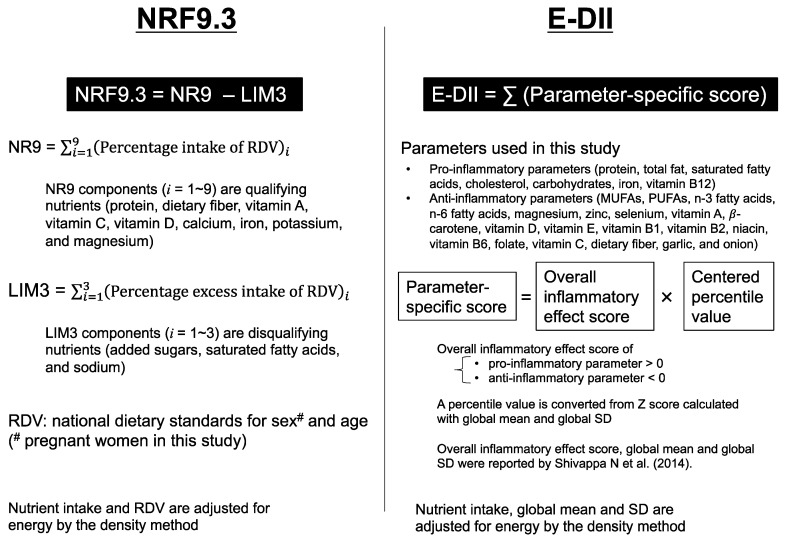
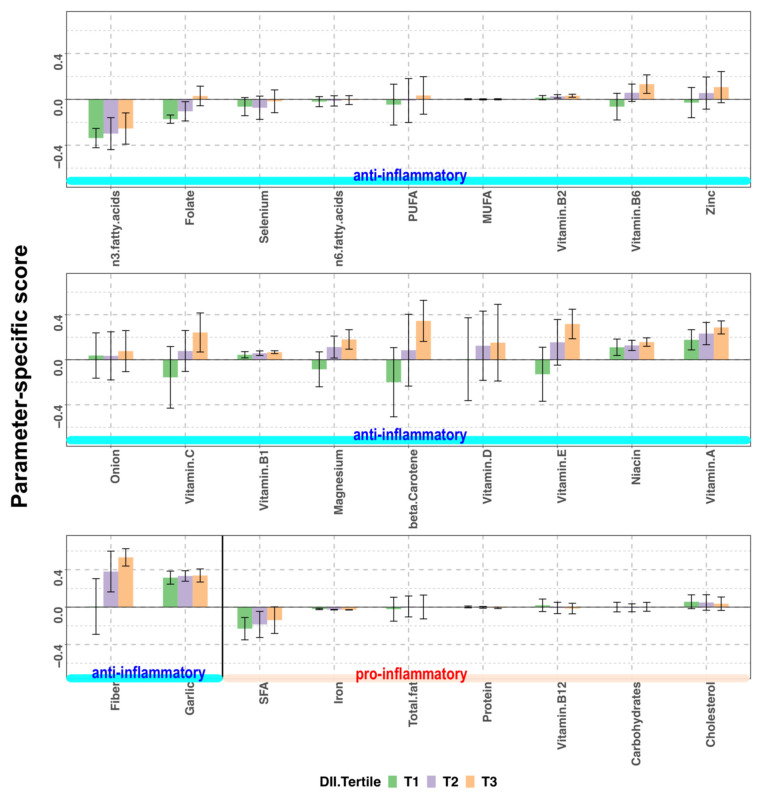
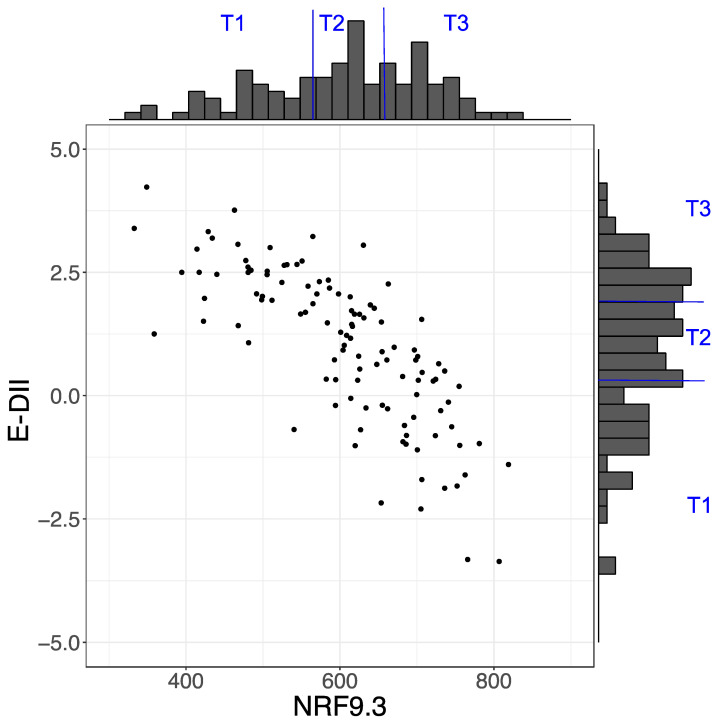
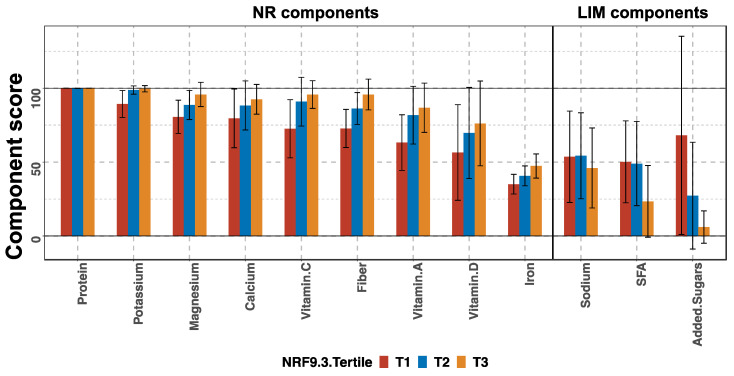
The maternal diet can potentially influence the life-course health of the child. A poor-quality maternal diet creates nutrient deficiencies and affects immune-metabolic regulation during pregnancy. The nutrient-based overall dietary quality can be assessed using the Nutrient-Rich Food Index 9.3 (NRF9.3), which measures adherence to the national reference daily values of nutrient intake. Pro- and anti-inflammatory nutrient intake can be assessed using the energy-adjusted dietary inflammatory index (E-DII), a comprehensive index of diet-derived inflammatory capacity. Using these indices, we assessed the overall dietary quality and inflammatory potential of pregnant women during mid-gestation in an urban area of Japan ( = 108) and found that there was a strong inverse correlation between the NRF9.3 and E-DII scores. Comparison of the scores among the tertiles of NRF9.3 or E-DII indicated that dietary fiber, vitamin C, vitamin A, and magnesium mainly contributed to the variability of both indices. Intake of vegetables and fruits was positively associated with high NRF9.3 scores and negatively associated with high E-DII scores, after adjustment for maternal age, pre-pregnancy body mass index, and educational level. Consistent with the previous studies that used dietary pattern analysis, this study also demonstrated that vegetables and fruits were the food groups chiefly associated with high dietary quality and low inflammatory potential among pregnant Japanese women.
孕妇的饮食可能会影响孩子的终生健康。不良的孕妇饮食会造成营养缺乏,并影响怀孕期间的免疫代谢调节。营养丰富的食物指数 9.3(NRF9.3)可用于评估基于营养素的整体饮食质量,该指数衡量了孕妇对营养素每日参考摄入量的遵守情况。可使用能量调整后的饮食炎症指数(E-DII)评估促炎和抗炎营养素的摄入量,这是衡量饮食炎症能力的综合指标。使用这些指标,我们评估了日本城区孕妇在妊娠中期的整体饮食质量和炎症潜能(n = 108),发现 NRF9.3 和 E-DII 评分之间存在很强的负相关。NRF9.3 或 E-DII 三分位数评分的比较表明,膳食纤维、维生素 C、维生素 A 和镁主要导致了这两个指数的差异。调整孕妇的年龄、孕前体重指数和教育水平后,蔬菜和水果的摄入量与 NRF9.3 高分呈正相关,与 E-DII 高分呈负相关。与使用饮食模式分析的先前研究一致,本研究还表明,蔬菜和水果是与日本孕妇高饮食质量和低炎症潜能主要相关的食物组。