Suttisansanee Uthaiwan, Thiyajai Parunya, Chalermchaiwat Parisut, Wongwathanarat Khanitha, Pruesapan Kanchana, Charoenkiatkul Somsri, Temviriyanukul Piya
Institute of Nutrition, Mahidol University, Salaya, Phuttamonthon, Nakhon Pathom 73170, Thailand.
Food and Nutrition Academic and Research Cluster, Institute of Nutrition, Mahidol University, Salaya, Phuttamonthon, Nakhon Pathom 73170, Thailand.
Plants (Basel). 2021 Jul 29;10(8):1563. doi: 10.3390/plants10081563.
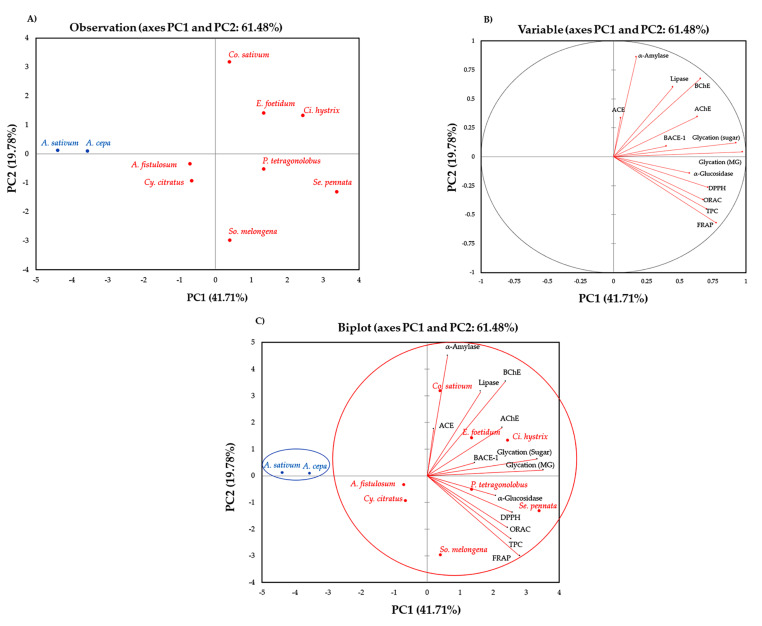
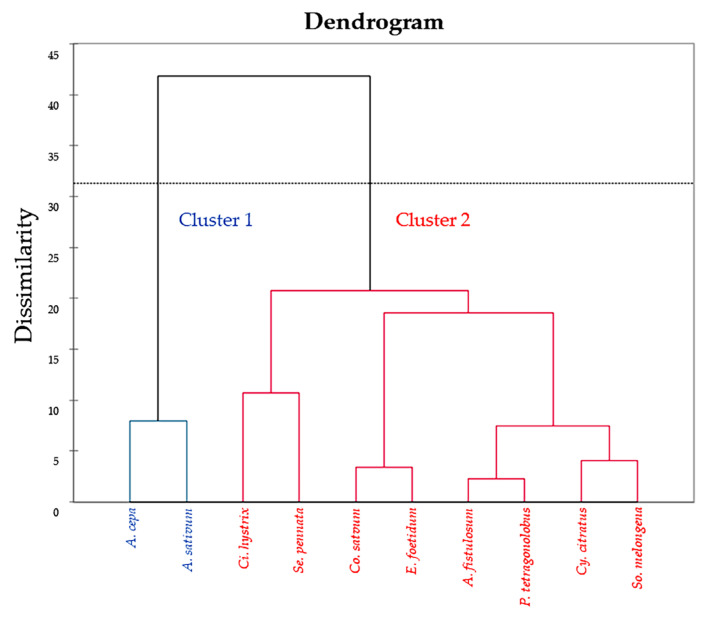
Non-communicable diseases (NCDs) are the leading global cause of death. The World Health Organization (WHO) has endorsed the consumption of fruits and vegetables because they are rich in phytochemicals that sustainably ameliorate the occurrence of NCDs. Thai food contains many spices and vegetables with recognized health benefits. Quality control of plant samples encountered a bottleneck in the field and comparative studies of plant control origins including species or cultivar identification, growing area and appropriate harvesting time are limited. To address this issue, all plant samples used in this study were cultivated and controlled by the Department of Agriculture, Ministry of Agriculture and Cooperatives, Thailand. The samples were phytochemically screened and determined their health-promoting bioactivities via antioxidant activities and inhibition of NCD-related enzymes including lipase (obesity), α-amylase and α-glucosidase (diabetes), angiotensin-converting enzyme (hypertension), as well as acetylcholinesterase, butyrylcholinesterase and β-secretase (Alzheimer's disease). The non-enzymatic reaction toward glycation was also evaluated. The results showed that subsp. (Lace) Maslin, Seigler & Ebinger, DC. and 'Kermit' extracts exhibited high antioxidant activities. Moreover, DC. extract was a potent inhibitor against lipase, angiotensin-converting enzyme and butyrylcholinesterase, while L. and (L.) DC. were potent anti-diabetic agents and subsp. (Lace) Maslin, and Seigler & Ebinger was a potent anti-glycation agent. Our data provide a comparative analysis of ten vegetables to encourage healthy food consumption and development to control NCDs in Thailand in the future.
非传染性疾病是全球主要的死因。世界卫生组织(WHO)倡导食用水果和蔬菜,因为它们富含能可持续改善非传染性疾病发生情况的植物化学物质。泰国食物含有许多具有公认健康益处的香料和蔬菜。植物样本的质量控制在该领域遇到了瓶颈,关于植物对照来源的比较研究,包括物种或品种鉴定、种植区域和适宜收获时间等都很有限。为解决这一问题,本研究中使用的所有植物样本均由泰国农业与合作社部下属的农业司进行种植和管控。对样本进行了植物化学筛选,并通过抗氧化活性以及对与非传染性疾病相关的酶的抑制作用来测定其促进健康的生物活性,这些酶包括脂肪酶(肥胖症)、α-淀粉酶和α-葡萄糖苷酶(糖尿病)、血管紧张素转换酶(高血压),以及乙酰胆碱酯酶、丁酰胆碱酯酶和β-分泌酶(阿尔茨海默病)。还评估了对糖基化的非酶促反应。结果表明,subsp. (Lace) Maslin、Seigler & Ebinger、DC.和‘Kermit’提取物表现出高抗氧化活性。此外,DC.提取物是脂肪酶、血管紧张素转换酶和丁酰胆碱酯酶的有效抑制剂,而L.和(L.)DC.是有效的抗糖尿病剂,subsp. (Lace) Maslin和Seigler & Ebinger是有效的抗糖基化剂。我们的数据提供了对十种蔬菜的比较分析,以鼓励未来在泰国食用健康食品并开展控制非传染性疾病的相关研究。