• 文献检索
  • 文档翻译
  • 深度研究
  • 学术资讯
  • Suppr Zotero 插件Zotero 插件
  • 邀请有礼
  • 套餐&价格
  • 历史记录
应用&插件
Suppr Zotero 插件Zotero 插件浏览器插件Mac 客户端Windows 客户端微信小程序
定价
高级版会员购买积分包购买API积分包
服务
文献检索文档翻译深度研究API 文档MCP 服务
关于我们
关于 Suppr公司介绍联系我们用户协议隐私条款
关注我们

Suppr 超能文献

核心技术专利:CN118964589B侵权必究
粤ICP备2023148730 号-1Suppr @ 2026

文献检索

告别复杂PubMed语法,用中文像聊天一样搜索,搜遍4000万医学文献。AI智能推荐,让科研检索更轻松。

立即免费搜索

文件翻译

保留排版,准确专业,支持PDF/Word/PPT等文件格式,支持 12+语言互译。

免费翻译文档

深度研究

AI帮你快速写综述,25分钟生成高质量综述,智能提取关键信息,辅助科研写作。

立即免费体验

同步和对抗性温度传感器利用灵活的交叉抑制来协调热稳态。

Synchronous and opponent thermosensors use flexible cross-inhibition to orchestrate thermal homeostasis.

作者信息

Hernandez-Nunez Luis, Chen Alicia, Budelli Gonzalo, Berck Matthew E, Richter Vincent, Rist Anna, Thum Andreas S, Cardona Albert, Klein Mason, Garrity Paul, Samuel Aravinthan D T

机构信息

Department of Physics, Harvard University, Cambridge, MA 02138, USA.

Center for Brain Science, Harvard University, Cambridge, MA 02138, USA.

出版信息

Sci Adv. 2021 Aug 27;7(35). doi: 10.1126/sciadv.abg6707. Print 2021 Aug.

DOI:10.1126/sciadv.abg6707
PMID:34452914
原文链接:https://pmc.ncbi.nlm.nih.gov/articles/PMC8397275/
Abstract

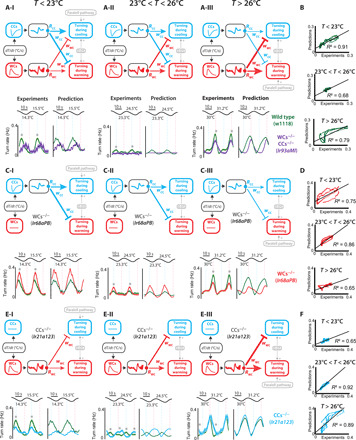
Body temperature homeostasis is essential and reliant upon the integration of outputs from multiple classes of cooling- and warming-responsive cells. The computations that integrate these outputs are not understood. Here, we discover a set of warming cells (WCs) and show that the outputs of these WCs combine with previously described cooling cells (CCs) in a cross-inhibition computation to drive thermal homeostasis in larval WCs and CCs detect temperature changes using overlapping combinations of ionotropic receptors: Ir68a, Ir93a, and Ir25a for WCs and Ir21a, Ir93a, and Ir25a for CCs. WCs mediate avoidance to warming while cross-inhibiting avoidance to cooling, and CCs mediate avoidance to cooling while cross-inhibiting avoidance to warming. Ambient temperature-dependent regulation of the strength of WC- and CC-mediated cross-inhibition keeps larvae near their homeostatic set point. Using neurophysiology, quantitative behavioral analysis, and connectomics, we demonstrate how flexible integration between warming and cooling pathways can orchestrate homeostatic thermoregulation.

摘要

体温稳态至关重要,且依赖于多种类型的冷敏和热敏细胞输出信号的整合。整合这些输出信号的计算过程尚不清楚。在这里,我们发现了一组热敏细胞(WCs),并表明这些WCs的输出信号与先前描述的冷敏细胞(CCs)在交叉抑制计算中相结合,以驱动幼虫的热稳态。WCs和CCs使用离子otropic受体的重叠组合来检测温度变化:WCs使用Ir68a、Ir93a和Ir25a,CCs使用Ir21a、Ir93a和Ir25a。WCs介导对升温的回避,同时交叉抑制对降温的回避,而CCs介导对降温的回避,同时交叉抑制对升温的回避。环境温度依赖性调节WC和CC介导的交叉抑制强度,使幼虫保持在其稳态设定点附近。通过神经生理学、定量行为分析和连接组学,我们展示了升温与降温途径之间灵活的整合如何协调稳态体温调节。

https://cdn.ncbi.nlm.nih.gov/pmc/blobs/2b39/8397275/23f308095ddd/abg6707-F10.jpg
https://cdn.ncbi.nlm.nih.gov/pmc/blobs/2b39/8397275/2461e016a9f4/abg6707-F1.jpg
https://cdn.ncbi.nlm.nih.gov/pmc/blobs/2b39/8397275/c62b8c2ff905/abg6707-F2.jpg
https://cdn.ncbi.nlm.nih.gov/pmc/blobs/2b39/8397275/e90514084f93/abg6707-F3.jpg
https://cdn.ncbi.nlm.nih.gov/pmc/blobs/2b39/8397275/d7dbdfdf5f50/abg6707-F4.jpg
https://cdn.ncbi.nlm.nih.gov/pmc/blobs/2b39/8397275/c24ba1995d30/abg6707-F5.jpg
https://cdn.ncbi.nlm.nih.gov/pmc/blobs/2b39/8397275/0f6d08910a02/abg6707-F6.jpg
https://cdn.ncbi.nlm.nih.gov/pmc/blobs/2b39/8397275/53e07b51ed92/abg6707-F7.jpg
https://cdn.ncbi.nlm.nih.gov/pmc/blobs/2b39/8397275/49cbd0df9481/abg6707-F8.jpg
https://cdn.ncbi.nlm.nih.gov/pmc/blobs/2b39/8397275/77eba60e9455/abg6707-F9.jpg
https://cdn.ncbi.nlm.nih.gov/pmc/blobs/2b39/8397275/23f308095ddd/abg6707-F10.jpg
https://cdn.ncbi.nlm.nih.gov/pmc/blobs/2b39/8397275/2461e016a9f4/abg6707-F1.jpg
https://cdn.ncbi.nlm.nih.gov/pmc/blobs/2b39/8397275/c62b8c2ff905/abg6707-F2.jpg
https://cdn.ncbi.nlm.nih.gov/pmc/blobs/2b39/8397275/e90514084f93/abg6707-F3.jpg
https://cdn.ncbi.nlm.nih.gov/pmc/blobs/2b39/8397275/d7dbdfdf5f50/abg6707-F4.jpg
https://cdn.ncbi.nlm.nih.gov/pmc/blobs/2b39/8397275/c24ba1995d30/abg6707-F5.jpg
https://cdn.ncbi.nlm.nih.gov/pmc/blobs/2b39/8397275/0f6d08910a02/abg6707-F6.jpg
https://cdn.ncbi.nlm.nih.gov/pmc/blobs/2b39/8397275/53e07b51ed92/abg6707-F7.jpg
https://cdn.ncbi.nlm.nih.gov/pmc/blobs/2b39/8397275/49cbd0df9481/abg6707-F8.jpg
https://cdn.ncbi.nlm.nih.gov/pmc/blobs/2b39/8397275/77eba60e9455/abg6707-F9.jpg
https://cdn.ncbi.nlm.nih.gov/pmc/blobs/2b39/8397275/23f308095ddd/abg6707-F10.jpg

相似文献

1
Synchronous and opponent thermosensors use flexible cross-inhibition to orchestrate thermal homeostasis.同步和对抗性温度传感器利用灵活的交叉抑制来协调热稳态。
Sci Adv. 2021 Aug 27;7(35). doi: 10.1126/sciadv.abg6707. Print 2021 Aug.
2
Ionotropic Receptors Specify the Morphogenesis of Phasic Sensors Controlling Rapid Thermal Preference in Drosophila.离子型受体决定果蝇快速热偏好控制的相敏传感器的形态发生。
Neuron. 2019 Feb 20;101(4):738-747.e3. doi: 10.1016/j.neuron.2018.12.022. Epub 2019 Jan 14.
3
The Ionotropic Receptors IR21a and IR25a mediate cool sensing in Drosophila.离子型受体IR21a和IR25a介导果蝇的冷觉感知。
Elife. 2016 Apr 29;5:e13254. doi: 10.7554/eLife.13254.
4
Distinct combinations of variant ionotropic glutamate receptors mediate thermosensation and hygrosensation in .不同组合的变异离子型谷氨酸受体介导了(某种生物)的温度感觉和湿度感觉。
Elife. 2016 Sep 22;5:e17879. doi: 10.7554/eLife.17879.
5
Ionotropic Receptor-dependent cool cells control the transition of temperature preference in Drosophila larvae.离子型受体依赖性冷觉细胞控制果蝇幼虫对温度偏好的转变。
PLoS Genet. 2021 Apr 7;17(4):e1009499. doi: 10.1371/journal.pgen.1009499. eCollection 2021 Apr.
6
Ionotropic Receptor-dependent moist and dry cells control hygrosensation in .离子型受体依赖性的湿敏和干敏细胞控制着……中的湿度感知。 (原句结尾不完整)
Elife. 2017 Jun 16;6:e26654. doi: 10.7554/eLife.26654.
7
The impacts of hypertonic conditions on larval cool cells.高渗条件对幼虫冷细胞的影响。
Front Cell Neurosci. 2024 Sep 23;18:1347460. doi: 10.3389/fncel.2024.1347460. eCollection 2024.
8
Monoacylglycerol acyltransferase maintains ionotropic receptor expression for cool temperature sensing and avoidance in Drosophila.单酰甘油酰基转移酶维持离子型受体的表达,以实现果蝇对低温的感知和躲避。
Commun Biol. 2025 May 29;8(1):765. doi: 10.1038/s42003-025-08154-0.
9
Two Ascending Thermosensory Pathways from the Lateral Parabrachial Nucleus That Mediate Behavioral and Autonomous Thermoregulation.两条来自外侧臂旁核的上行热敏通路介导行为和自主体温调节。
J Neurosci. 2023 Jul 12;43(28):5221-5240. doi: 10.1523/JNEUROSCI.0643-23.2023. Epub 2023 Jun 20.
10
Thermosensory processing in the Drosophila brain.果蝇大脑中的温度感觉处理
Nature. 2015 Mar 19;519(7543):353-7. doi: 10.1038/nature14170. Epub 2015 Mar 4.

引用本文的文献

1
Evolution of temperature preference behaviour among larvae.幼虫温度偏好行为的演变。
iScience. 2025 May 31;28(7):112809. doi: 10.1016/j.isci.2025.112809. eCollection 2025 Jul 18.
2
Morphology and ultrastructure of external sense organs of larvae.幼虫外部感觉器官的形态学与超微结构
Elife. 2025 Jun 16;12:RP91155. doi: 10.7554/eLife.91155.
3
Neural substrates of cold nociception in larva.幼虫冷痛觉感受的神经基质

本文引用的文献

1
Connectomics Analysis Reveals First-, Second-, and Third-Order Thermosensory and Hygrosensory Neurons in the Adult Drosophila Brain.连接组学分析揭示了成年果蝇大脑中的第一、第二和第三级热敏和湿敏神经元。
Curr Biol. 2020 Aug 17;30(16):3167-3182.e4. doi: 10.1016/j.cub.2020.06.028. Epub 2020 Jul 2.
2
A discrete neuronal circuit induces a hibernation-like state in rodents.一种离散的神经元回路可诱导啮齿动物进入类似冬眠的状态。
Nature. 2020 Jul;583(7814):109-114. doi: 10.1038/s41586-020-2163-6. Epub 2020 Jun 11.
3
Neurons that regulate mouse torpor.
Elife. 2025 Jun 13;12:RP91582. doi: 10.7554/eLife.91582.
4
Monoacylglycerol acyltransferase maintains ionotropic receptor expression for cool temperature sensing and avoidance in Drosophila.单酰甘油酰基转移酶维持离子型受体的表达,以实现果蝇对低温的感知和躲避。
Commun Biol. 2025 May 29;8(1):765. doi: 10.1038/s42003-025-08154-0.
5
The impacts of hypertonic conditions on larval cool cells.高渗条件对幼虫冷细胞的影响。
Front Cell Neurosci. 2024 Sep 23;18:1347460. doi: 10.3389/fncel.2024.1347460. eCollection 2024.
6
Drosophila larvae form appetitive and aversive associative memory in response to thermal conditioning.果蝇幼虫通过热驯化形成奖赏和厌恶联想记忆。
PLoS One. 2024 Sep 24;19(9):e0303955. doi: 10.1371/journal.pone.0303955. eCollection 2024.
7
Pulsing Addition to Modulated Electro-Hyperthermia.脉冲添加到调制式电过热疗法中。
Bioengineering (Basel). 2024 Jul 17;11(7):725. doi: 10.3390/bioengineering11070725.
8
Functional relationship between peripheral thermosensation and behavioral thermoregulation.外周温度觉与行为体温调节之间的功能关系。
Front Neural Circuits. 2024 Jul 9;18:1435757. doi: 10.3389/fncir.2024.1435757. eCollection 2024.
9
Vertebrate behavioral thermoregulation: knowledge and future directions.脊椎动物的行为体温调节:知识与未来方向。
Neurophotonics. 2024 Jul;11(3):033409. doi: 10.1117/1.NPh.11.3.033409. Epub 2024 May 20.
10
G protein-coupled receptor-based thermosensation determines temperature acclimatization of Caenorhabditis elegans.基于 G 蛋白偶联受体的热感觉决定了秀丽隐杆线虫的温度适应。
Nat Commun. 2024 Feb 23;15(1):1660. doi: 10.1038/s41467-024-46042-z.
调控小鼠休眠的神经元。
Nature. 2020 Jul;583(7814):115-121. doi: 10.1038/s41586-020-2387-5. Epub 2020 Jun 11.
4
Mosquito heat seeking is driven by an ancestral cooling receptor.蚊子的热感是由一个古老的冷却感受器驱动的。
Science. 2020 Feb 7;367(6478):681-684. doi: 10.1126/science.aay9847.
5
Mechanisms of Homeostatic Synaptic Plasticity .稳态突触可塑性的机制
Front Cell Neurosci. 2019 Dec 3;13:520. doi: 10.3389/fncel.2019.00520. eCollection 2019.
6
Ionotropic Receptors Specify the Morphogenesis of Phasic Sensors Controlling Rapid Thermal Preference in Drosophila.离子型受体决定果蝇快速热偏好控制的相敏传感器的形态发生。
Neuron. 2019 Feb 20;101(4):738-747.e3. doi: 10.1016/j.neuron.2018.12.022. Epub 2019 Jan 14.
7
Distinct activity-gated pathways mediate attraction and aversion to CO in Drosophila.果蝇中不同的活动门控通路介导对 CO 的吸引和回避。
Nature. 2018 Dec;564(7736):420-424. doi: 10.1038/s41586-018-0732-8. Epub 2018 Nov 21.
8
Cells and circuits for thermosensation in mammals.哺乳动物的热感觉细胞与神经回路
Neurosci Lett. 2019 Jan 18;690:167-170. doi: 10.1016/j.neulet.2018.10.026. Epub 2018 Oct 21.
9
An expression atlas of variant ionotropic glutamate receptors identifies a molecular basis of carbonation sensing.变构型离子型谷氨酸受体表达图谱鉴定碳酸感应的分子基础。
Nat Commun. 2018 Oct 12;9(1):4252. doi: 10.1038/s41467-018-06453-1.
10
Temporal processing and context dependency in response to mechanosensation.对机械感觉反应的时间处理和语境相关性。
Elife. 2018 Jun 26;7:e36419. doi: 10.7554/eLife.36419.