Department of Physiology, Semmelweis University, Budapest, Hungary.
Department of Genetics, Cell- and Immunobiology, Semmelweis University, Budapest, Hungary.
Front Immunol. 2021 Aug 12;12:671995. doi: 10.3389/fimmu.2021.671995. eCollection 2021.
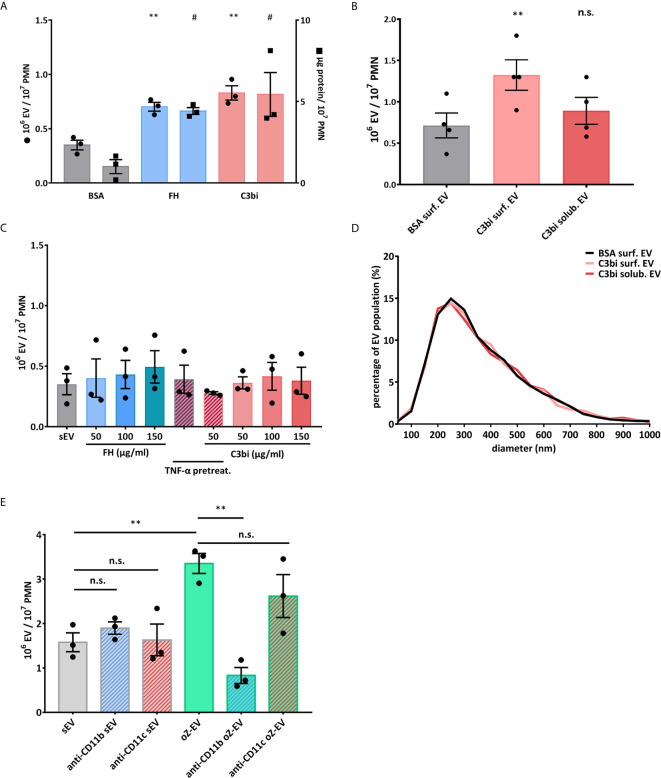
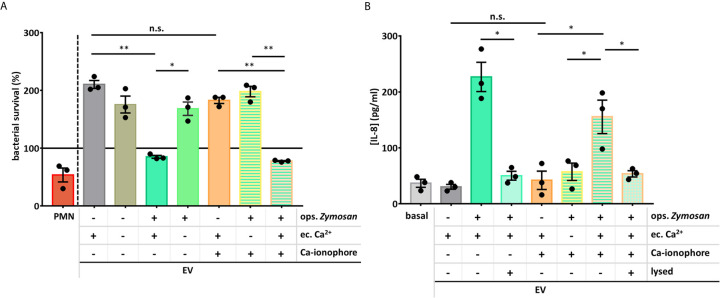
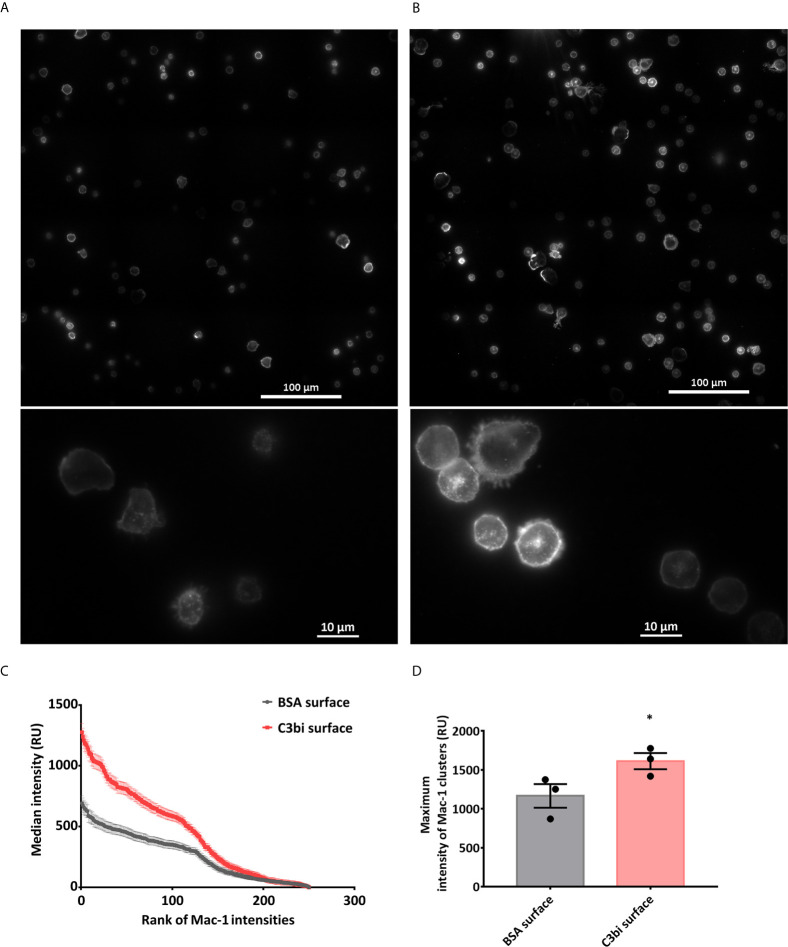
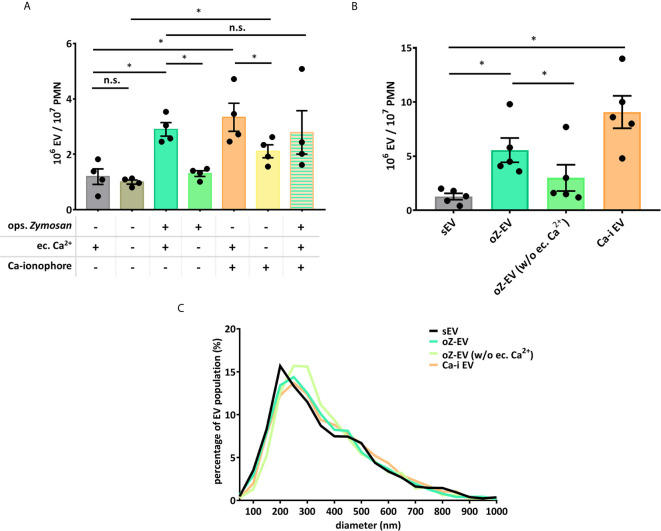
Depending on the prevailing environmental conditions, neutrophilic granulocytes release extracellular vesicles (EV) which have either anti-inflammatory effects on other neutrophils or pro-inflammatory and antibacterial effects. In the present study we investigated the molecular mechanisms underlying the biogenesis of functionally heterogenic EVs. We show that selective stimulation of Mac-1 integrin (complement receptor 3) by specific ligands initiates the generation of EVs which are able to impair bacterial growth and to induce the secretion of the pro-inflammatory cytokine IL-8 (aEV). However, direct Mac-1 stimulation results in aEV release only if neutrophils were activated on ligand coated surfaces whereas soluble ligands are ineffective. Using total internal reflection fluorescence (TIRF) microcopy, an increased clustering of Mac-1 molecules could be visualized in neutrophils added to C3bi coated surfaces; moreover antibody induced cluster formation triggers aEV release as well. Mac-1 induced production of aEV apparently necessitates a strong calcium signal as it fully depends on the presence of extracellular calcium. However, initiation of a strong calcium signal by an ionophore only results the generation of EV devoid of any antibacterial or pro-inflammatory effect. Our results thus demonstrate that stimulation and clustering of Mac-1 is necessary and sufficient for initiation of aEV biogenesis. In contrast, an intracellular calcium signal is necessary but by itself not sufficient for the production of antibacterial and pro-inflammatory EVs.
根据流行的环境条件,嗜中性粒细胞释放细胞外囊泡(EV),这些 EV 对其他嗜中性粒细胞具有抗炎作用或具有促炎和抗菌作用。在本研究中,我们研究了功能异质 EV 生物发生的分子机制。我们表明,特异性刺激 Mac-1 整合素(补体受体 3)的特异性配体启动 EV 的产生,EV 能够抑制细菌生长并诱导促炎细胞因子 IL-8(aEV)的分泌。然而,只有当嗜中性粒细胞在配体包被的表面上被激活时,直接刺激 Mac-1 才会导致 aEV 的释放,而可溶性配体则无效。使用全内反射荧光(TIRF)显微镜,可以在添加到 C3bi 包被表面的嗜中性粒细胞中可视化 Mac-1 分子的聚集增加;此外,抗体诱导的簇形成也会触发 aEV 的释放。Mac-1 诱导的 aEV 产生显然需要强烈的钙信号,因为它完全依赖于细胞外钙的存在。然而,离子载体引发强钙信号仅导致生成缺乏任何抗菌或促炎作用的 EV。因此,我们的结果表明,Mac-1 的刺激和聚集是启动 aEV 生物发生的必要和充分条件。相比之下,细胞内钙信号对于产生抗菌和促炎 EV 是必要的,但本身并不足够。