Zhang Yuying, Zhu Baoyi, He Minghui, Cai Yi, Ying Xiaoling, Jiang Chonghe, Ji Weidong, Zeng Jianwen
Department of Urology, The Sixth Affiliated Hospital of Guangzhou Medical University (Qingyuan People's Hospital), Qingyuan, China.
Department of Liver Surgery, The First Affiliated Hospital of Sun Yat-sen University, Guangzhou, China.
Front Oncol. 2021 Aug 11;11:710767. doi: 10.3389/fonc.2021.710767. eCollection 2021.
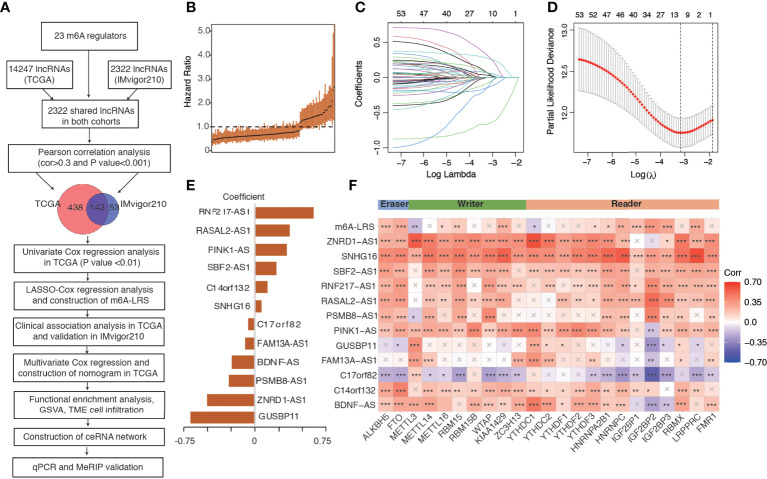
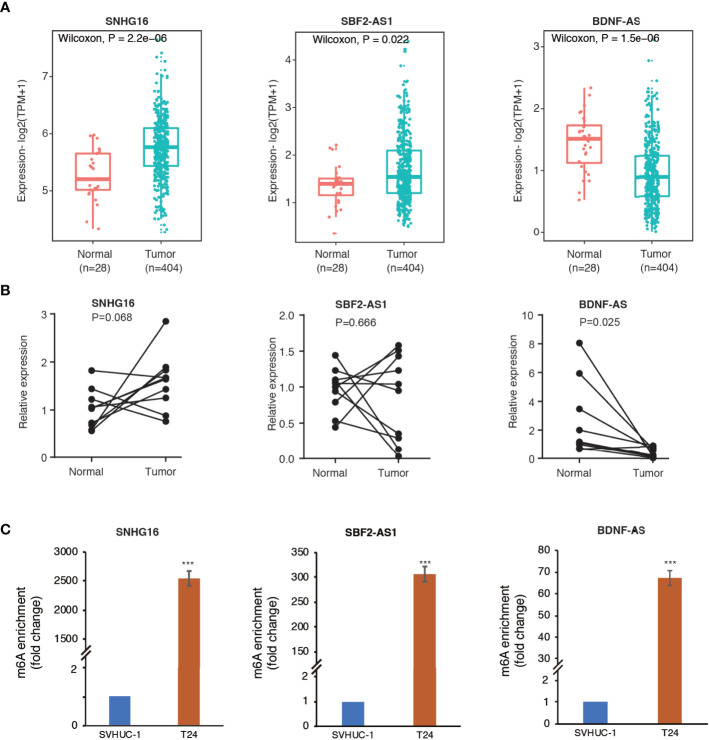
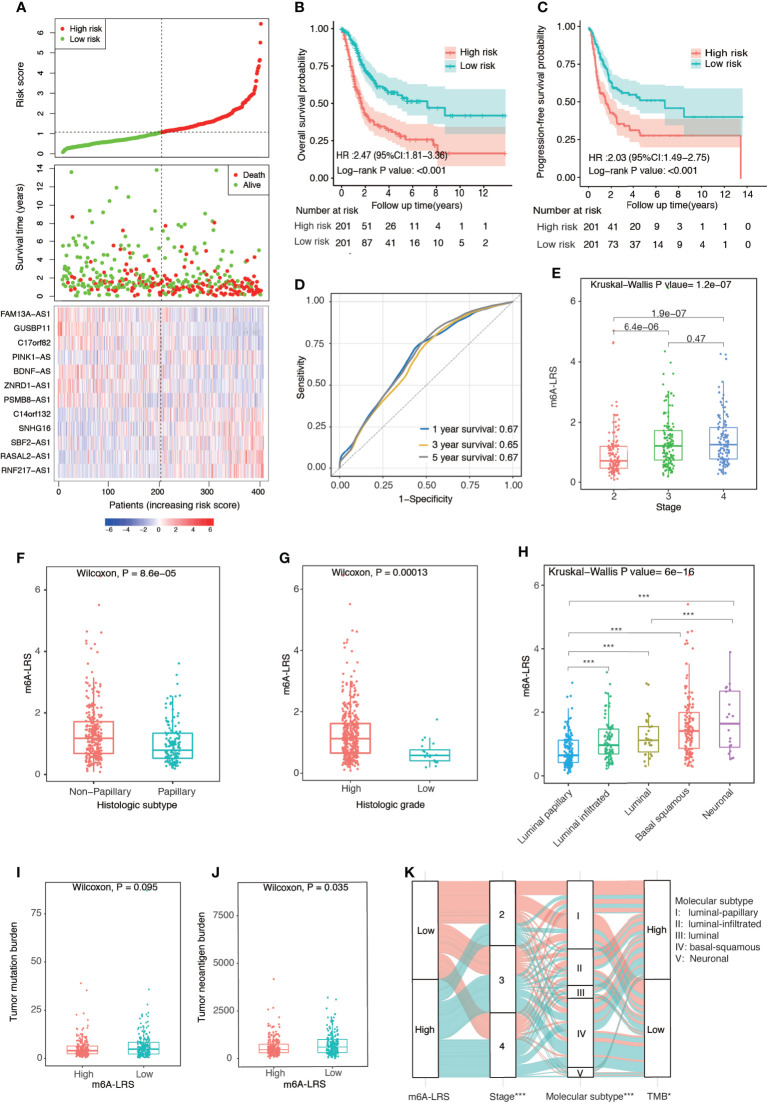
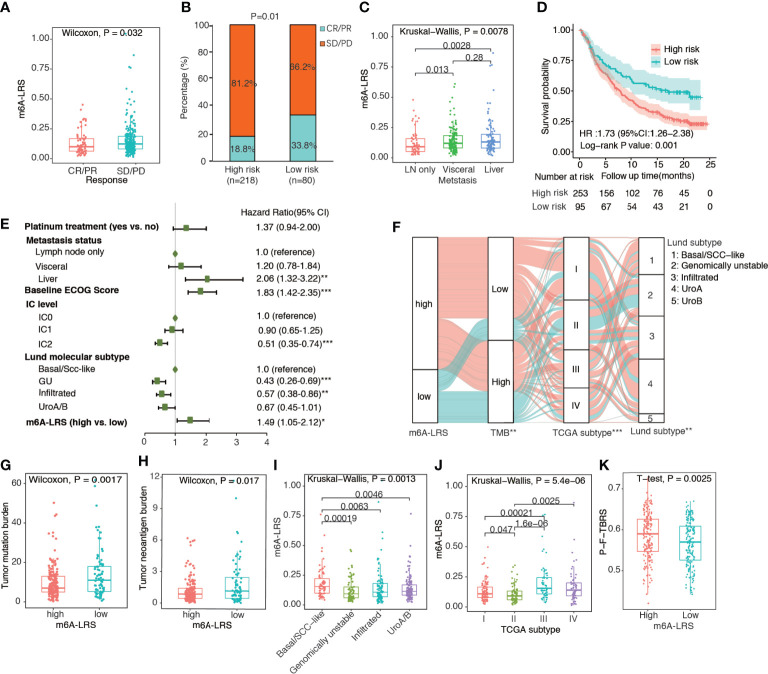
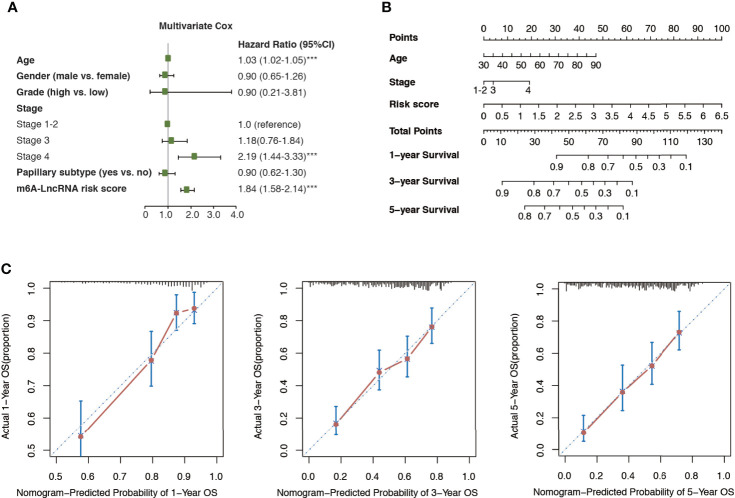
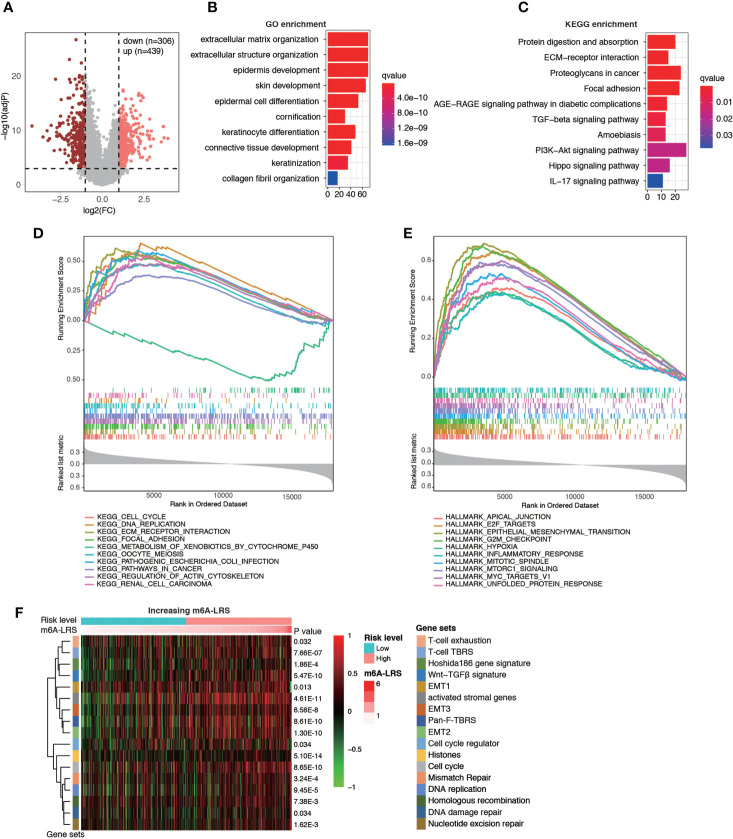
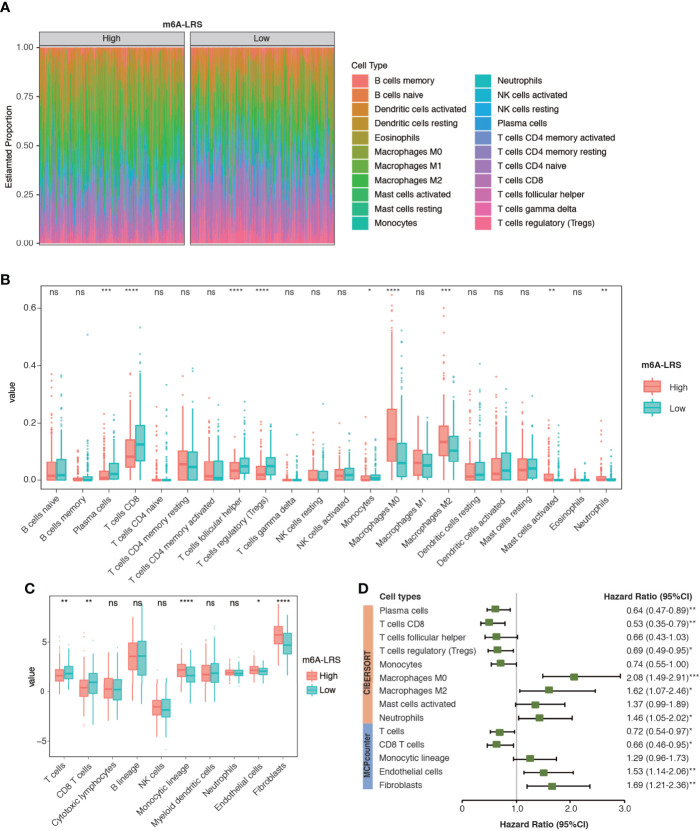
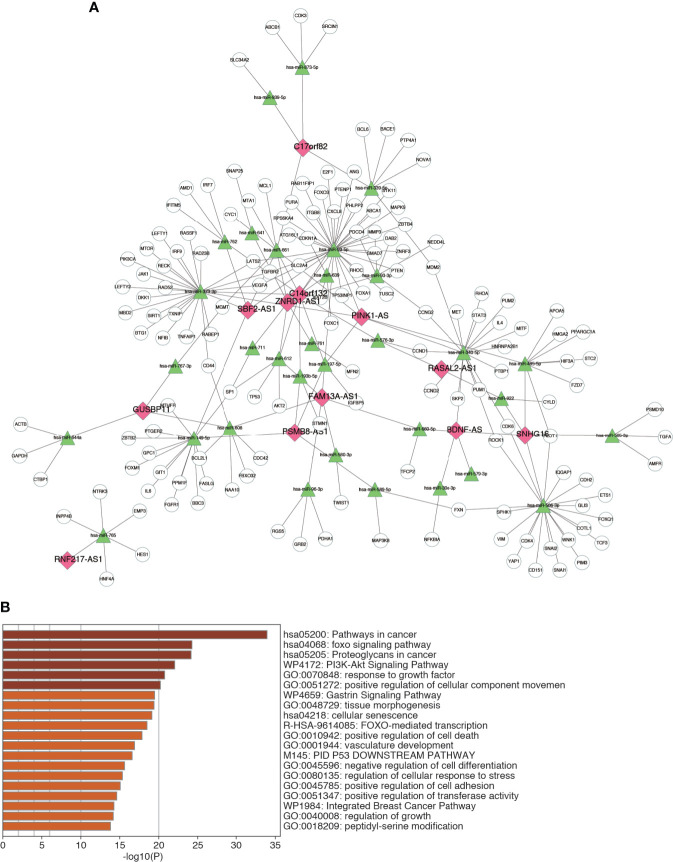
Both lncRNAs and the N6-methyladenosine (m6A) modification are key regulators of tumorigenesis and innate immunity. However, little is known about the m6A modification of lncRNAs and their clinical and immune relevance in bladder cancer. In this study, we identified m6A-related lncRNAs using Pearson correlation analysis in The Cancer Genome Atlas (TCGA) and the IMvigor210 datasets. Next, univariate Cox regression was performed using the TCGA dataset to filter prognostic m6A-related lncRNAs, which were further subjected to the least absolute shrinkage and selection operator (LASSO) Cox regression to establish a 12 m6A-related lncRNA prognostic score (m6A-LRS). The m6A-LRS was validated in the IMvigor210 dataset. In addition, high m6A-LRS tumors, characterized by decreased tumor mutation load and neoantigen load, showed poorer response to immunotherapy than those with low m6A-LRS in the IMvigor210 dataset. Further, we constructed an m6A-LRS-based nomogram that demonstrated a strong ability to predict overall survival in patients with bladder cancer. Moreover, enrichment analysis revealed that tumor-associated biological processes, oncogenic signaling, and tumor hallmarks were commonly associated with a high m6A-LRS. Gene set variation analysis also indicated that high m6A-LRS was associated with activation of canonical oncogenic signatures, such as the epithelial-to-mesenchymal transition, cell cycle regulators, and DNA replication, as well as activation of immunosuppressive signatures, such as the T-cell exhaustion and pan-fibroblast-TGF-β response signatures. Furthermore, we observed distinct tumor microenvironment cell infiltration characteristics between high- and low-risk tumors. High m6A-LRS tumors showed reduced infiltration of CD8+ T-cells and enhanced infiltration of macrophages and fibroblasts. Additionally, we established a competing endogenous RNA network based on the12 m6A-related lncRNAs. Finally, three lncRNAs (SNHG16, SBF2-AS1, and BDNF-AS) were selected for further validation. The qualitative PCR assay on 10 pairs of bladder cancer and adjacent normal control samples validated the differential expression, and methylated RNA immunoprecipitation (MeRIP) analysis demonstrated a robust m6A enrichment in T24 bladder cancer cells compared with normal uroepithelial cells (SVHUC-1). In conclusion, this study introduced an m6A-related lncRNA signature that identified a subgroup of patients with poor prognoses and suboptimal immune responses, thus providing novel approaches for treatment response prediction and patient stratification in bladder cancer.
长链非编码RNA(lncRNA)和N6-甲基腺苷(m6A)修饰都是肿瘤发生和固有免疫的关键调节因子。然而,关于lncRNA的m6A修饰及其在膀胱癌中的临床和免疫相关性知之甚少。在本研究中,我们使用Pearson相关分析在癌症基因组图谱(TCGA)和IMvigor210数据集中鉴定了与m6A相关的lncRNA。接下来,使用TCGA数据集进行单变量Cox回归,以筛选出与预后相关的m6A修饰lncRNA,这些lncRNA再进一步进行最小绝对收缩和选择算子(LASSO)Cox回归,以建立一个包含12个与m6A相关lncRNA的预后评分(m6A-LRS)。m6A-LRS在IMvigor210数据集中得到了验证。此外,在IMvigor210数据集中,以肿瘤突变负荷和新抗原负荷降低为特征的高m6A-LRS肿瘤对免疫治疗的反应比低m6A-LRS肿瘤更差。此外,我们构建了一个基于m6A-LRS的列线图,该列线图显示出强大的预测膀胱癌患者总生存的能力。此外,富集分析表明,肿瘤相关的生物学过程、致癌信号通路和肿瘤特征通常与高m6A-LRS相关。基因集变异分析还表明,高m6A-LRS与经典致癌特征的激活有关,如上皮-间质转化、细胞周期调节因子和DNA复制,以及免疫抑制特征的激活,如T细胞耗竭和泛成纤维细胞-TGF-β反应特征。此外,我们观察到高风险和低风险肿瘤之间不同的肿瘤微环境细胞浸润特征。高m6A-LRS肿瘤显示CD8+T细胞浸润减少,巨噬细胞和成纤维细胞浸润增加。此外,我们基于这12个与m6A相关的lncRNA建立了一个竞争性内源性RNA网络。最后,选择了三个lncRNA(SNHG16、SBF2-AS1和BDNF-AS)进行进一步验证。对10对膀胱癌和癌旁正常对照样本进行的定性PCR检测验证了差异表达,甲基化RNA免疫沉淀(MeRIP)分析表明,与正常尿路上皮细胞(SVHUC-1)相比,T24膀胱癌细胞中m6A富集明显。总之,本研究引入了一种与m6A相关的lncRNA特征,该特征可识别出预后不良和免疫反应欠佳的患者亚组,从而为膀胱癌的治疗反应预测和患者分层提供了新方法。