Pandey S, Mukherjee D, Kshirsagar P, Patra C, Bodas D
Nanobioscience Group, Agharkar Research Institute, GG Agarkar Road, Pune, 411 004, India.
Savitribai Phule Pune University, Ganeshkhind Road, Pune, 411 007, India.
Mater Today Bio. 2021 Jul 24;11:100123. doi: 10.1016/j.mtbio.2021.100123. eCollection 2021 Jun.
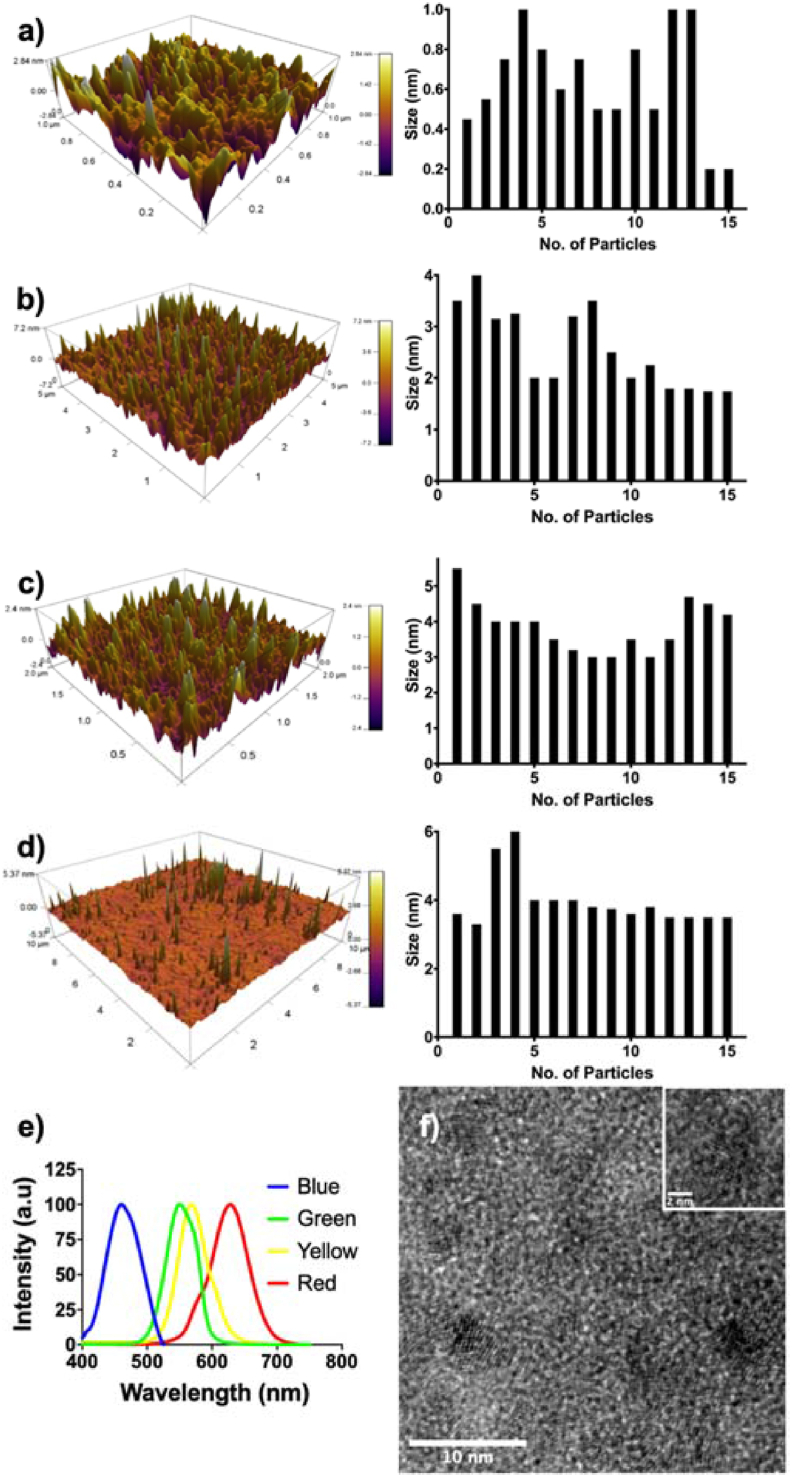
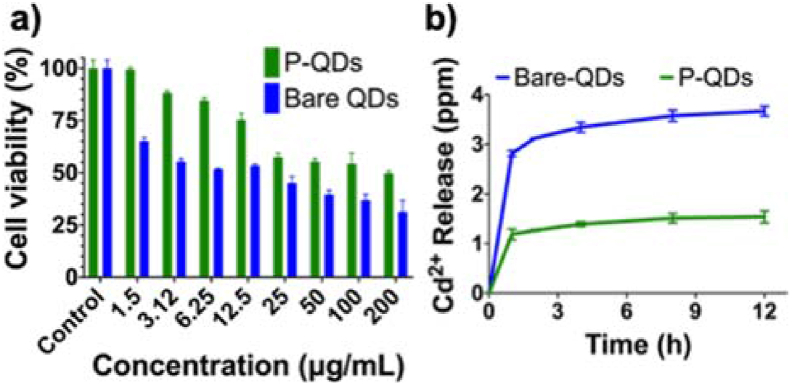
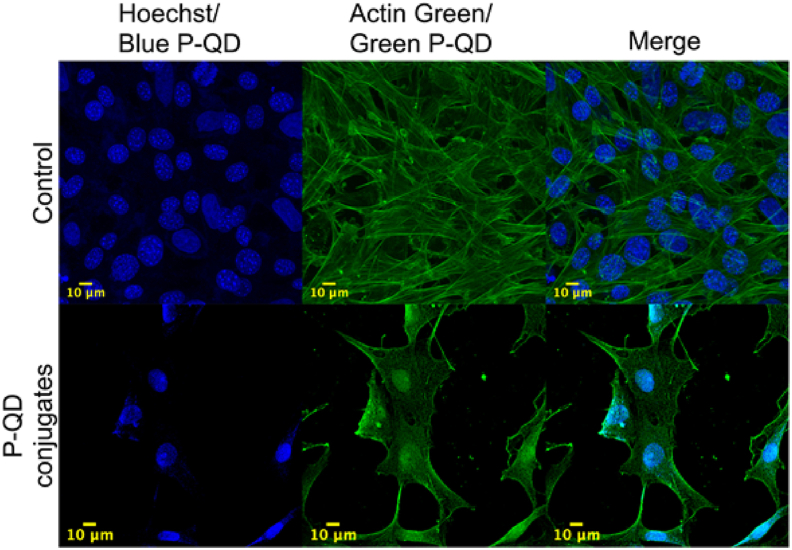
Quantum dots (QDs) are semiconductor nanocrystals with unique size-tunable emissions. To obtain a precise emission spectrum, monodispersity in size is imperative, which is achieved by controlling the reaction kinetics in a continuous flow of active microreactors. Further, a multivariate approach (dimensional analysis) is employed to impose stringent control on the reaction process resulting in monodispersed preparation of cadmium telluride (CdTe) quantum dots. Dimensional analysis knits multiple variables into a dimensionless mathematical form which not only predicts parameters precisely to obtain narrow size tunability but also guarantees reproducibility in synthesis. Analytical, structural, and optical characterization of the microreactor synthesized polydimethylsiloxane (PDMS) coated CdTe QDs reveal quantum efficient (61.5%), photostable (44%), and biocompatible nanocrystals of 5-15 nm. Further, PDMS-coated QDs (P-QDs) are conjugated with organelle-specific antibodies/biomarkers for imaging in NIH 3T3 cells. Likewise, proliferating cell nuclear antigen (PCNA) and anti-myosin (MF20), cardiomyocytes antibodies are conjugated with P-QDs (red and green, respectively) to image the zebrafish's cardiac tissue. Antibodies tagged with quantum dots are imaged simultaneously using confocal microscopy. Thus, multiplexed bio-imaging of and zebrafish tissue is demonstrated successfully. The results indicate the suitability of continuous flow active microreactor in conjunction with the mathematical prediction of process parameters to synthesize reproducibly monodispersed and quantum efficient QDs.
量子点(QDs)是具有独特尺寸可调发射特性的半导体纳米晶体。为了获得精确的发射光谱,尺寸的单分散性至关重要,这可通过在连续流动的活性微反应器中控制反应动力学来实现。此外,采用多变量方法(量纲分析)对反应过程进行严格控制,从而实现碲化镉(CdTe)量子点的单分散制备。量纲分析将多个变量整合为无量纲的数学形式,它不仅能精确预测参数以获得窄尺寸可调性,还能保证合成的可重复性。对微反应器合成的聚二甲基硅氧烷(PDMS)包覆的CdTe量子点进行分析、结构和光学表征,结果显示其为量子效率达61.5%、光稳定性达44%且具有生物相容性的5 - 15纳米纳米晶体。此外,PDMS包覆的量子点(P - QDs)与细胞器特异性抗体/生物标志物偶联,用于在NIH 3T3细胞中成像。同样地,增殖细胞核抗原(PCNA)和抗肌球蛋白(MF20),即心肌细胞抗体,分别与P - QDs(红色和绿色)偶联,用于斑马鱼心脏组织成像。用共聚焦显微镜同时对标记有量子点的抗体进行成像。因此,成功展示了对 和斑马鱼组织的多重生物成像。结果表明,连续流动活性微反应器结合过程参数的数学预测,适合用于可重复地合成单分散且量子效率高的量子点。