Kuraji Ryutaro, Sekino Satoshi, Kapila Yvonne, Numabe Yukihiro
Department of Life Science Dentistry, The Nippon Dental University, Tokyo, Japan.
Department of Periodontology, The Nippon Dental University School of Life Dentistry at Tokyo, Tokyo, Japan.
Periodontol 2000. 2021 Oct;87(1):204-240. doi: 10.1111/prd.12387.
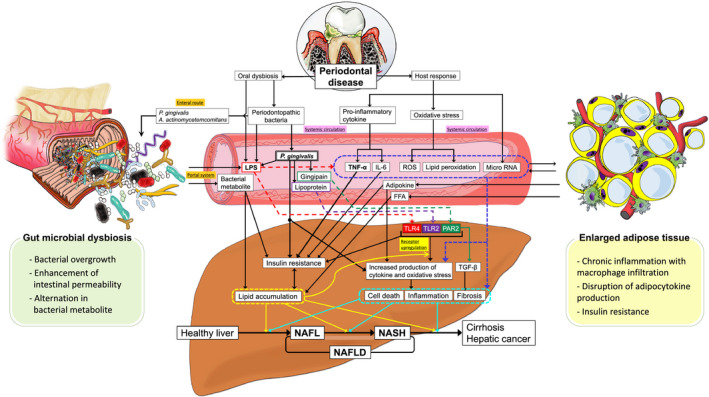
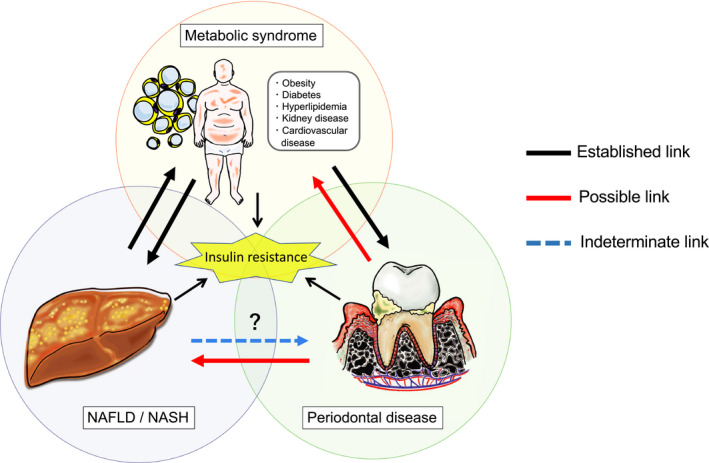
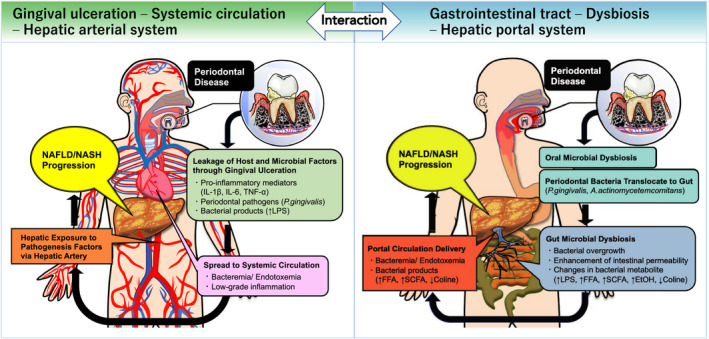
Periodontal disease, a chronic inflammatory disease of the periodontal tissues, is not only a major cause of tooth loss, but it is also known to exacerbate/be associated with various metabolic disorders, such as obesity, diabetes, dyslipidemia, and cardiovascular disease. Recently, growing evidence has suggested that periodontal disease has adverse effects on the pathophysiology of liver disease. In particular, nonalcoholic fatty liver disease, a hepatic manifestation of metabolic syndrome, has been associated with periodontal disease. Nonalcoholic fatty liver disease is characterized by hepatic fat deposition in the absence of a habitual drinking history, viral infections, or autoimmune diseases. A subset of nonalcoholic fatty liver diseases can develop into more severe and progressive forms, namely nonalcoholic steatohepatitis. The latter can lead to cirrhosis and hepatocellular carcinoma, which are end-stage liver diseases. Extensive research has provided plausible mechanisms to explain how periodontal disease can negatively affect nonalcoholic fatty liver disease and nonalcoholic steatohepatitis, namely via hematogenous or enteral routes. During periodontitis, the liver is under constant exposure to various pathogenic factors that diffuse systemically from the oral cavity, such as bacteria and their by-products, inflammatory cytokines, and reactive oxygen species, and these can be involved in disease promotion of nonalcoholic fatty liver disease and nonalcoholic steatohepatitis. Also, gut microbiome dysbiosis induced by enteral translocation of periodontopathic bacteria may impair gut wall barrier function and promote the transfer of hepatotoxins and enterobacteria to the liver through the enterohepatic circulation. Moreover, in a population with metabolic syndrome, the interaction between periodontitis and systemic conditions related to insulin resistance further strengthens the association with nonalcoholic fatty liver disease. However, most of the pathologic links between periodontitis and nonalcoholic fatty liver disease in humans are provided by epidemiologic observational studies, with the causal relationship not yet being established. Several systematic and meta-analysis studies also show conflicting results. In addition, the effect of periodontal treatment on nonalcoholic fatty liver disease has hardly been studied. Despite these limitations, the global burden of periodontal disease combined with the recent nonalcoholic fatty liver disease epidemic has important clinical and public health implications. Emerging evidence suggests an association between periodontal disease and liver diseases, and thus we propose the term periodontal disease-related nonalcoholic fatty liver disease or periodontal disease-related nonalcoholic steatohepatitis. Continued efforts in this area will pave the way for new diagnostic and therapeutic approaches based on a periodontologic viewpoint to address this life-threatening liver disease.
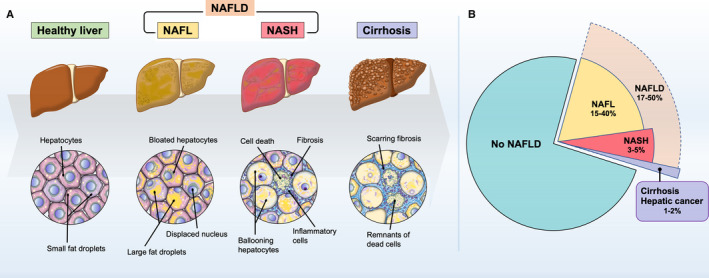
牙周病是牙周组织的一种慢性炎症性疾病,不仅是牙齿脱落的主要原因,还已知会加重各种代谢紊乱或与之相关,如肥胖、糖尿病、血脂异常和心血管疾病。最近,越来越多的证据表明牙周病对肝脏疾病的病理生理学有不良影响。特别是,非酒精性脂肪性肝病作为代谢综合征的一种肝脏表现,已与牙周病相关联。非酒精性脂肪性肝病的特征是在没有习惯性饮酒史、病毒感染或自身免疫性疾病的情况下肝脏脂肪沉积。一部分非酒精性脂肪性肝病可发展为更严重和进行性的形式,即非酒精性脂肪性肝炎。后者可导致肝硬化和肝细胞癌,这是肝脏疾病的终末期。广泛的研究提供了合理的机制来解释牙周病如何通过血行或肠道途径对非酒精性脂肪性肝病和非酒精性脂肪性肝炎产生负面影响。在牙周炎期间,肝脏持续暴露于从口腔全身扩散的各种致病因素,如细菌及其副产物、炎性细胞因子和活性氧,这些因素可能参与非酒精性脂肪性肝病和非酒精性脂肪性肝炎的疾病进展。此外,牙周病原菌的肠内移位引起的肠道微生物群失调可能损害肠壁屏障功能,并促进肝毒素和肠杆菌通过肠肝循环转移至肝脏。此外,在患有代谢综合征的人群中,牙周炎与胰岛素抵抗相关的全身状况之间的相互作用进一步加强了与非酒精性脂肪性肝病的关联。然而,人类牙周炎与非酒精性脂肪性肝病之间的大多数病理联系是由流行病学观察性研究提供的,因果关系尚未确立。几项系统评价和荟萃分析研究也显示出相互矛盾的结果。此外,牙周治疗对非酒精性脂肪性肝病的影响几乎未被研究。尽管存在这些局限性,但牙周病的全球负担加上近期非酒精性脂肪性肝病的流行具有重要的临床和公共卫生意义。新出现的证据表明牙周病与肝脏疾病之间存在关联,因此我们提出“牙周病相关非酒精性脂肪性肝病”或“牙周病相关非酒精性脂肪性肝炎”这一术语。该领域的持续努力将为基于牙周病学观点的新诊断和治疗方法铺平道路,以应对这种危及生命的肝脏疾病。