Department of Biology, College of Science and Technology, Wenzhou-Kean University, Wenzhou, Zhejiang Province, People's Republic of China.
Zhejiang Bioinformatics International Science and Technology Cooperation Centre Wenzhou-Kean University, Wenzhou, Zhejiang Province, People's Republic of China.
Appl Environ Microbiol. 2021 Oct 28;87(22):e0155821. doi: 10.1128/AEM.01558-21. Epub 2021 Sep 1.
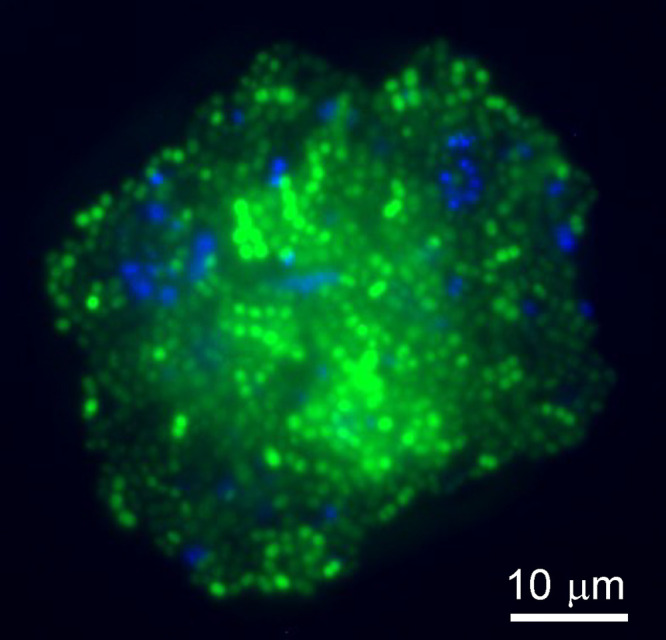
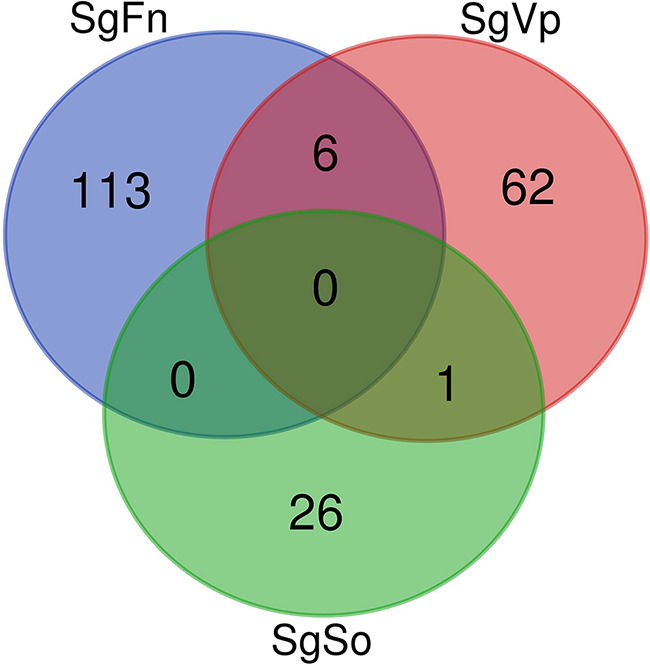
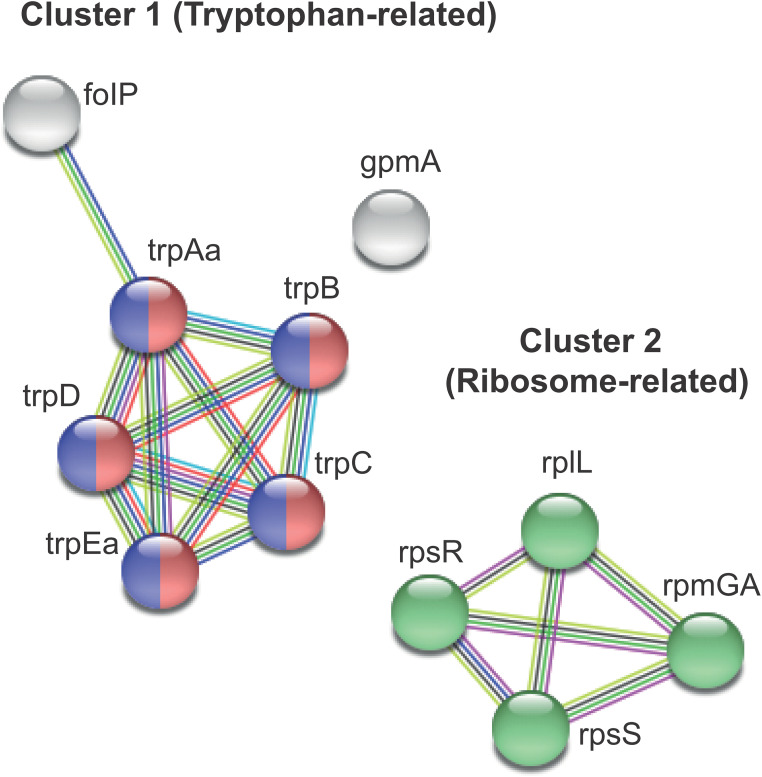
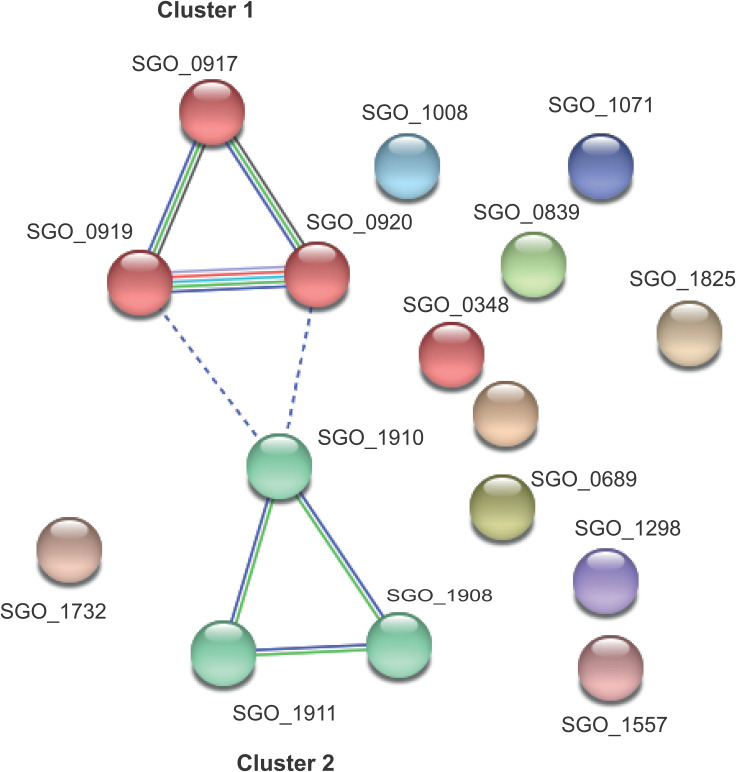
Cell-cell adhesion between oral bacteria plays a key role in the development of polymicrobial communities such as dental plaque. Oral streptococci such as Streptococcus gordonii and Streptococcus oralis are important early colonizers of dental plaque and bind to a wide range of different oral microorganisms, forming multispecies clumps or "coaggregates." S. gordonii actively responds to coaggregation by regulating gene expression. To further understand these responses, we assessed gene regulation in S. gordonii and S. oralis following coaggregation in 25% human saliva. Coaggregates were formed by mixing, and after 30 min, RNA was extracted for dual transcriptome sequencing (RNA-Seq) analysis. In S. oralis, 18 genes (6 upregulated and 12 downregulated) were regulated by coaggregation. Significantly downregulated genes encoded functions such as amino acid and antibiotic biosynthesis, ribosome, and central carbon metabolism. In total, 28 genes were differentially regulated in Streptococcus gordonii (25 upregulated and 3 downregulated). Many genes associated with transporters and a two-component (NisK/SpaK) regulatory system were upregulated following coaggregation. Our comparative analyses of S. gordoniiS. oralis with different previously published S. gordonii pairings (S. gordoniiFusobacterium nucleatum and S. gordoniiVeillonella parvula) suggest that the gene regulation is specific to each pairing, and responses do not appear to be conserved. This ability to distinguish between neighboring bacteria may be important for S. gordonii to adapt appropriately during the development of complex biofilms such as dental plaque. Dental plaque is responsible for two of the most prevalent diseases in humans, dental caries and periodontitis. Controlling the formation of dental plaque and preventing the transition from oral health to disease requires a detailed understanding of microbial colonization and biofilm development. Streptococci are among the most common colonizers of dental plaque. This study identifies key genes that are regulated when oral streptococci bind to one another, as they do in the early stages of dental plaque formation. We show that specific genes are regulated in two different oral streptococci following the formation of mixed-species aggregates. The specific responses of S. gordonii to coaggregation with S. oralis are different from those to coaggregation with other oral bacteria. Targeting the key genes that are upregulated during interspecies interactions may be a powerful approach to control the development of biofilm and maintain oral health.
口腔细菌之间的细胞-细胞黏附在多微生物群落的发展中起着关键作用,例如牙菌斑。口腔链球菌,如戈登链球菌和口腔链球菌,是牙菌斑的早期定植者,并与广泛的不同的口腔微生物结合,形成多物种聚集或“共聚体”。戈登链球菌通过调节基因表达来积极响应共聚体。为了进一步了解这些反应,我们在 25%人唾液中混合后评估了戈登链球菌和口腔链球菌共聚体形成后的基因表达调控。30 分钟后,提取 RNA 进行双转录组测序(RNA-Seq)分析。在口腔链球菌中,有 18 个基因(6 个上调和 12 个下调)受到共聚体的调控。显著下调的基因编码的功能如氨基酸和抗生素生物合成、核糖体和中心碳代谢。总的来说,在戈登链球菌中有 28 个基因差异表达(25 个上调和 3 个下调)。许多与转运体和双组分(NisK/SpaK)调节系统相关的基因在共聚体形成后上调。我们对戈登链球菌与不同先前发表的戈登链球菌配对(戈登链球菌与梭杆菌和戈登链球菌与小韦荣球菌)的比较分析表明,基因调控是特定于每个配对的,并且反应似乎没有保守。这种区分相邻细菌的能力可能对戈登链球菌在复杂生物膜如牙菌斑的发展过程中适当适应是重要的。牙菌斑是人类最常见的两种疾病,龋齿和牙周炎的罪魁祸首。控制牙菌斑的形成和防止从口腔健康向疾病的转变需要详细了解微生物定植和生物膜的发展。链球菌是牙菌斑中最常见的定植菌。本研究确定了当口腔链球菌相互结合时被调控的关键基因,因为它们在牙菌斑形成的早期阶段。我们表明,在混合物种聚集形成后,两种不同的口腔链球菌中特定的基因被调控。戈登链球菌与口腔链球菌共聚体的反应与与其他口腔细菌共聚体的反应不同。针对种间相互作用过程中上调的关键基因可能是控制生物膜发展和维持口腔健康的有力方法。