Department of Plastic Surgery, The First Affiliated Hospital of Kunming Medical University, Kunming, Yunnan 650032, P.R. China.
Mol Med Rep. 2021 Nov;24(5). doi: 10.3892/mmr.2021.12398. Epub 2021 Sep 3.
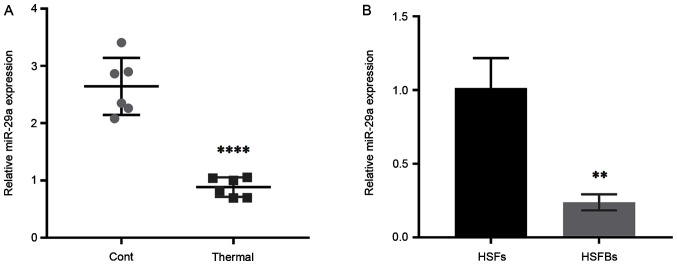
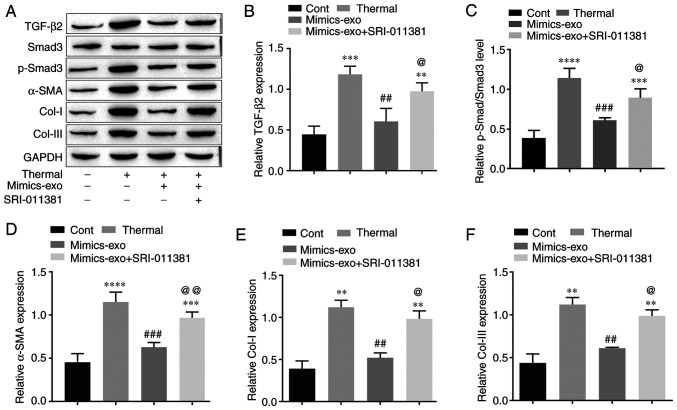
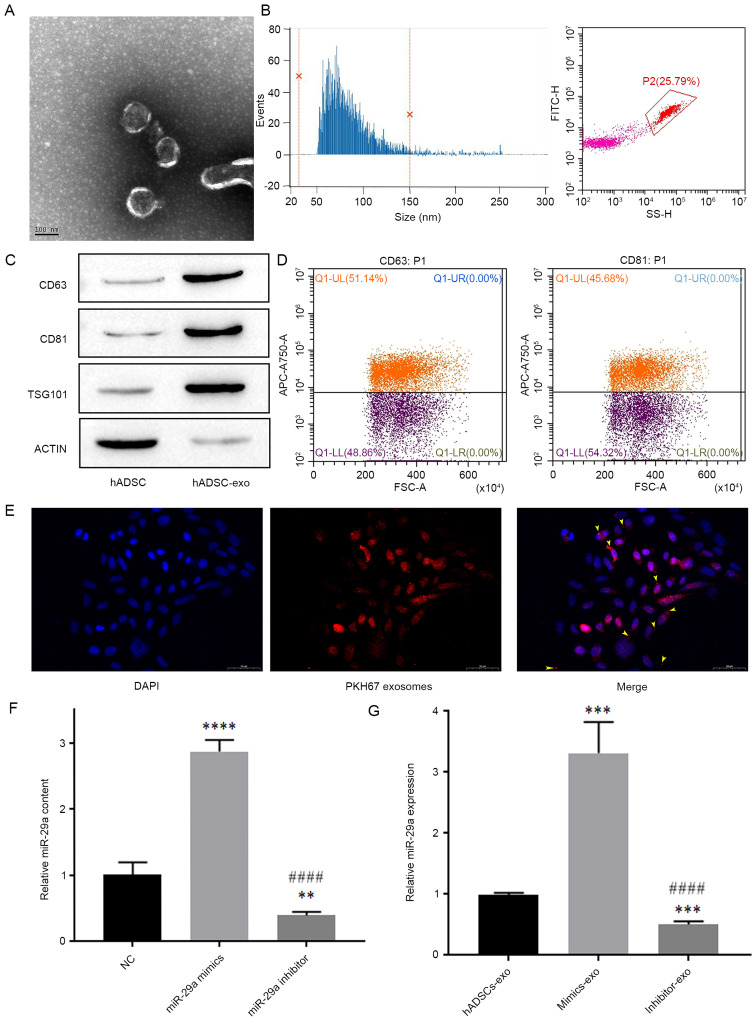
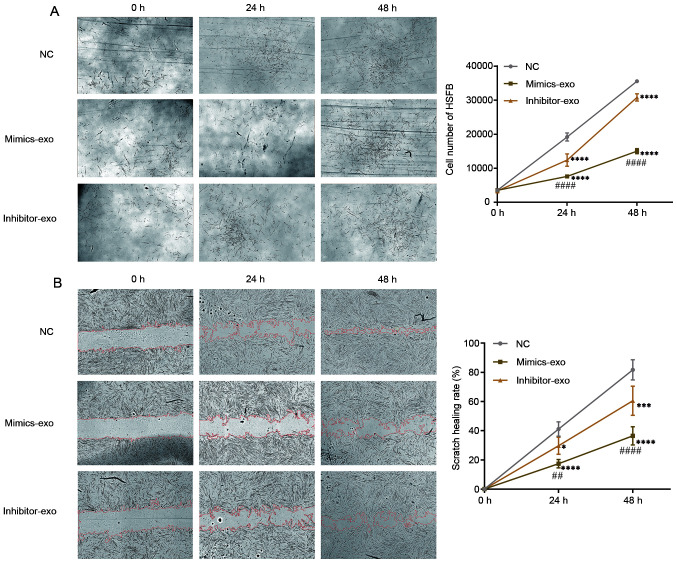
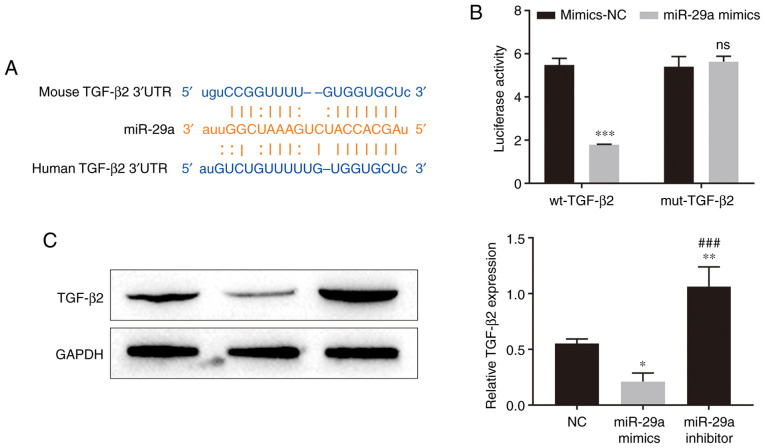
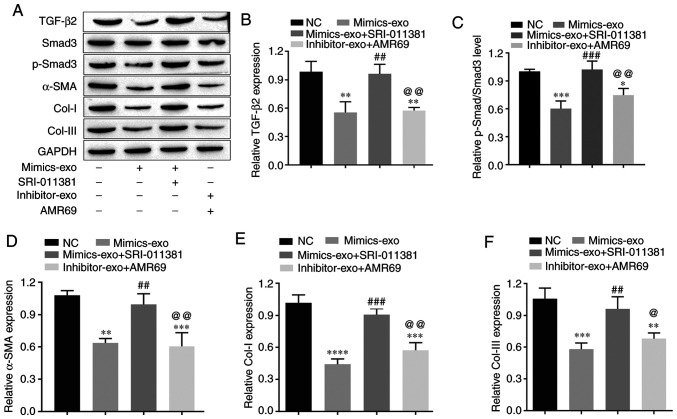
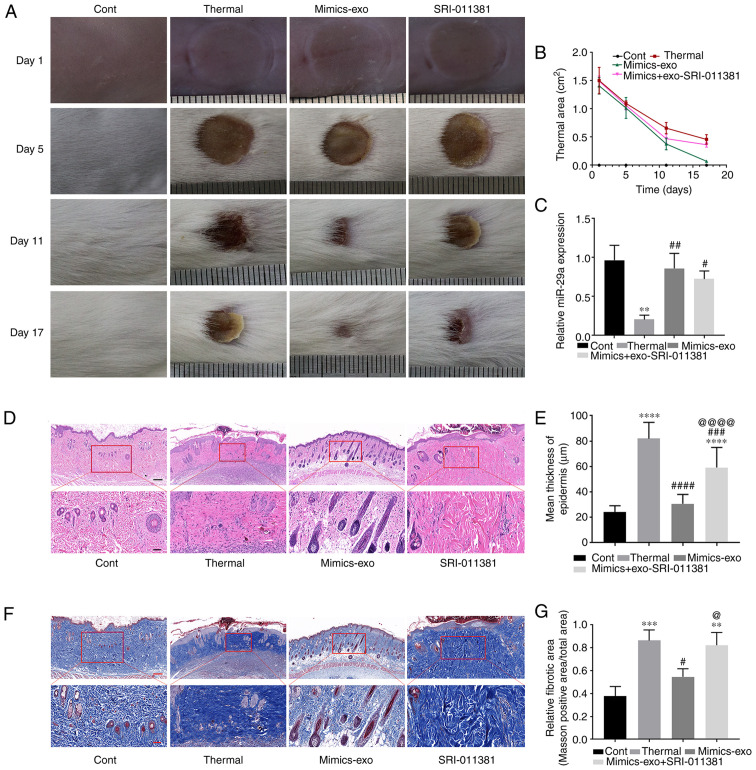
Pathological scars mainly refer to hypertrophic scars and keloids, and have a high incidence. Moreover, these scars seriously affect the patient's appearance and are associated with significant pain. The present study aimed to investigate the inhibitory effect of microRNA (miR)‑29a from human adipose‑derived mesenchymal stem cells (hADSCs) exosomes on scar formation. Firstly, the expression of miR‑29a in thermal skin tissues of mice and human hypertrophic scar fibroblasts (HSFBs) was detected via reverse transcription‑quantitative PCR. Exosomes derived from miR‑29a‑modified hADSCs were extracted and the influence of miR‑29a‑modified hADSCs‑exo on the proliferation and function of HSFBs was determined. Lastly, the effect of miR‑29a‑modified hADSCs‑exo on scar formation was determined using a thermal mouse model. The results demonstrated that miR‑29a was downregulated in scar tissues after scalding and in HSFBs. After treating HSFBs with miR‑29a‑modified hADSC exosomes, miR‑29a‑overexpressing hADSC exosomes inhibited the proliferation and migration of HSFBs. Moreover, it was found that TGF‑β2 was the target of miR‑29a, and that hADSC exosome‑derived miR‑29a inhibited the fibrosis of HSFBs and scar hyperplasia after scalding in mice by targeting the TGF‑β2/Smad3 signaling pathway. In summary, the current data indicated that miR‑29a‑modified hADSC exosome therapy can decrease scar formation by inhibiting the TGF‑β2/Smad3 signaling pathway via its derived exogenous miR‑29a, and this may be useful for the future treatment of pathological scars by providing a potential molecular basis.
病理性瘢痕主要包括增生性瘢痕和瘢痕疙瘩,其发病率较高。此外,这些瘢痕严重影响患者的外观,并伴有明显的疼痛。本研究旨在探讨人脂肪间充质干细胞(hADSCs)外泌体中的 microRNA(miR)-29a 对瘢痕形成的抑制作用。首先,通过逆转录定量 PCR 检测了 miR-29a 在小鼠热皮肤组织和人增生性瘢痕成纤维细胞(HSFBs)中的表达。提取了 miR-29a 修饰的 hADSCs 衍生的外泌体,并确定了 miR-29a 修饰的 hADSCs-Exo 对 HSFBs 增殖和功能的影响。最后,采用热鼠模型确定了 miR-29a 修饰的 hADSCs-Exo 对瘢痕形成的影响。结果表明,烫伤后瘢痕组织和 HSFBs 中 miR-29a 下调。用 miR-29a 修饰的 hADSC 外泌体处理 HSFBs 后,miR-29a 过表达的 hADSC 外泌体抑制了 HSFBs 的增殖和迁移。此外,研究发现 TGF-β2 是 miR-29a 的靶基因,hADSC 外泌体衍生的 miR-29a 通过靶向 TGF-β2/Smad3 信号通路抑制烫伤后 HSFBs 的纤维化和瘢痕增生。综上所述,该研究数据表明,miR-29a 修饰的 hADSC 外泌体治疗可通过其衍生的外源性 miR-29a 抑制 TGF-β2/Smad3 信号通路来减少瘢痕形成,这可能为病理性瘢痕的未来治疗提供一种潜在的分子基础。