Department of Burn and Plastic Surgery, Shandong Provincial Hospital, Cheeloo College of Medicine, Shandong University, Jinan, Shandong, China.
Department of Burn and Plastic Surgery, Shandong Provincial Hospital Affiliated to Shandong First Medical University, Jinan, Shandong, China.
Bioengineered. 2022 Apr;13(4):8515-8525. doi: 10.1080/21655979.2022.2051838.
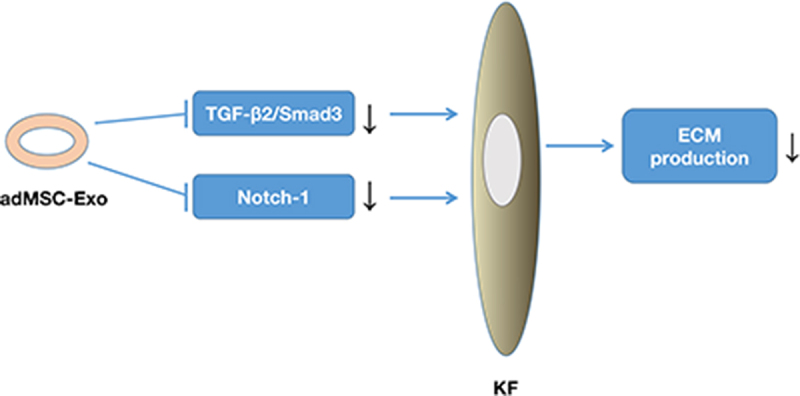
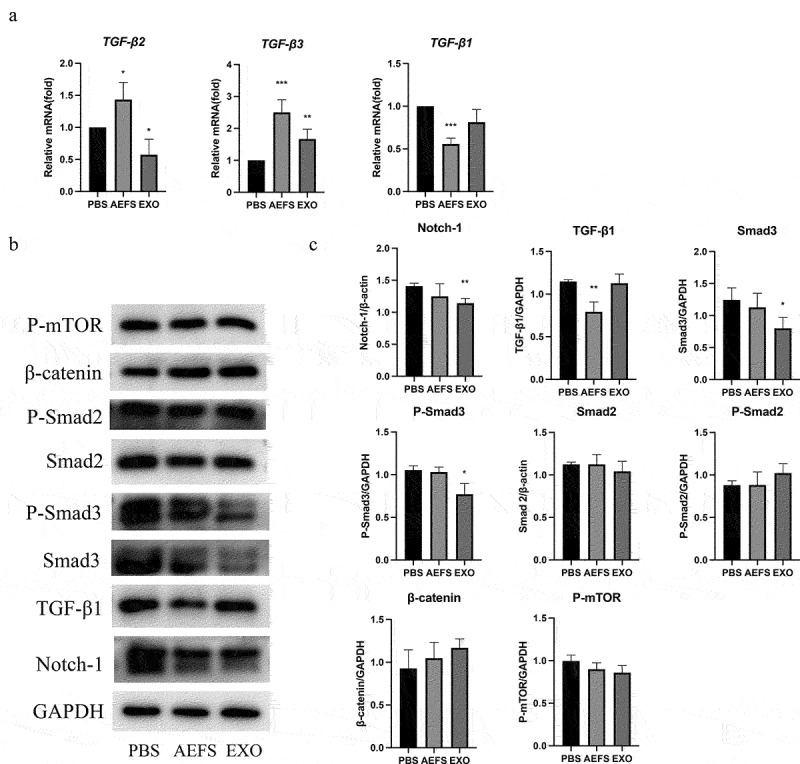
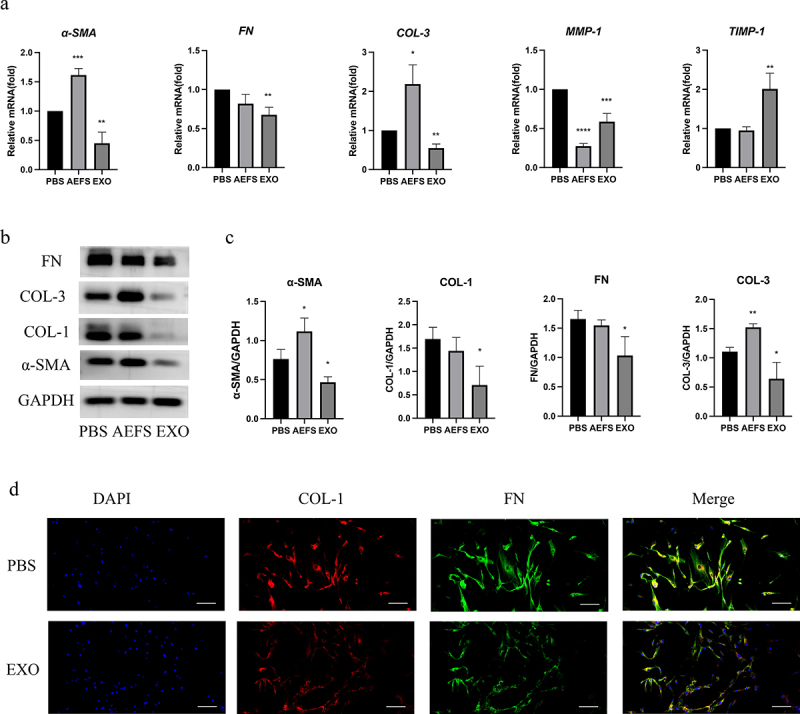
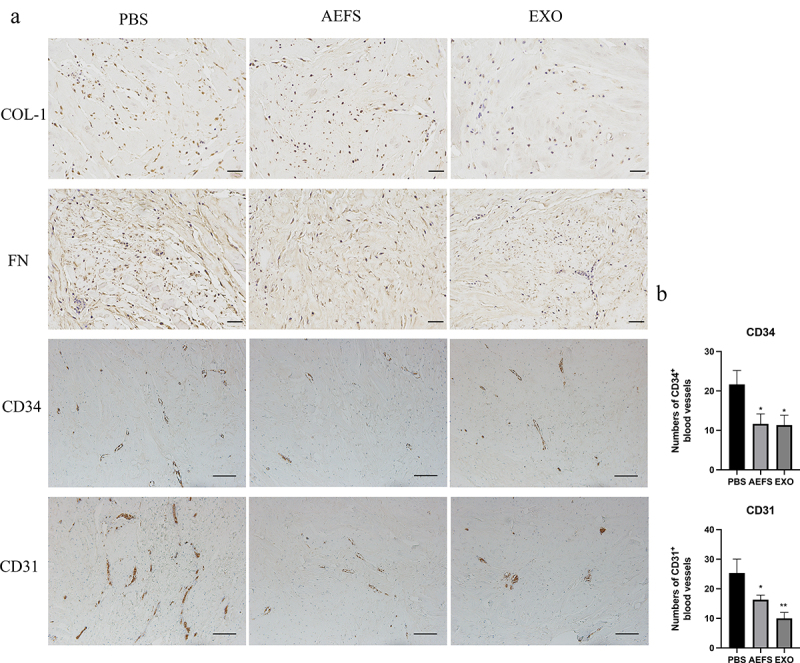
Keloids are an excessive tissue response to dermal damage, characterized by uncontrolled growth and a high recurrence rate after various treatments. Abnormalities with the extracellular matrix (ECM) are one of the most important contributing factors to the formation of keloids. Although exosomes from human adipose-derived mesenchymal stem cells (adMSC-Exos) have been shown to promote repair and regeneration in wounds, they have seldom been studied for the treatment of keloids. In this study, we aimed to investigate the effects of adMSC-Exos on ECM remodeling in keloids using both and models. The results showed that adMSC-Exos inhibited gene and protein expression of collagen I (), collagen III (), fibronectin (), and α-smooth muscle actin () in keloid fibroblasts (KFs). Furthermore, using an tissue explant model, we found that adMSC-Exos significantly suppressed COL production and disrupted the microvessel stucture. We also demonstrated that adMSC-Exos inhibited the protein expression of Smad3 and Notch-1, and the expression of transforming growth factor β2 () in KFs, and promoted the expression of . These findings largely explain the mechanisms underlying the inhibition of ECM production in keloids by adMSC-Exos. In conclusion, our results revealed that adMSC-Exos effectively inhibited the production of ECM in keloids, which provides a new potential alternative for the systemic treatment of keloids.
瘢痕疙瘩是一种对皮肤损伤的过度组织反应,其特征是在各种治疗后无法控制的生长和高复发率。细胞外基质(ECM)的异常是瘢痕疙瘩形成的最重要因素之一。尽管来自人脂肪间充质干细胞(adMSC-Exos)的外泌体已被证明可促进伤口修复和再生,但它们很少被用于瘢痕疙瘩的治疗研究。在这项研究中,我们旨在使用 和 模型研究 adMSC-Exos 对瘢痕疙瘩 ECM 重塑的影响。结果表明,adMSC-Exos 抑制了瘢痕疙瘩成纤维细胞(KFs)中胶原 I ()、胶原 III ()、纤维连接蛋白(FN)和α-平滑肌肌动蛋白(α-SMA)的基因和蛋白表达。此外,使用 组织外植体模型,我们发现 adMSC-Exos 可显著抑制 COL 的产生并破坏微血管结构。我们还证明,adMSC-Exos 抑制了 KFs 中 Smad3 和 Notch-1 的蛋白表达以及转化生长因子 β2 ()的表达,并促进了 的表达。这些发现在很大程度上解释了 adMSC-Exos 抑制瘢痕疙瘩 ECM 产生的机制。总之,我们的研究结果表明,adMSC-Exos 可有效抑制瘢痕疙瘩中 ECM 的产生,为瘢痕疙瘩的全身治疗提供了一种新的潜在替代方法。