Filek Klara, Trotta Adriana, Gračan Romana, Di Bello Antonio, Corrente Marialaura, Bosak Sunčica
Department of Biology, Faculty of Science, University of Zagreb, Rooseveltov trg 6, 10 000, Zagreb, Croatia.
Department of Veterinary Medicine, University of Bari "Aldo Moro", Str. Prov. Per Casamassima Km 3, 70010, Valenzano, BA, Italy.
Anim Microbiome. 2021 Sep 3;3(1):59. doi: 10.1186/s42523-021-00120-5.
Microbial communities of wild animals are being increasingly investigated to provide information about the hosts' biology and promote conservation. Loggerhead sea turtles (Caretta caretta) are a keystone species in marine ecosystems and are considered vulnerable in the IUCN Red List, which led to growing efforts in sea turtle conservation by rescue centers around the world. Understanding the microbial communities of sea turtles in the wild and how affected they are by captivity, is one of the stepping stones in improving the conservation efforts. Describing oral and cloacal microbiota of wild animals could shed light on the previously unknown aspects of sea turtle holobiont biology, ecology, and contribute to best practices for husbandry conditions.
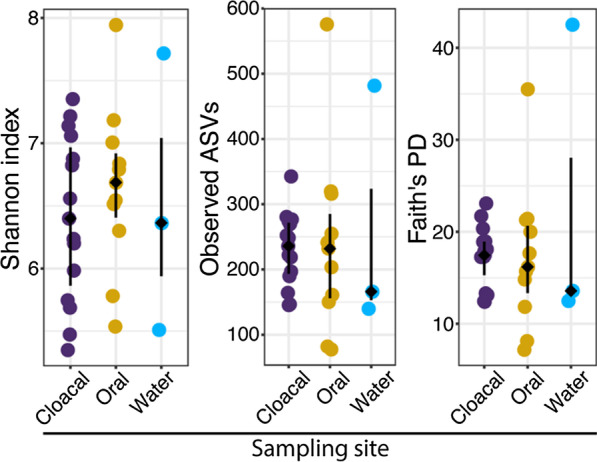
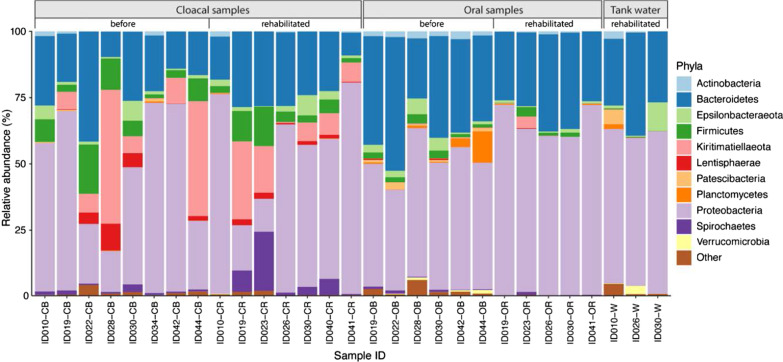
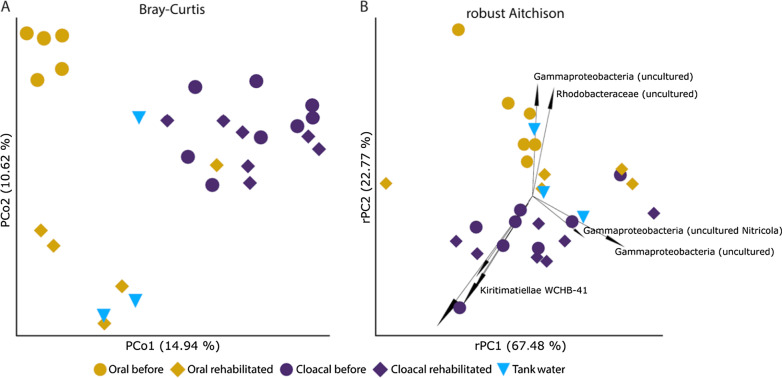
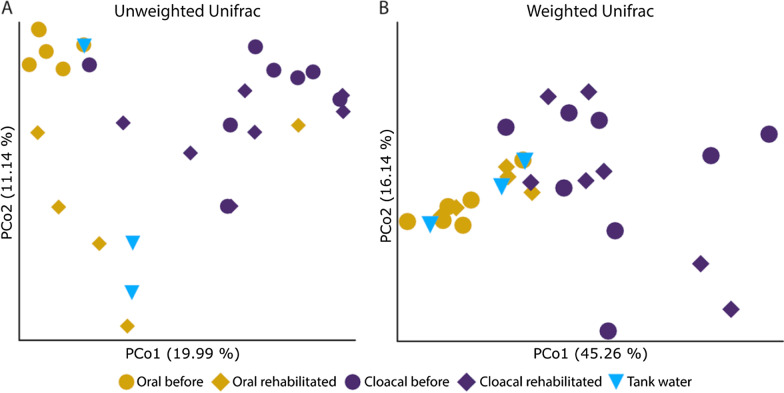
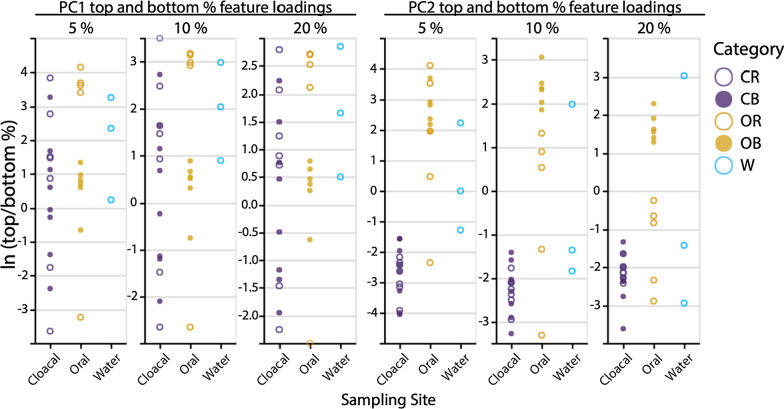
We describe the oral and cloacal microbiota of Mediterranean loggerhead sea turtles by 16S rRNA gene sequencing to compare the microbial communities of wild versus turtles in, or after, rehabilitation at the Adriatic Sea rescue centers and clinics. Our results show that the oral microbiota is more sensitive to environmental shifts than the cloacal microbiota, and that it does retain a portion of microbial taxa regardless of the shift from the wild and into rehabilitation. Additionally, Proteobacteria and Bacteroidetes dominated oral and cloacal microbiota, while Kiritimatiellaeota were abundant in cloacal samples. Unclassified reads were abundant in the aforementioned groups, which indicates high incidence of yet undiscovered bacteria of the marine reptile microbial communities.
We provide the first insights into the oral microbial communities of wild and rehabilitated loggerhead sea turtles, and establish a framework for quick and non-invasive sampling of oral and cloacal microbial communities, useful for the expansion of the sample collection in wild loggerhead sea turtles. Finally, our investigation of effects of captivity on the gut-associated microbial community provides a baseline for studying the impact of husbandry conditions on turtles' health and survival upon their return to the wild.
对野生动物微生物群落的研究日益增多,旨在提供有关宿主生物学的信息并促进保护工作。蠵龟(Caretta caretta)是海洋生态系统中的关键物种,在世界自然保护联盟红色名录中被视为易危物种,这促使全球各地的救援中心加大了海龟保护力度。了解野生海龟的微生物群落以及圈养对其的影响,是改善保护工作的重要一步。描述野生动物的口腔和泄殖腔微生物群,有助于揭示蠵龟共生生物生物学和生态学中此前未知的方面,并为饲养条件的最佳实践提供参考。
我们通过16S rRNA基因测序描述了地中海蠵龟的口腔和泄殖腔微生物群,以比较野生海龟与亚得里亚海救援中心及诊所中正在康复或康复后的海龟的微生物群落。我们的结果表明,口腔微生物群比泄殖腔微生物群对环境变化更敏感,并且尽管从野生环境转变为康复环境,它仍保留了一部分微生物类群。此外,变形菌门和拟杆菌门在口腔和泄殖腔微生物群中占主导地位,而柯里蒂马蒂埃菌门在泄殖腔样本中含量丰富。上述群体中未分类的读数很多,这表明海洋爬行动物微生物群落中尚未发现的细菌发生率很高。
我们首次深入了解了野生和康复蠵龟的口腔微生物群落,并建立了一个快速、非侵入性采样口腔和泄殖腔微生物群落的框架,这对于扩大野生蠵龟样本采集非常有用。最后,我们对圈养对肠道相关微生物群落影响的研究为研究饲养条件对海龟放归野外后的健康和生存的影响提供了基线。