Hajhosseiny Reza, Munoz Camila, Cruz Gastao, Khamis Ramzi, Kim Won Yong, Prieto Claudia, Botnar René M
School of Biomedical Engineering and Imaging Sciences, King's College London, London, United Kingdom.
National Heart and Lung Institute, Imperial College London, London, United Kingdom.
Front Cardiovasc Med. 2021 Aug 17;8:682924. doi: 10.3389/fcvm.2021.682924. eCollection 2021.
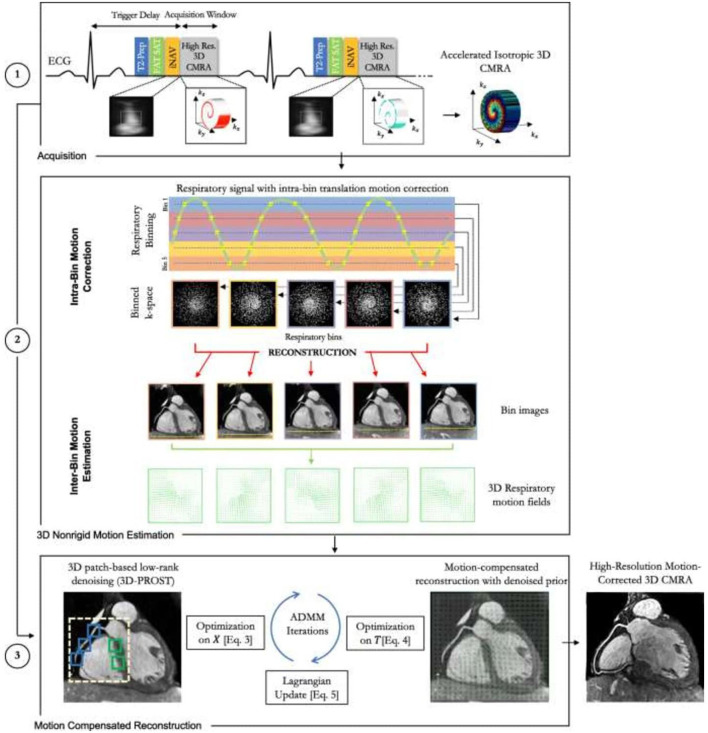
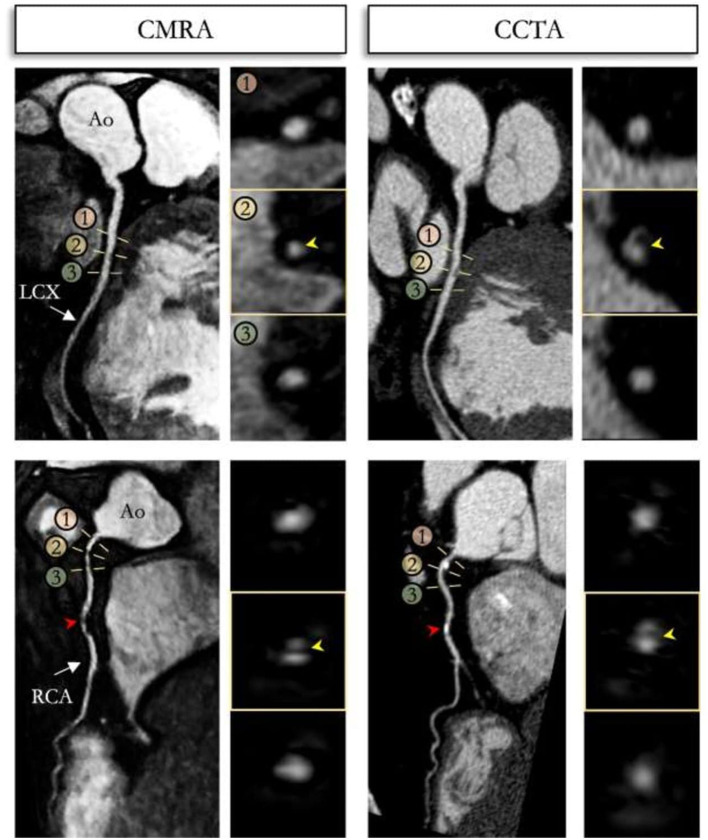
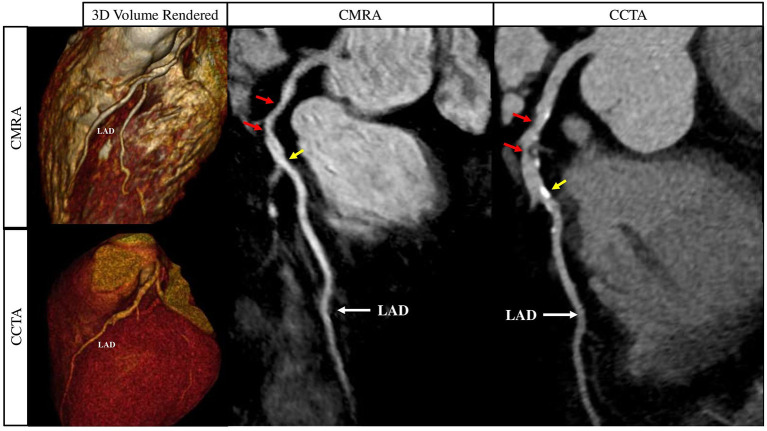
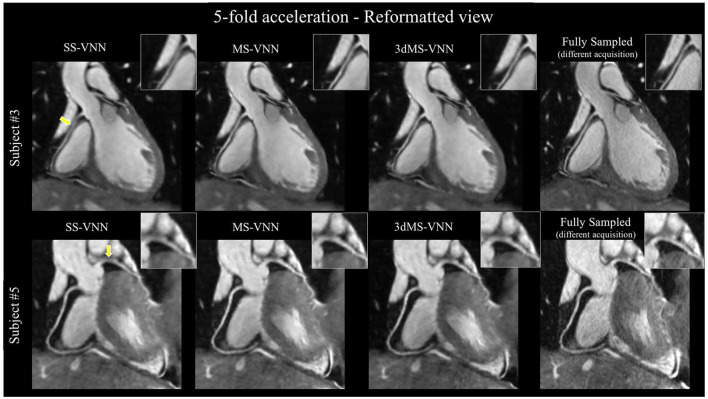
Cardiovascular disease is the leading cause of mortality worldwide, with atherosclerotic coronary artery disease (CAD) accounting for the majority of cases. X-ray coronary angiography and computed tomography coronary angiography (CCTA) are the imaging modalities of choice for the assessment of CAD. However, the use of ionising radiation and iodinated contrast agents remain drawbacks. There is therefore a clinical need for an alternative modality for the early identification and longitudinal monitoring of CAD without these associated drawbacks. Coronary magnetic resonance angiography (CMRA) could be a potential alternative for the detection and monitoring of coronary arterial stenosis, without exposing patients to ionising radiation or iodinated contrast agents. Further advantages include its versatility, excellent soft tissue characterisation and suitability for repeat imaging. Despite the early promise of CMRA, widespread clinical utilisation remains limited due to long and unpredictable scan times, onerous scan planning, lower spatial resolution, as well as motion related image quality degradation. The past decade has brought about a resurgence in CMRA technology, with significant leaps in image acceleration, respiratory and cardiac motion estimation and advanced motion corrected or motion-resolved image reconstruction. With the advent of artificial intelligence, great advances are also seen in deep learning-based motion estimation, undersampled and super-resolution reconstruction promising further improvements of CMRA. This has enabled high spatial resolution (1 mm isotropic), 3D whole heart CMRA in a clinically feasible and reliable acquisition time of under 10 min. Furthermore, latest super-resolution image reconstruction approaches which are currently under evaluation promise acquisitions as short as 1 min. In this review, we will explore the recent technological advances that are designed to bring CMRA closer to clinical reality.
心血管疾病是全球主要的死亡原因,其中动脉粥样硬化性冠状动脉疾病(CAD)占大多数病例。X射线冠状动脉造影和计算机断层扫描冠状动脉造影(CCTA)是评估CAD的首选成像方式。然而,使用电离辐射和碘化造影剂仍然存在缺点。因此,临床上需要一种替代方式,用于早期识别和长期监测CAD,而不存在这些相关缺点。冠状动脉磁共振血管造影(CMRA)可能是检测和监测冠状动脉狭窄的一种潜在替代方法,无需让患者暴露于电离辐射或碘化造影剂。其他优点包括其多功能性、出色的软组织特征以及适合重复成像。尽管CMRA早期前景良好,但由于扫描时间长且不可预测、扫描规划繁琐、空间分辨率较低以及与运动相关的图像质量下降,其临床广泛应用仍然有限。在过去十年中,CMRA技术有了复兴,在图像加速、呼吸和心脏运动估计以及先进的运动校正或运动分辨图像重建方面取得了重大进展。随着人工智能的出现,基于深度学习的运动估计、欠采样和超分辨率重建也取得了巨大进展,有望进一步改善CMRA。这使得在不到10分钟的临床可行且可靠的采集时间内实现高空间分辨率(各向同性1毫米)的3D全心CMRA成为可能。此外,目前正在评估的最新超分辨率图像重建方法有望实现短至1分钟的采集。在这篇综述中,我们将探讨旨在使CMRA更接近临床实际的近期技术进展。