Public Health Sciences, Fred Hutchinson Cancer Research Center, Seattle, Washington, U.S.A.
Clinical Research Division, Fred Hutchinson Cancer Research Center, Seattle, Washington, U.S.A.
Gut Microbes. 2021 Jan-Dec;13(1):1965463. doi: 10.1080/19490976.2021.1965463.
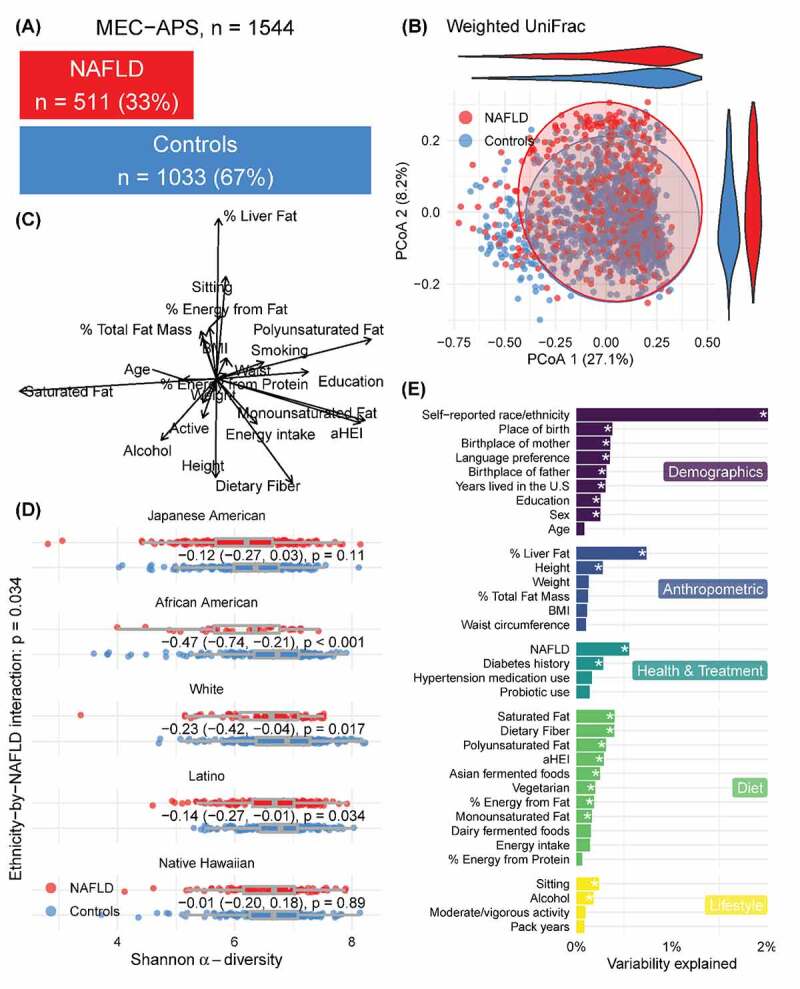
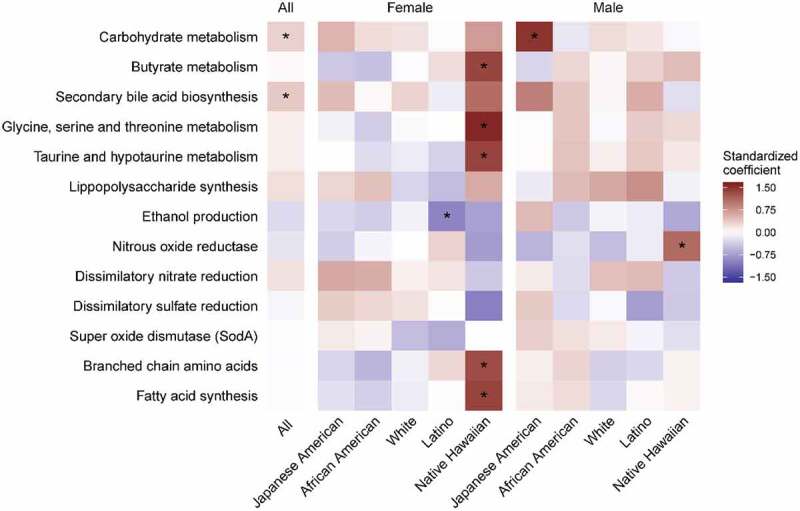
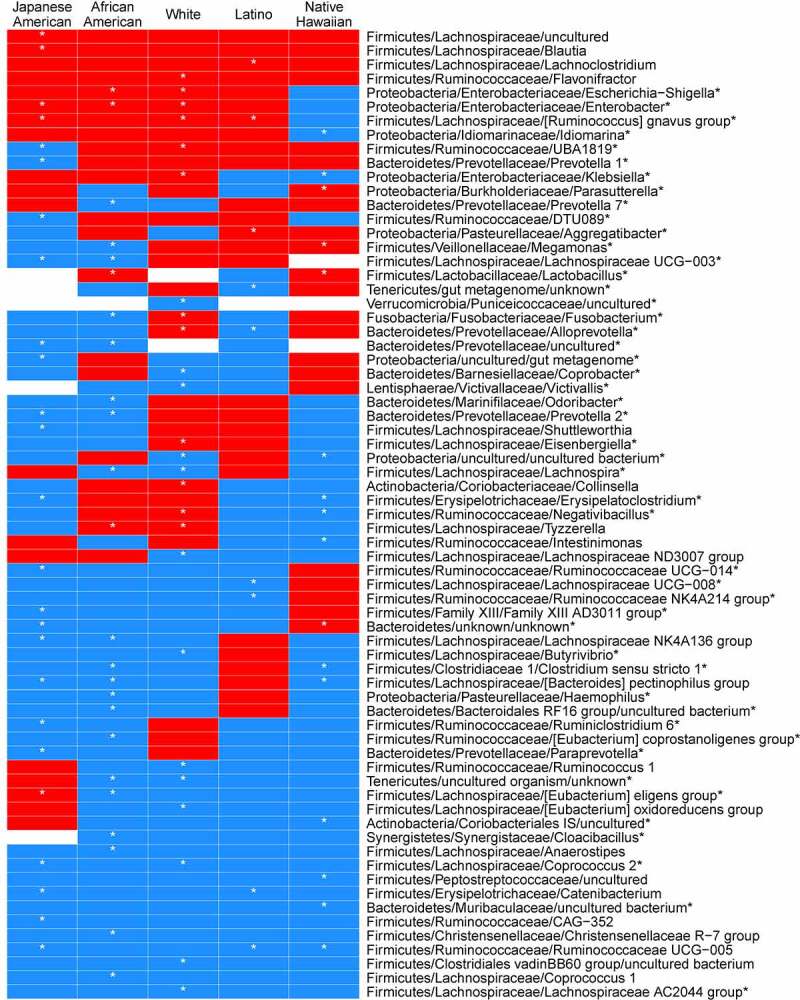
Nonalcoholic fatty liver disease (NAFLD) is a risk factor for liver cancer and prevalence varies by ethnicity. Along with genetic and lifestyle factors, the gut microbiome (GM) may contribute to NAFLD and its progression to advanced liver disease. Our cross-sectional analysis assessed the association of the GM with hepatic adiposity among African American, Japanese American, White, Latino, and Native Hawaiian participants in the Multiethnic Cohort. We used MRI to measure liver fat and determine nonalcoholic fatty liver disease (NAFLD) status (n = 511 cases) in 1,544 participants, aged 60-77 years, with 12-53% overall adiposity (BMI of 17.8-46.2 kg/m). The GM was measured by 16S rRNA gene sequencing and, on a subset, by metagenomic sequencing. Alpha diversity was lower overall with NAFLD and in certain ethnicities (African Americans, Whites, and Latinos). In models regressing genus on NAFLD status, 62 of 149 genera (40%) exhibited a significant interaction between NAFLD and ethnicity stratified analysis found 69 genera significantly associated with NAFLD in at least one ethnic group. No single genus was significantly associated with NAFLD across all ethnicities. In contrast, the same bacterial metabolic pathways were over-represented in participants with NAFLD regardless of ethnicity. Imputed secondary bile acid and carbohydrate pathways were associated with NAFLD, the latter of which was corroborated by metagenomics, although different genera in different ethnicities were associated with these pathways. Overall, we found that NAFLD was associated with altered bacterial composition and metabolism, and that bacterial endotoxin, assessed by plasma lipopolysaccharide binding protein (LBP), may mediate liver fat-associated systemic inflammation in a manner that seems to vary by ethnicity.
非酒精性脂肪性肝病 (NAFLD) 是肝癌的一个风险因素,其患病率因种族而异。除了遗传和生活方式因素外,肠道微生物组 (GM) 也可能导致 NAFLD 及其向晚期肝病进展。我们的横断面分析评估了 GM 与非裔美国人、日裔美国人、白种人、拉丁裔和夏威夷原住民参与者的肝脏脂肪之间的相关性,这些参与者参加了多民族队列研究。我们使用 MRI 测量肝脏脂肪,并在 1544 名年龄在 60-77 岁、总体肥胖率为 12-53%(BMI 为 17.8-46.2kg/m)的参与者中确定了非酒精性脂肪性肝病 (NAFLD) 状态(511 例病例)。GM 通过 16S rRNA 基因测序测量,在一部分参与者中通过宏基因组测序测量。在存在 NAFLD 和某些种族(非裔美国人、白人和拉丁裔)的情况下,总体上 α 多样性较低。在将属回归到 NAFLD 状态的模型中,在 149 个属中有 62 个(40%)表现出与 NAFLD 和种族之间的显著相互作用,分层分析发现 69 个属与至少一个种族的 NAFLD 显著相关。没有一个属在所有种族中都与 NAFLD 显著相关。相比之下,无论种族如何,相同的细菌代谢途径在 NAFLD 患者中都过度表达。推测的次级胆汁酸和碳水化合物途径与 NAFLD 相关,宏基因组学也证实了这一点,尽管不同种族的不同属与这些途径相关。总的来说,我们发现 NAFLD 与细菌组成和代谢的改变有关,并且通过血浆脂多糖结合蛋白 (LBP) 评估的细菌内毒素可能以一种似乎因种族而异的方式介导与肝脏脂肪相关的全身炎症。