The Foundation for Medical Research, Dr. Kantilal J. Sheth Memorial Building, 84-A, RG Thadani Marg, Worli, Mumbai, Maharashtra, 400018, India.
Vikas Nursing Home, Shivaji Nagar, Govandi, Mumbai, India.
Sci Rep. 2021 Sep 8;11(1):17812. doi: 10.1038/s41598-021-96902-7.
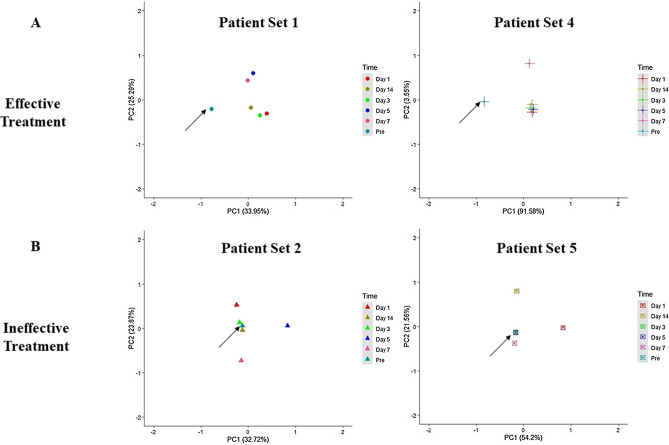
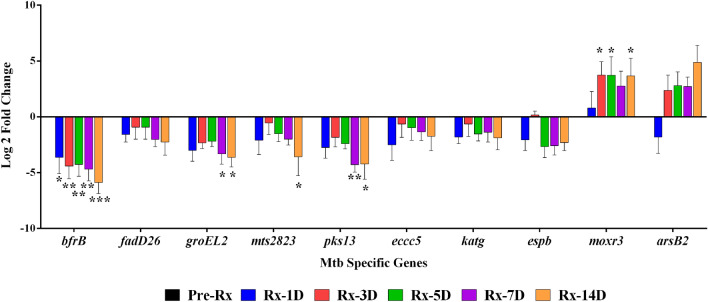
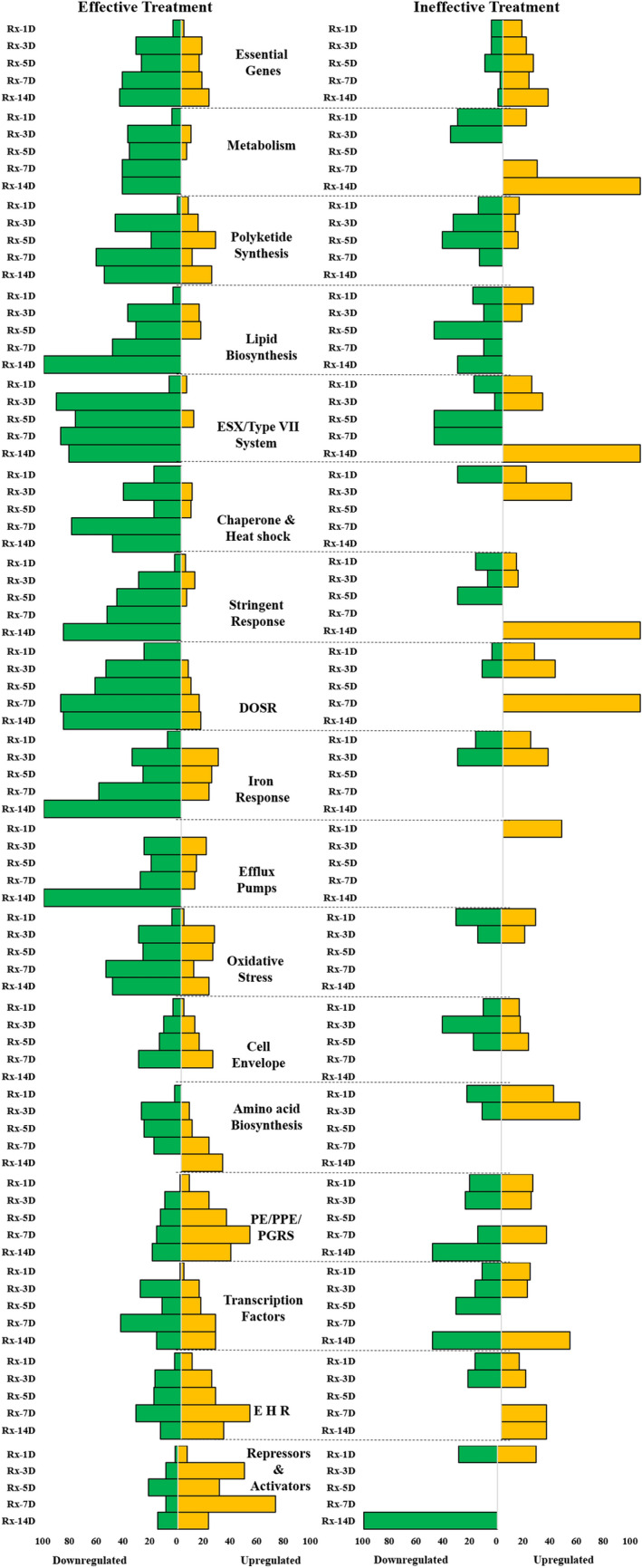
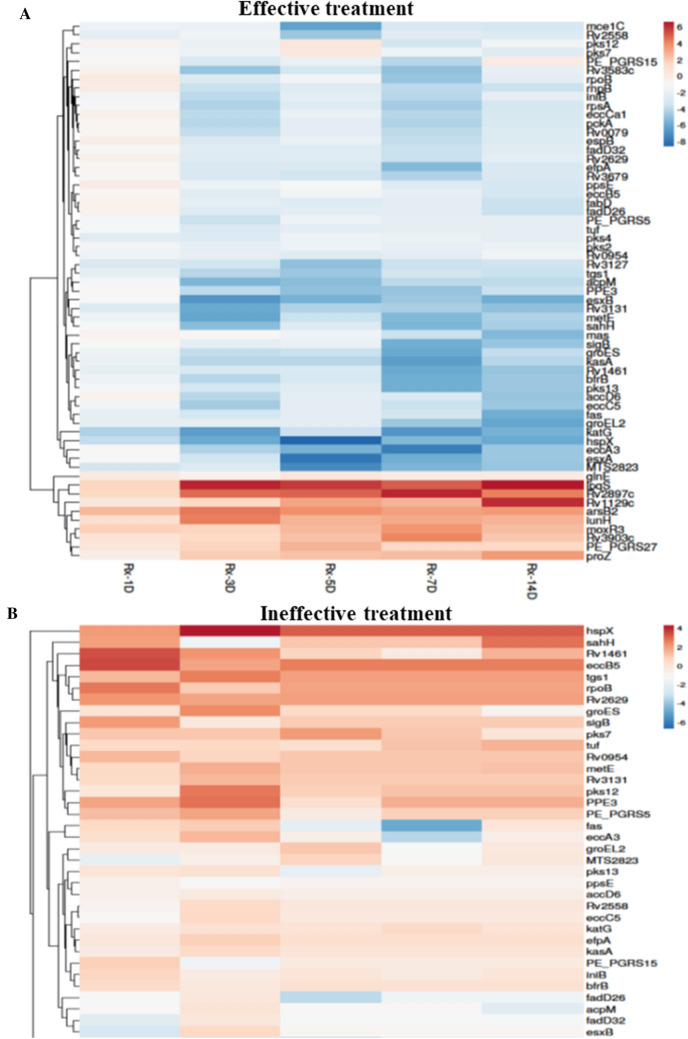
Effective treatment reduces a tuberculosis patient's ability to infect others even before they test negative in sputum or culture. Currently, the basis of reduced infectiousness of the Mycobacterium tuberculosis (Mtb) with effective treatment is unclear. We evaluated changes in aerosolized bacteria expelled by patients through a transcriptomic approach before and after treatment initiation (up to 14 days) by RNA sequencing. A distinct change in the overall transcriptional profile was seen post-treatment initiation compared to pretreatment, only when patients received effective treatment. This also led to the downregulation of genes associated with cellular activities, cell wall assembly, virulence factors indicating loss of pathogenicity, and a diminished ability to infect and survive in new host cells. Based on this, we identified genes whose expression levels changed with effective treatment. The observations of the study open up avenues for further evaluating the changes in bacterial gene expression during the early phase of treatment as biomarkers for monitoring response to tuberculosis treatment regimens and provide means of identifying better correlates of Mtb transmission.
有效的治疗方法可以降低肺结核患者的传染性,即使他们的痰或培养物检测结果仍为阳性。目前,尚不清楚治疗有效时结核分枝杆菌(Mycobacterium tuberculosis,Mtb)传染性降低的基础是什么。我们通过 RNA 测序,在治疗开始前(最多 14 天)和开始后评估了患者通过气溶胶排出的细菌的转录组变化。与治疗前相比,只有当患者接受有效治疗时,治疗开始后才会出现整体转录谱的明显变化。这也导致与细胞活动、细胞壁组装、毒力因子相关的基因下调,表明致病性丧失,以及在新宿主细胞中感染和存活的能力减弱。基于此,我们确定了随着有效治疗而发生变化的基因。该研究的观察结果为进一步评估治疗早期细菌基因表达的变化开辟了途径,这些变化可作为监测结核治疗方案反应的生物标志物,并提供了识别更好的 Mtb 传播相关指标的方法。