Eltanahy Ahmed M, Koluib Yara A, Gonzales Albert
Department of Physiology and Cell Biology, School of Medicine, University of Nevada, Reno, NV, United States.
Tanta University Hospitals, Faculty of Medicine, Tanta University, Tanta, Egypt.
Front Physiol. 2021 Aug 23;12:719701. doi: 10.3389/fphys.2021.719701. eCollection 2021.
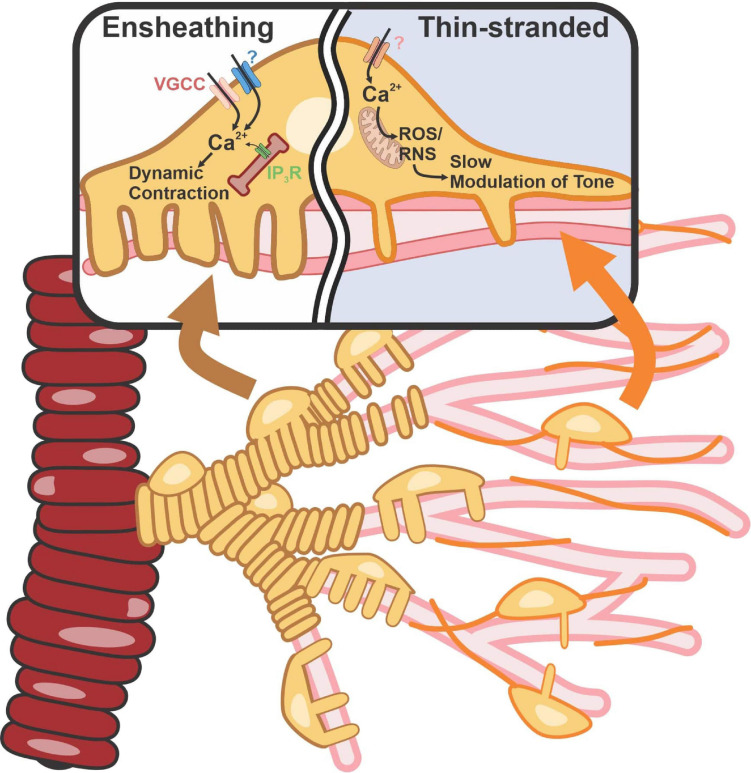
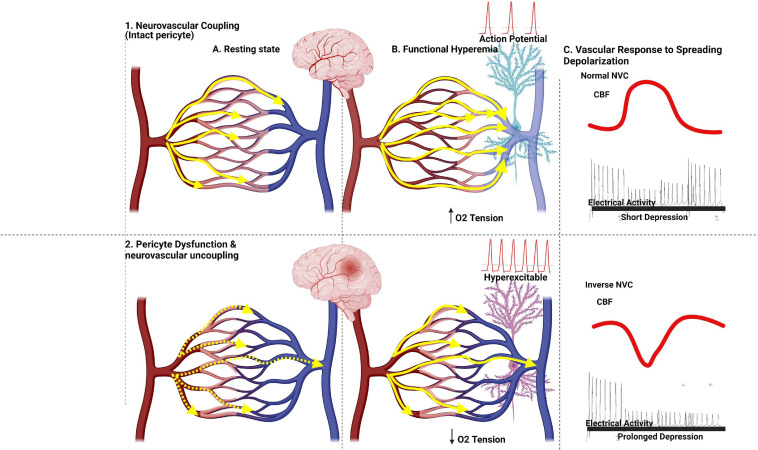
Pericytes in the brain are candidate regulators of microcirculatory blood flow because they are strategically positioned along the microvasculature, contain contractile proteins, respond rapidly to neuronal activation, and synchronize microvascular dynamics and neurovascular coupling within the capillary network. Analyses of mice with defects in pericyte generation demonstrate that pericytes are necessary for the formation of the blood-brain barrier, development of the glymphatic system, immune homeostasis, and white matter function. The development, identity, specialization, and progeny of different subtypes of pericytes, however, remain unclear. Pericytes perform brain-wide 'transportation engineering' functions in the capillary network, instructing, integrating, and coordinating signals within the cellular communicome in the neurovascular unit to efficiently distribute oxygen and nutrients ('goods and services') throughout the microvasculature ('transportation grid'). In this review, we identify emerging challenges in pericyte biology and shed light on potential pericyte-targeted therapeutic strategies.
脑周细胞是微循环血流的候选调节因子,因为它们沿微血管呈战略定位,含有收缩蛋白,对神经元激活反应迅速,并能使微血管动力学和毛细血管网络内的神经血管耦合同步。对周细胞生成存在缺陷的小鼠的分析表明,周细胞对于血脑屏障的形成、类淋巴系统的发育、免疫稳态和白质功能是必需的。然而,不同亚型周细胞的发育、特性、特化及其后代仍不清楚。周细胞在毛细血管网络中执行全脑范围的“运输工程”功能,在神经血管单元的细胞通讯组内指导、整合和协调信号,以在整个微血管(“运输网格”)中有效分配氧气和营养物质(“货物和服务”)。在本综述中,我们确定了周细胞生物学中出现的挑战,并阐明了潜在的以周细胞为靶点的治疗策略。