Guo Tao, Duan Hongxiang, Chen Jinbo, Liu Jinhui, Othmane Belaydi, Hu Jiao, Li Huihuang, Zu Xiongbing
Department of Urology, Xiangya Hospital, Central South University, Changsha, China.
School of Computer Science and Engineering, Central South University, Changsha, China.
Front Oncol. 2021 Aug 23;11:718644. doi: 10.3389/fonc.2021.718644. eCollection 2021.
Although the RNA modification N6-methyladenosine ZC3H13 has been found to play vital regulatory roles in many types of cancers, its role in predicting the tumor immune microenvironment (TME) and response to immune checkpoint blockade (ICB) in kidney renal clear cell carcinoma (KIRC) remains unclear.
We comprehensively analyzed the expression, prognostic significance and immunological role of ZC3H13 in pan-cancers and systematically correlated ZC3H13 with TME cell-infiltration, ICB response and targeted therapy in KIRC. The data were collected from The Cancer Genome Atlas (TCGA), Gene Expression Omnibus (GEO), Genotype-Tissue Expression (GTEx), Broad Institute Cancer Cell Line Encyclopedia (CCLE) and DrugBank database. Also, we performed RNA sequencing (RNA-seq) of 46 renal cell carcinoma tissues and 11 adjacent normal tissues to validate our result. All analyses were implemented using R software, version 3.6.3.
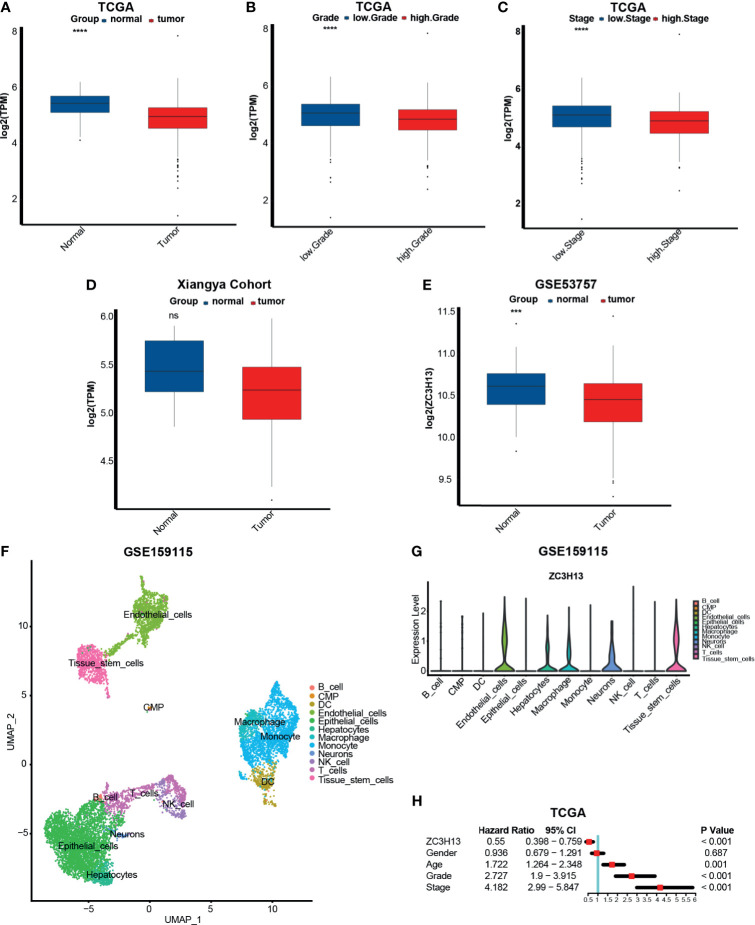
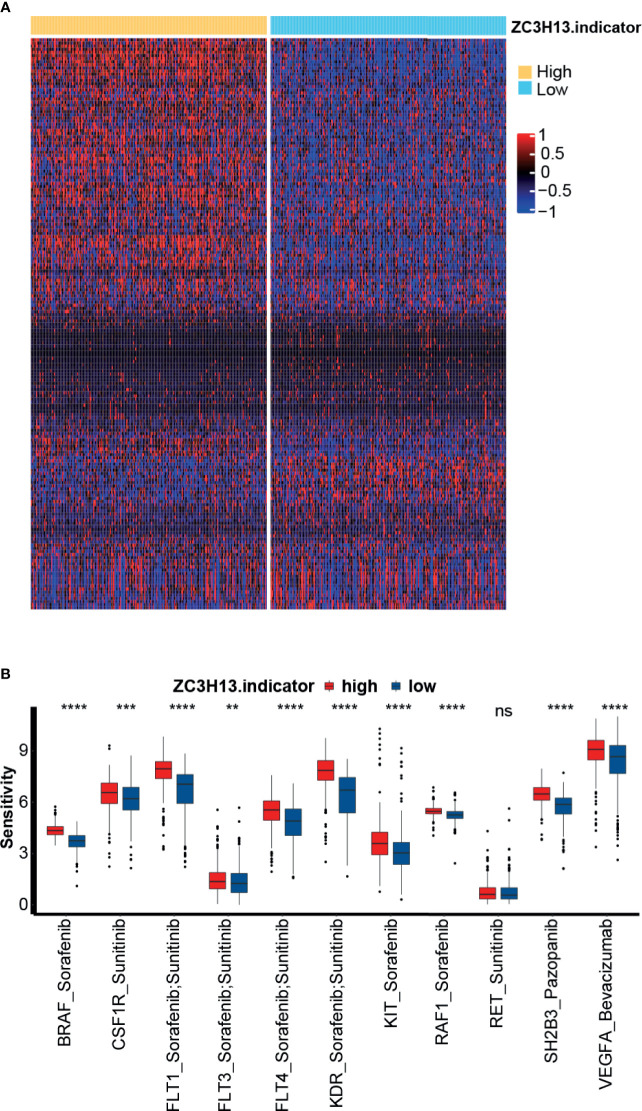
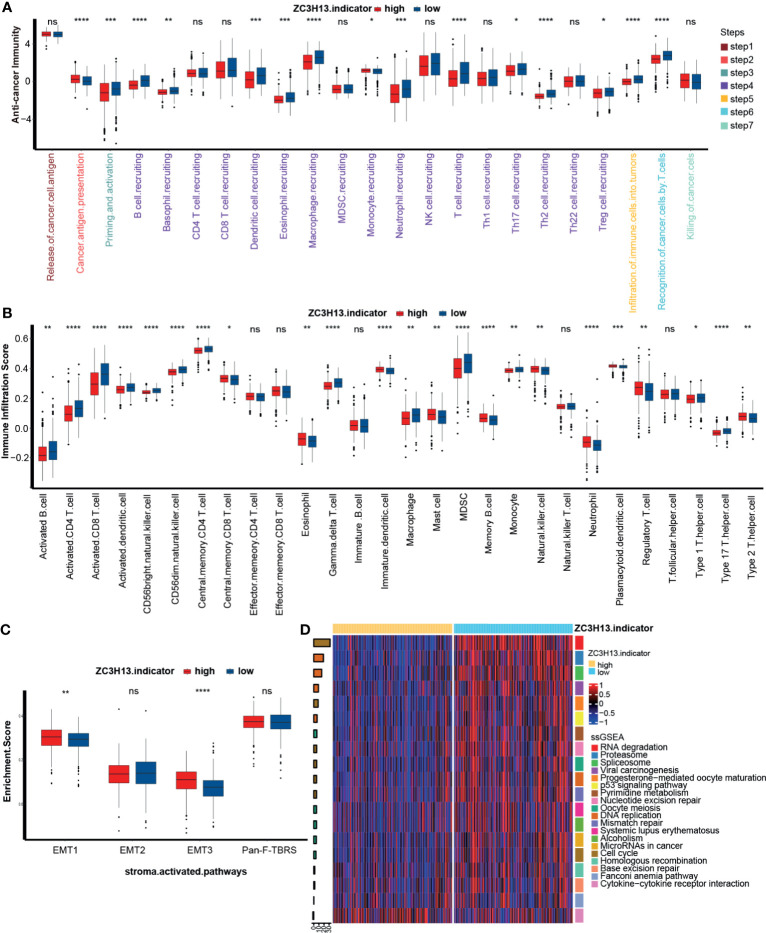
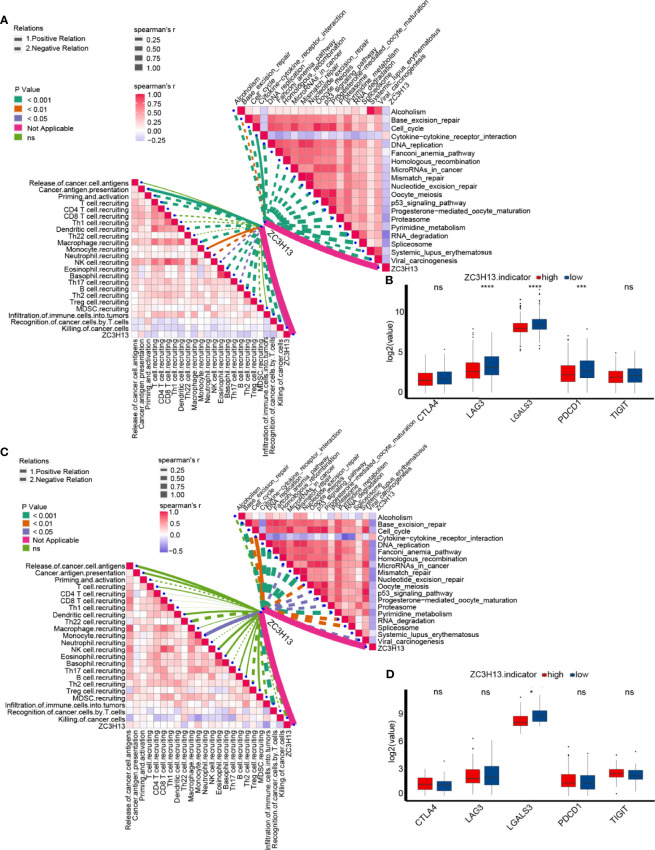
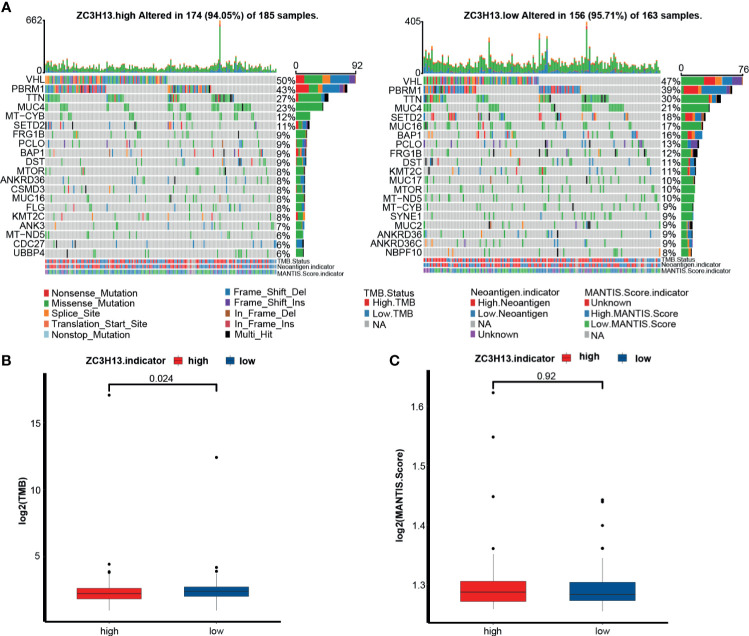
ZC3H13 was significantly differentially expressed in most tumors. However, its expression profiles and prognostic significance were consistent only in KIRC, regardless of overall survival, progression-free survival and cancer-specific survival. Additionally, ZC3H13 expression was correlated with clinicopathological factors in KIRC. Furthermore, we found that ZC3H13 might shape a noninflamed phenotype and could predict a lower response to ICB in KIRC. These results could be validated in our own RNA-seq data. Tumor mutation burden (TMB) was significantly higher in the low ZC3H13 group. Finally, we found that ZC3H13 could predict the sensitivity of targeted therapy for KIRC.
ZC3H13 might shape a noninflamed phenotype in KIRC. Moreover, ZC3H13 could predict the prognosis and clinical response of ICB and the sensitivity to targeted therapies in KIRC.
尽管已发现RNA修饰N6-甲基腺苷ZC3H13在多种癌症中发挥重要的调节作用,但其在预测肾透明细胞癌(KIRC)的肿瘤免疫微环境(TME)及对免疫检查点阻断(ICB)的反应方面的作用仍不清楚。
我们全面分析了ZC3H13在泛癌中的表达、预后意义及免疫作用,并系统地将ZC3H13与KIRC中的TME细胞浸润、ICB反应和靶向治疗相关联。数据收集自癌症基因组图谱(TCGA)、基因表达综合数据库(GEO)、基因型-组织表达数据库(GTEx)、布罗德研究所癌细胞系百科全书(CCLE)和药物银行数据库。此外,我们对46例肾细胞癌组织和11例癌旁正常组织进行了RNA测序(RNA-seq)以验证我们的结果。所有分析均使用R软件3.6.3版进行。
ZC3H13在大多数肿瘤中存在显著差异表达。然而,无论总生存期、无进展生存期还是癌症特异性生存期,其表达谱和预后意义仅在KIRC中一致。此外,ZC3H13表达与KIRC中的临床病理因素相关。此外,我们发现ZC3H13可能塑造一种非炎症表型,并可预测KIRC中对ICB的较低反应。这些结果可在我们自己的RNA-seq数据中得到验证。低ZC3H13组的肿瘤突变负荷(TMB)显著更高。最后,我们发现ZC3H13可预测KIRC靶向治疗的敏感性。
ZC3H13可能在KIRC中塑造一种非炎症表型。此外,ZC3H13可预测KIRC中ICB的预后和临床反应以及对靶向治疗的敏感性。