Department of Urology, Xiangya Hospital, Central South University, Changsha, China.
National Clinical Research Center for Geriatric Disorder, Xiangya Hospital, Central South University, Changsha, China.
Front Immunol. 2022 Sep 23;13:933241. doi: 10.3389/fimmu.2022.933241. eCollection 2022.
Due to the different infiltration abundance of immune cells in tumor, the efficacy of immunotherapy varies widely among individuals. Recently, growing evidence suggested that cuproptosis has impact on cancer immunity profoundly. However, the comprehensive roles of cuproptosis-related genes in tumor microenvironment (TME) and in response to immunotherapy are still unclear.
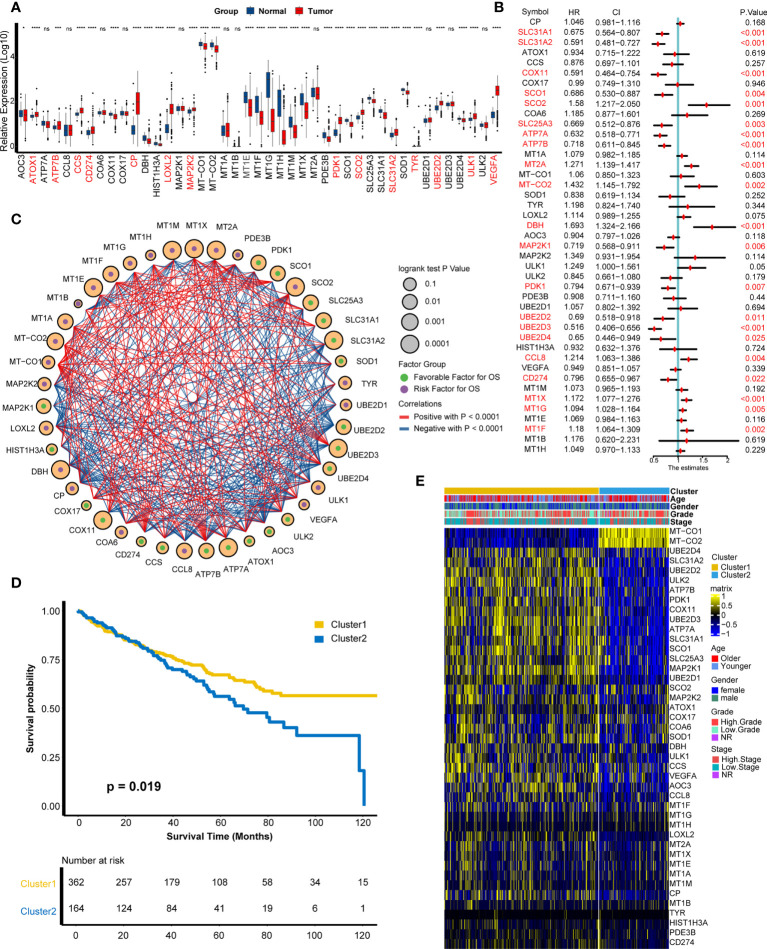
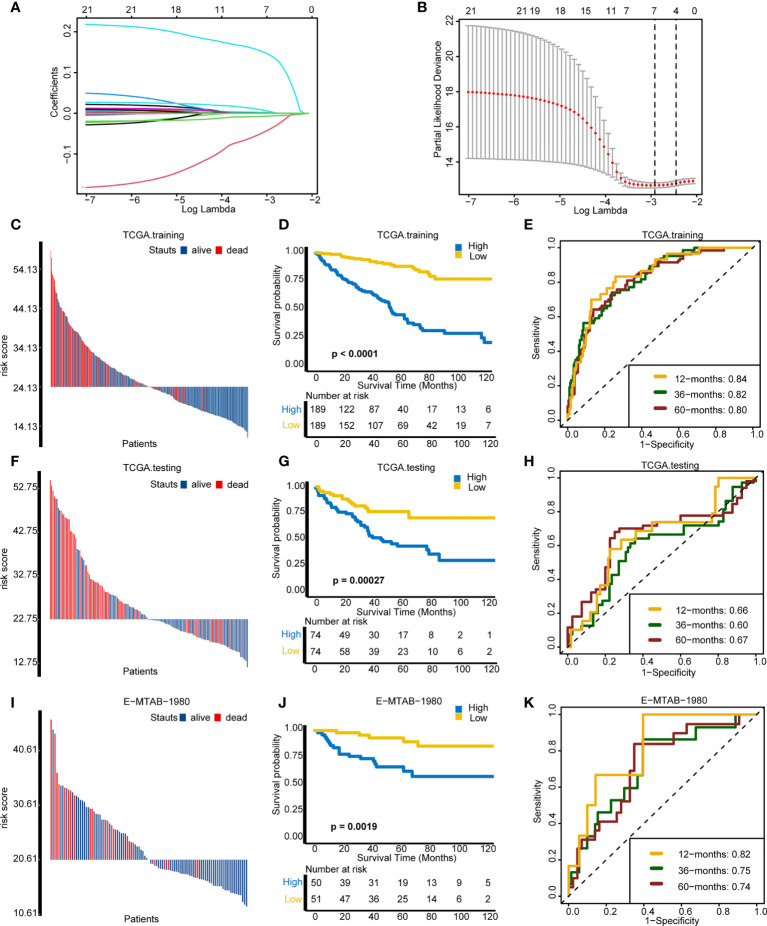
Based on 43 cuproptosis-related genes, we employed unsupervised clustering to identify cuproptosis-related patterns and single-sample gene set enrichment analysis algorithm to build a cuproptosis signature for individual patient's immune cell infiltration and efficacy of immune checkpoint blockade (ICB) evaluation. Then, the cuproptosis-related genes were narrowed down using univariate Cox regression model and least absolute shrinkage and selection operator algorithm. Finally, a cuproptosis risk score was built by random survival forest based on these narrowed-down genes.
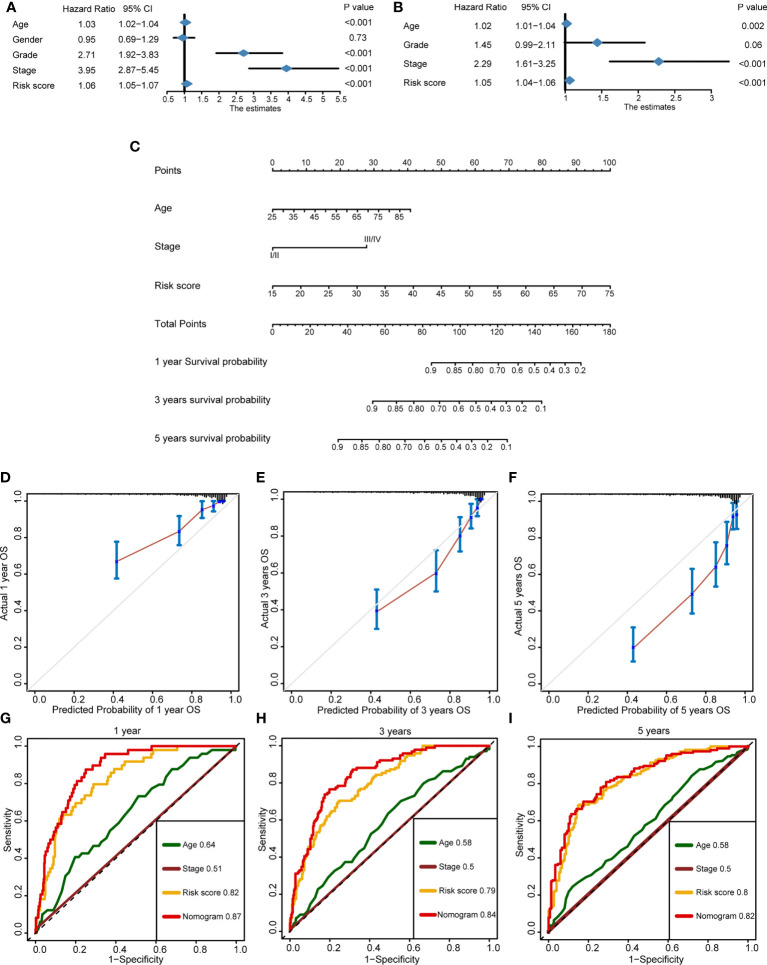
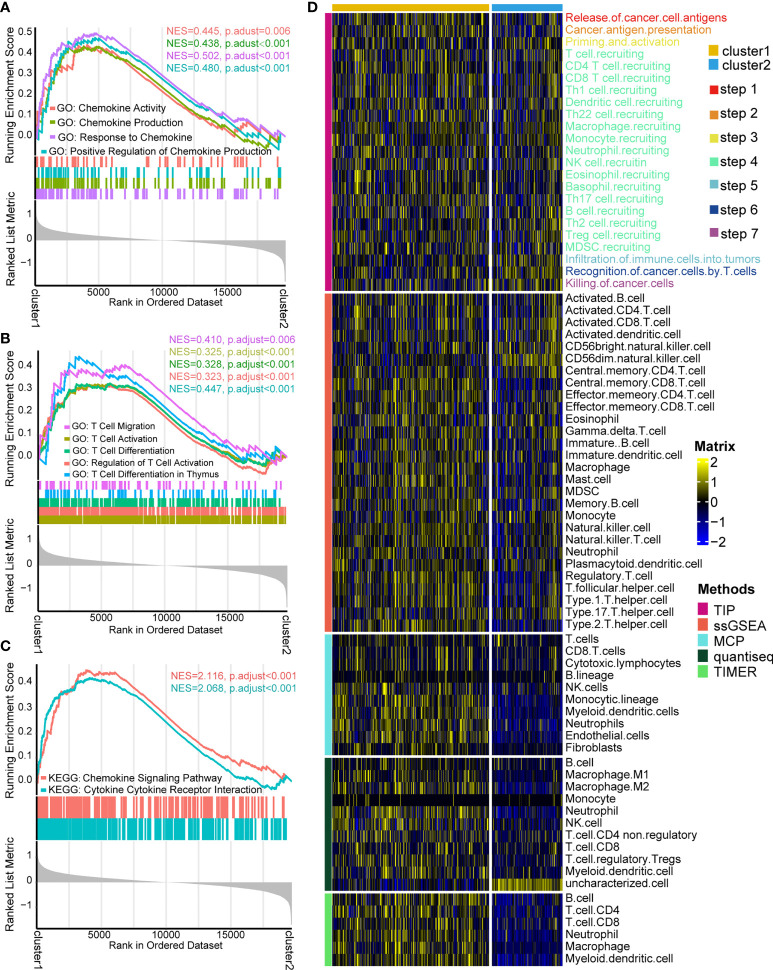
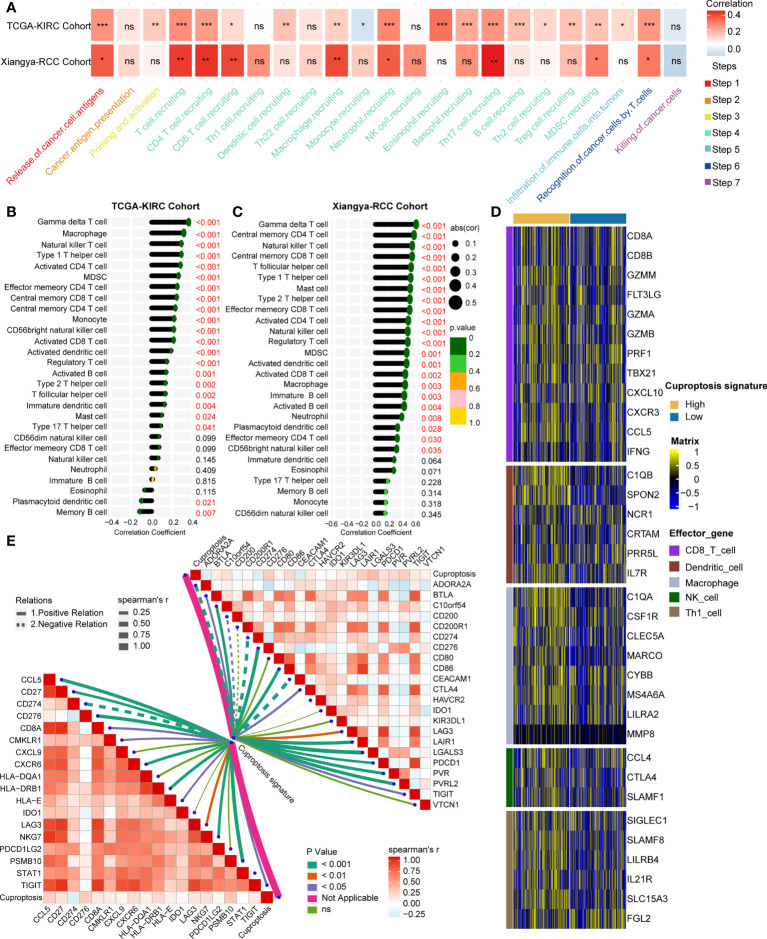
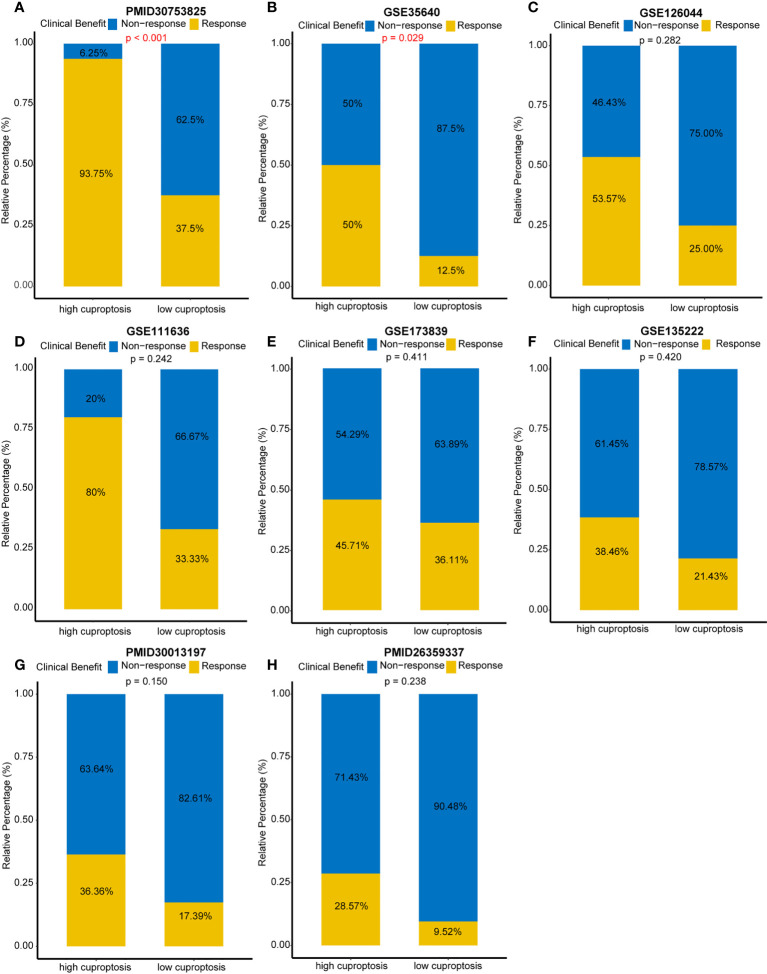
Two distinct cuproptosis-related patterns were developed, with cuproptosis cluster 1 showing better prognosis and higher enrichment of immune-related pathways and infiltration of immune cells. For individual evaluation, the cuproptosis signature that we built could be used not only for predicting immune cell infiltration in TME but also for evaluating an individual's sensitivity to ICBs. Patients with higher cuproptosis signature scores exhibited more activated cancer immune processes, higher immune cell infiltration, and better curative efficacy of ICBs. Furthermore, a robust cuproptosis risk score indicated that patients with higher risk scores showed worse survival outcomes, which could be validated in internal and external validation cohorts. Ultimately, a nomogram which combined the risk score with the prognostic clinical factors was developed, and it showed excellent prediction accuracy for survival outcomes.
Distinct cuproptosis-related patterns have significant differences on prognosis and immune cell infiltration in kidney renal clear cell carcinoma (KIRC). Cuproptosis signature and risk score are able to provide guidance for precision therapy and accurate prognosis prediction for patients with KIRC.
由于免疫细胞在肿瘤中的浸润丰度不同,免疫疗法在个体之间的疗效差异很大。最近,越来越多的证据表明铜死亡与癌症免疫有深远的影响。然而,铜死亡相关基因在肿瘤微环境(TME)中的综合作用以及对免疫治疗的反应仍不清楚。
基于 43 个铜死亡相关基因,我们采用无监督聚类来识别铜死亡相关模式,并采用单样本基因集富集分析算法为个体患者的免疫细胞浸润和免疫检查点阻断(ICB)疗效评估构建铜死亡特征。然后,使用单变量 Cox 回归模型和最小绝对值收缩和选择算子算法对铜死亡相关基因进行了筛选。最后,基于这些筛选后的基因,采用随机生存森林构建了铜死亡风险评分。
开发了两种不同的铜死亡相关模式,铜死亡簇 1 显示出更好的预后和更高的免疫相关途径富集和免疫细胞浸润。对于个体评估,我们构建的铜死亡特征不仅可以用于预测 TME 中的免疫细胞浸润,还可以用于评估个体对 ICB 的敏感性。具有较高铜死亡特征评分的患者表现出更活跃的癌症免疫过程、更高的免疫细胞浸润和更好的 ICB 治疗效果。此外,稳健的铜死亡风险评分表明,风险评分较高的患者生存结局较差,在内部和外部验证队列中得到验证。最终,结合风险评分和预后临床因素开发了一个列线图,该列线图对生存结局具有出色的预测准确性。
在肾透明细胞癌(KIRC)中,不同的铜死亡相关模式在预后和免疫细胞浸润方面存在显著差异。铜死亡特征和风险评分能够为 KIRC 患者提供精准治疗和准确预后预测的指导。