Department of Biological Sciences, Galvin Life Science Center, University of Notre Dame, Notre Dame, IN 46556, USA.
Eck Institute for Global Health, University of Notre Dame, Notre Dame, IN 46556, USA.
Int J Mol Sci. 2021 Sep 6;22(17):9632. doi: 10.3390/ijms22179632.
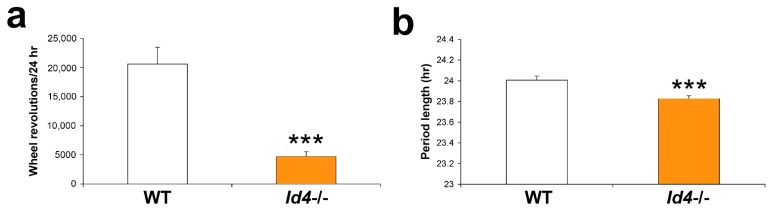
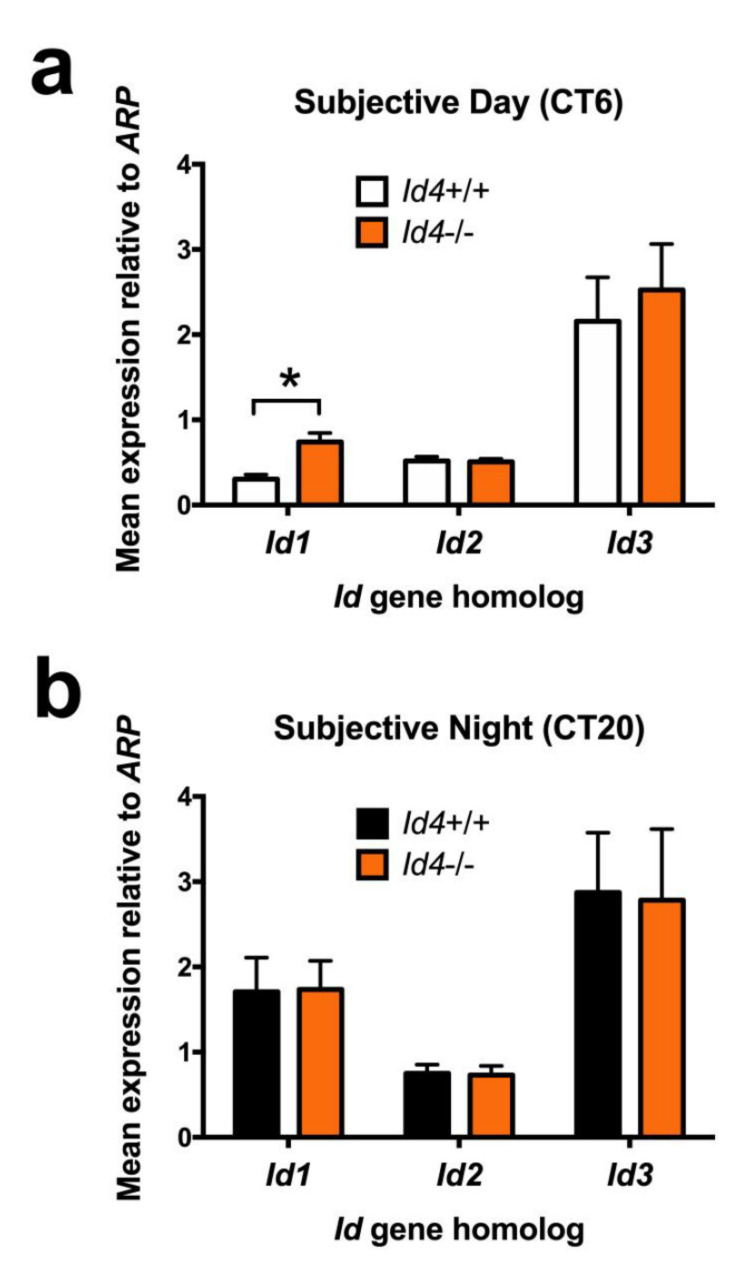
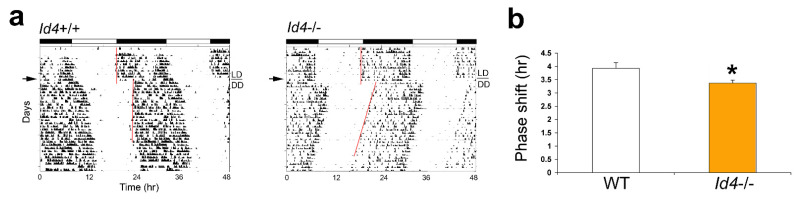
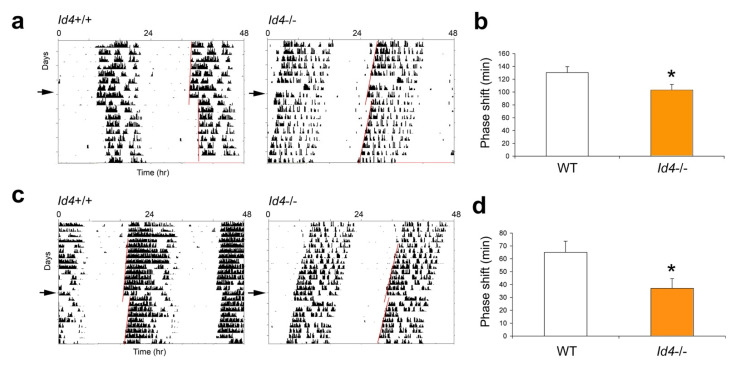
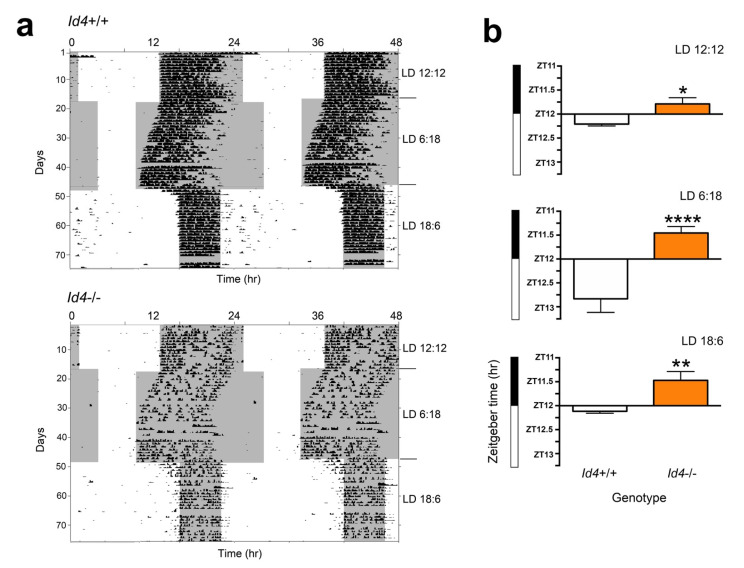
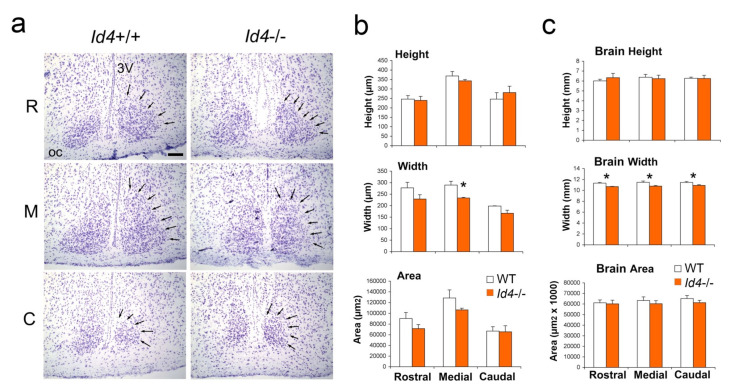
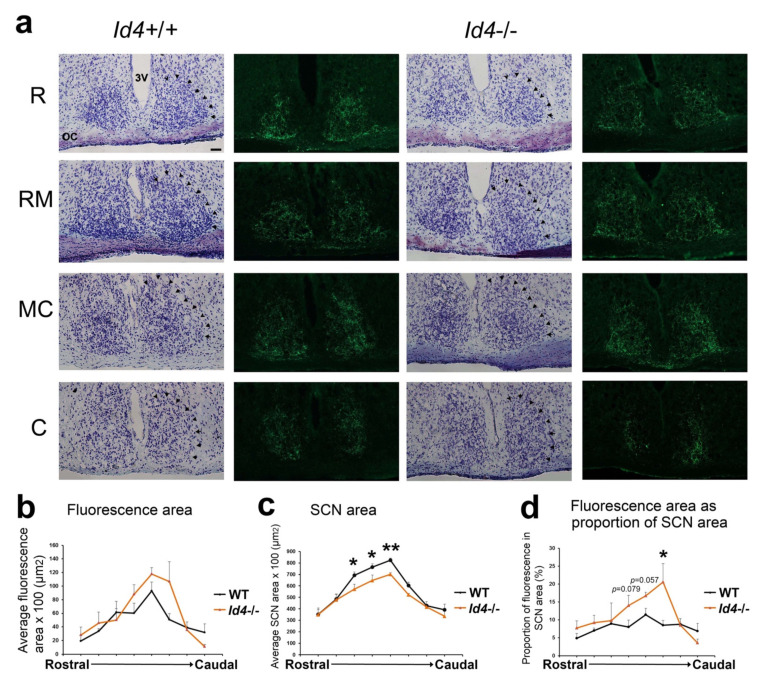
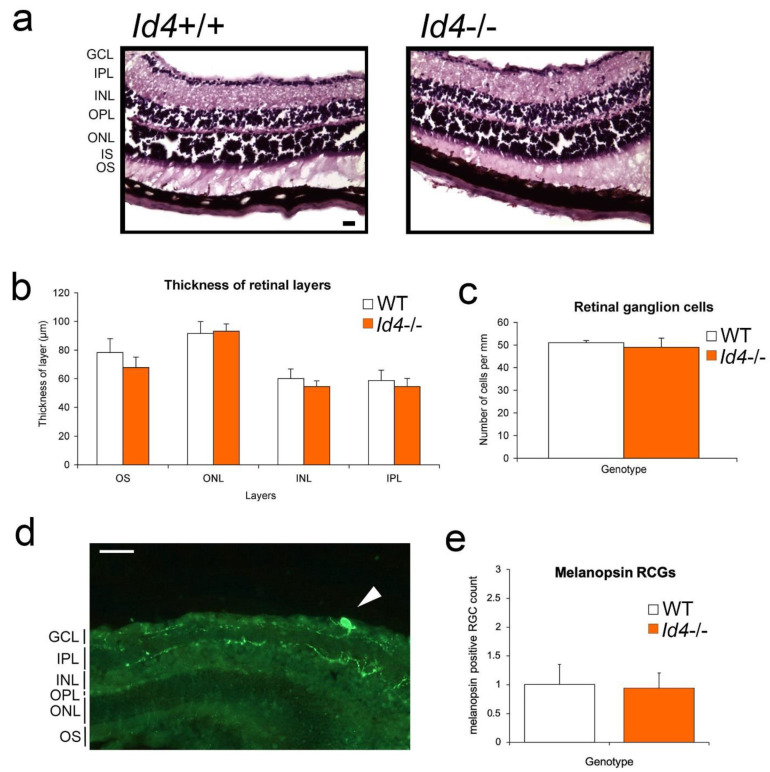
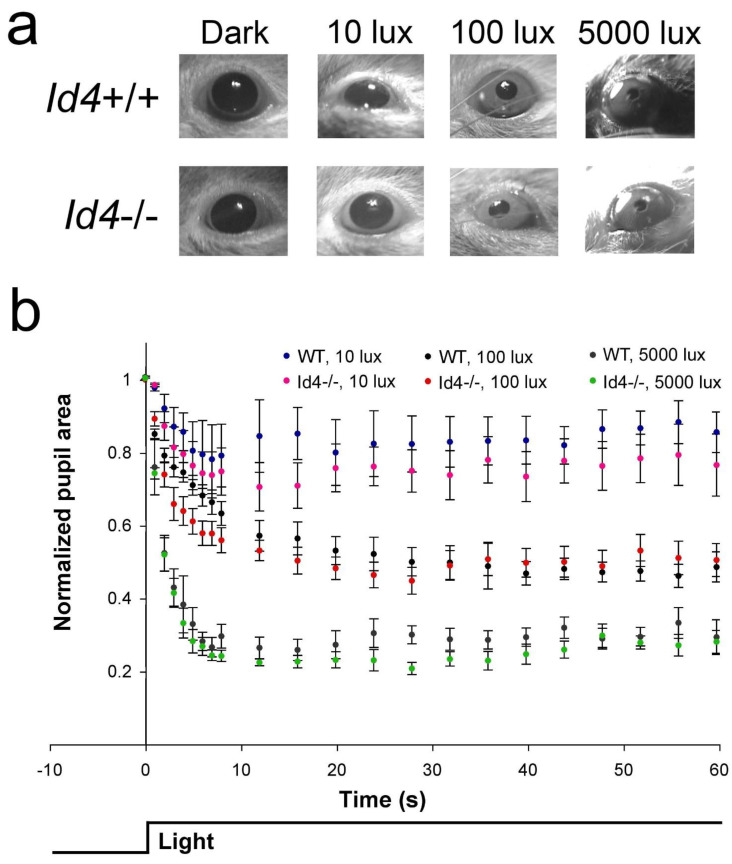
() genes comprise a family of four helix-loop-helix (HLH) transcriptional inhibitors. Our earlier studies revealed a role for ID2 within the circadian system, contributing to input, output, and core clock function through its interaction with CLOCK and BMAL1. Here, we explore the contribution of ID4 to the circadian system using a targeted disruption of the gene. Attributes of the circadian clock were assessed by monitoring the locomotor activity of -/- mice, and they revealed disturbances in its operation. -mutant mice expressed a shorter circadian period length, attenuated phase shifts in responses to continuous and discrete photic cues, and an advanced phase angle of entrainment under a 12:12 light:dark cycle and under short and long photoperiods. To understand the basis for these properties, suprachiasmatic nucleus (SCN) and retinal structures were examined. Anatomical analysis reveals a smaller -/- SCN in the width dimension, which is a finding consistent with its smaller brain. As a result of this feature, anterograde tracing in -/- mice revealed retinal afferents innovate a disproportionally larger SCN area. The -/- photic entrainment responses are unlikely to be due to an impaired function of the retinal pathways since -/- retinal anatomy and function tested by pupillometry were similar to wild-type mice. Furthermore, these circadian characteristics are opposite to those exhibited by the -/- mouse, suggesting an opposing influence of the ID4 protein within the circadian system; or, the absence of ID4 results in changes in the expression or activity of other members of the gene family. Expression analysis of the genes within the -/- SCN revealed a time-of-day specific elevated . It is plausible that the increased and/or absence of ID4 result in changes in interactions with bHLH canonical clock components or with targets upstream and/or downstream of the clock, thereby resulting in abnormal properties of the circadian clock and its entrainment.
() 基因构成了一个四螺旋-环-螺旋 (HLH) 转录抑制剂家族。我们之前的研究表明 ID2 在生物钟系统中发挥作用,通过与 CLOCK 和 BMAL1 的相互作用,为输入、输出和核心时钟功能做出贡献。在这里,我们使用 基因的靶向破坏来探索 ID4 对生物钟系统的贡献。通过监测 -/- 小鼠的活动来评估生物钟的特征,结果显示其功能紊乱。-/- 突变小鼠的昼夜节律周期长度较短,对连续和离散光线索的相位变化反应减弱,在 12:12 光照:黑暗周期和短光照和长光照下的同步相位角提前。为了了解这些特性的基础,我们检查了视交叉上核 (SCN) 和视网膜结构。解剖分析显示 -/- SCN 在宽度维度上较小,这一发现与它的大脑较小相一致。由于这一特征,-/- 小鼠中的顺行追踪显示视网膜传入神经创新地占据了不成比例的更大的 SCN 区域。-/- 的光同步反应不太可能是由于视网膜途径的功能受损,因为通过瞳孔测量法测试的 -/- 视网膜解剖结构和功能与野生型小鼠相似。此外,这些昼夜节律特征与 -/- 小鼠表现出的特征相反,表明 ID4 蛋白在生物钟系统中具有相反的影响;或者,ID4 的缺失导致 基因家族的其他成员的表达或活性发生变化。在 -/- SCN 内对 基因的表达分析显示出特定的时间依赖性升高。可以合理地假设,增加的 和/或 ID4 的缺失导致与 bHLH 经典时钟成分或时钟上游和/或下游的靶标相互作用的变化,从而导致生物钟及其同步的异常特性。