Singh Prakrity, Chauhan Shweta Singh, Pandit Shraddha, Sinha Meetali, Gupta Shristee, Gupta Anshika, Parthasarathi Ramakrishnan
CSIR- Indian Institute of Toxicology Research, Vishvigyan Bhavan, 31, Mahatma Gandhi Marg, Lucknow, 226001, Uttar Pradesh, India.
Academy of Scientific and Innovative Research (AcSIR), Ghaziabad, 201002, Uttar Pradesh, India.
J Tradit Complement Med. 2022 Jan;12(1):90-99. doi: 10.1016/j.jtcme.2021.09.001. Epub 2021 Sep 8.
The severe acute respiratory syndrome-2019 has affected more than 190 million people around the world and caused severe crises throughout the globe. Due to rapid mutation in the viral genome, its became important to simultaneously improvise the host immunity while targeting viral proteins to reduce the severity of infection.
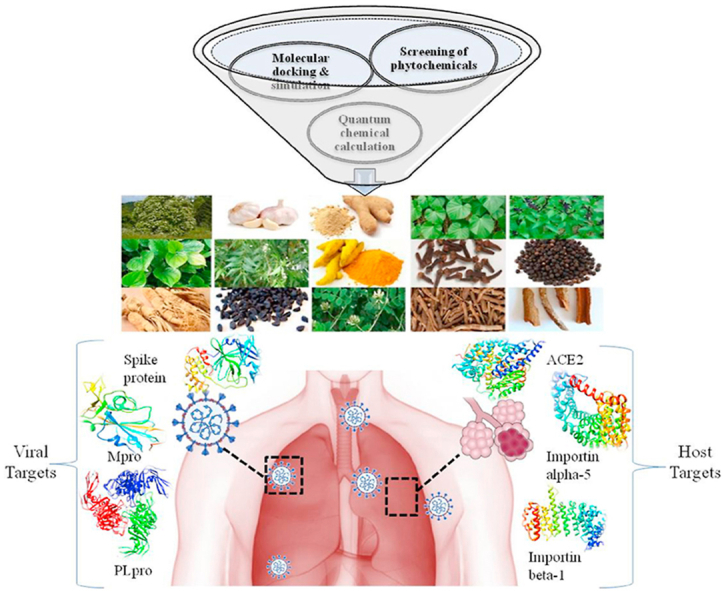
The current computational work focuses on multi-level rigorous screening of 47 medicinal plant-based phytochemicals for discovering effective phytochemical inhibitors against the host and viral targets.
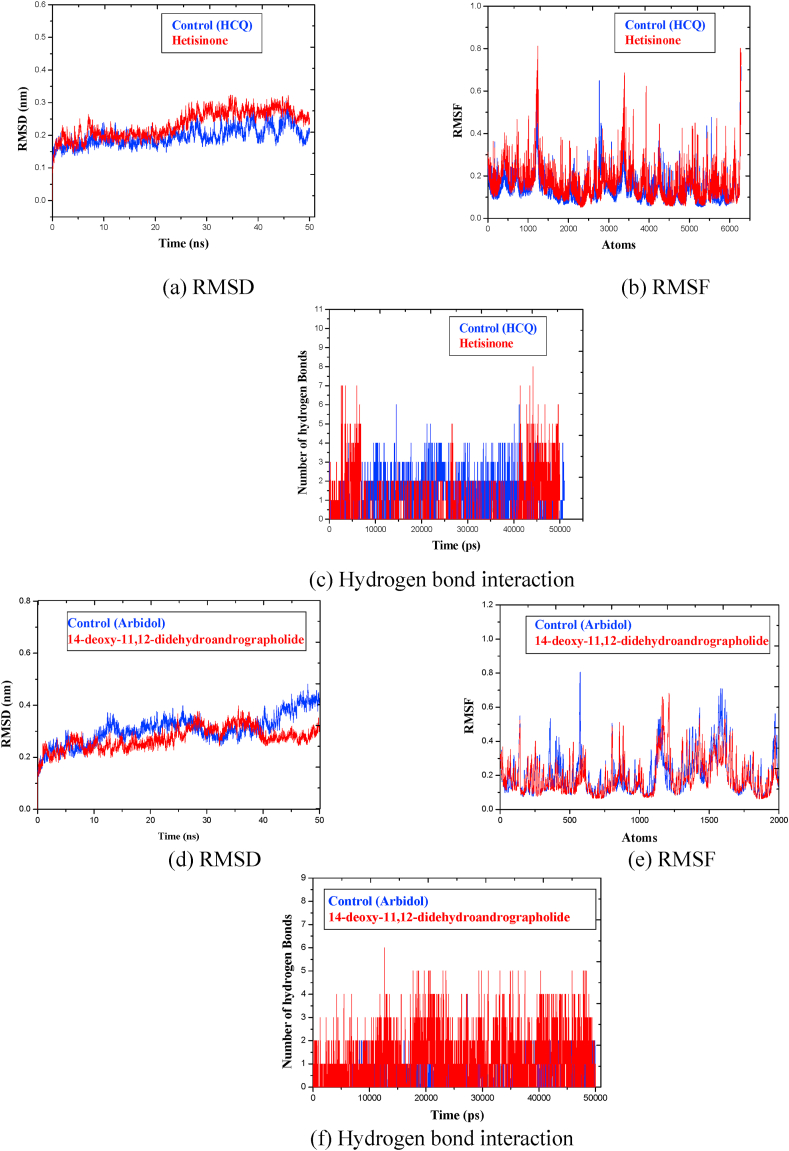
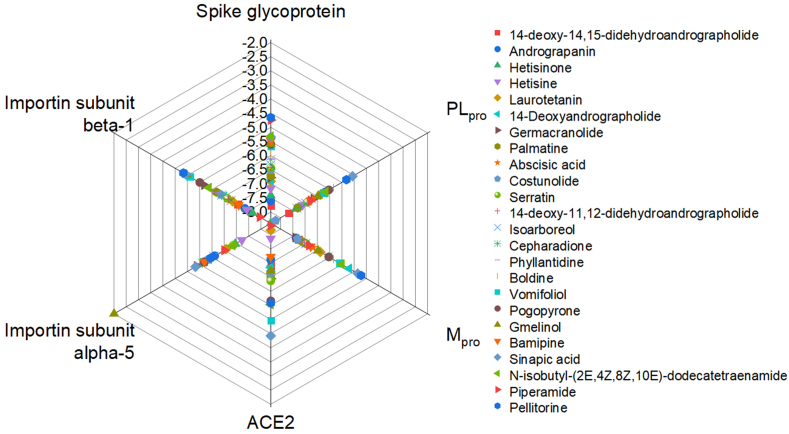
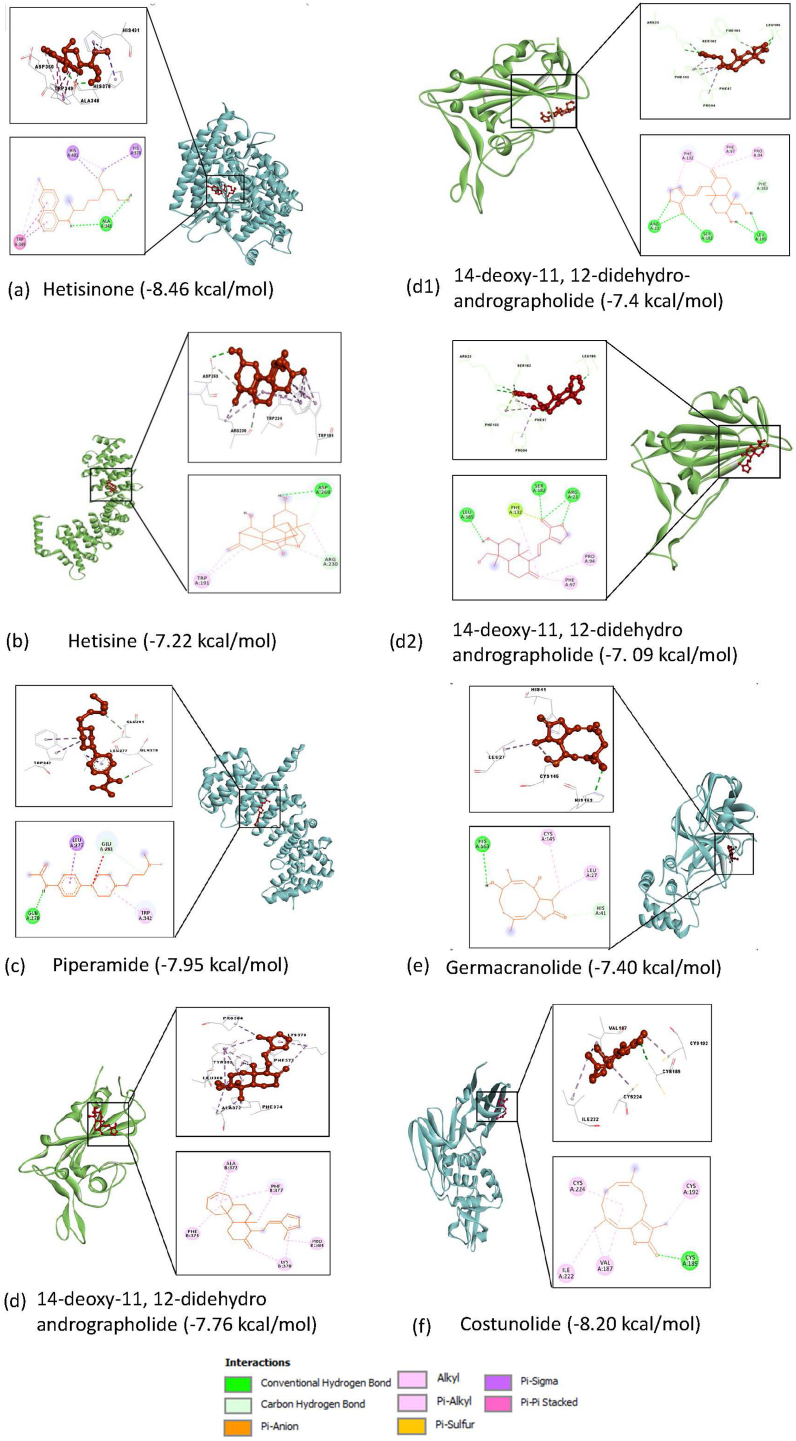
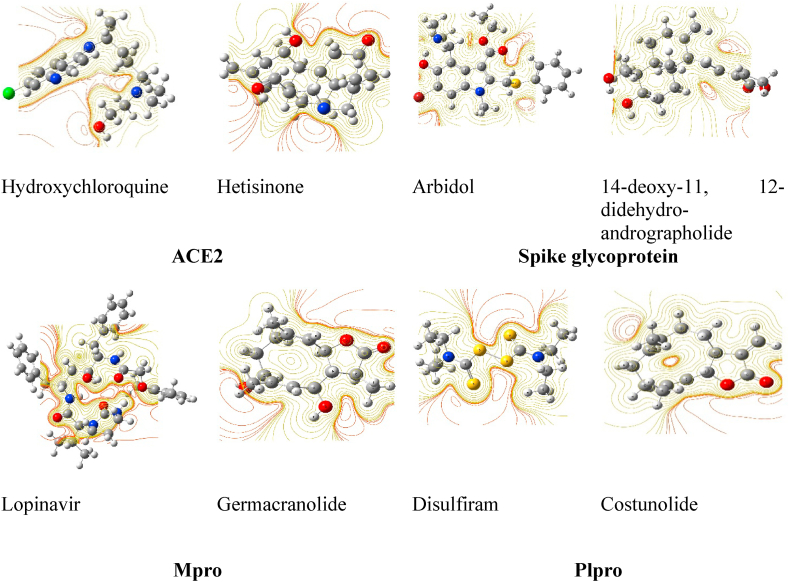
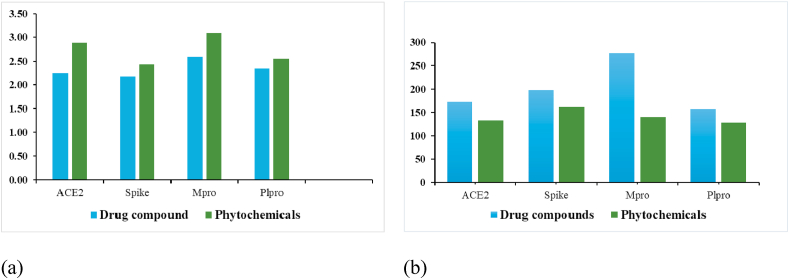
A total of 586 phytochemicals were analyzed in detail based on their drug-likeness, pharmacological properties, and structure-based activity against the viral proteins (Spike glycoprotein, Papain-like protease, and Main protease) and host proteins (ACE2, Importin-subunit α-5, and β-1). Phytochemicals showing higher binding affinity with the dual capacity to target both the categories of proteins were further analyzed by profiling of their chemical reactivity using Density-Functional Theory (DFT) based quantum chemical methods. Finally, detailed molecular dynamics simulations were performed to analyze the interactions of the complexes.
The results revealed that the selected phytochemicals from , , and may have the capacity to act with prominent affinity towards the host and viral proteins. Therefore, the combination of active phytochemicals of these plants may prove to be more beneficial and can be used for developing the potential phytotherapeutic intervention.
2019年严重急性呼吸综合征已影响全球超过1.9亿人,并在全球引发严重危机。由于病毒基因组的快速突变,在靶向病毒蛋白的同时提高宿主免疫力以降低感染严重程度变得至关重要。
当前的计算工作聚焦于对47种药用植物来源的植物化学物质进行多层次严格筛选,以发现针对宿主和病毒靶点的有效植物化学抑制剂。
基于586种植物化学物质的类药性、药理特性以及对病毒蛋白(刺突糖蛋白、木瓜样蛋白酶和主要蛋白酶)和宿主蛋白(血管紧张素转换酶2、输入蛋白亚基α-5和β-1)的基于结构的活性,对其进行了详细分析。对显示出与两类蛋白都具有较高结合亲和力的植物化学物质,使用基于密度泛函理论(DFT)的量子化学方法对其化学反应性进行分析,进一步研究。最后,进行了详细的分子动力学模拟以分析复合物的相互作用。
结果表明,从[此处原文缺失具体植物名称]、[此处原文缺失具体植物名称]、[此处原文缺失具体植物名称]和[此处原文缺失具体植物名称]中筛选出的植物化学物质可能对宿主和病毒蛋白具有显著的亲和力。因此,这些植物的活性植物化学物质的组合可能更有益,可用于开发潜在的植物治疗干预措施。