Pandey Kavita, Umar Shahid
Department of Bioanalytical Sciences (Integrated), G. N. Khalsa College, Matunga, Mumbai, India.
Department of Surgery, University of Kansas Medical Center, Kansas City, KS 66160, USA.
Curr Opin Physiol. 2021 Oct;23. doi: 10.1016/j.cophys.2021.100472. Epub 2021 Aug 17.
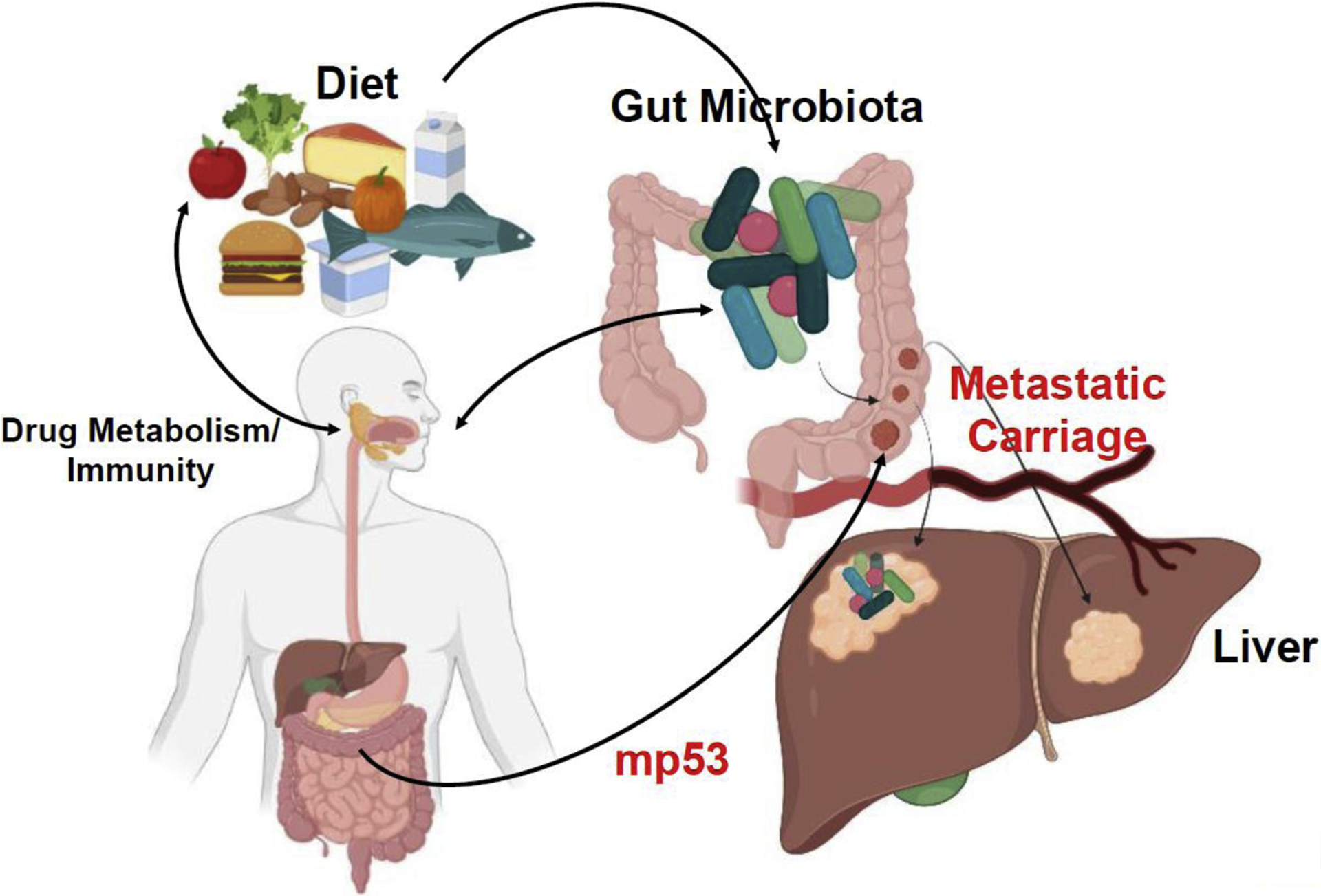
Metagenomic analyses have revealed microbial dysbiosis in the gut of patients with colorectal cancer (CRC). The gut microbiota influences CRC via a variety of mechanisms, including microbial-derived factors such as metabolites or genotoxins. Pathogenic drivers and opportunistic passenger bacteria may underlie direct effect of the gut microbiota on carcinogenesis. We posit that metabolites generated by gut microbiota can influence CRC through a multitude of epigenetic or genetic effects on malignant transformation. A closer look at the cross talks between the commensals, epithelial cells, immune regulators etc., needs to be established with more substantiated studies. The recurrence of chemoresistant disease following therapy undoubtedly provides the impetus for morbidity and mortality; yet, the role of gut microbiome in drug resistance remains to be fully investigated. We review the current literature on microbial dysbiosis during CRC and discuss the mechanistic basis of CRC-associated bacteria in tumor initiation, progression and drug resistance.
宏基因组分析揭示了结直肠癌(CRC)患者肠道中的微生物群落失调。肠道微生物群通过多种机制影响结直肠癌,包括微生物衍生的因子,如代谢物或基因毒素。致病驱动菌和机会性过路菌可能是肠道微生物群对致癌作用产生直接影响的基础。我们认为,肠道微生物群产生的代谢物可通过对恶性转化产生多种表观遗传或遗传效应来影响结直肠癌。需要通过更充分的研究来进一步明确共生菌、上皮细胞、免疫调节因子等之间的相互作用。治疗后化疗耐药性疾病的复发无疑推动了发病率和死亡率的上升;然而,肠道微生物群在耐药性中的作用仍有待充分研究。我们综述了目前关于结直肠癌期间微生物群落失调的文献,并讨论了结直肠癌相关细菌在肿瘤发生、发展和耐药性中的作用机制。