Department of Neurology, Tongji Hospital, Tongji Medical College, Huazhong University of Science and Technology, Wuhan, 430030, People's Republic of China.
Department of Neurology, Mayo Clinic, Rochester, MN, 55905, USA.
J Neuroinflammation. 2021 Sep 15;18(1):201. doi: 10.1186/s12974-021-02266-0.
Neuromyelitis optica spectrum disorder (NMOSD) is mainly an anti-aquaporin 4 (anti-AQP4) autoantibodies-mediated idiopathic inflammatory demyelinating disease of the central nervous system. Systemic and local inflammatory responses play a key role in the pathophysiology of NMOSD. However, the role of the crucial immunomodulators CD4CD25 forkhead box P3 (Foxp3) regulatory T cells (Tregs) has not been investigated in NMOSD.
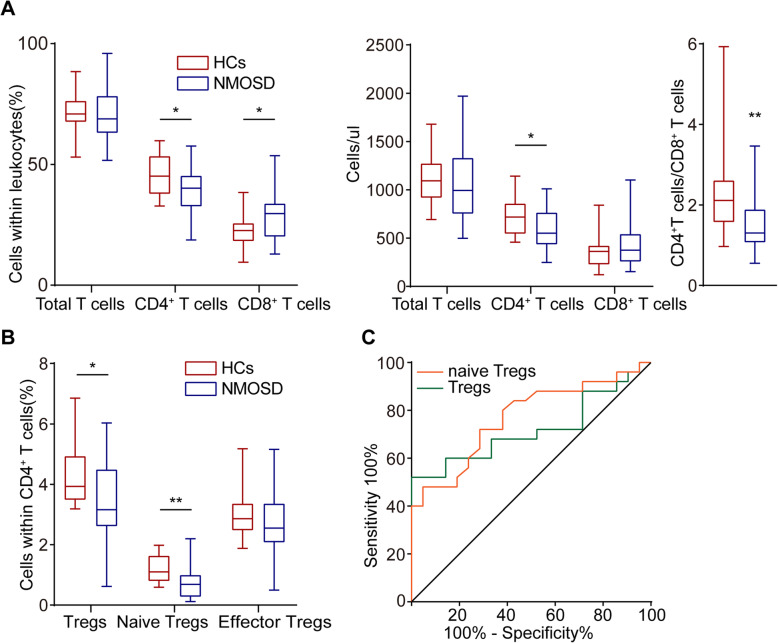
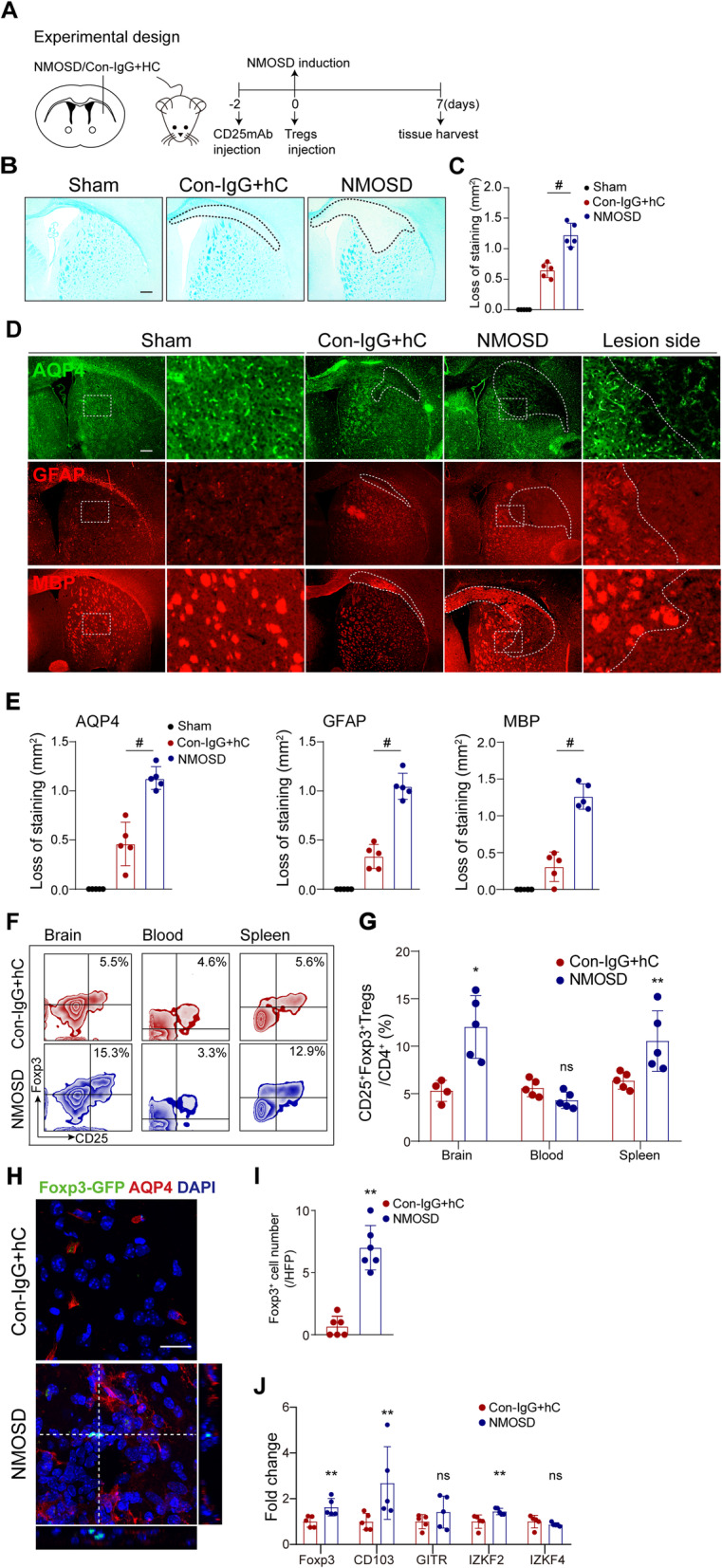
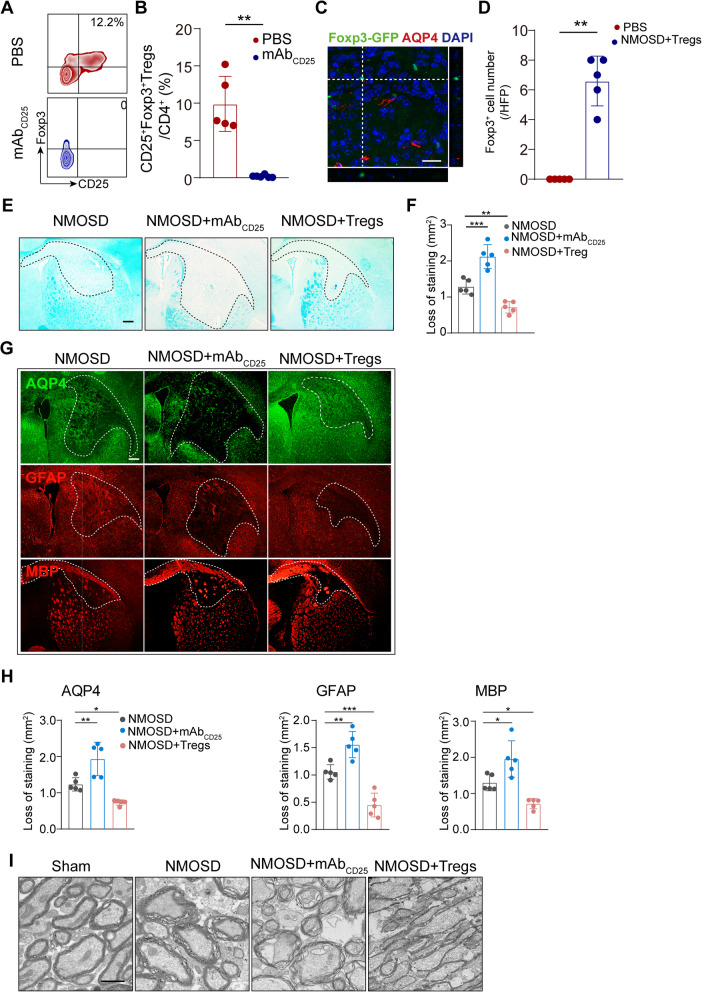
Twenty-five patients with anti-AQP4-postive NMOSD undergoing an attack and 21 healthy controls (HCs) were enrolled. Frequencies of T cell subsets and Tregs in the peripheral blood were assessed by flow cytometry. Additionally, a model of NMOSD using purified immunoglobulin G from anti-AQP4-antibodies-positive patients with NMOSD and human complement injected into brain of female adult C57BL/6J mice was established. Infiltrated Tregs into NMOSD mouse brain lesions were analyzed by flow cytometry, histological sections, and real-time quantitative Polymerase Chain Reaction. Astrocyte loss, demyelination, and inflammatory response were also evaluated in our NMOSD mouse model. Finally, we examined the effects of both depletion and adoptive transfer of Tregs.
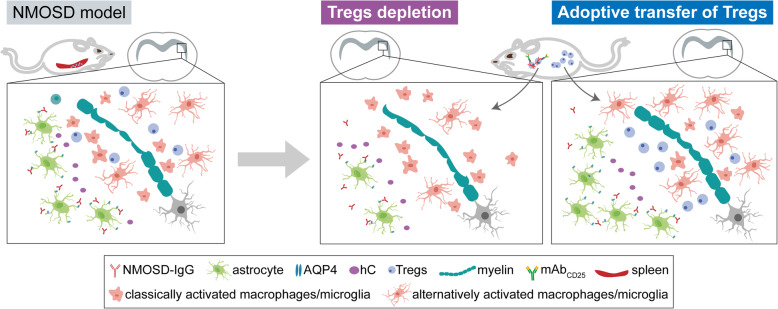
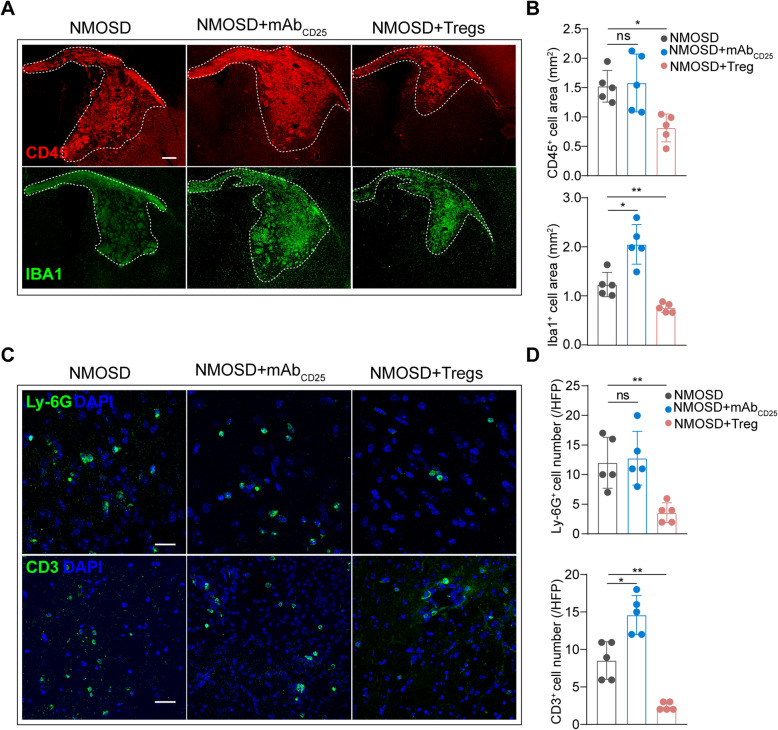
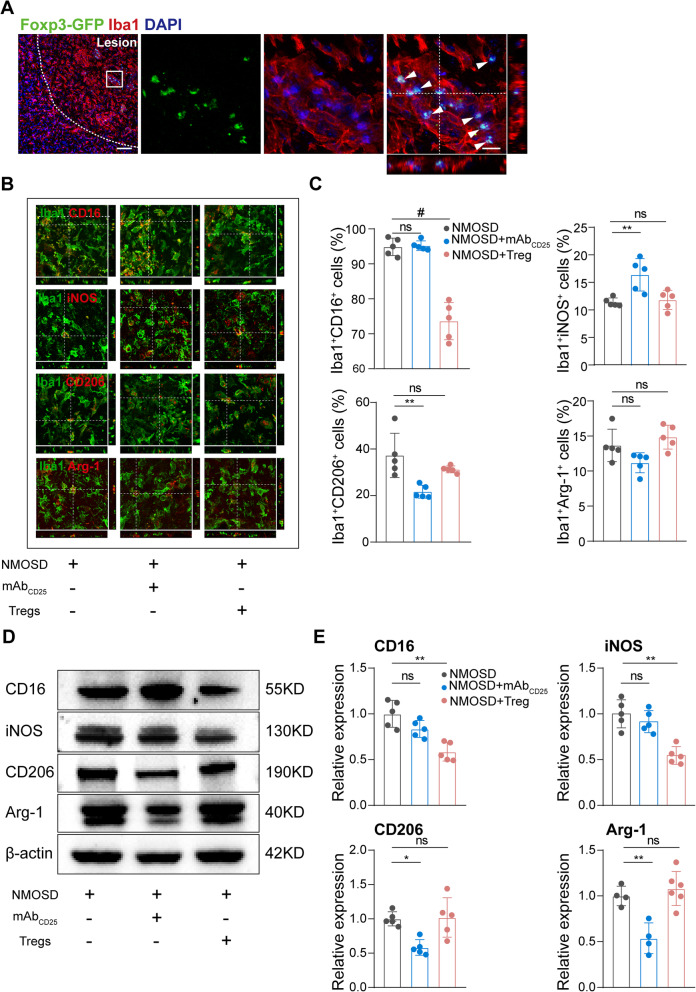
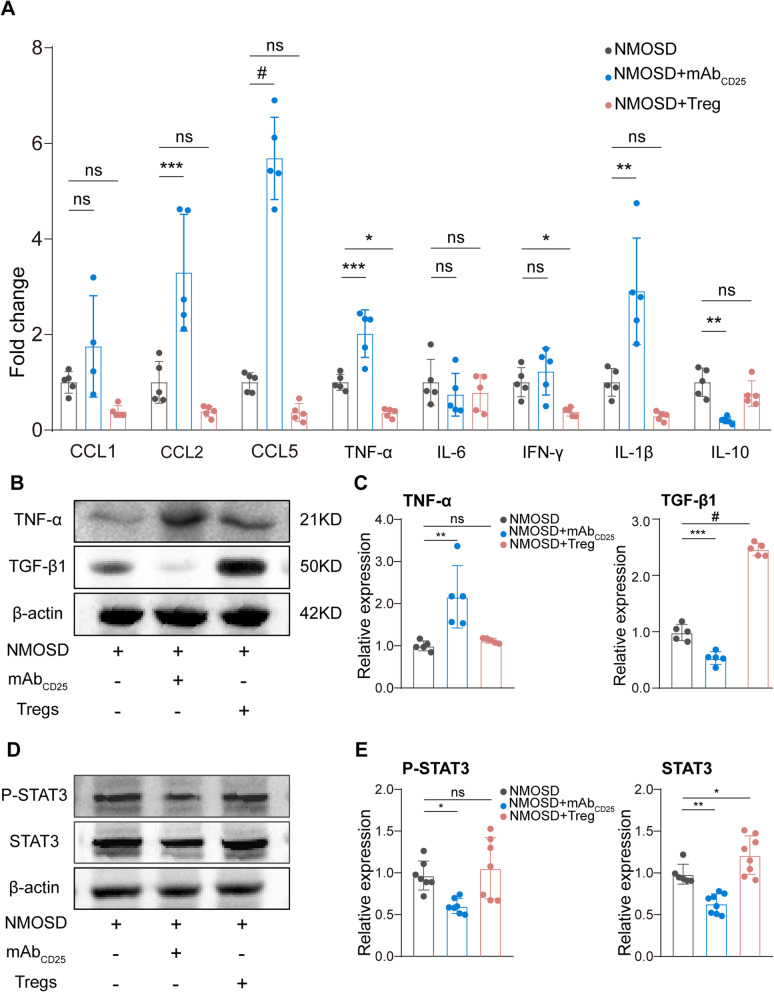
The percentage of Tregs, especially naïve Tregs, among total T cells in peripheral blood was significantly decreased in NMOSD patients at acute stage when compared to HCs. Within our animal model, the number and proportion of Tregs among CD4 T cells were increased in the lesion of mice with NMOSD. Depletion of Tregs profoundly enhanced astrocyte loss and demyelination in these mice, while adoptive transfer of Tregs attenuated brain damage. Mechanistically, the absence of Tregs induced more macrophage infiltration, microglial activation, and T cells invasion, and modulated macrophages/microglia toward a classical activation phenotype, releasing more chemokines and pro-inflammatory cytokines. In contrast, Tregs transfer ameliorated immune cell infiltration in NMOSD mice, including macrophages, neutrophils, and T cells, and skewed macrophages and microglia towards an alternative activation phenotype, thereby decreasing the level of chemokines and pro-inflammatory cytokines.
Tregs may be key immunomodulators ameliorating brain damage via dampening inflammatory response after NMOSD.
视神经脊髓炎谱系疾病(NMOSD)主要是一种抗水通道蛋白 4(抗-AQP4)自身抗体介导的中枢神经系统特发性炎症性脱髓鞘疾病。全身和局部炎症反应在 NMOSD 的病理生理学中起着关键作用。然而,关键免疫调节剂 CD4+CD25+叉头框 P3(Foxp3)调节性 T 细胞(Tregs)在 NMOSD 中的作用尚未得到研究。
纳入 25 例抗-AQP4 阳性 NMOSD 发作患者和 21 名健康对照者(HCs)。采用流式细胞术评估外周血 T 细胞亚群和 Tregs 的频率。此外,还建立了一种使用 NMOSD 患者抗-AQP4 抗体阳性的纯化免疫球蛋白 G 和人补体注入雌性成年 C57BL/6J 小鼠脑内的 NMOSD 模型。通过流式细胞术、组织切片和实时定量聚合酶链反应分析 NMOSD 小鼠脑损伤中浸润的 Tregs。还评估了 NMOSD 小鼠模型中的星形胶质细胞丢失、脱髓鞘和炎症反应。最后,我们检查了 Tregs 的耗竭和过继转移的影响。
与 HCs 相比,NMOSD 患者在急性发作时外周血中 T 细胞总数中 Tregs 的比例,尤其是幼稚 Tregs 的比例明显降低。在我们的动物模型中,NMOSD 小鼠病变中 CD4+T 细胞中的 Tregs 数量和比例增加。Tregs 的耗竭显著增强了这些小鼠的星形胶质细胞丢失和脱髓鞘,而过继转移 Tregs 则减轻了脑损伤。在机制上,Tregs 的缺失诱导了更多的巨噬细胞浸润、小胶质细胞激活和 T 细胞浸润,并将巨噬细胞/小胶质细胞向经典激活表型转变,释放更多趋化因子和促炎细胞因子。相比之下,Tregs 转移改善了 NMOSD 小鼠的免疫细胞浸润,包括巨噬细胞、中性粒细胞和 T 细胞,并使巨噬细胞和小胶质细胞向替代激活表型倾斜,从而降低趋化因子和促炎细胞因子的水平。
Tregs 可能是通过在 NMOSD 后抑制炎症反应来改善脑损伤的关键免疫调节剂。