Max-Eder Research Group for Pediatric Sarcoma Biology, Institute of Pathology, Faculty of Medicine, LMU Munich, Munich, Germany.
Division of Translational Pediatric Sarcoma Research, German Cancer Research Center (DKFZ), German Cancer Consortium (DKTK), Heidelberg, Germany.
Nat Commun. 2021 Sep 16;12(1):5356. doi: 10.1038/s41467-021-25553-z.
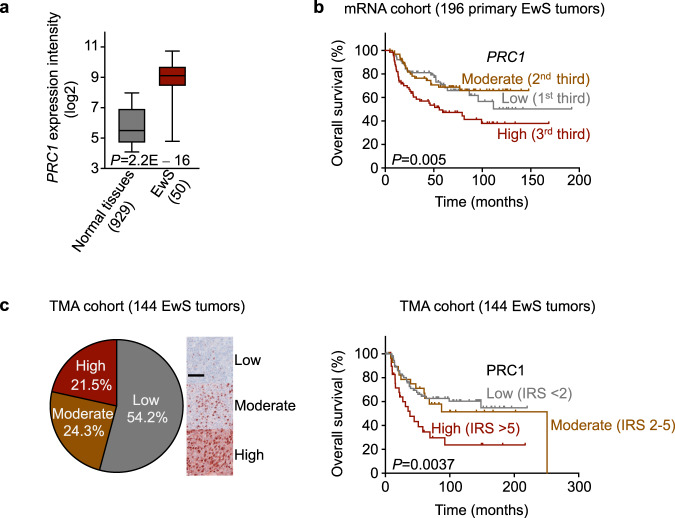
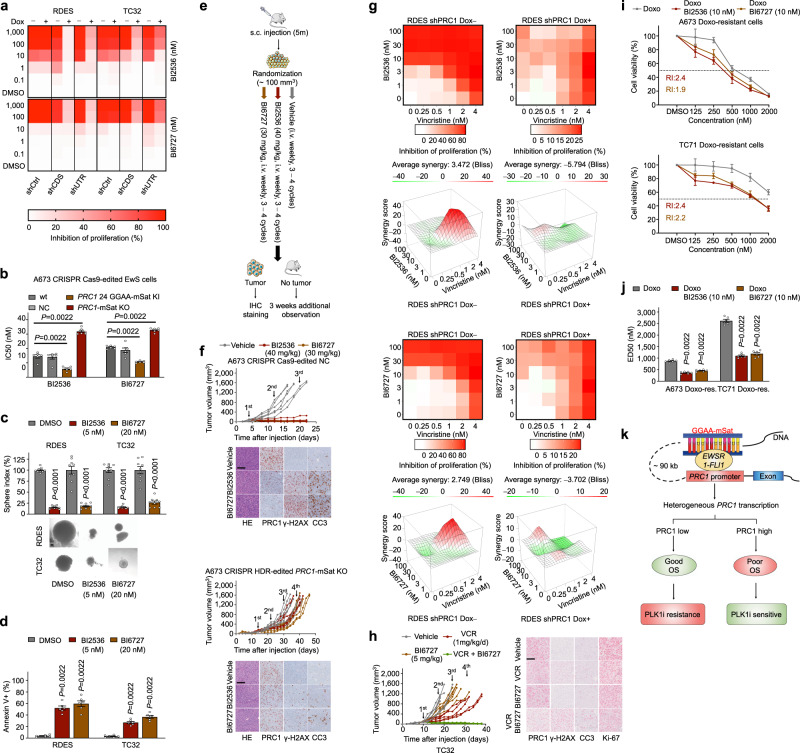
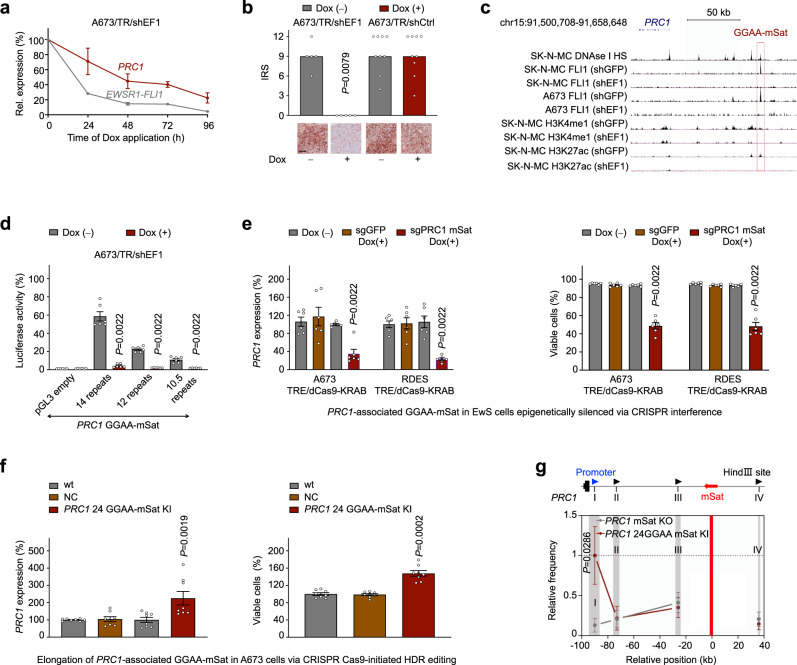
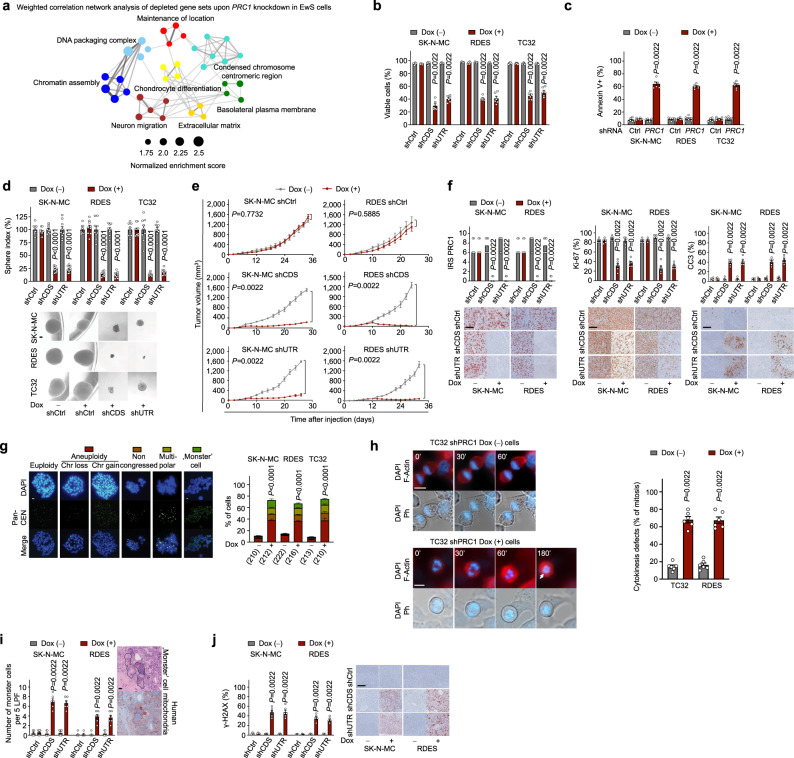
Chromosomal instability (CIN) is a hallmark of cancer. Yet, many childhood cancers, such as Ewing sarcoma (EwS), feature remarkably 'silent' genomes with minimal CIN. Here, we show in the EwS model how uncoupling of mitosis and cytokinesis via targeting protein regulator of cytokinesis 1 (PRC1) or its activating polo-like kinase 1 (PLK1) can be employed to induce fatal genomic instability and tumor regression. We find that the EwS-specific oncogenic transcription factor EWSR1-FLI1 hijacks PRC1, which physiologically safeguards controlled cell division, through binding to a proximal enhancer-like GGAA-microsatellite, thereby promoting tumor growth and poor clinical outcome. Via integration of transcriptome-profiling and functional in vitro and in vivo experiments including CRISPR-mediated enhancer editing, we discover that high PRC1 expression creates a therapeutic vulnerability toward PLK1 inhibition that can repress even chemo-resistant EwS cells by triggering mitotic catastrophe.Collectively, our results exemplify how aberrant PRC1 activation by a dominant oncogene can confer malignancy but provide opportunities for targeted therapy, and identify PRC1 expression as an important determinant to predict the efficacy of PLK1 inhibitors being used in clinical trials.
染色体不稳定性 (CIN) 是癌症的一个标志。然而,许多儿童癌症,如尤因肉瘤 (EwS),其基因组具有显著的“沉默”特征,CIN 最小。在这里,我们在 EwS 模型中展示了如何通过靶向细胞分裂调控蛋白 1 (PRC1) 或其激活的 Polo 样激酶 1 (PLK1) 来分离有丝分裂和胞质分裂,可以诱导致命的基因组不稳定性和肿瘤消退。我们发现,EwS 特异性致癌转录因子 EWSR1-FLI1 通过结合到近端增强子样 GGAA-微卫星,劫持了生理上保护细胞分裂的 PRC1,从而促进肿瘤生长和不良的临床结局。通过整合转录组谱分析以及包括 CRISPR 介导的增强子编辑在内的体外和体内功能实验,我们发现高 PRC1 表达会产生对 PLK1 抑制的治疗易感性,通过触发有丝分裂灾难,甚至可以抑制化疗耐药的 EwS 细胞。总的来说,我们的结果说明了显性癌基因异常激活 PRC1 如何赋予恶性肿瘤,但为靶向治疗提供了机会,并确定 PRC1 表达作为预测临床试验中使用的 PLK1 抑制剂疗效的一个重要决定因素。