Department of Public Health, Erasmus MC, University Medical Center Rotterdam, P.O. Box 2040, CA, Rotterdam, 3000, The Netherlands.
Association of Dutch Burn Centres, Maasstad Hospital, Rotterdam, the Netherlands.
BMC Health Serv Res. 2021 Sep 19;21(1):988. doi: 10.1186/s12913-021-06913-3.
Differences in health care utilization by educational level can contribute to inequalities in health. Understanding health care utilization and health-related quality of life (HRQoL) of educational groups may provide important insights into the presence of these inequalities. Therefore, we assessed characteristics, health care utilization and HRQoL of injury patients by educational level.
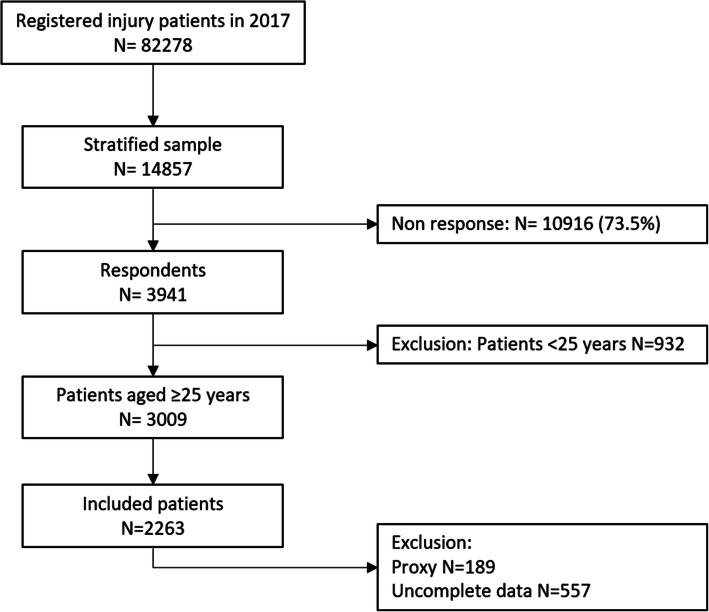
Data for this registry based cohort study were extracted from the Dutch Injury Surveillance System. At 6-month follow-up, a stratified sample of patients (≥25 years) with an unintentional injury reported their health care utilization since discharge and completed the EQ-5-Dimension, 5-Level (EQ-5D-5L) and visual analogue scale (EQ VAS). Logistic regression analyses, adjusting for patient and injury characteristics, were performed to investigate the association between educational level and health care utilization. Descriptive statistics were used to analyse HRQoL scores by educational level, for hospitalized and non-hospitalized patients.
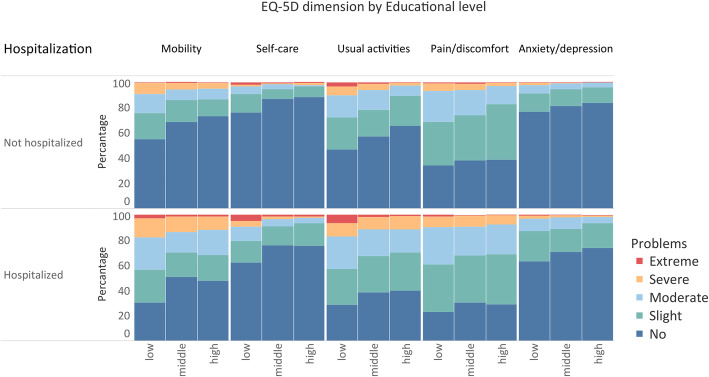
This study included 2606 patients; 47.9% had a low, 24.4% a middle level, and 27.7% a high level of education. Patients with low education were more often female, were older, had more comorbidities, and lived more often alone compared to patients with high education (p < 0.001). Patients with high education were more likely to visit a general practitioner (OR: 1.38; CI: 1.11-1.72) but less likely to be hospitalized (OR: 0.79; CI: 0.63-1.00) and to have nursing care at home (OR: 0.66; CI: 0.49-0.90) compared to their low educated counterparts. For both hospitalized an non-hospitalized persons, those with low educational level reported lower HRQoL and more problems on all dimensions than those with a higher educational level.
Post-discharge, level of education was associated with visiting the general practitioner and nursing care at home, but not significantly with use of other health care services in the 6 months post-injury. Additionally, patients with a low educational level had a poorer HRQoL. However, other factors including age and sex may also explain a part of these differences between educational groups. It is important that patients are aware of potential consequences of their trauma and when and why they should consult a specific health care service after ED or hospital discharge.
不同教育程度的医疗保健利用差异可能导致健康不平等。了解教育群体的医疗保健利用和与健康相关的生活质量(HRQoL)可以为这些不平等的存在提供重要的见解。因此,我们评估了不同教育程度的伤害患者的特征、医疗保健利用和 HRQoL。
本基于登记的队列研究的数据从荷兰伤害监测系统中提取。在 6 个月的随访中,对出院后有非故意损伤的年龄≥25 岁的患者进行分层抽样,报告其出院后医疗保健利用情况,并完成 EQ-5D 维度、5 级(EQ-5D-5L)和视觉模拟量表(EQ VAS)。对患者和损伤特征进行调整的逻辑回归分析用于调查教育水平与医疗保健利用之间的关系。对住院和非住院患者按教育水平进行 HRQoL 评分的描述性统计分析。
本研究纳入了 2606 名患者;47.9%的患者受教育程度较低,24.4%的患者受教育程度中等,27.7%的患者受教育程度较高。与受教育程度较高的患者相比,受教育程度较低的患者女性更多,年龄更大,合并症更多,独居的比例更高(p<0.001)。受教育程度较高的患者更有可能去看全科医生(OR:1.38;CI:1.11-1.72),但更不可能住院(OR:0.79;CI:0.63-1.00)和接受家庭护理(OR:0.66;CI:0.49-0.90),与受教育程度较低的患者相比。对于住院和非住院患者,受教育程度较低的患者在所有维度上的 HRQoL 均较低,问题也较多。
出院后,教育水平与全科医生就诊和家庭护理有关,但与受伤后 6 个月内其他医疗保健服务的使用无显著相关性。此外,教育程度较低的患者 HRQoL 较差。然而,其他因素,包括年龄和性别,也可能解释教育群体之间的部分差异。重要的是,患者应意识到他们的创伤可能带来的潜在后果,以及何时以及为何应在 ED 或出院后咨询特定的医疗保健服务。