Flores-Vergara Raúl, Olmedo Ivonne, Aránguiz Pablo, Riquelme Jaime Andrés, Vivar Raúl, Pedrozo Zully
Advanced Center for Chronic Diseases (ACCDiS), Facultad de Ciencias Químicas y Farmacéuticas & Facultad de Medicina, Universidad de Chile, Santiago de Chile, Chile.
Programa de Fisiología y Biofísica, Instituto de Ciencias Biomédicas (ICBM), Facultad de Medicina, Universidad de Chile, Santiago de Chile, Chile.
Front Physiol. 2021 Sep 3;12:716721. doi: 10.3389/fphys.2021.716721. eCollection 2021.
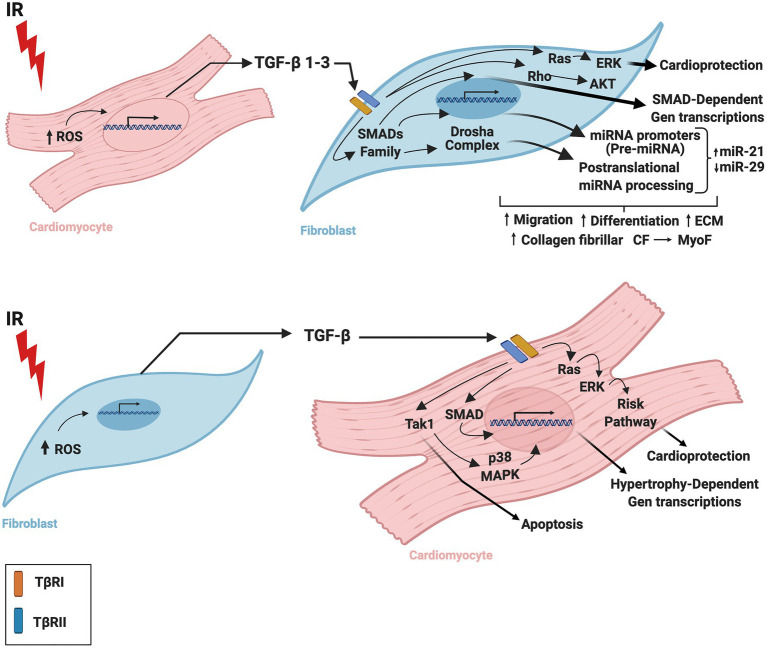
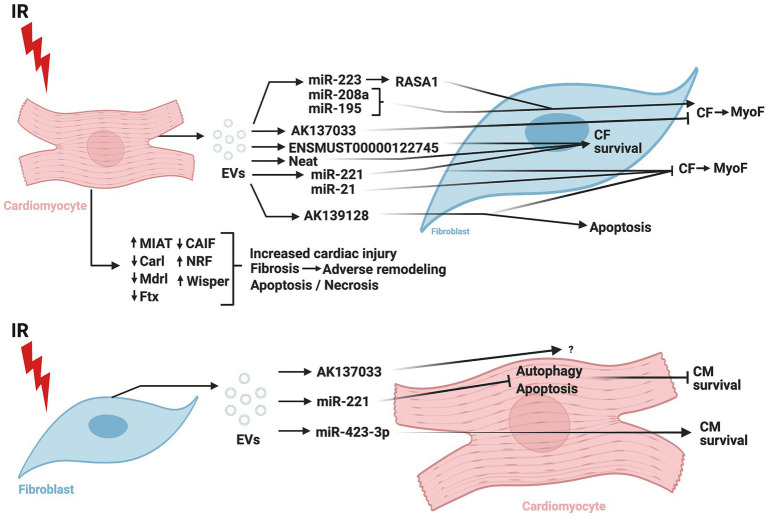
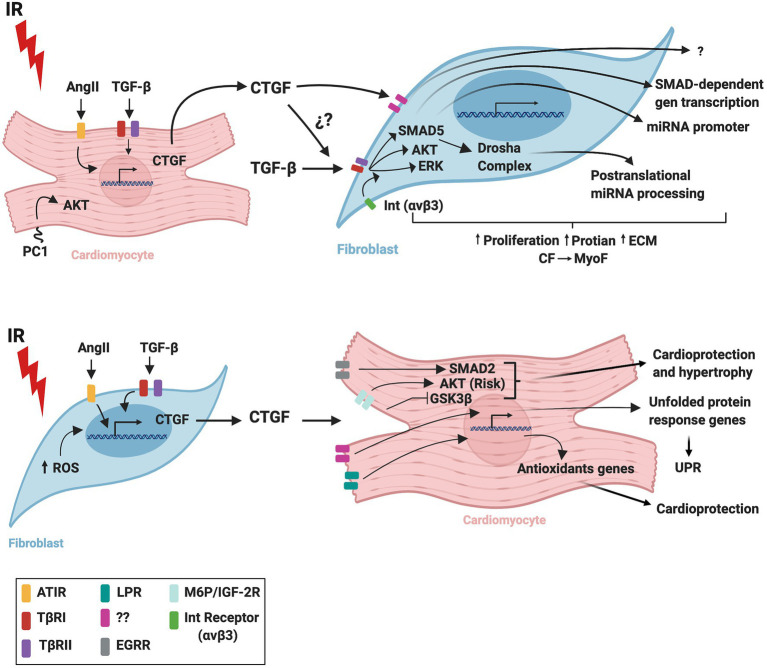
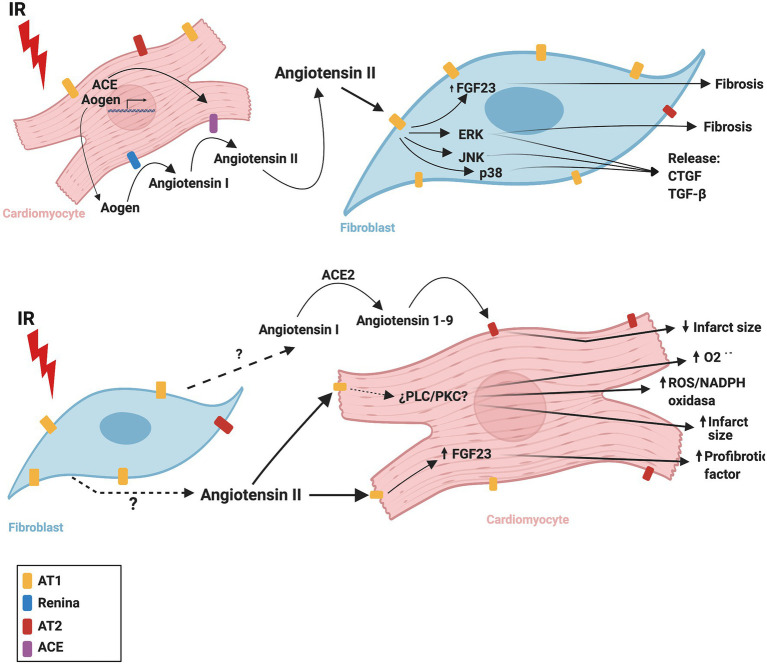
Communication between cells is a foundational concept for understanding the physiology and pathology of biological systems. Paracrine/autocrine signaling, direct cell-to-cell interplay, and extracellular matrix interactions are three types of cell communication that regulate responses to different stimuli. In the heart, cardiomyocytes, fibroblasts, and endothelial cells interact to form the cardiac tissue. Under pathological conditions, such as myocardial infarction, humoral factors released by these cells may induce tissue damage or protection, depending on the type and concentration of molecules secreted. Cardiac remodeling is also mediated by the factors secreted by cardiomyocytes and fibroblasts that are involved in the extensive reciprocal interactions between these cells. Identifying the molecules and cellular signal pathways implicated in these processes will be crucial for creating effective tissue-preserving treatments during or after reperfusion. Numerous therapies to protect cardiac tissue from reperfusion-induced injury have been explored, and ample pre-clinical research has attempted to identify drugs or techniques to mitigate cardiac damage. However, despite great success in animal models, it has not been possible to completely translate these cardioprotective effects to human applications. This review provides a current summary of the principal molecules, pathways, and mechanisms underlying cardiomyocyte and cardiac fibroblast crosstalk during ischemia/reperfusion injury. We also discuss pre-clinical molecules proposed as treatments for myocardial infarction and provide a clinical perspective on these potential therapeutic agents.
细胞间通讯是理解生物系统生理学和病理学的一个基本概念。旁分泌/自分泌信号传导、细胞间直接相互作用以及细胞外基质相互作用是调节对不同刺激反应的三种细胞通讯类型。在心脏中,心肌细胞、成纤维细胞和内皮细胞相互作用形成心脏组织。在病理条件下,如心肌梗死,这些细胞释放的体液因子可能会根据分泌分子的类型和浓度诱导组织损伤或保护作用。心脏重塑也由心肌细胞和成纤维细胞分泌的因子介导,这些因子参与了这些细胞之间广泛的相互作用。确定这些过程中涉及的分子和细胞信号通路对于在再灌注期间或之后创建有效的组织保护治疗至关重要。已经探索了许多保护心脏组织免受再灌注损伤的疗法,并且大量临床前研究试图确定减轻心脏损伤的药物或技术。然而,尽管在动物模型中取得了巨大成功,但尚未能够将这些心脏保护作用完全转化为人类应用。本综述提供了关于缺血/再灌注损伤期间心肌细胞和心脏成纤维细胞相互作用的主要分子、途径和机制的当前总结。我们还讨论了作为心肌梗死治疗方法提出的临床前分子,并提供了关于这些潜在治疗剂的临床观点。