Saito Haruka, Yamashita Yuji, Sakata Nanami, Ishiga Takako, Shiraishi Nanami, Usuki Giyu, Nguyen Viet Tru, Yamamura Eiji, Ishiga Yasuhiro
Faculty of Life and Environmental Sciences, University of Tsukuba, Tsukuba, Japan.
Western Highlands Agriculture and Forestry Science Institute, Buon Ma Thuot, Vietnam.
Front Plant Sci. 2021 Sep 3;12:726565. doi: 10.3389/fpls.2021.726565. eCollection 2021.
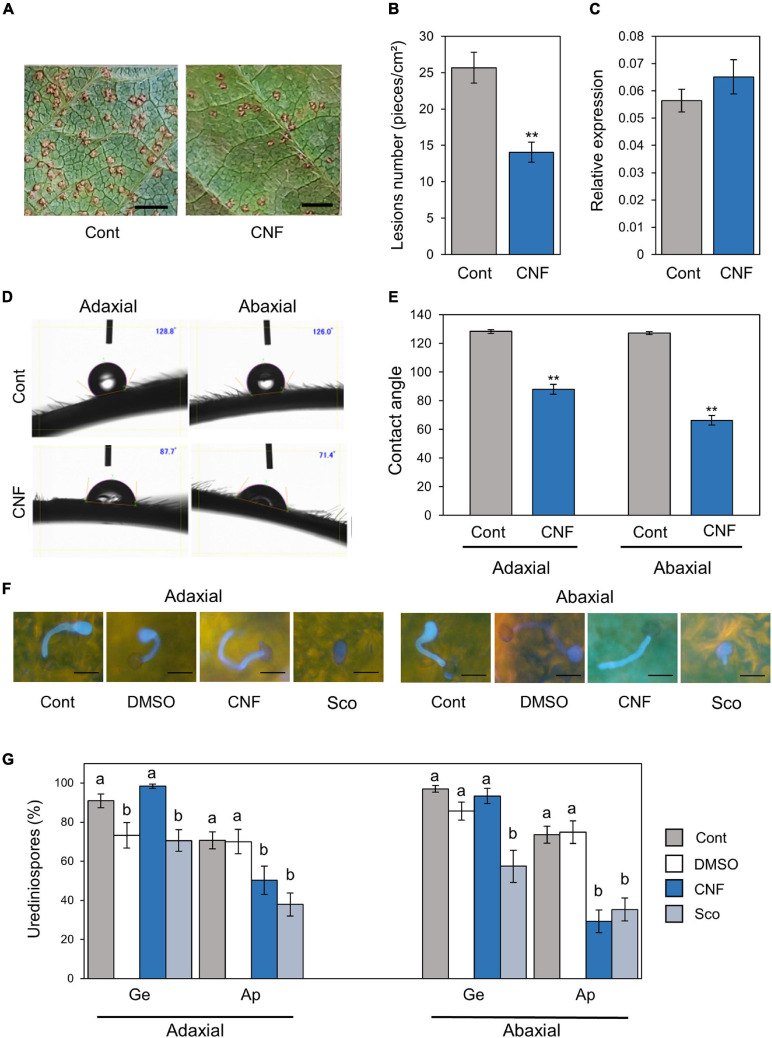
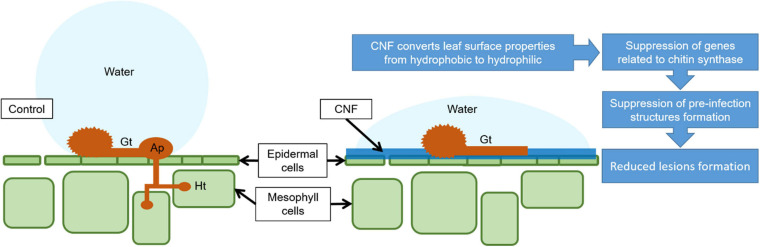
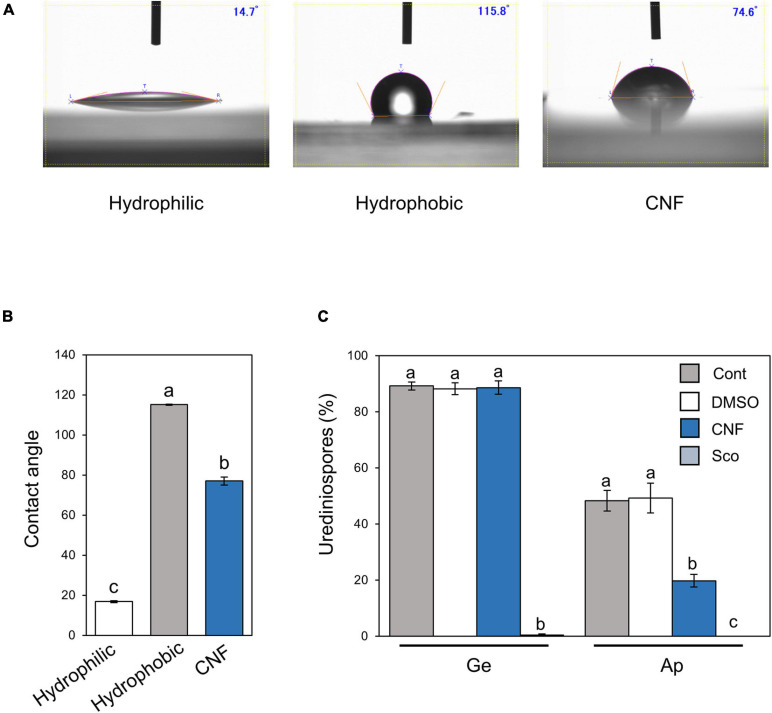
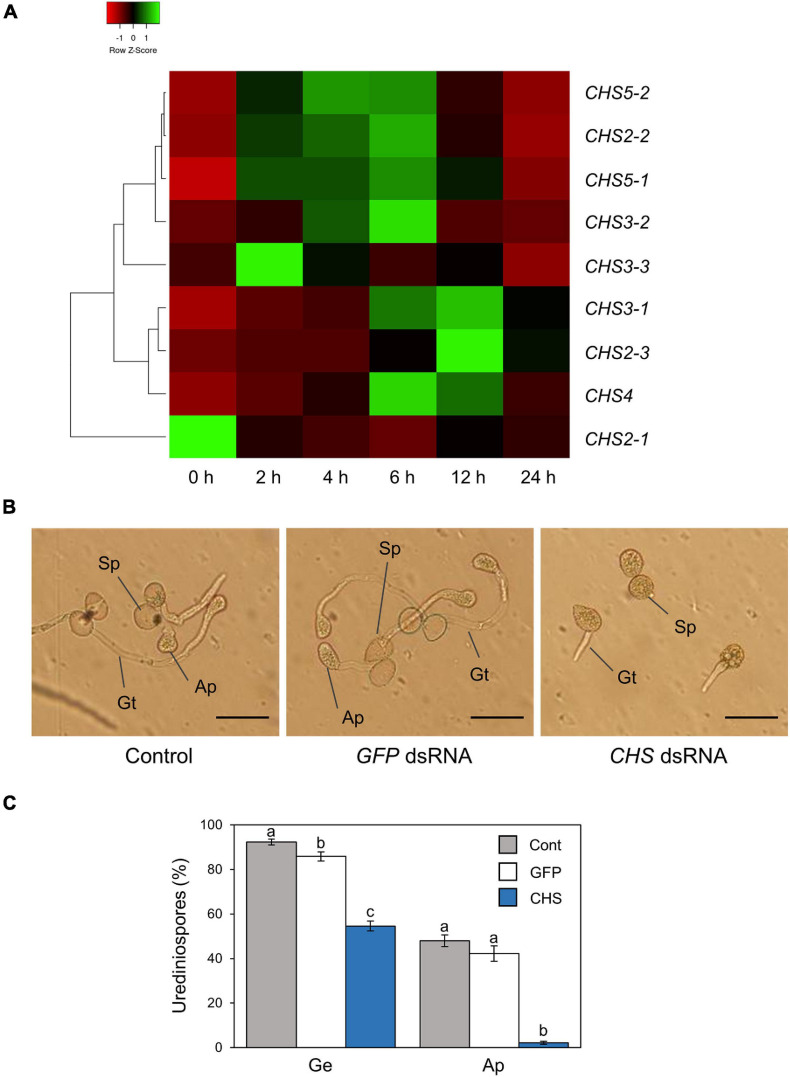
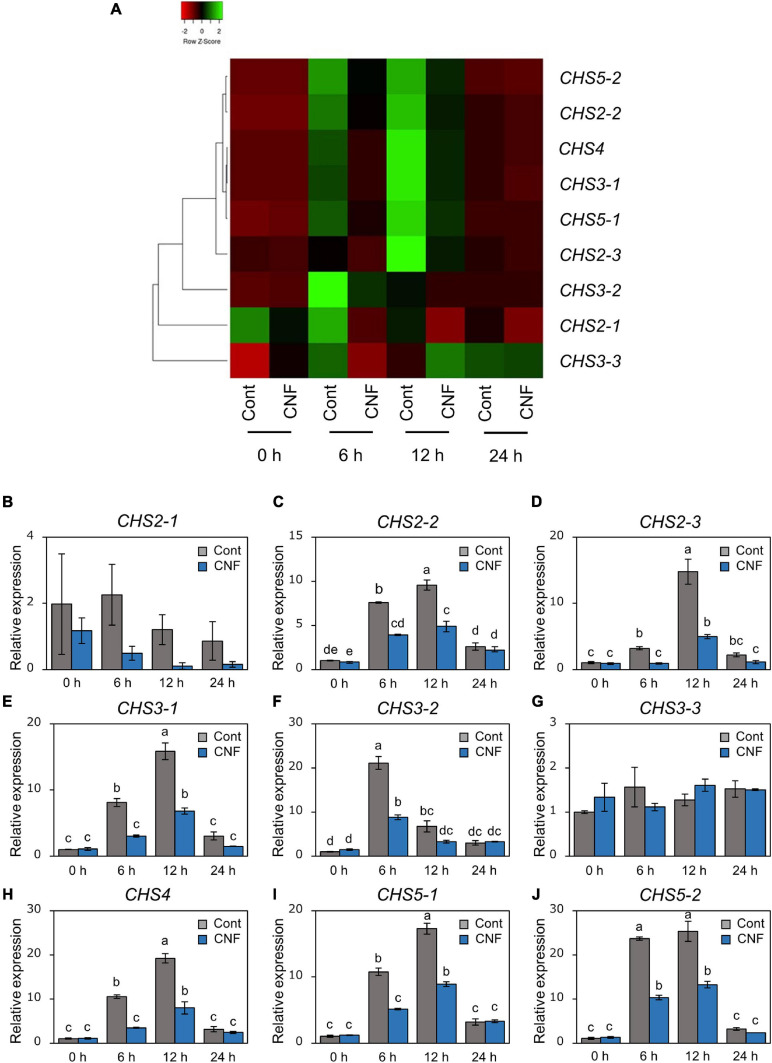
Asian soybean rust (ASR) caused by , an obligate biotrophic fungal pathogen, is the most devastating soybean production disease worldwide. Currently, timely fungicide application is the only means to control ASR in the field. We investigated cellulose nanofiber (CNF) application on ASR disease management. CNF-treated leaves showed reduced lesion number after inoculation compared to control leaves, indicating that covering soybean leaves with CNF confers resistance. We also demonstrated that formation of appressoria, and also gene expression related to these formations, such as (), were significantly suppressed in CNF-treated soybean leaves compared to control leaves. Moreover, contact angle measurement revealed that CNF converts soybean leaf surface properties from hydrophobic to hydrophilic. These results suggest that CNF can change soybean leaf surface hydrophobicity, conferring resistance against , based on the reduced expression of , as well as reduced formation of pre-infection structures. This is the first study to investigate CNF application to control field disease.
由专性活体营养真菌病原体引起的亚洲大豆锈病(ASR)是全球最具毁灭性的大豆生产病害。目前,及时施用杀菌剂是田间控制ASR的唯一手段。我们研究了纤维素纳米纤维(CNF)在ASR病害管理中的应用。与对照叶片相比,接种后经CNF处理的叶片病斑数量减少,这表明用CNF覆盖大豆叶片可赋予抗性。我们还证明,与对照叶片相比,CNF处理的大豆叶片中附着胞的形成以及与这些形成相关的基因表达,如(),均受到显著抑制。此外,接触角测量表明,CNF将大豆叶片表面性质从疏水性转变为亲水性。这些结果表明,CNF可以改变大豆叶片表面疏水性,基于()表达的降低以及感染前结构形成的减少,赋予对(病原体名称缺失)的抗性。这是首次研究CNF在控制田间病害中的应用。