
通过寄主和喷雾诱导基因沉默降低大豆上的叶斑病的感染。
Reduction of Phakopsora pachyrhizi infection on soybean through host- and spray-induced gene silencing.
机构信息
Department of Plant Pathology and Crop Physiology, Louisiana State University Agricultural Center, Baton Rouge, LA, USA.
Department of Agriculture, Alcorn State University, Lorman, MS, USA.
出版信息
Mol Plant Pathol. 2020 Jun;21(6):794-807. doi: 10.1111/mpp.12931. Epub 2020 Mar 20.
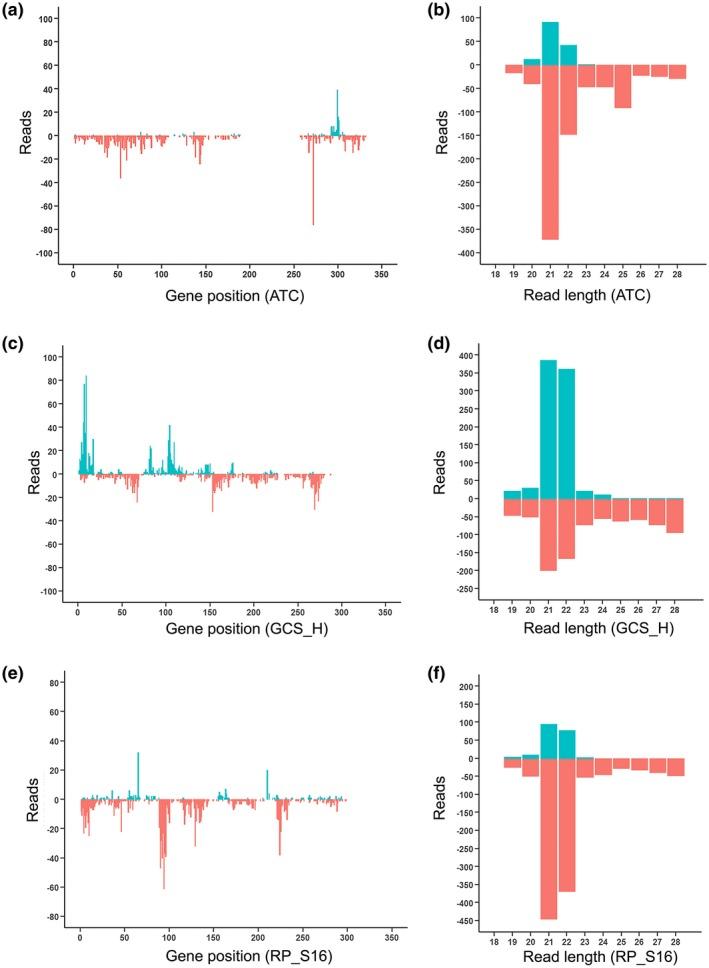
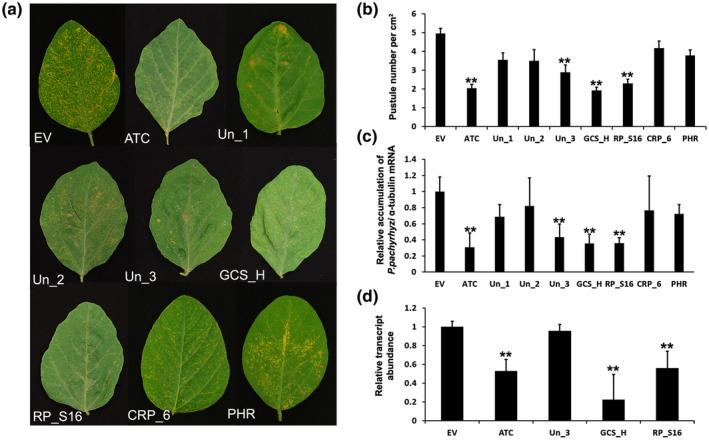
Asian soybean rust (ASR), caused by the obligate fungal pathogen Phakopsora pachyrhizi, often leads to significant yield losses and can only be managed through fungicide applications currently. In the present study, eight urediniospore germination or appressorium formation induced P. pachyrhizi genes were investigated for their feasibility to suppress ASR through a bean pod mottle virus (BPMV)-based host-induced gene silencing (HIGS) strategy. Soybean plants expressing three of these modified BPMV vectors suppressed the expression of their corresponding target gene by 45%-80%, fungal biomass accumulation by 58%-80%, and significantly reduced ASR symptom development in soybean leaves after the plants were inoculated with P. pachyrhizi, demonstrating that HIGS can be used to manage ASR. In addition, when the in vitro synthesized double-stranded RNAs (dsRNAs) for three of the genes encoding an acetyl-CoA acyltransferase, a 40S ribosomal protein S16, and glycine cleavage system H protein were sprayed directly onto detached soybean leaves prior to P. pachyrhizi inoculation, they also resulted in an average of over 73% reduction of pustule numbers and 75% reduction in P. pachyrhizi biomass accumulation on the detached leaves compared to the controls. To the best of our knowledge, this is the first report of suppressing P. pachyrhizi infection in soybean through both HIGS and spray-induced gene silencing. It was demonstrated that either HIGS constructs targeting P. pachyrhizi genes or direct dsRNA spray application could be an effective strategy for reducing ASR development on soybean.
亚洲大豆锈病(ASR)由专性真菌病原菌 Phakopsora pachyrhizi 引起,通常会导致显著的产量损失,目前只能通过杀菌剂应用来管理。在本研究中,研究了 8 个诱导锈菌孢子萌发或附着胞形成的 P. pachyrhizi 基因,以评估通过基于豆荚斑驳病毒(BPMV)的宿主诱导基因沉默(HIGS)策略抑制 ASR 的可行性。表达这三种修饰的 BPMV 载体的大豆植株通过 45%-80%的对应靶基因表达抑制、58%-80%的真菌生物量积累,以及在接种 P. pachyrhizi 后显著降低大豆叶片上 ASR 症状的发展,证明 HIGS 可用于管理 ASR。此外,当三个基因编码的乙酰辅酶 A 酰基转移酶、40S 核糖体蛋白 S16 和甘氨酸裂解系统 H 蛋白的体外合成双链 RNA(dsRNA)在接种 P. pachyrhizi 之前直接喷洒到分离的大豆叶片上时,与对照相比,它们还导致平均超过 73%的疮痂数减少和 75%的 P. pachyrhizi 生物量积累减少。据我们所知,这是首次通过 HIGS 和喷雾诱导基因沉默抑制大豆中 P. pachyrhizi 感染的报道。研究表明,针对 P. pachyrhizi 基因的 HIGS 构建体或直接 dsRNA 喷雾应用都可能是减少大豆 ASR 发展的有效策略。



 Zotero 插件